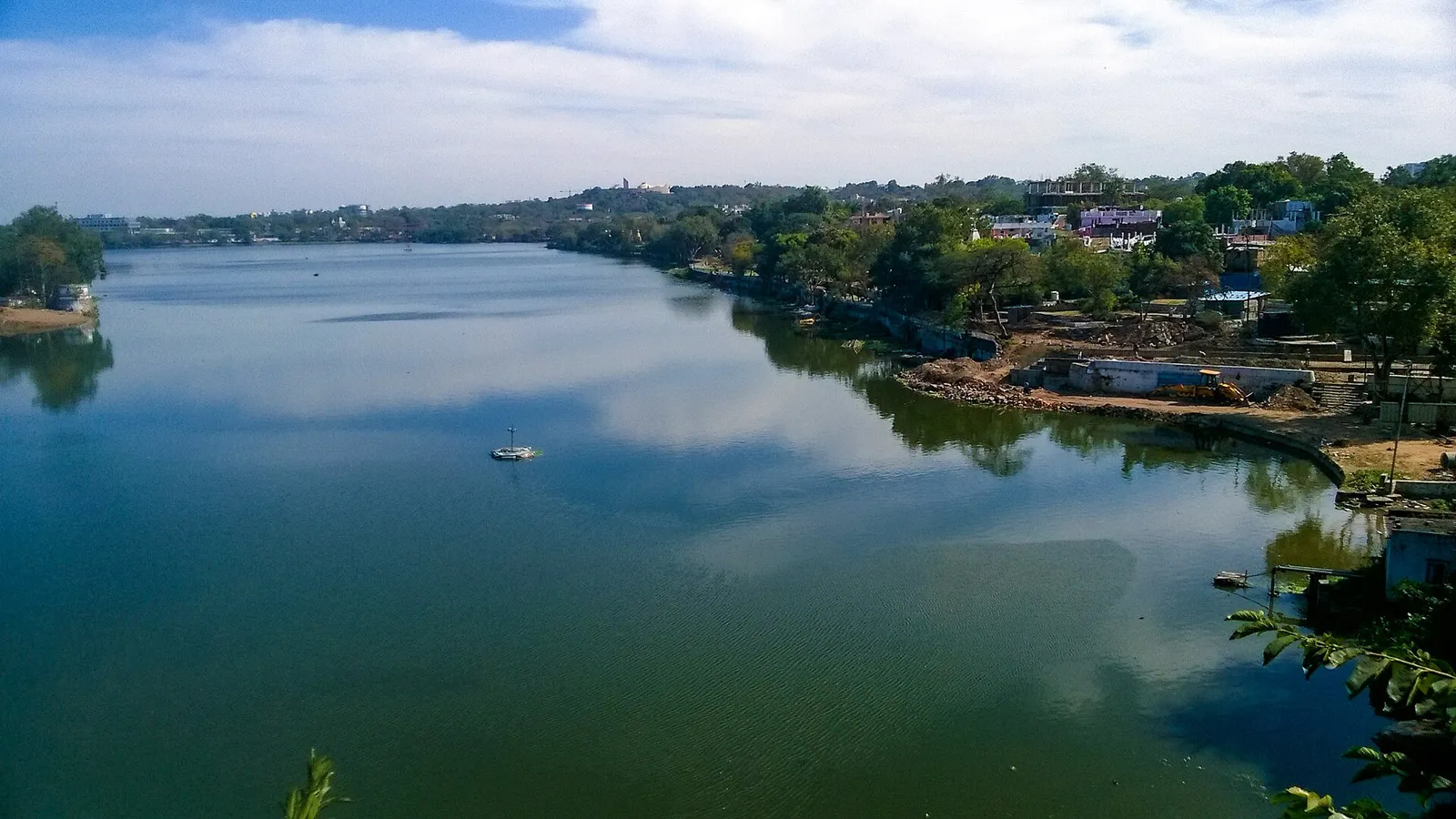
Walk to the edge of Bhopal’s Boat Club on a clear October morning and you’ll understand, immediately, why this city exists here. The Upper Lake — Bada Talaab, Bhojtal, whatever you call it — stretches so far ahead of you that the far shore disappears into haze. It doesn’t look like something a human being built. It does not look like something built a thousand years ago.
And yet both are true.
A lake that built a city
In the 11th century, the Paramara king Raja Bhoj ordered the construction of an enormous earthen dam across the Kolans and Betwa rivers. The resulting reservoir covered roughly 38 square kilometres — one of the largest man-made lakes in Asia at the time, and still among the largest in India.
The city that grew up around it took its name from the king: Bhoj-pal, later Bhopal.
The lake wasn’t just a feat of engineering. It fed the city’s drinking water, supported its agriculture, and shaped its culture. Even today, the Upper Lake supplies roughly 40% of Bhopal’s drinking water. Touch it, and you’re touching the reason people live here.
In 2002, it was designated a Ramsar Site — a wetland of international importance — for its exceptional biodiversity. Over 250 species of birds have been recorded here, including spectacular winter visitors like bar-headed geese, northern pintails, and common pochards that fly in from Central Asia and Siberia each November.
What it actually looks like
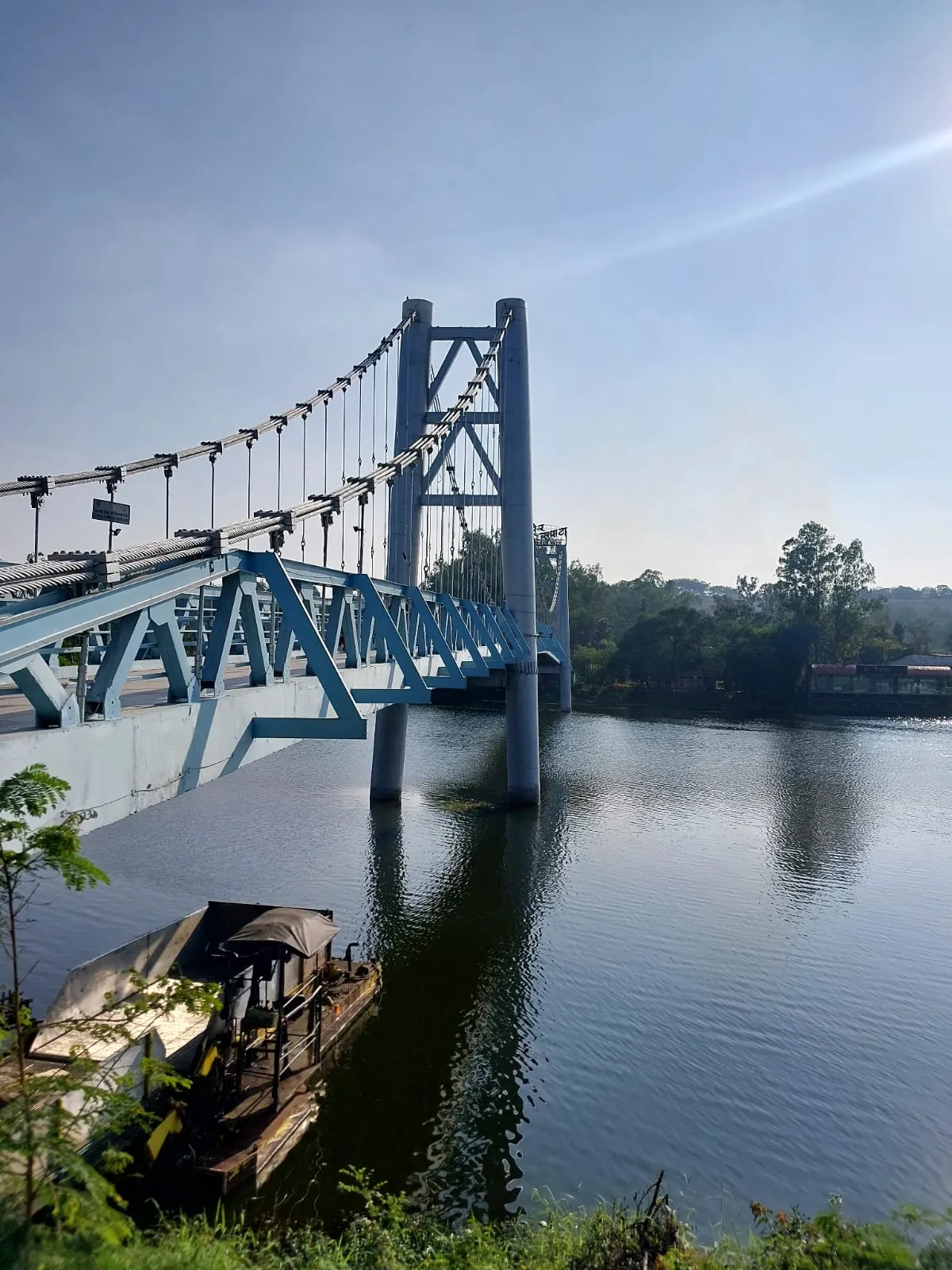
The eastern shore, where the Boat Club sits, is where most visitors end up. It’s pleasant and well-maintained: a wide promenade, boats for hire, food stalls, and a clear view across the water toward the ridge of Van Vihar on the southern bank.
But the lake is much bigger than that small window suggests. The northern shore traces the edge of Shyamla Hills, where the Raj Bhavan (Governor’s residence) sits high above the water. To the west, the lake narrows into the Lower Lake near the old city — the two connected by a causeway that was once the only road between them.
On a calm morning, the surface is absolutely still. The Vindhyachal hills appear in reflection. If you come at dawn, before the boats start, the silence is something else entirely.
The Boat Club and Van Vihar together
The most rewarding way to spend half a day here is to combine both. Start at the Boat Club (BHEL Boat Club on the eastern shore), take a pedal boat or motorboat across the water toward Van Vihar — you’ll see deer, blackbuck, and occasionally wolves and leopards on the bank — then come back and walk the promenade as the afternoon light goes golden.
Pedal boats are the slow, relaxed option: you go where you want, pause where you want, take in the birds. Motorboats are faster and better for families with restless kids. Both are worth it.
The birds
If you’re visiting between November and February, pay attention to the birds.
The Upper Lake sits along a major migratory flyway. Each winter, tens of thousands of birds arrive from breeding grounds across northern and central Asia: bar-headed geese that have just crossed the Himalayas, common teals, shovellers, cormorants, painted storks. The northern shore near the Kamla Park area and the wetland patches around Saket Nagar are the best spots to find them.
You don’t need binoculars, though they help. A slow walk along the water at dawn will show you more birds in an hour than most city parks show you in a year.
Practical details
Getting there: The Boat Club end is the easiest access point. An auto from New Market takes 15–20 minutes and costs around ₹100. Cabs are cheap and reliable.
How long to spend: A minimum of 2 hours if you just want the lake view and a boat ride. Half a day if you add Van Vihar. A full day if you’re a birder or photographer.
What to eat: The stalls along the Boat Club promenade sell the usual mix of chai, poha, and jalebi. There’s nothing remarkable in the immediate area — come fed or bring snacks. The better food is back in the city.
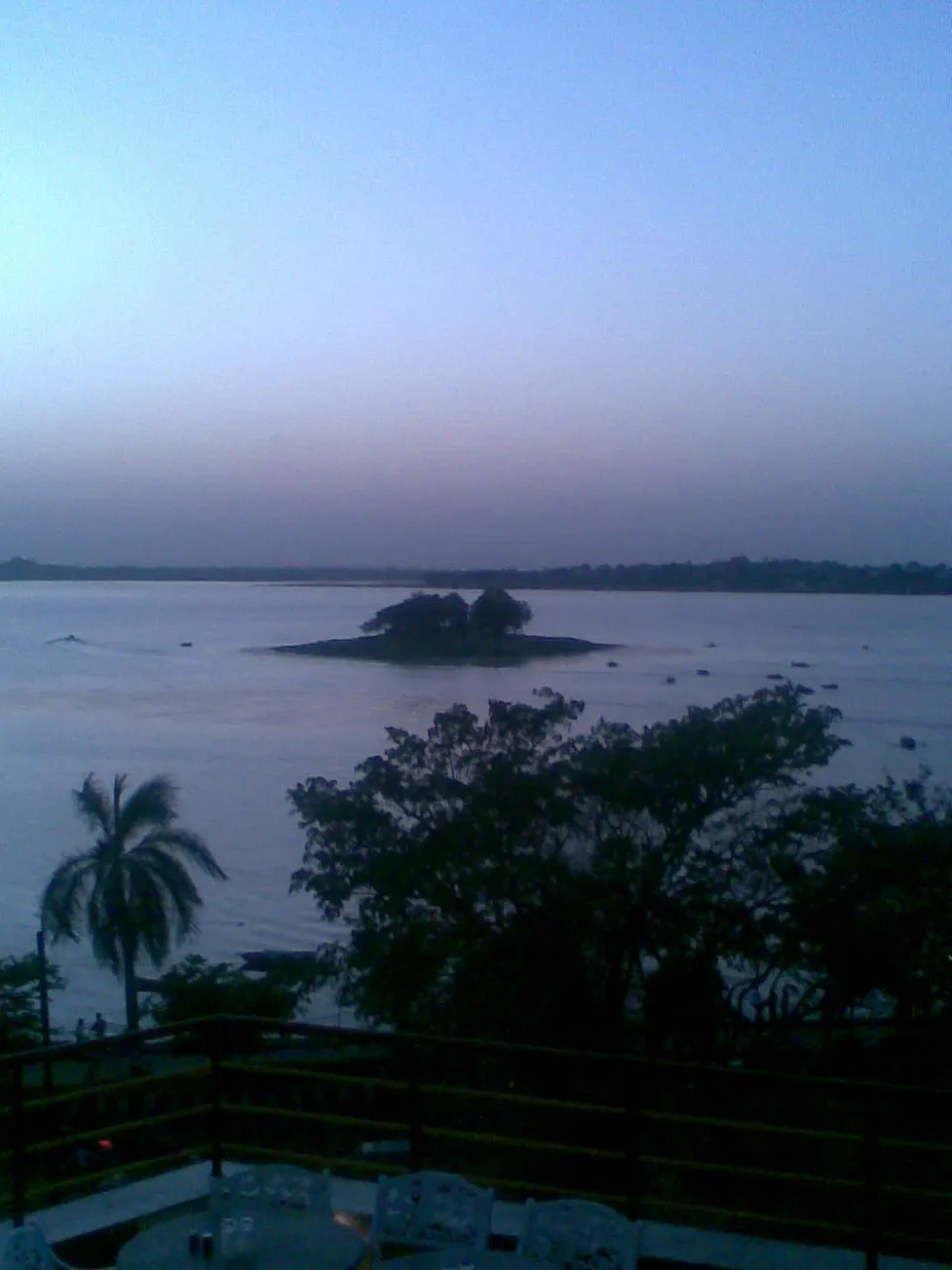
The sunset: Book your boat ride for 5:30–6 PM (exact timing shifts seasonally — ask the boatman). The light comes in from the west, the water turns copper, and the silhouette of Van Vihar’s ridge appears on the far bank. It’s one of those sights that stills you.
What most guides miss
Most articles about the Upper Lake describe the Boat Club promenade and nothing else. That’s fine as far as it goes, but the lake is a 38 sq km living ecosystem — and most of it is unvisited.
The Bhoj Wetland area to the west of the main lake is where the serious birdwatching happens. The wetland is protected, and access is limited, but the view from the approach roads gives you a sense of what’s there. The Forest Department sometimes organizes nature walks — worth checking.
The Lower Lake (Chhota Talaab), connected to the upper lake near the old city, is often overlooked entirely. The old city’s edge meets the water here, and the view back across the causeway at dusk — with the domes of the Taj-ul-Masajid rising behind the water — is one of Bhopal’s quietly magnificent scenes.
One honest note
The lake is clean, but it isn’t perfect. Urban runoff and encroachment remain real pressures. On some days, especially in the hot months, algal bloom is visible near the shore. The water is treated before it enters the city supply, but swimming is not recommended.
None of this diminishes the experience of being there. The lake has survived a thousand years of human use. It will outlast most of what’s been built around it. Standing at its edge at dawn, watching the mist burn off and the first light hit the hills across the water — that feeling doesn’t require anything to be perfect.
Timings and fees verified June 2026. Boat Club timings: 7 AM – 8 PM daily. Pedal boats: ₹50–80/person. Always confirm current rates at the counter.