
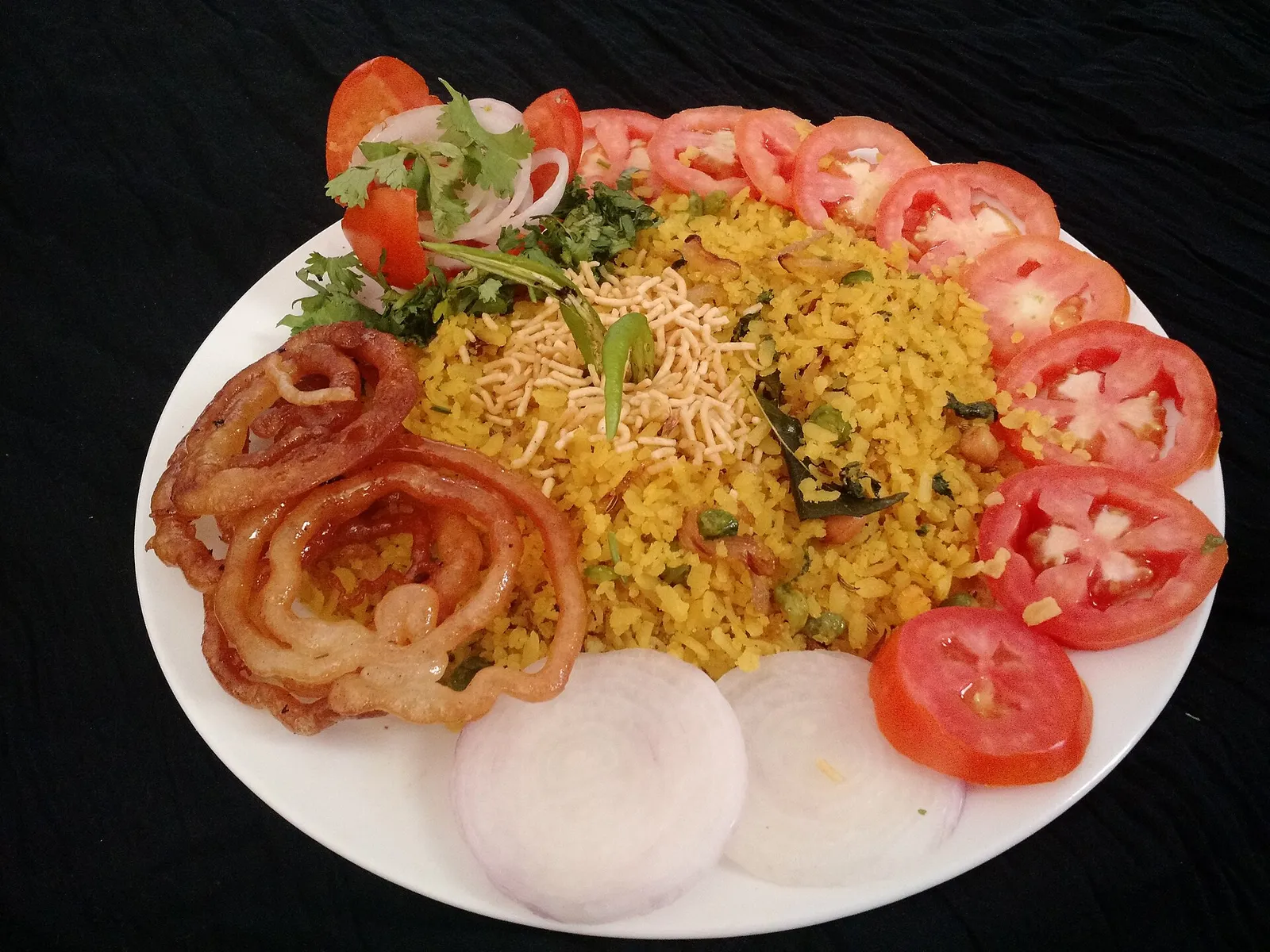
Bhopal eats well — quietly, seriously, and with a split personality. In the morning it's a vegetarian town that runs on poha and jalebi. After dark, in the lanes of the old city, it's one of central India's great Mughlai meat destinations — slow-cooked kormas, smoky kebabs and rich nihari, a legacy of the Nawabs and Begums who ruled here. This is a guide to what to eat in Bhopal, and where the flavour actually lives.
Why Bhopal is a serious food city
Bhopal's food is shaped by its history. For two centuries this was a princely state with a refined courtly kitchen, and that Mughlai influence still defines its non-vegetarian cooking. Layered on top is the everyday vegetarian street food of Madhya Pradesh, and a sweet-and-chai culture that keeps the markets buzzing late. The result is a city where a ₹30 plate of poha and a sit-down plate of gosht korma can both be the best thing you eat all week.
The breakfast ritual: poha–jalebi
If you do one food thing in Bhopal, do this. Poha — flattened rice steamed soft with onions, mild spices, a squeeze of lemon, fresh coriander and a fistful of crunchy sev — is the city's morning staple, and Bhopalis eat it with a side of hot, syrup-soaked jalebi. The sweet-and-savoury combination sounds odd and tastes perfect. Every neighbourhood has its favourite namkeen shop or cart; the poha is usually gone by mid-morning, so go early.
The Mughlai heart: korma, kebabs & nihari
This is what Bhopal is really famous for. The city's signature is Bhopali gosht korma — mutton slow-cooked with yoghurt and whole spices into a thick, aromatic gravy. Around it sits a whole repertoire: seekh kebabs grilled over coals, soft shami kebabs, nihari (a slow-cooked meat stew, traditionally a breakfast), paya, and fragrant biryani. Much of it is best in the evening, cooked by family-run shops that have done the same dish for generations.
Vegetarian Bhopal: bhutte ka kees & street snacks
Vegetarians are spoiled too. Look for bhutte ka kees — grated corn cooked with milk, spices and a tempering, a Madhya Pradesh specialty — alongside the universal street-snack spread: samosas, kachoris, aloo tikki, dahi vada and chaat, with tangy chutneys. The poha–jalebi breakfast is, of course, fully vegetarian.
Sweets, chai and late-night bites
Bhopal has a sweet tooth. Beyond jalebi, try imarti — a richer, orange-red, sweeter cousin of jalebi — and the wider North Indian sweet-shop range. Wash it down with the city's milky, spiced chai, which fuels the markets from dawn to well past midnight. The old city's food lanes stay lively late, and a cup of chai after a plate of kebabs is the proper way to end a Bhopal night.
Where to eat: the food neighbourhoods
In Bhopal, where matters as much as what. The richest eating is in and around the old city:
- Ibrahimpura / "Chatori Gali" — the famous late-night lane for kebabs, rolls and grilled meats. Come hungry, after dark.
- Chowk Bazaar (old city) — family-run shops and street vendors near Gohar Mahal, Moti Masjid and Taj-ul-Masajid — easy to fold into a heritage walk.
- New Market (TT Nagar) — the go-to for poha, snacks, chaat and sweets in the newer part of town.
Half the fun is asking a local which stall they swear by — loyalties here are fierce and specific.
A few honest tips
- Go early for poha — the best stalls sell out by late morning.
- Eat kebabs in the evening, when the old-city grills are fired up.
- Eat where it's busy — high turnover means fresh food, the best hygiene signal on the street.
- Pair food with sightseeing: the old-city food lanes sit right beside the monuments, so a heritage morning and a food evening combine naturally — see the 2-day Bhopal itinerary.