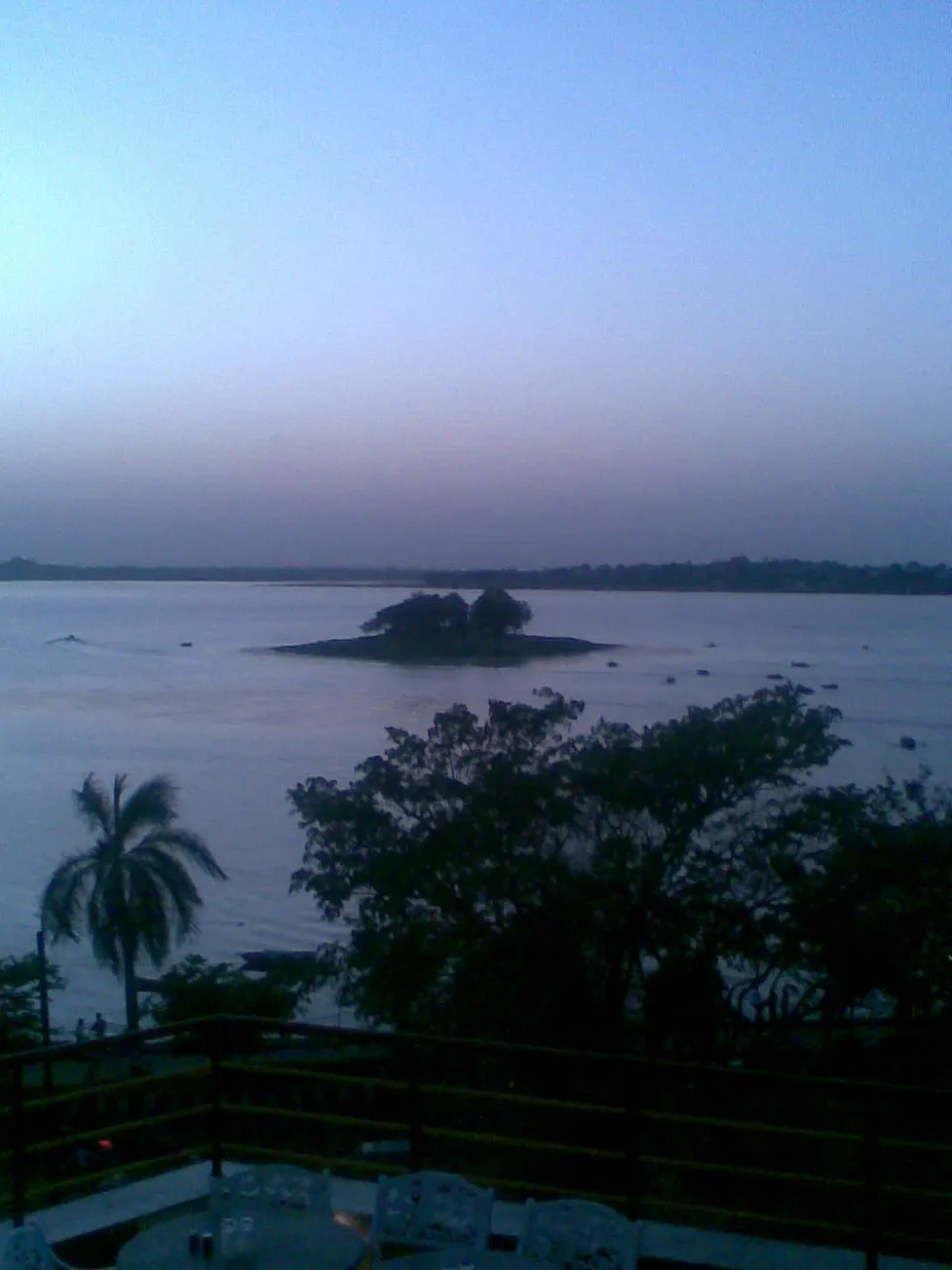
The first thing that hits you about Bharat Bhavan isn’t the art inside. It’s the building itself — a cascade of stepped sandstone terraces falling down a wooded hillside toward the Upper Lake, organic and unhurried, as if the architecture grew out of the rock rather than being placed on it. Charles Correa designed it this way deliberately. In 1975, when he was commissioned to create a national centre for the arts in Bhopal, he refused the convention of a grand rectangular block. He followed the hill instead.
The result, inaugurated in 1982 by Prime Minister Indira Gandhi, is one of independent India’s most admired public buildings — and one of its most visited cultural institutions.
What Charles Correa Built
Correa’s genius at Bharat Bhavan was restraint. The complex spans several acres, but it never announces itself. There are no imposing facades, no symmetrical approaches, no columns demanding that you look up in awe. Instead, you descend through it — a sequence of open courtyards, covered verandahs, sloping paths, and sudden views of the lake below. Beige Vindhyan sandstone throughout, warm in the afternoon sun.
The building has no right angles to speak of. Spaces open into each other unexpectedly. A gallery leads onto a terrace, which leads onto a staircase, which deposits you in front of a reflecting pool with the Upper Lake shimmering in the distance. On a clear winter afternoon, the light here does something extraordinary — it bounces off the water, off the pale stone, and suffuses every interior with a luminous warmth that no gallery lighting can replicate.
This is architecture that takes sides. It says: art should not be separated from the landscape it came from. It says: the building should serve the work, not overshadow it.
Roopankar: Where Folk Art Gets Its Due
The centrepiece of Bharat Bhavan is Roopankar — its museum of visual art, divided between a permanent collection of Indian folk and tribal art and a rotating contemporary gallery.
The folk and tribal collection is the reason serious visitors come from across the country. Gond paintings from Mandla and Dindori — intricate, cosmological, alive with animals and forest spirits. Bastar Dhokra bronzes — lost-wax metalwork made by tribal craftspeople in Chhattisgarh using methods that predate the Indus Valley Civilisation. Warli paintings from Maharashtra’s tribal belts. Madhubani works from Bihar. Objects in terracotta, bamboo, and fabric that you would ordinarily encounter only in village markets, stripped of context, tagged with a price.
Here, they have context. Roopankar doesn’t treat folk and tribal art as craft curios to be distinguished from “real” art. It places Gond paintings alongside contemporary Indian canvases. It asks you to look at a Dhokra horseman and a modernist sculpture in the same breath. That curatorial argument — that there is no hierarchy, only vision — is radical even now, and was more so in 1982.
Rangmandal and the Living Theatre
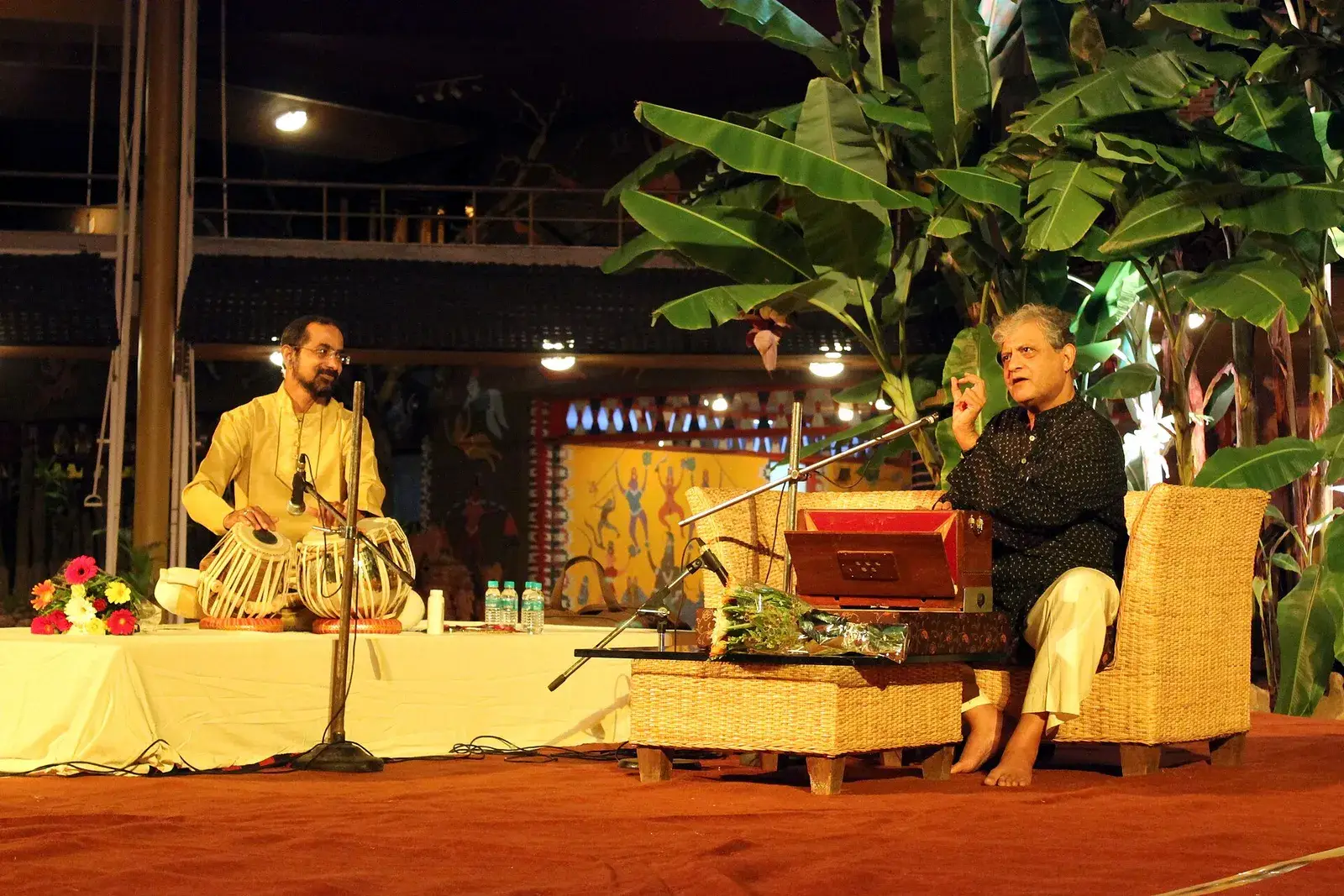
Bharat Bhavan has always been as much about performance as it is about objects on walls. The Rangmandal — the resident theatre troupe established here — became one of the most important companies in Indian theatre in the 1980s and 1990s, working with directors like B.V. Karanth and Satyadev Dubey. Many of its productions drew on Indian folk traditions — Mahua songs, Chhattisgarhi oral narratives, ritual performance — and brought them into conversation with contemporary stagecraft.
The Antrang studio theatre is compact and flexible — built for experimental work, not spectacle. Bahirang, the open-air amphitheatre on the lakeshore, is a different proposition entirely: a gentle bowl of stone terraces facing a large stage, with the Upper Lake behind it and the sky above. On a winter evening, with a fire lit in the courtyard and a performance underway, Bharat Bhavan at its best is one of the most atmospheric cultural spaces in India.
Check the Bharat Bhavan Trust’s website or notice boards for current programme schedules — there are lean periods between festivals, but the venue is rarely entirely dark.
What Most Visitors Miss
Most people come for Roopankar, see the permanent collection, and leave. That’s fine, but it misses the texture of the place. Spend time in the courtyards between galleries — the transitions are where Correa’s design breathes. Sit by the reflecting pool. Look at how the building places you in relation to the lake at every turn.
If the Vithika gallery has a temporary show on, go. The programming is uneven — some shows are exceptional, some less so — but the gallery itself, tucked away at the edge of the complex, is one of the quieter spaces and worth finding.
The reading room and resource centre, though modest, holds archives on Indian folk art that researchers and serious students come specifically to use. It’s open on weekdays.
Getting There and Practical Notes
Bharat Bhavan sits on Shamla Hills, just above the Upper Lake’s northern shore. The road to it is the same one that goes to Van Vihar — if you’re coming from New Market, follow the lake road. An auto from New Market takes about 20 minutes; a cab slightly less. Parking is available but tight on weekends.
Opening hours run roughly 2 PM to 8 PM, Tuesday to Sunday. The afternoon opening reflects the institution’s cultural character — this is an evening destination, best visited as the day cools and the lake light changes. Arrive by 3 PM to give yourself proper time with Roopankar before moving out to the terraces and lake views.
The entry fee is nominal. Photography in outdoor areas is unrestricted. Inside Roopankar, check at the entrance — some sections ask you not to photograph, and the signage is not always prominent.
Timings and fees verified July 2026. Bharat Bhavan is closed on Mondays and on occasional festival days — call the Trust before visiting on a public holiday.