Almost everyone in Bhopal has been to Birla Mandir. Almost no one has been to the museum right beside it. The temple — the Lakshmi Narayan Temple on the Arera Hills — is one of the city’s most-visited spots. But a few steps away, past a red arrow most people walk straight past, is a museum full of ancient stone gods, 2,000-year-old coins and fossils older than the Himalayas. One December morning, my younger brother and I turned left instead of heading home — and had it almost entirely to ourselves.
First, the temple on the hill
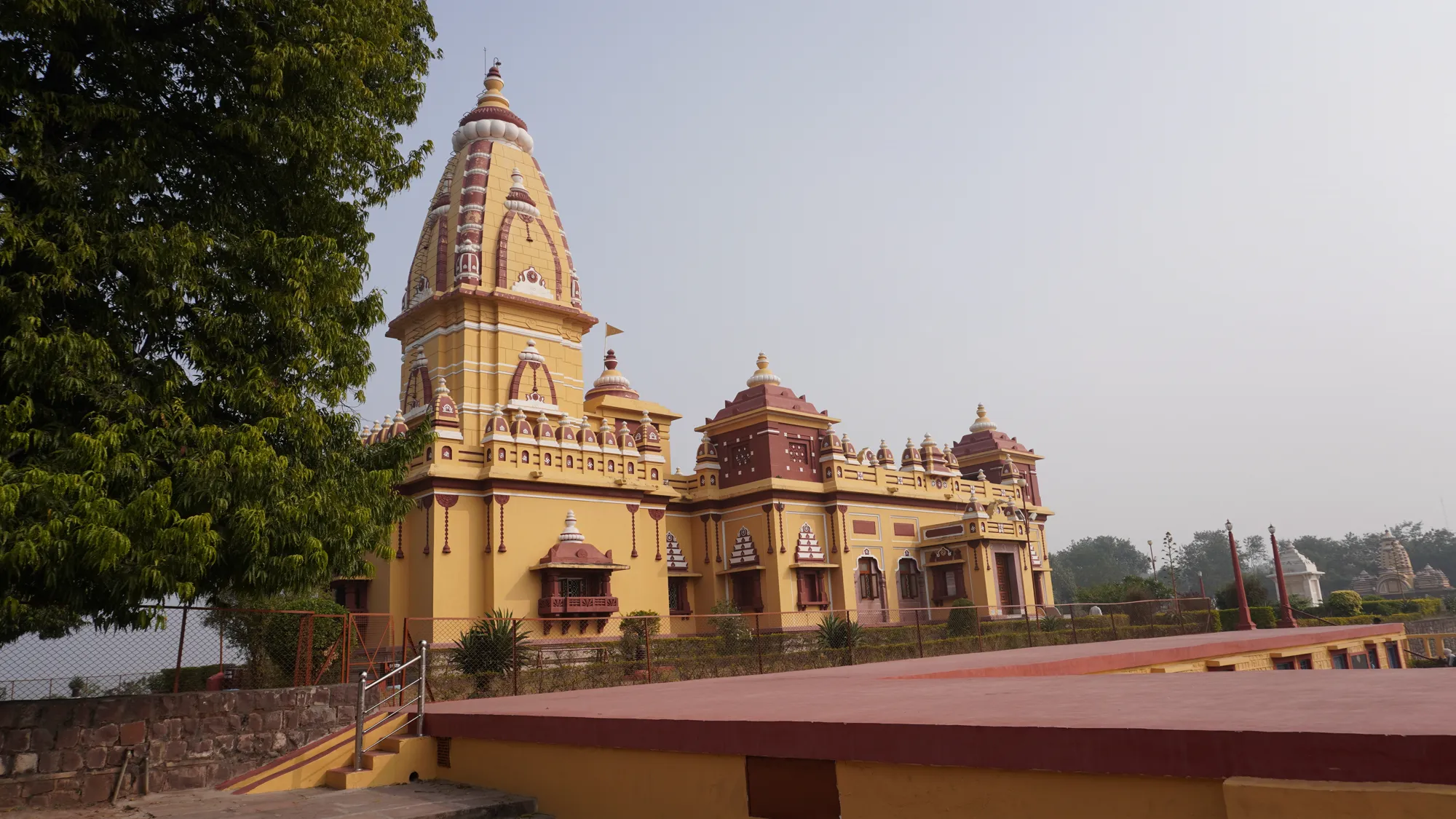
You feel the climb before you see the temple. The road bends up the Arera Hills, past a stone archway and a flight of steps, and then the shikhara appears — bright yellow and maroon, catching the winter sun. This is Birla Mandir, Bhopal, also called the Lakshmi Narayan Temple after the god Vishnu (Narayan) and the goddess Lakshmi in its main shrine.
Most people know the temple is “Birla,” but not much more. Two marble plaques by the entrance tell the whole story. The foundation stone (शिलान्यास) was laid on 3 December 1960 by Dr Kailash Nath Katju, then Chief Minister of Madhya Pradesh. The finished temple was consecrated (प्रतिष्ठा) four years later, on 15 November 1964, by the next Chief Minister, Pt Dwarka Prasad Mishra. Both plaques end the same way: built “with the generous support of Shri Ganga Prasad Birla, established through the Hindusthan Charity Trust.”
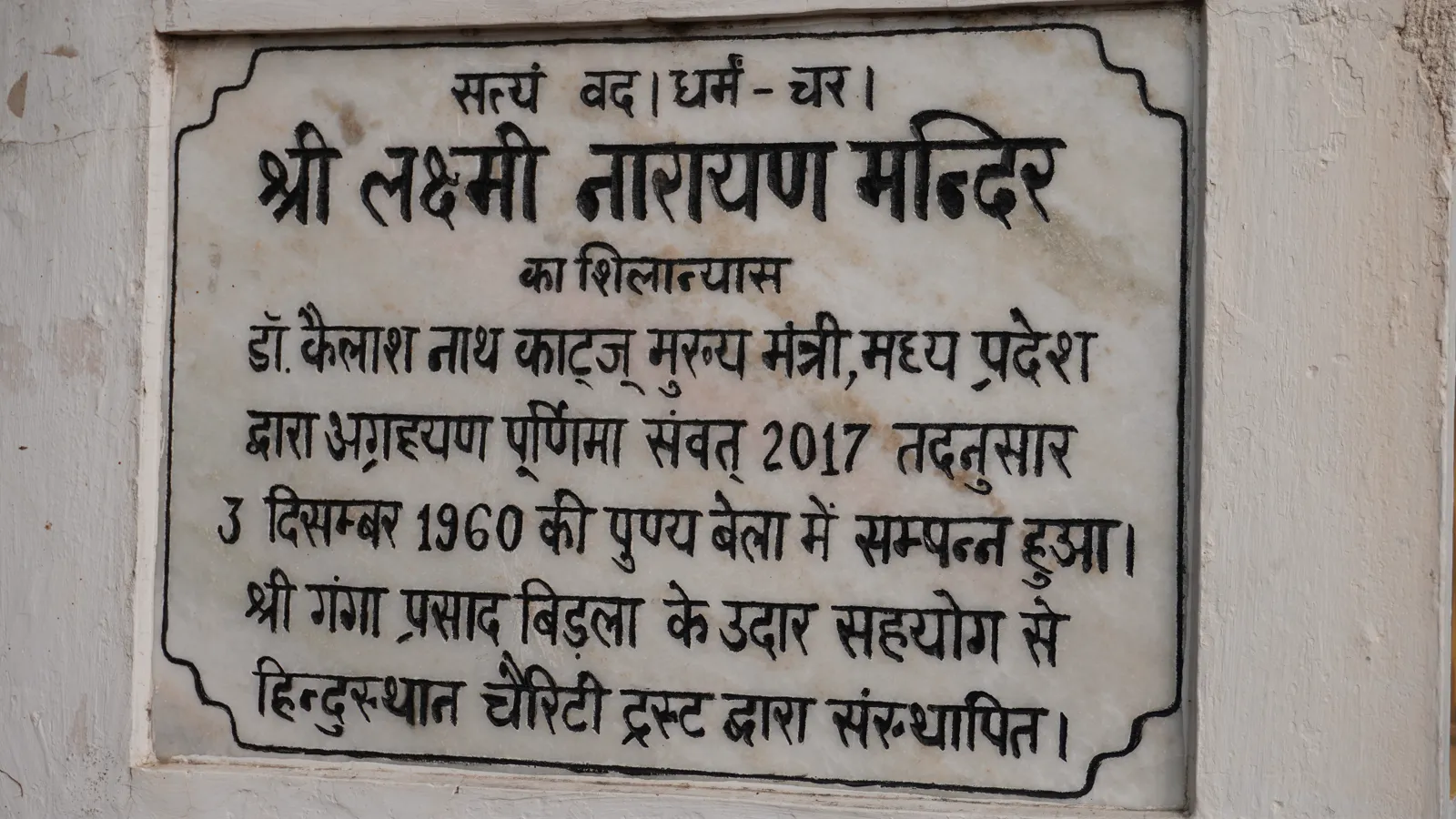
Both plaques carry the same short line at the top — सत्यं वद। धर्मं चर। — “Speak the truth; walk in righteousness,” an old verse from the Taittiriya Upanishad. It is a good sentence to read before you take off your shoes and stand in the cool, quiet shrine.
The walk up to Birla Mandir, past the water channel and gardens — Arera Hills, Bhopal.
Then, the museum no one turns towards
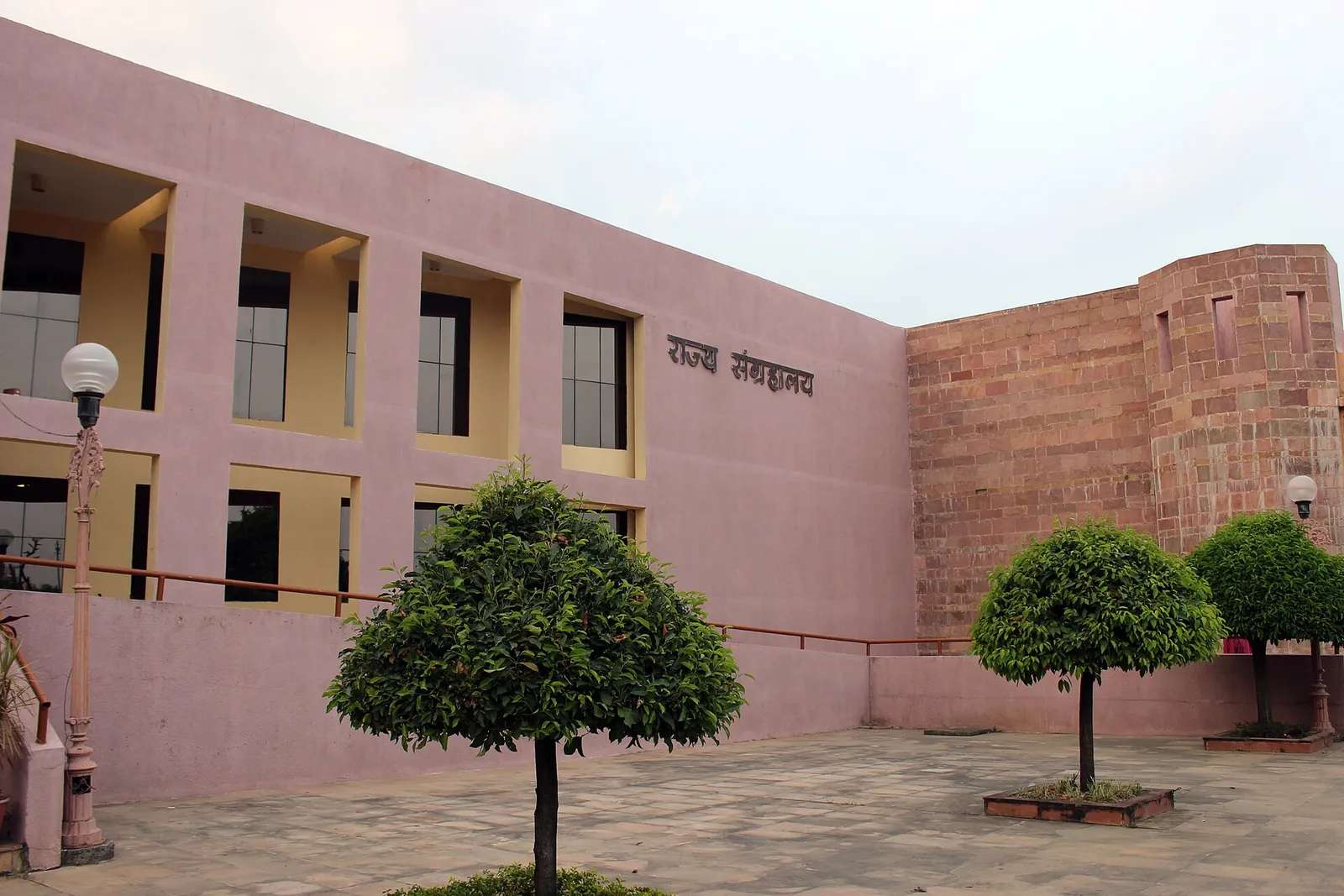
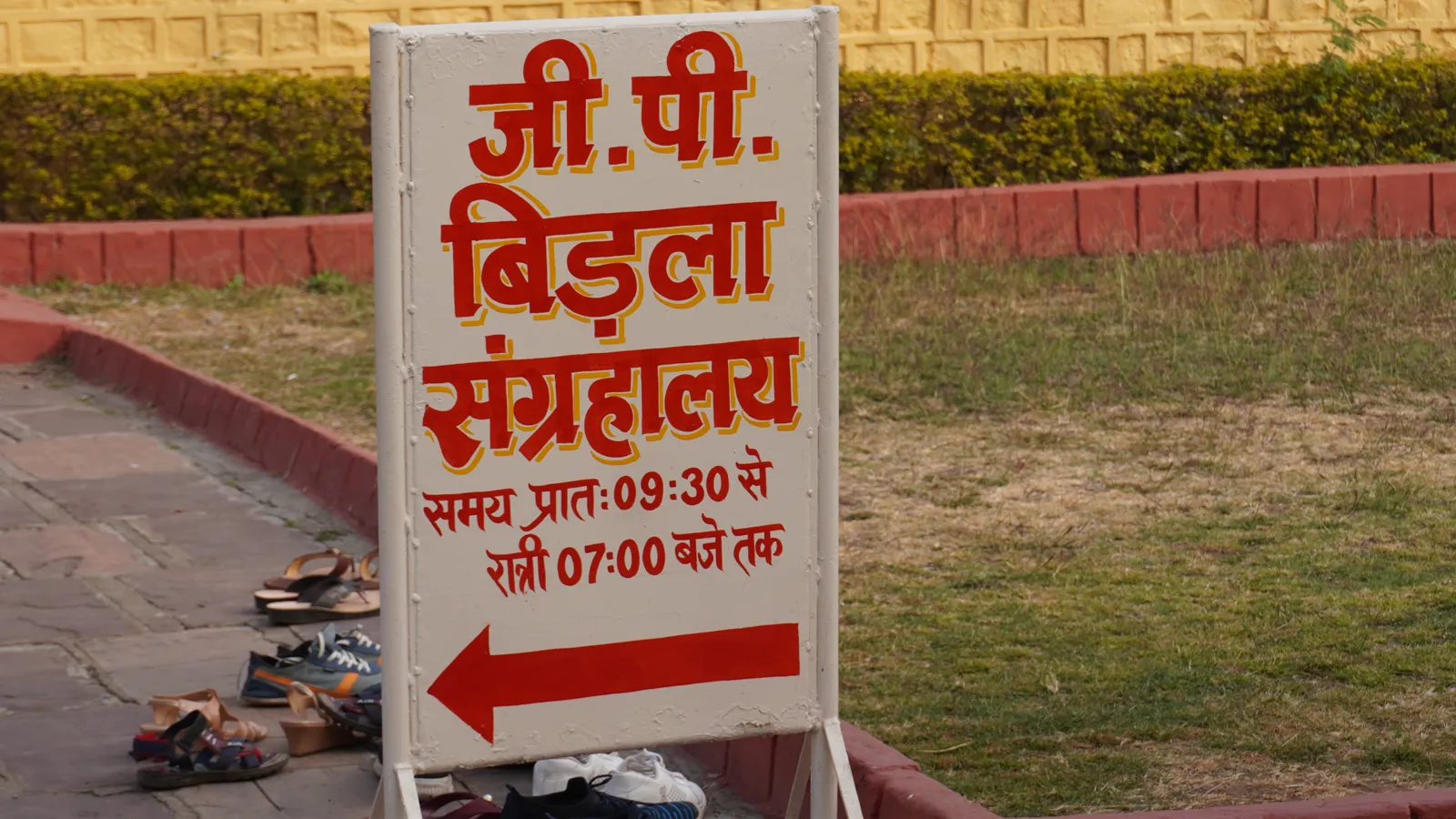
Here is the thing almost everyone misses. After darshan, people put their shoes back on and drift back down the hill. But a small white board with a red arrow points the other way: जी.पी. बिड़ला संग्रहालय — the G.P. Birla Museum. We had walked past that arrow ourselves on earlier visits. This time we followed it.
The ticket window is a modest counter with a hand-stamped slip. Entry cost us ten rupees. The ticket names the museum as a division of the Birla Institute of Archaeology & Cultural Research, and lists the rules — do not touch the idols, photography is charged separately, no bags inside. The museum opened in 1971 and holds one of the finest collections of ancient sculpture in Madhya Pradesh. A replica of Ashoka’s Sarnath lion capital greets you at the door.
Past the temple, the museum wall: G.P. Birla Museum — quiet, and easy to miss.
A garden full of thousand-year-old gods
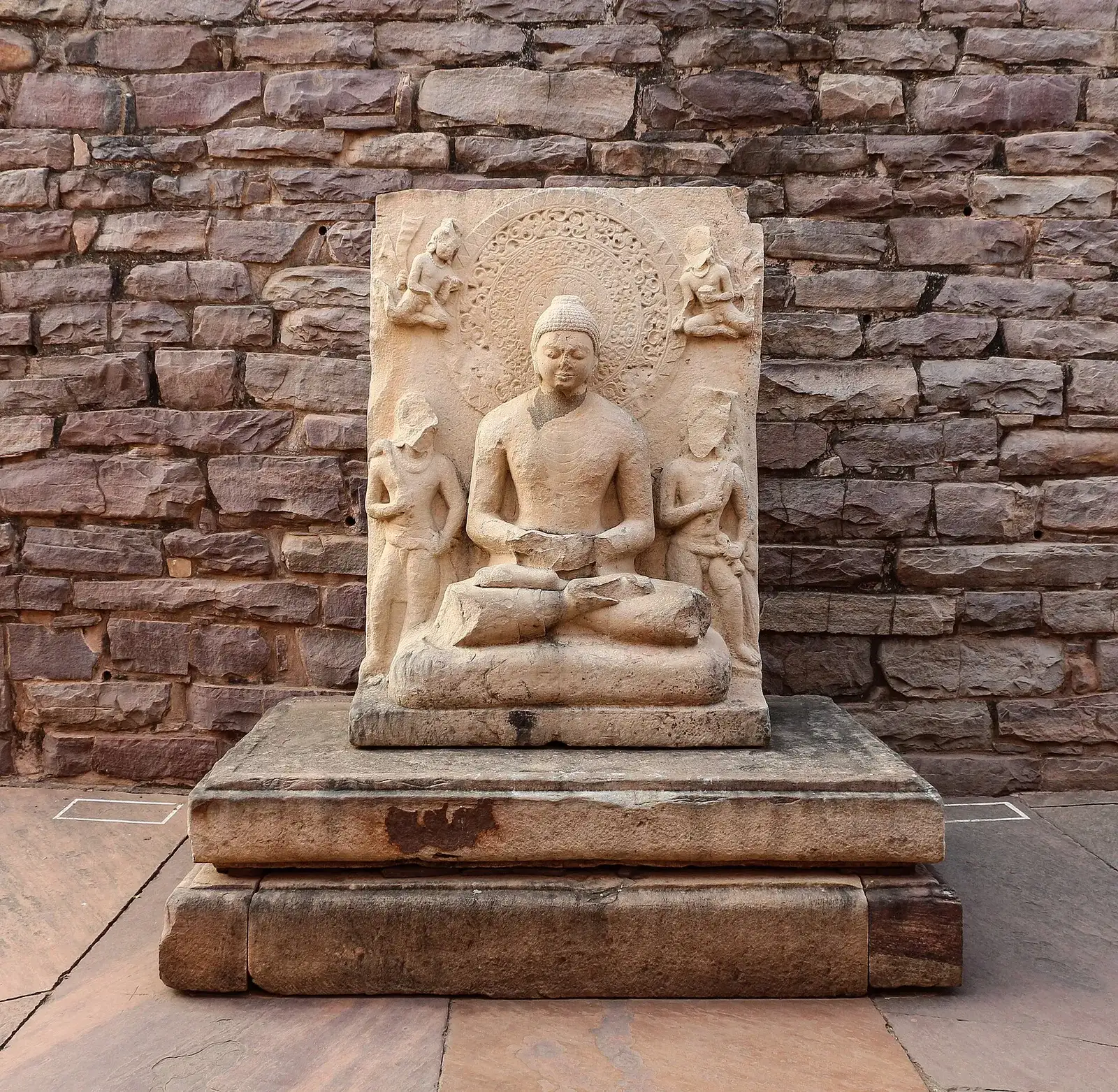
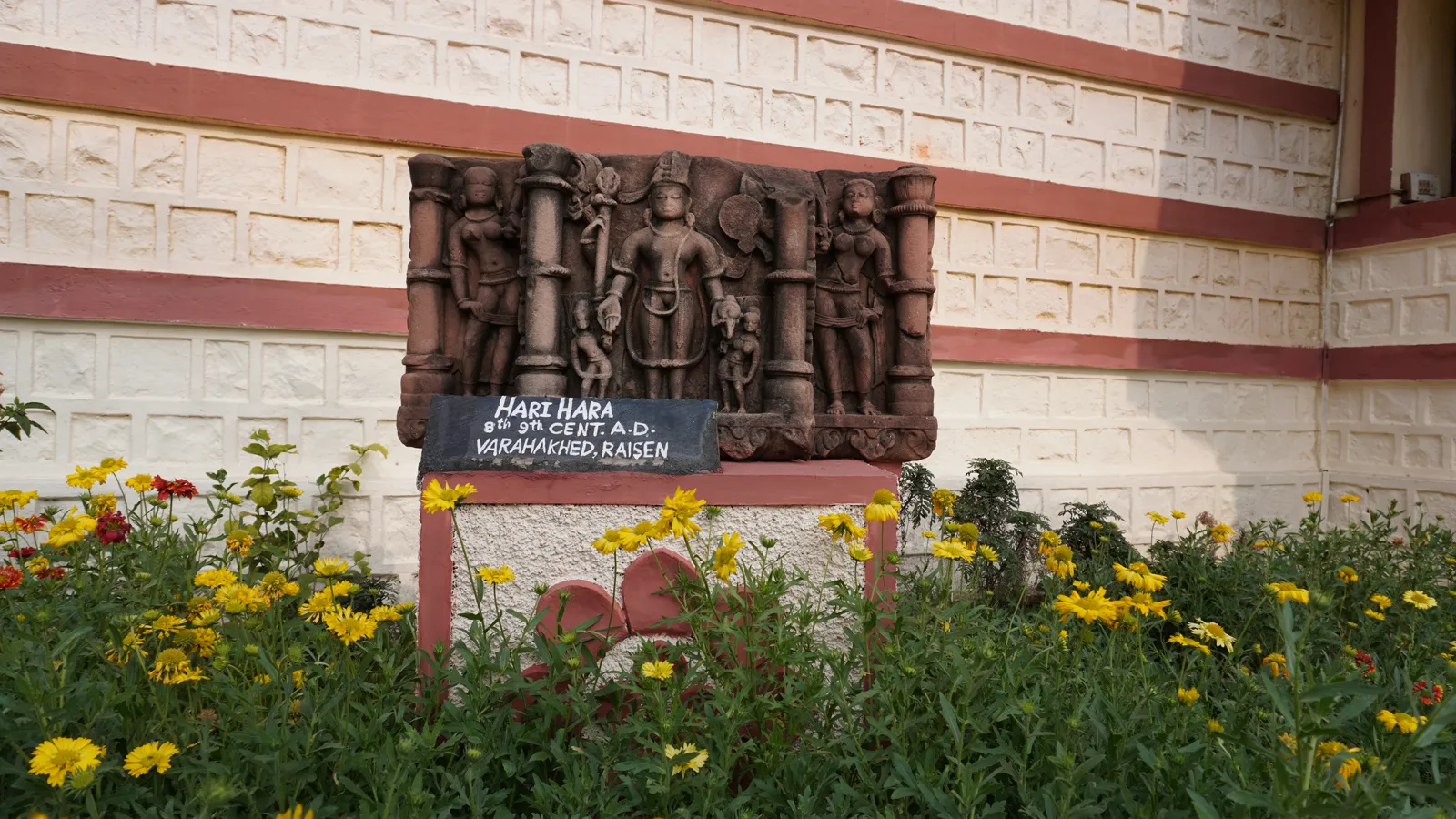
You start outside, in the garden. And this is where it hits you: the flower beds are lined with stone gods and goddesses carved between the 7th and 13th centuries — some a thousand years old, standing in the open among marigolds. Each has a small black label telling you what it is and, more amazingly, where it was found.
Read those labels and a map of old Madhya Pradesh appears. A tender Hari Hara — half Vishnu, half Shiva in one body — came from Varahakhed in Raisen, carved in the 8th–9th century. A loving Uma-Maheshvara (Shiva and Parvati together), a Kuber and Shiva, a stone Nandi bull and a set of standing figures all came from Samasgarh, near Bhopal, from the 12th–13th centuries.
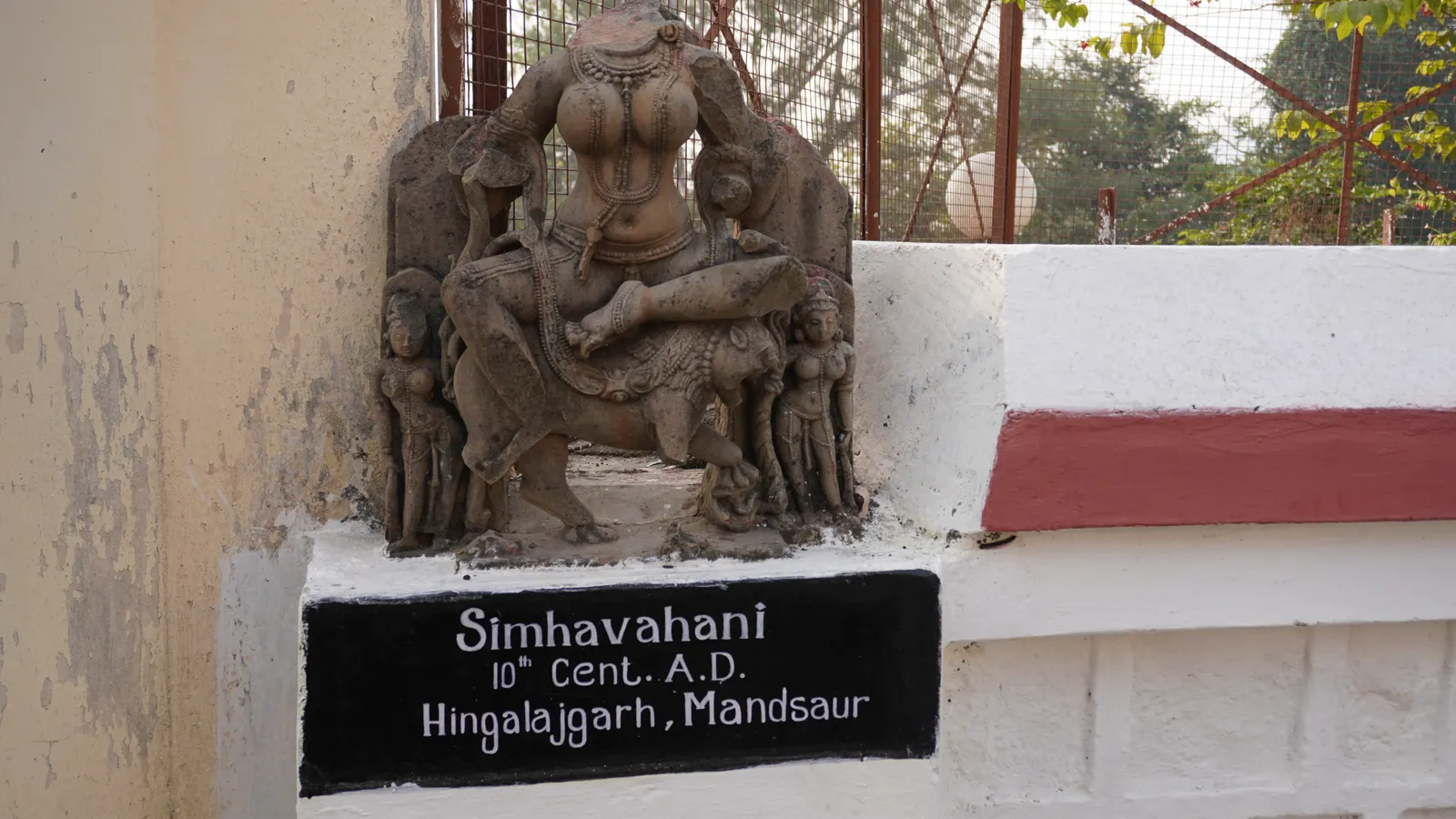
Others came from further away. A four-armed Simhavahini — the goddess riding her lion — was brought from Hinglajgarh in Mandsaur, a famous sculpture site in western Madhya Pradesh. From Ashapuri in Raisen came a Nara-Vyala (a hero fighting a mythical lion-beast) and a Siva and Vaman panel. Walk slowly and you realise you are looking at pieces of a dozen ruined temples, gathered here for safe-keeping.
The open-air sculpture garden — stone gods from the 7th to 13th centuries, lined up among the flower beds.
Halls of stone and bronze
Indoors, the light drops and the mood changes. Cool galleries — one signed simply Siva Gallery — hold the finer pieces, lifted onto pedestals and lit one by one. A tall Vishnu relief stands framed by orange drapes like a shrine. A carved Chaitya relief panel and a fierce man-lion Nrisimha both travelled here from Shahdol, far to the east, and are dated to the 8th–10th centuries. In glass cases sit small, dark bronzes — a graceful Ganesha and a Krishna, both from the 18th century.
The coins: 200 BC to the 1500s
One small, dark room stopped us the longest. Each coin sits under its own glass magnifier with a lamp behind it, so you lean in to a bright little circle and an ancient face swims up. The labels read like a roll-call of dynasties. A copper coin of the Satavahanas from about the 2nd century BC. A copper coin of the Kushan king Vima Kadphises. Another of Pushyamitra of the Sunga dynasty. And a silver coin of Islam Shah Suri from the 16th century AD.
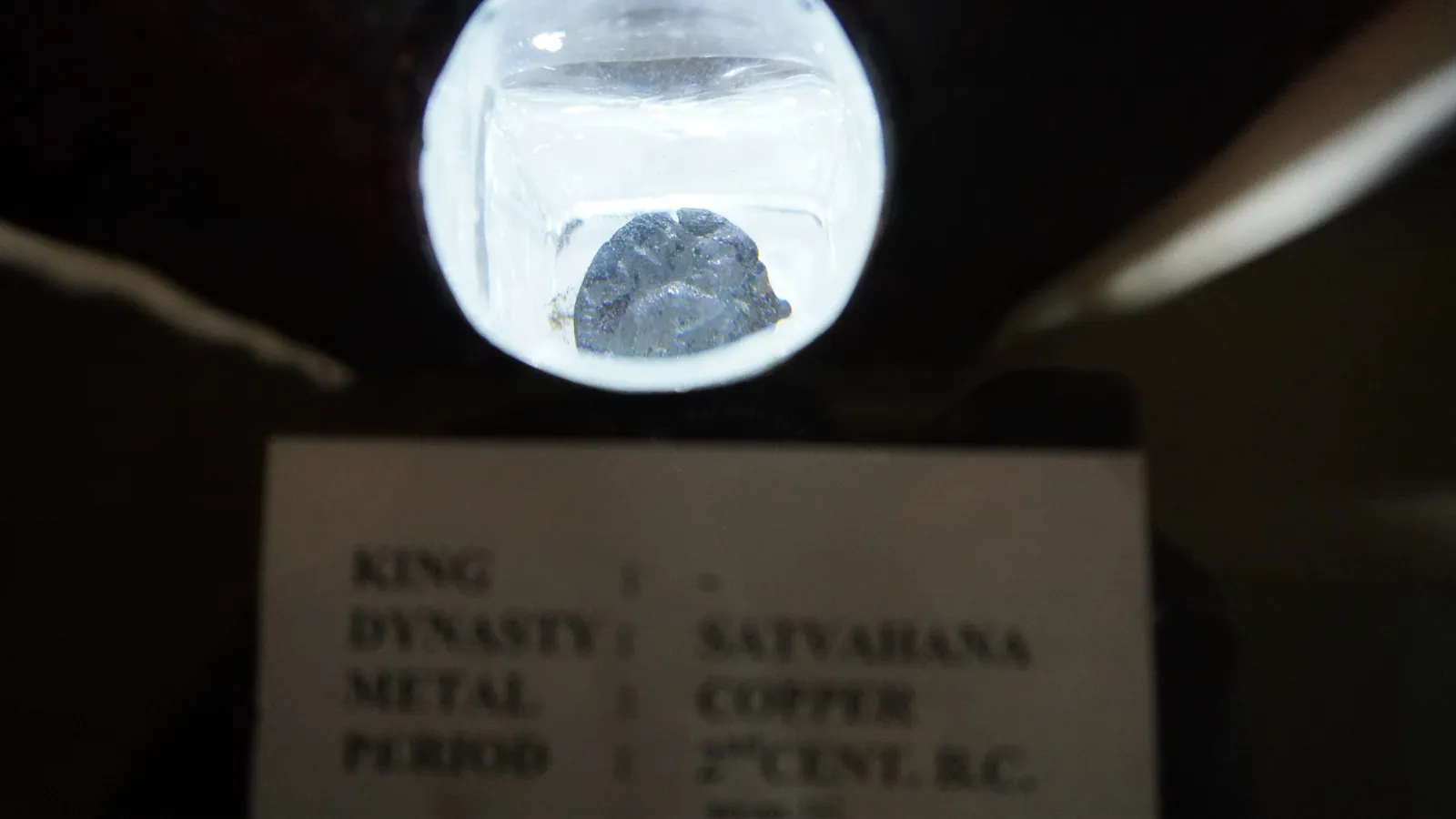
Leaning in to a single coin — a 2,000-year-old face under the magnifier lamp.
From about 200 BC to the 1500s — nearly eighteen centuries of money, in one room the size of a bedroom. A bright corner nearby holds shelves of painted Kondapalli and Nirmal folk figures, a small, cheerful surprise between all the sandstone gods.
Ten million years old
And then, in a back case, the oldest objects of all — and the ones we least expected in a temple museum. Lumps that look like ordinary firewood turn out to be petrified wood: trees that slowly turned to stone. The museum’s own board explains it plainly, and it is worth quoting:
“These objects collected from different sites of district Mandla, Madhya Pradesh include fossilized different parts of tree such as roots, trunk, branches, leaves, seeds and fruits… Calcium carbonate in some cases is replaced by Silica… These objects are about ten million years old.”
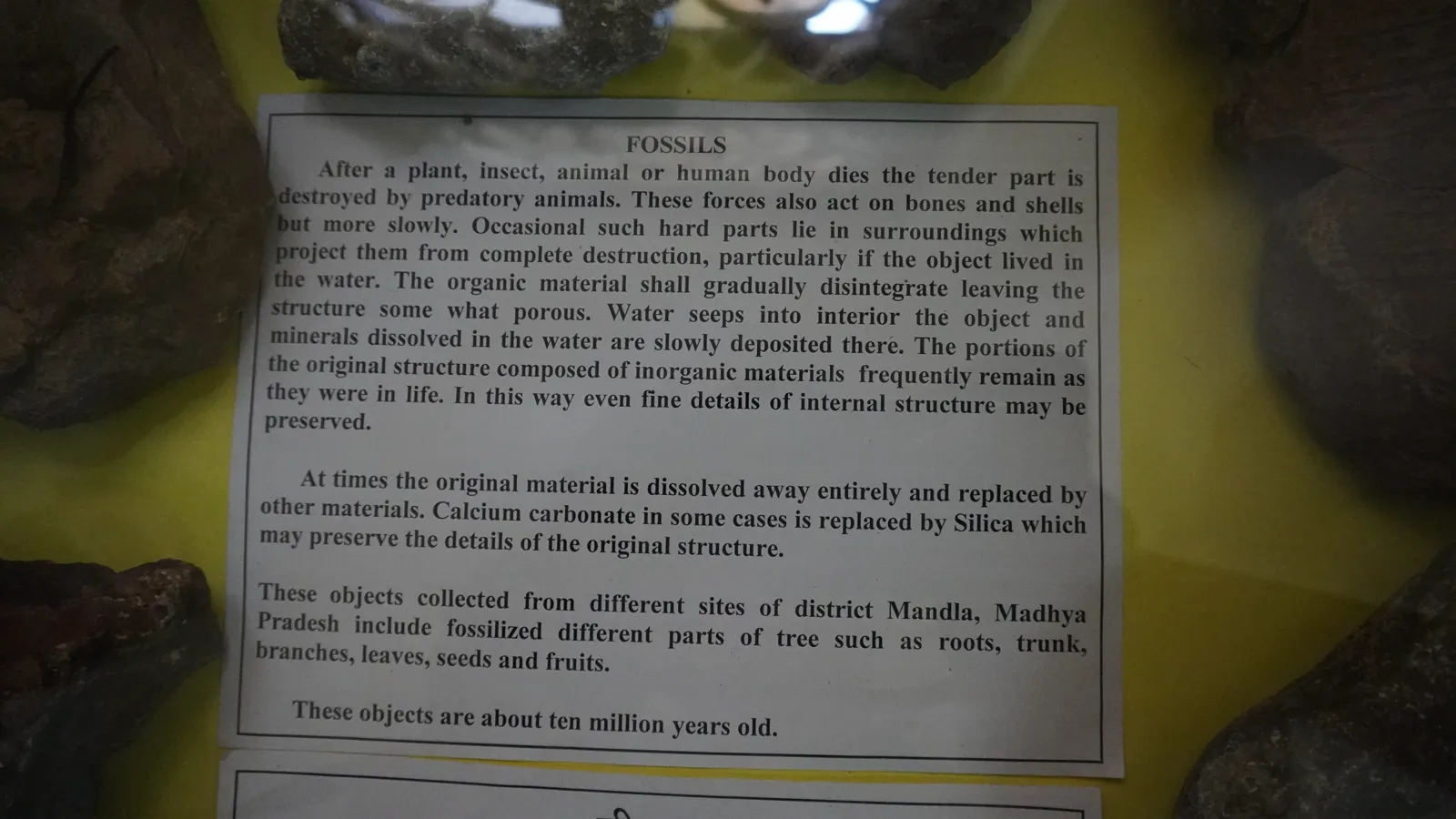
The fossil case — petrified wood from Mandla, about ten million years old.
Stand there for a second and let the numbers stack up. The bronze Ganesha is about 250 years old. The stone gods outside are around 1,000. The oldest coin is about 2,200. And this piece of wood is ten million years old — sitting in a glass box that half of Bhopal walks past every week without knowing.
About Birla Mandir & the Birla Museum, Bhopal
Birla Mandir, Bhopal (the Lakshmi Narayan Temple) is a Hindu temple on the Arera Hills, south of the Upper Lake, built by the Birla family and opened in 1964. Like other Birla temples across India, it is grand, clean and free to enter, and it gives sweeping views over the city. That is exactly why it is busy — and why the G.P. Birla Museum next door stays quiet.
- The temple: foundation stone laid 3 December 1960 (Dr K.N. Katju); consecrated 15 November 1964 (Pt Dwarka Prasad Mishra); built with the support of Ganga Prasad Birla via the Hindusthan Charity Trust. Main deities Lakshmi and Narayan (Vishnu), with shrines to Shiva, Durga and Hanuman.
- The museum: opened 1971; a division of the Birla Institute of Archaeology & Cultural Research. Open ~9:30 am–7:00 pm, closed Mondays; entry ₹10 (2021), photography charged separately.
- The collection: stone sculpture of the 7th–13th centuries from sites across MP (Samasgarh, Ashapuri and Varahakhed in Raisen, Hinglajgarh in Mandsaur, Bateshwar in Morena, Antra and Viratnagar in Shahdol); 18th-century bronzes; a coin gallery from ~200 BC to the 16th century; folk art; and petrified-wood fossils from Mandla, about ten million years old.
- Getting there: on the Arera Hills in central Bhopal, ~4–5 km from Bhopal Junction; easy by auto, taxi or bus. Allow 1.5–2 hours for both.
Verified July 2026 against the temple’s own foundation and consecration plaques, the G.P. Birla Museum entry ticket and gallery labels, and the museum’s fossils board — all photographed on our visit — cross-checked with Wikipedia (Lakshmi Narayan Temple, Bhopal) and Madhya Pradesh tourism sources. Dates, provenance sites, coin dynasties and the “about ten million years old” fossils note are taken from the museum’s own on-site signage. Entry fees reflect our December 2021 visit and may have changed. All photographs © bhopali.in / Manish Mahadware, from our morning at Birla Mandir and the Birla Museum on 7 December 2021.