Everyone thinks you have to leave Bhopal to find hills and quiet water. You don’t. When the monsoon comes, the whole city turns soft and green, and some of the prettiest evenings are ten or fifteen minutes from home. One rainy evening we carried our dinner from the kitchen, drove out to Kaliasot Dam, and got a small temple, a friendly dog, a sheet of grey water under green hills, and a long walk — all in about three hours, without ever leaving the city.
Bhopal is a hill station in the rains
People plan whole weekends to reach a hill station. But for a few months every year, Bhopal quietly becomes one. The rains wash the dust off everything, the hills around the lakes go a deep, wet green, low clouds sit on the water, and the evening air turns cool. You just have to step out and go to the water’s edge. So we did the simplest thing — packed food from home, and drove to Kaliasot Dam as the light went soft. No tickets, no planning, no long road.
A little temple by the gates — and Bhola
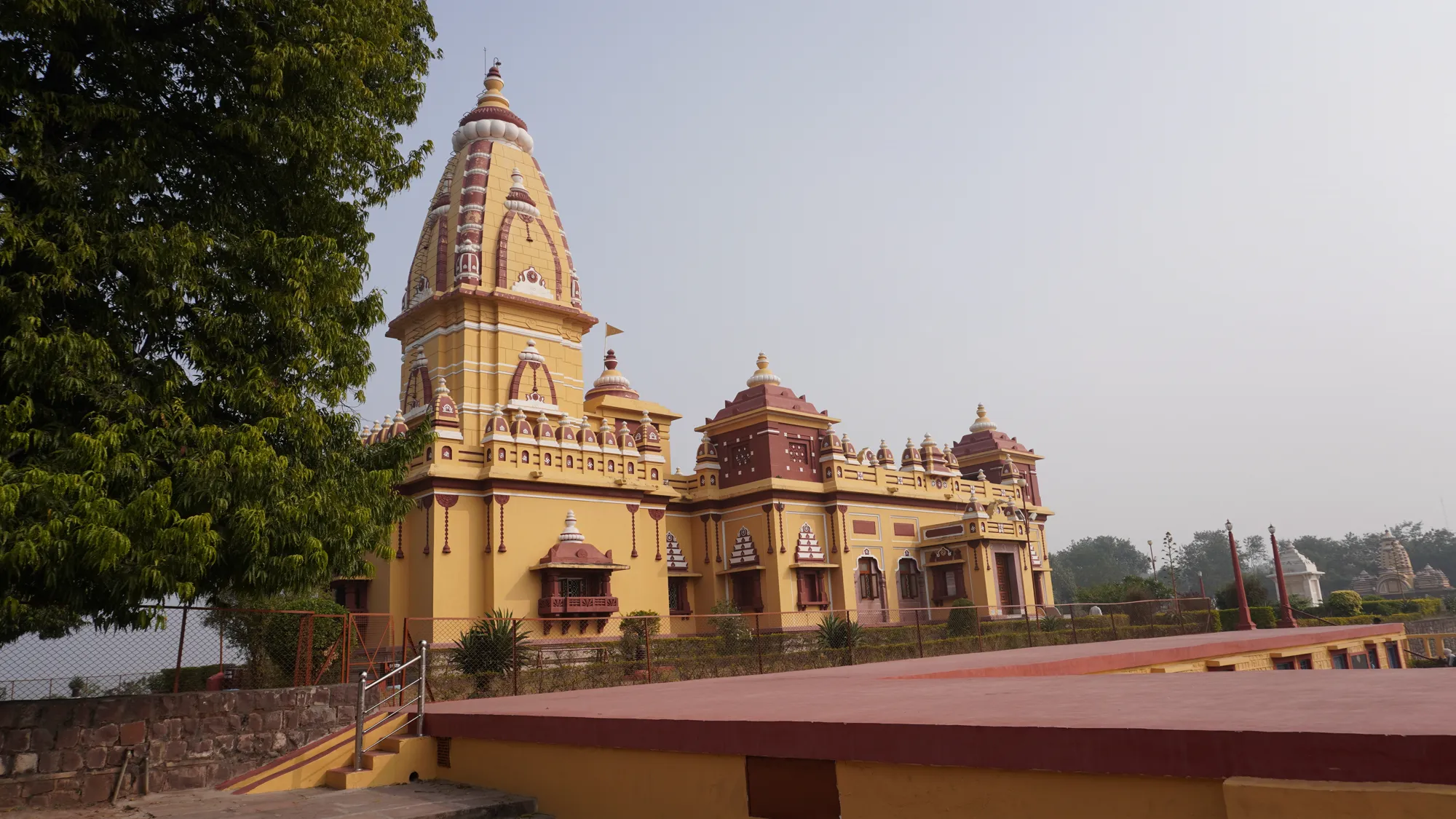
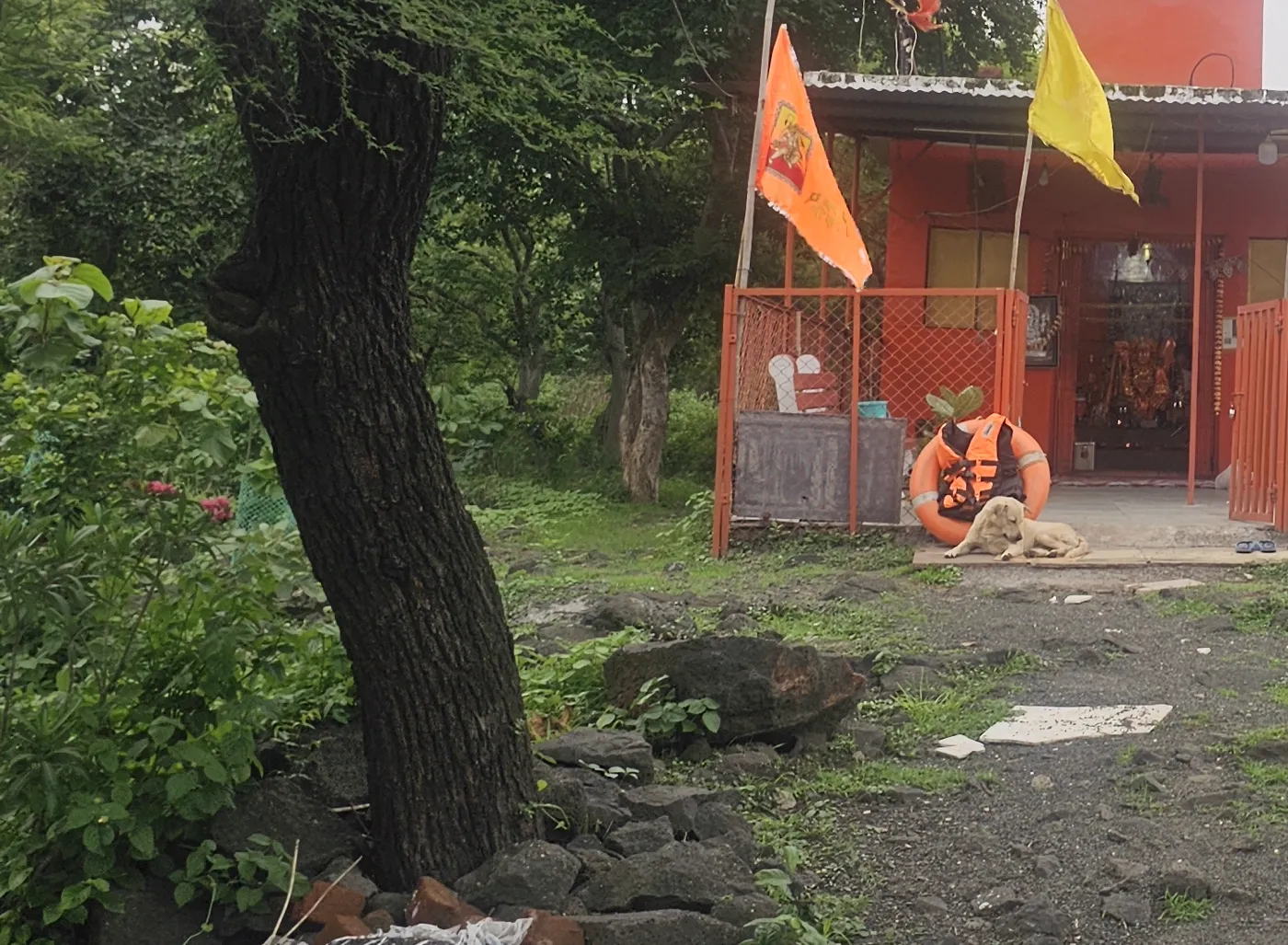
We stopped first at the small temple near the dam gates — a bright saffron shrine on the bank, its flags snapping in the wet wind, the water spread out grey behind it. And there we met Bhola: a calm, cream-coloured dog stretched out by the temple’s orange life-ring as if he owned the place. The priest (pandit ji) feeds him, and he has clearly decided the temple is home. He let us sit with him a while. Little friendships like that are half the reason to go somewhere slow.
The “Kaliasote Project”: a dam with a very old story
Walk up to the bridge over the gates and you meet an old green gate with faded letters: KALIASOTE PROJECT. It is easy to walk past, but it marks something big. Kaliasot Dam is an earthen dam about 34 metres high and over a kilometre long, with 13 gates that open to let the monsoon through. It was built to irrigate around 10,000 hectares of farmland in Bhopal and Raisen, and it is one of the city’s water sources.
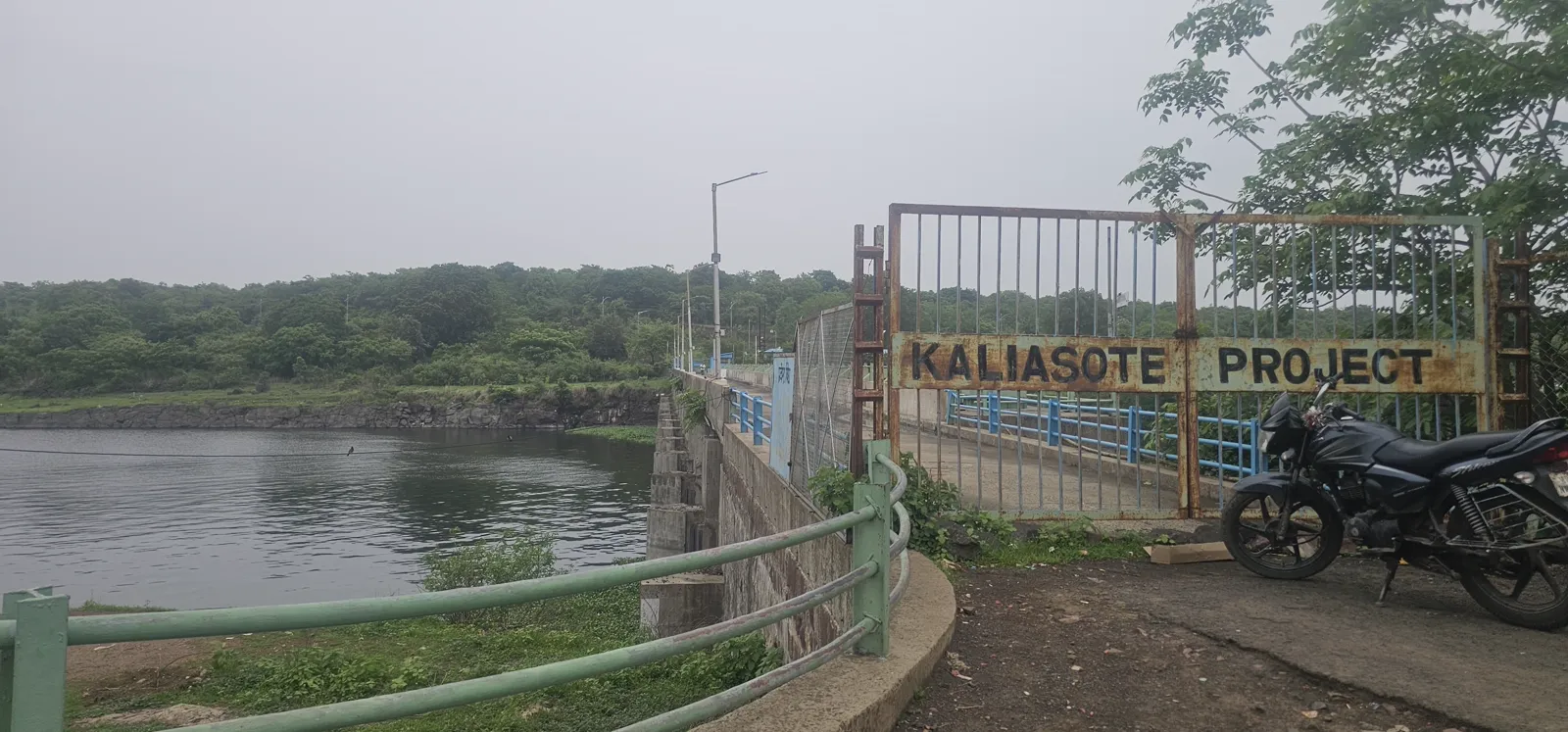
The river — the Kalia Sot — is said to be named after Kalia Gond, a Gond tribesman who, the old story goes, helped the 11th-century king Raja Bhoj find the natural water lines while he was building the great lakes of Bhopal. So the name you read on a rusty gate reaches almost a thousand years back. In the dry months the river is thin and shy; in the monsoon it fills, the gates matter, and the long line of the barrage looks its best.
The open ground — and a Sankranti I won’t forget
Past the temple there is a wide open ground beside the water. On a normal evening it is where people park, walk and let children run. But I know this ground in another season too. In Makar Sankranti, the kite-flying days of January, this whole stretch fills with people and the sky fills with kites. I came here one Sankranti to fly kites — and went home with a twisted, fractured ankle. The ground gives you an evening; it also, once, gave me a cast to remember it by.
Green hills, grey water
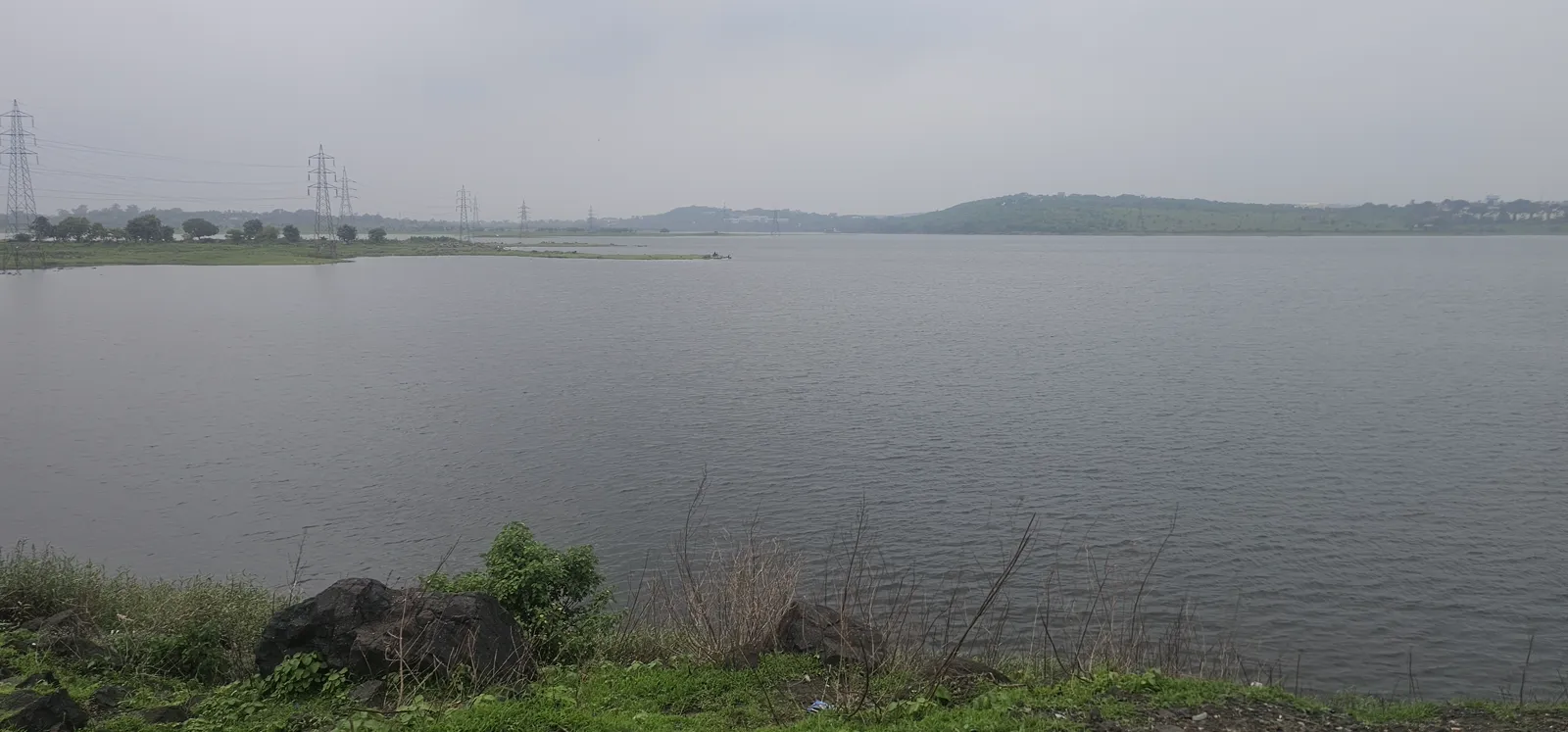
And then you just look at the water. In the monsoon Kaliasot is wide and calm, the far bank a soft line of green hills, low land-spits reaching into the reservoir, a single fishing boat sliding across. Clouds hang low. The city feels a long way away, though it is right behind you. This is the “hill station” feeling people drive hundreds of kilometres for — and here it is, on an ordinary evening, inside Bhopal.
The walking side, at dusk
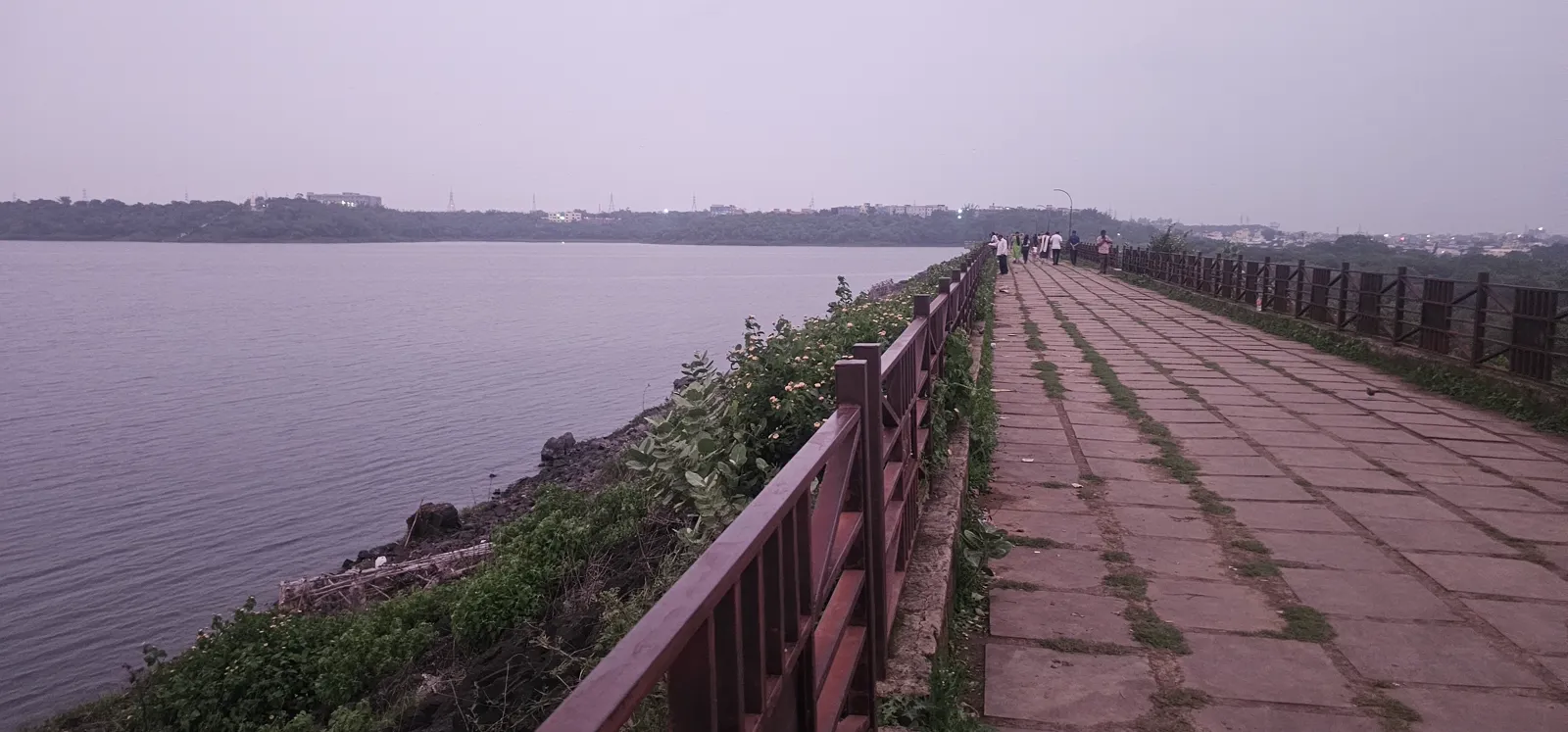
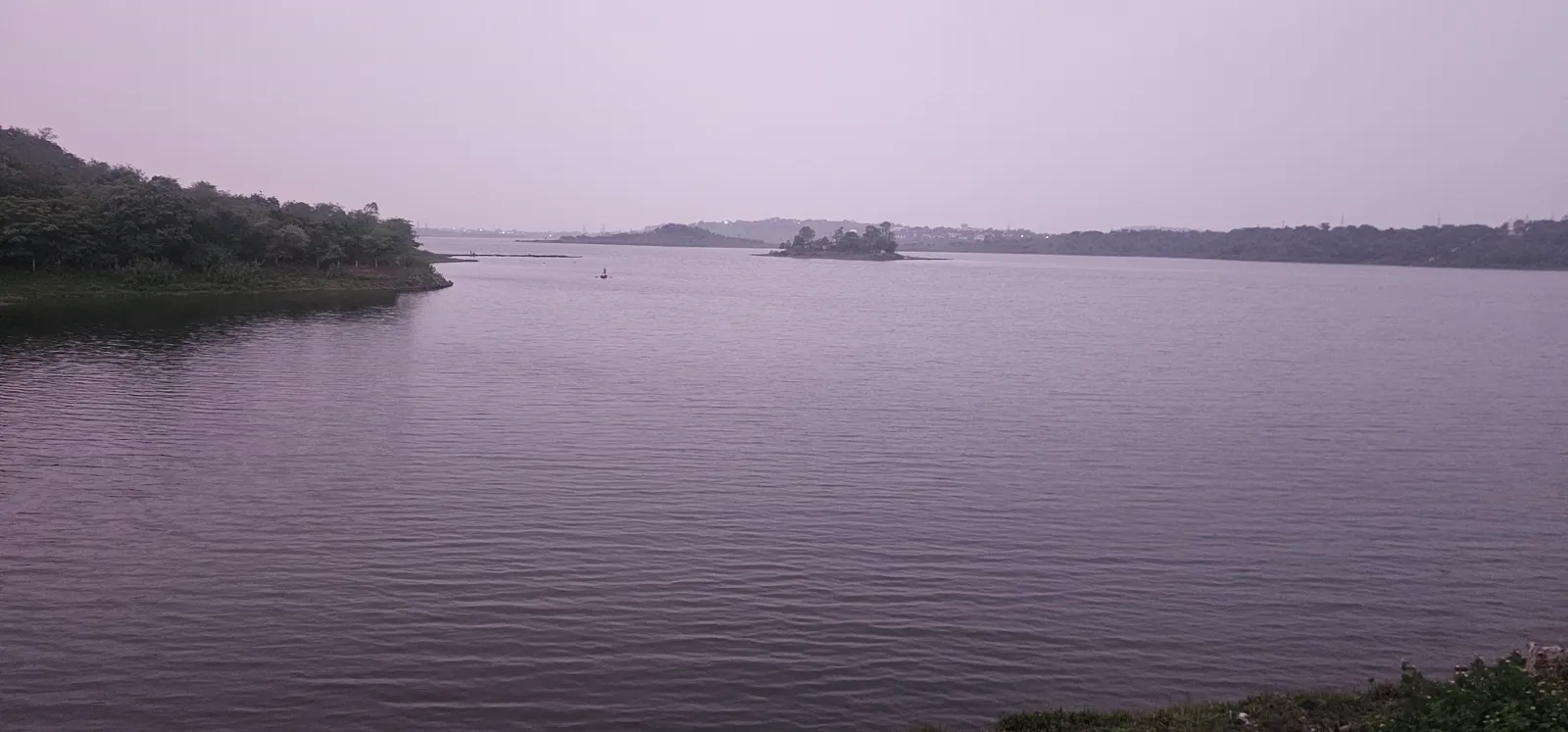
As the light turned, we drove a little further around to the other side — the part everyone means when they say they are “going to Kaliasot for a walk.” Here a long brick promenade runs out along the water, past a row of tea and snack stalls and parked cars. At dusk the sky went a soft mauve, the water turned the same colour, and people came out to walk off their day. We joined them, dinner already eaten, in no hurry to leave.
So many evenings like this, inside the city
The best part of Kaliasot is not Kaliasot. It is what it tells you about Bhopal: that a 2–3 hour evening escape is always within reach, no highway required. On the city’s green southern edge alone there is Kerwa Dam, Bhadbhada, the Upper Lake (Bhojtal) and Van Vihar — and Kaliasot itself. Carry food from home, pick a dam, and let the rains do the rest.
- Where: southern edge of Bhopal, on the Kaliasot river below the Upper Lake, near Chuna Bhatti / Kolar; part of the green Kerwa–Kaliasot belt.
- The dam: earthen, ~34.25 m high, ~1,080 m long, 13 radial gates; irrigates ~10,000 hectares in Bhopal & Raisen; a city water source.
- The name: the Kalia Sot river, tied to Raja Bhoj’s 11th-century lake-building and named for Kalia Gond.
- Best time: monsoon (July–September) for the green, full look; October–February evenings are cool and clear.
- Do: walk the promenade, visit the temple, watch the boats, fly kites in January, picnic with food from home.
Verified July 2026. Dam dimensions (about 34.25 m high, 1,080 m long, 13 radial gates) and the ~10,000-hectare irrigation figure are from published sources on Kaliasot Dam; the Raja Bhoj and Kalia Gond history is from Bhopal city portals and the “KALIASOTE PROJECT” gate we photographed on site. The route (temple gates → ground → walking side) is from our own GPS-tagged photos. All photographs and video © bhopali.in / Manish Mahadware, from our evening at Kaliasot Dam on 9 July 2026. Please keep these places clean and safe — carry your litter back, and mind the water’s edge.