Some places you stumble on. This one we had to earn. We’d never even heard of Narsinghgarh — a friend of ours, the sort who reads history for fun, had told us about a vast, forgotten palace-fort a couple of hours from Bhopal, slowly returning to the earth. So, one cool November morning, two families set out to find it. The fort, it turned out, would not make it easy.
What waited at the top was worth every wrong turn: a 340-year-old, 300-room palace, abandoned and magnificent, looking out over a silver lake — a place almost nobody visits, and that is exactly the point.
Getting there · the hard way
The road fought back
We left Bhopal early — parents, kids, the lot — stopped once for tea, and made good time on the highway for the ~110 km out to Narsinghgarh. The drive is easy and pretty, right up until it isn’t. As you near the fort the road narrows, and we did the classic thing: asked the locals, who waved us cheerfully into the village. The lanes shrank, the turns tightened — and then the road simply ran out, blocked by a stretch of construction, heaped with gravel and rubble our car could not climb.

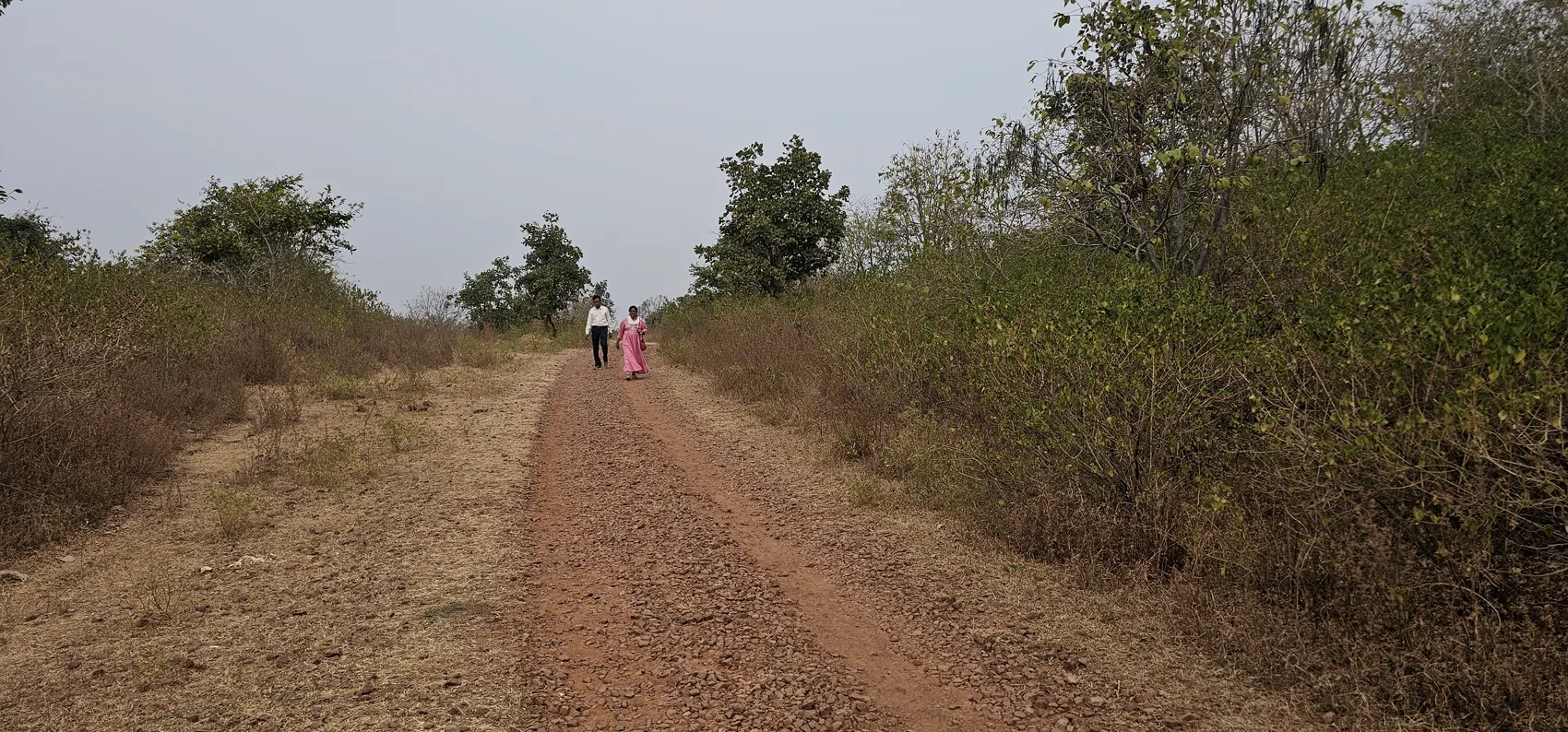
The rough, gravelly ground where the road gave up.
So we reversed — slowly, carefully — all the way back out of those narrow lanes to the main road, losing the better part of an hour. From there the proper approach road, far wider, finally pointed us at the hill. The last stretch is a steep, gravel-strewn climb, and our front-wheel-drive cars weren’t going to make the gate. So we did what you do: parked below, and walked up.
First sight
There it is, on the hill
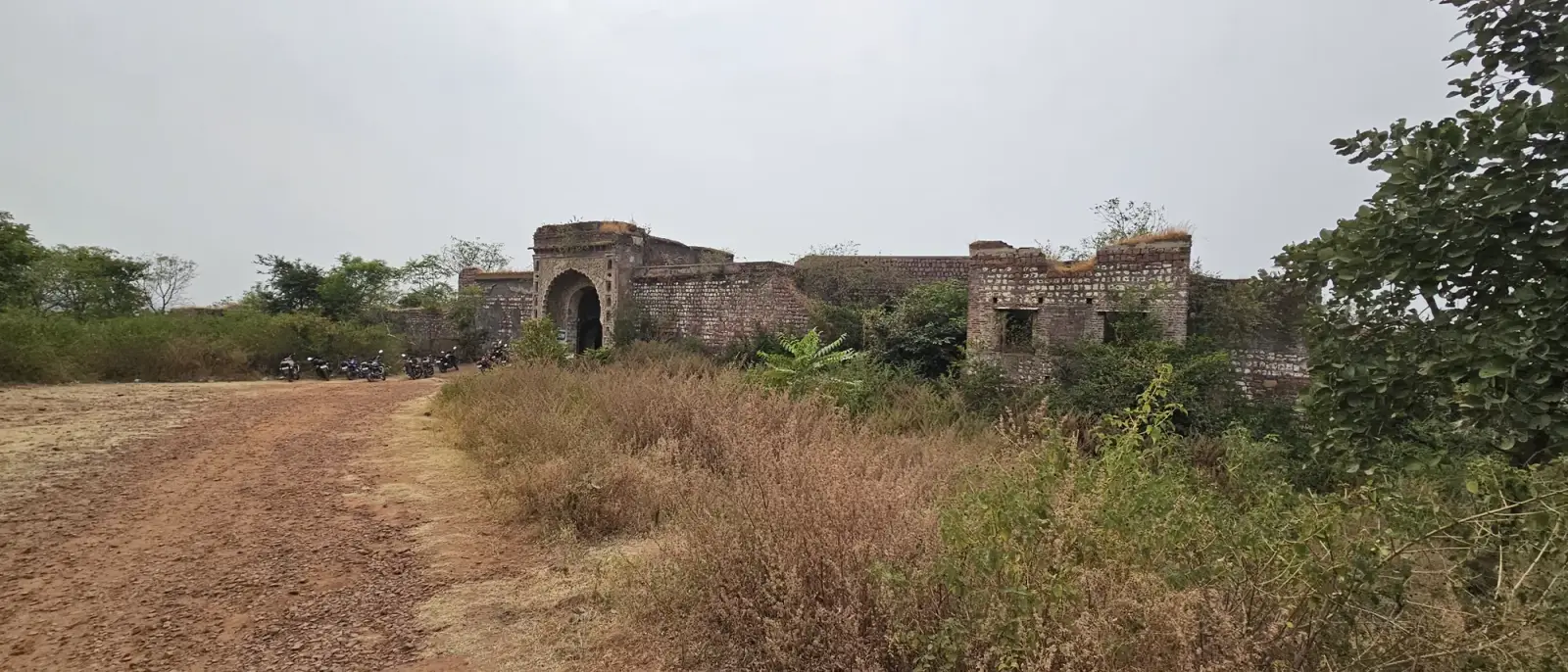
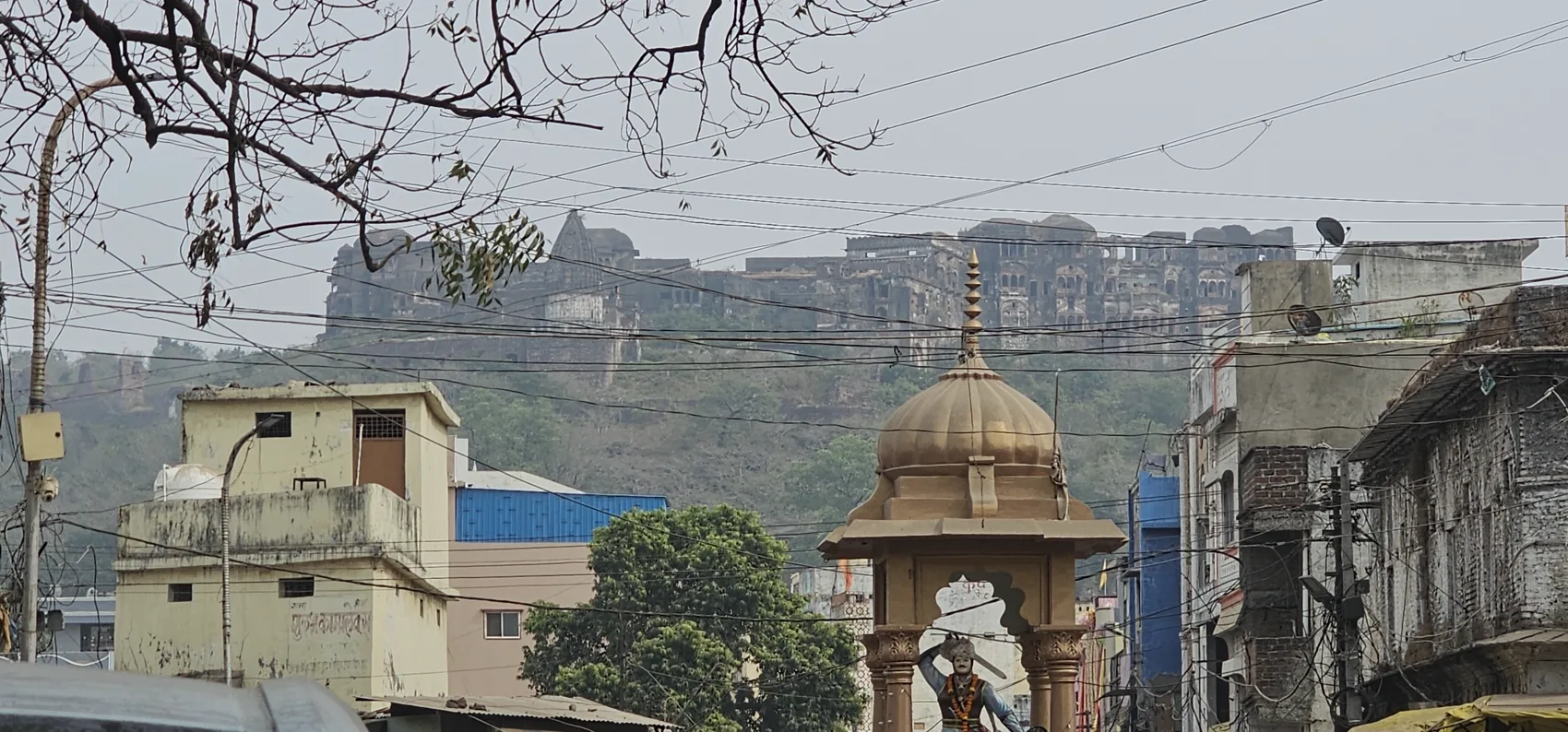
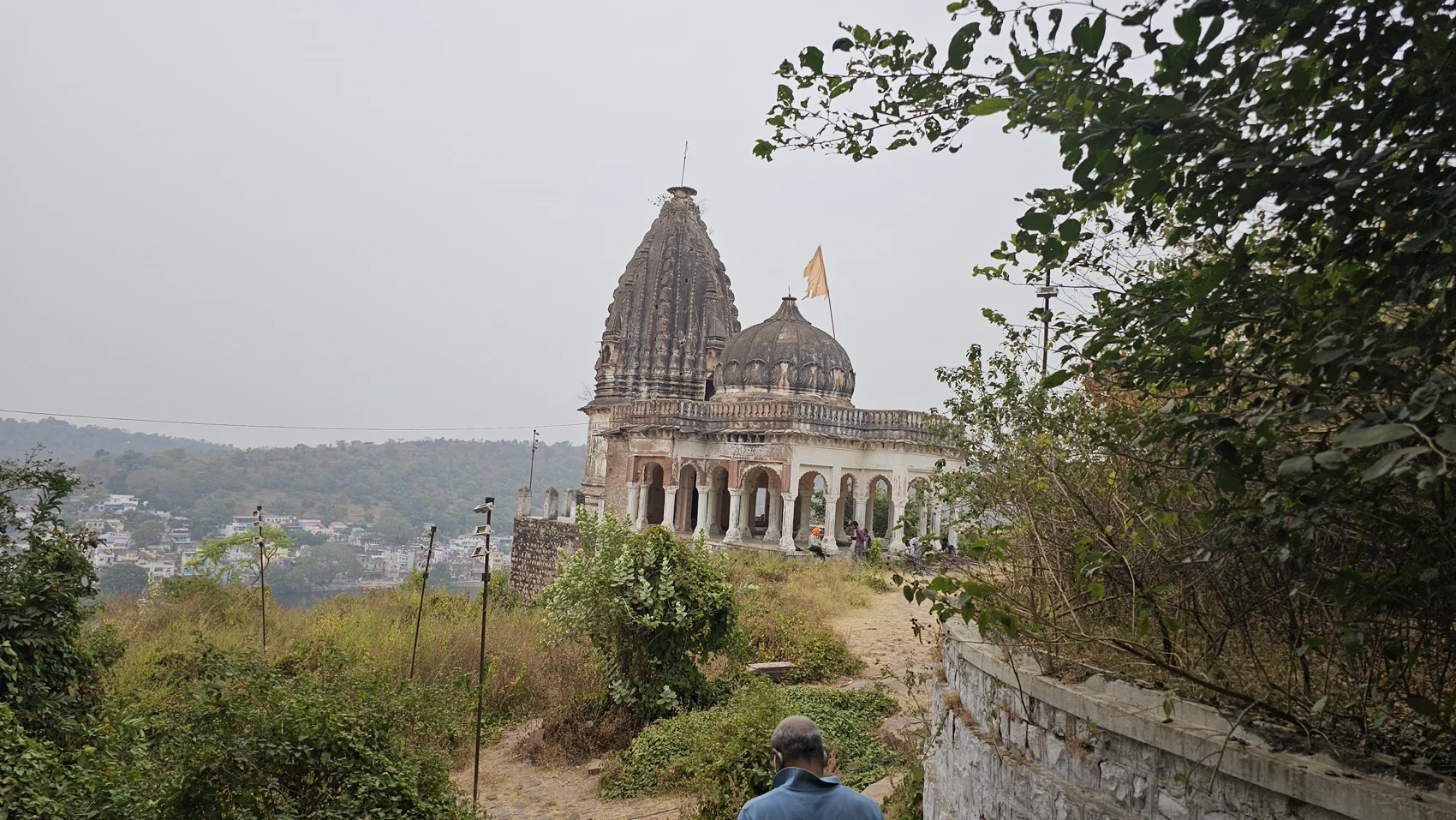
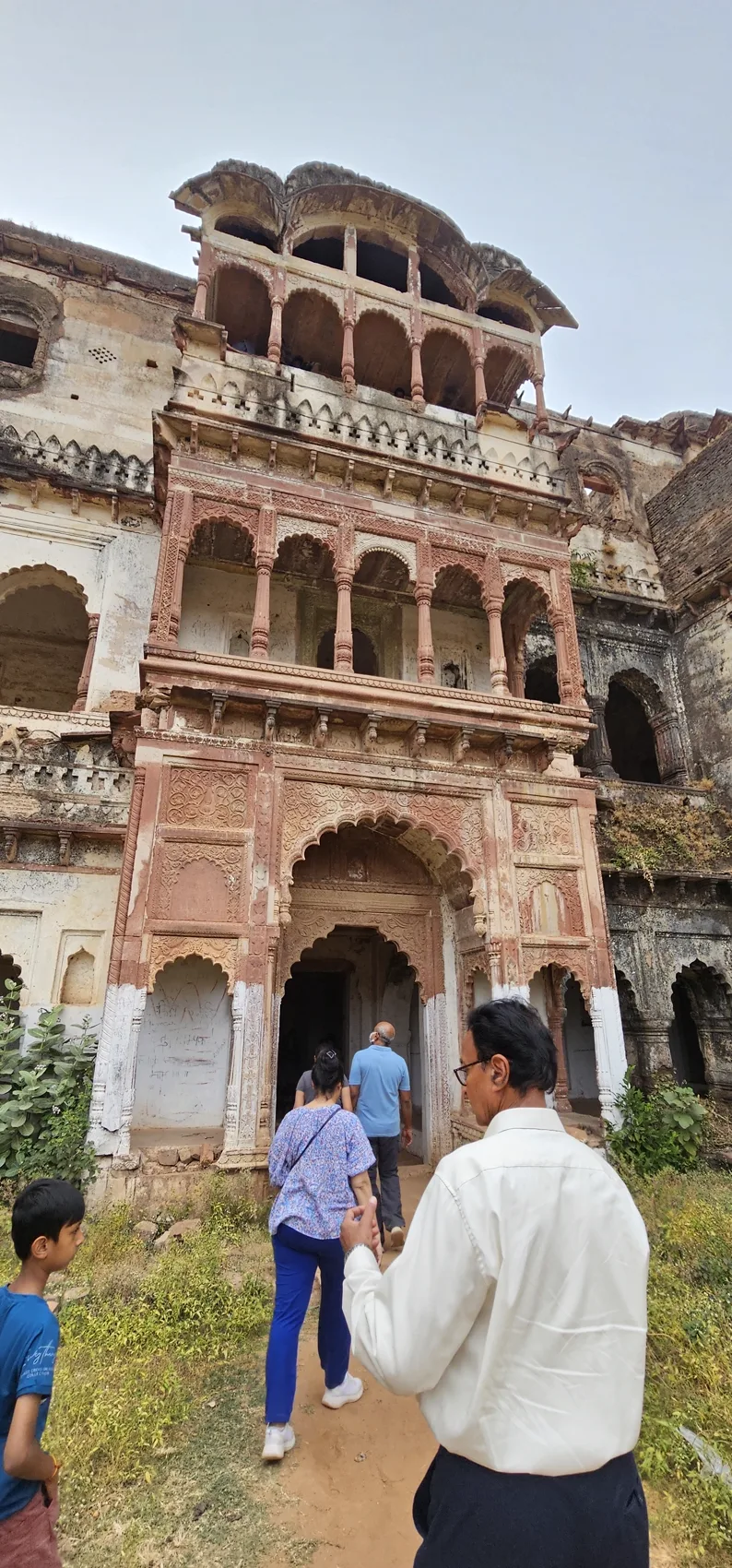
And then you see it — a long, broken crown of domes and walls along the ridge, rising over the town and a wide lake. From the streets below it looks almost like a backdrop; up close, on foot along the red-dirt path, it turns very real, and very large.
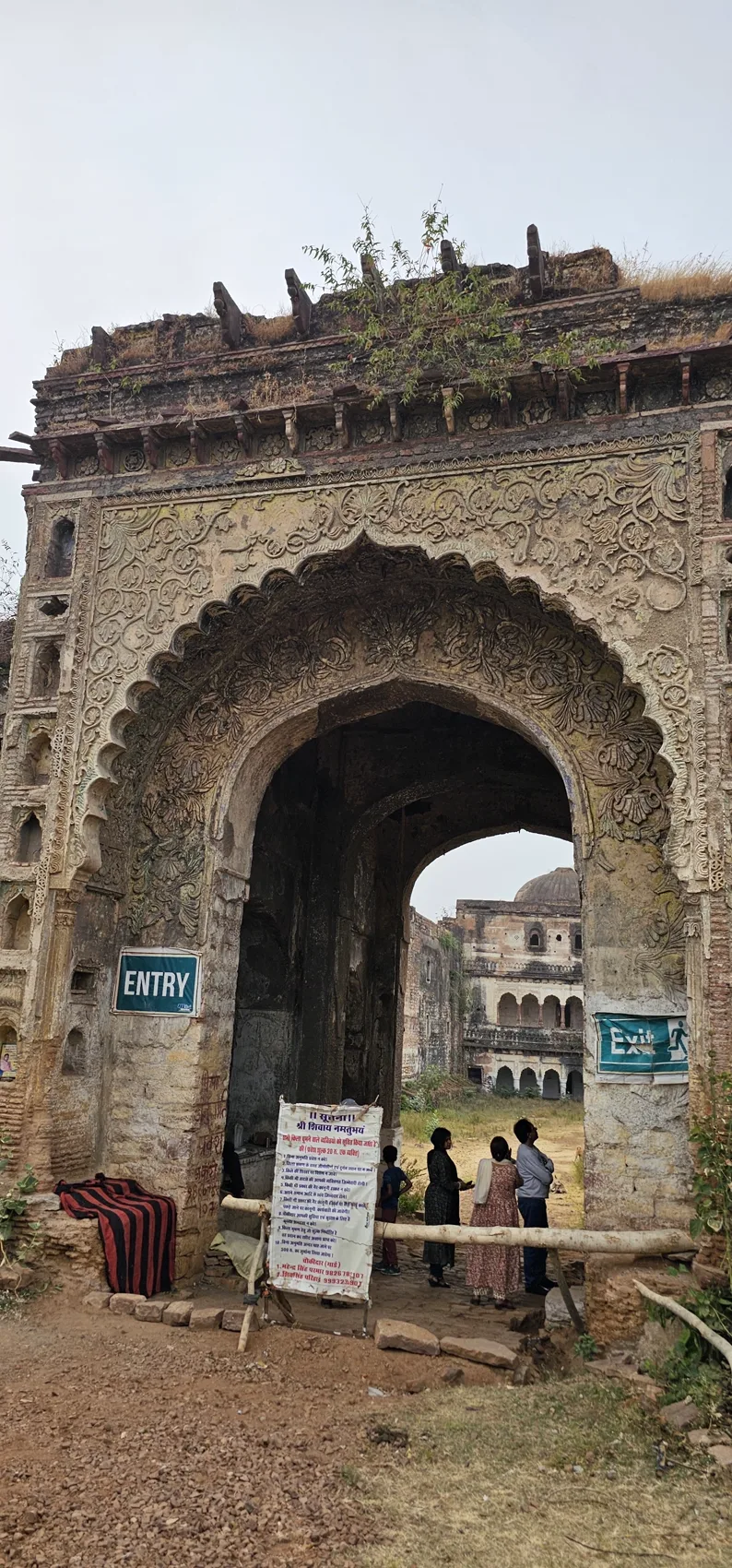
The great arched gateway still stands, scuffed and weathered, with a hand-painted “ENTRY” board the only nod to visitors. There is no ticket counter. There is, mostly, no one at all.
Inside the ruin
A palace built to be lived in
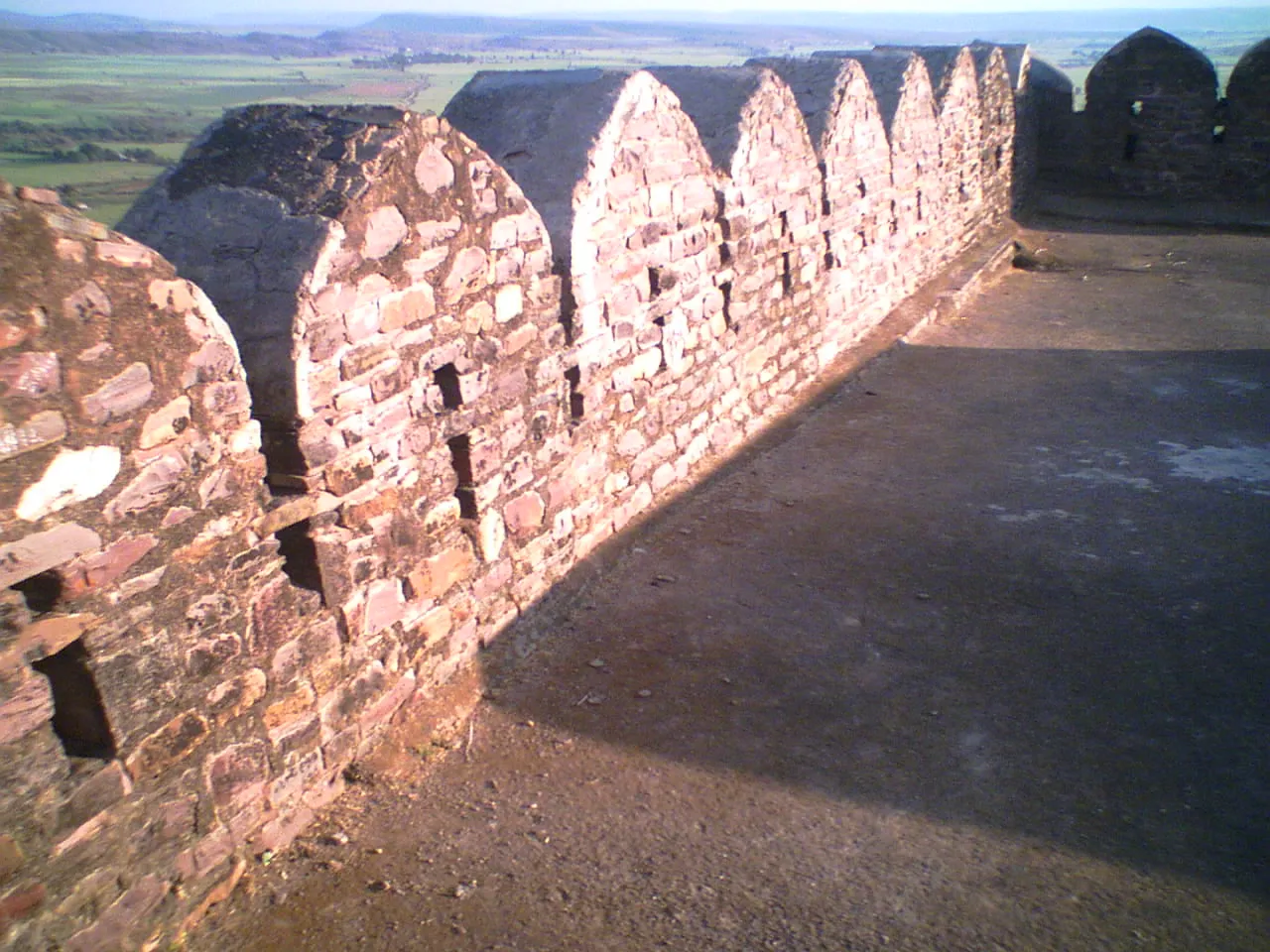
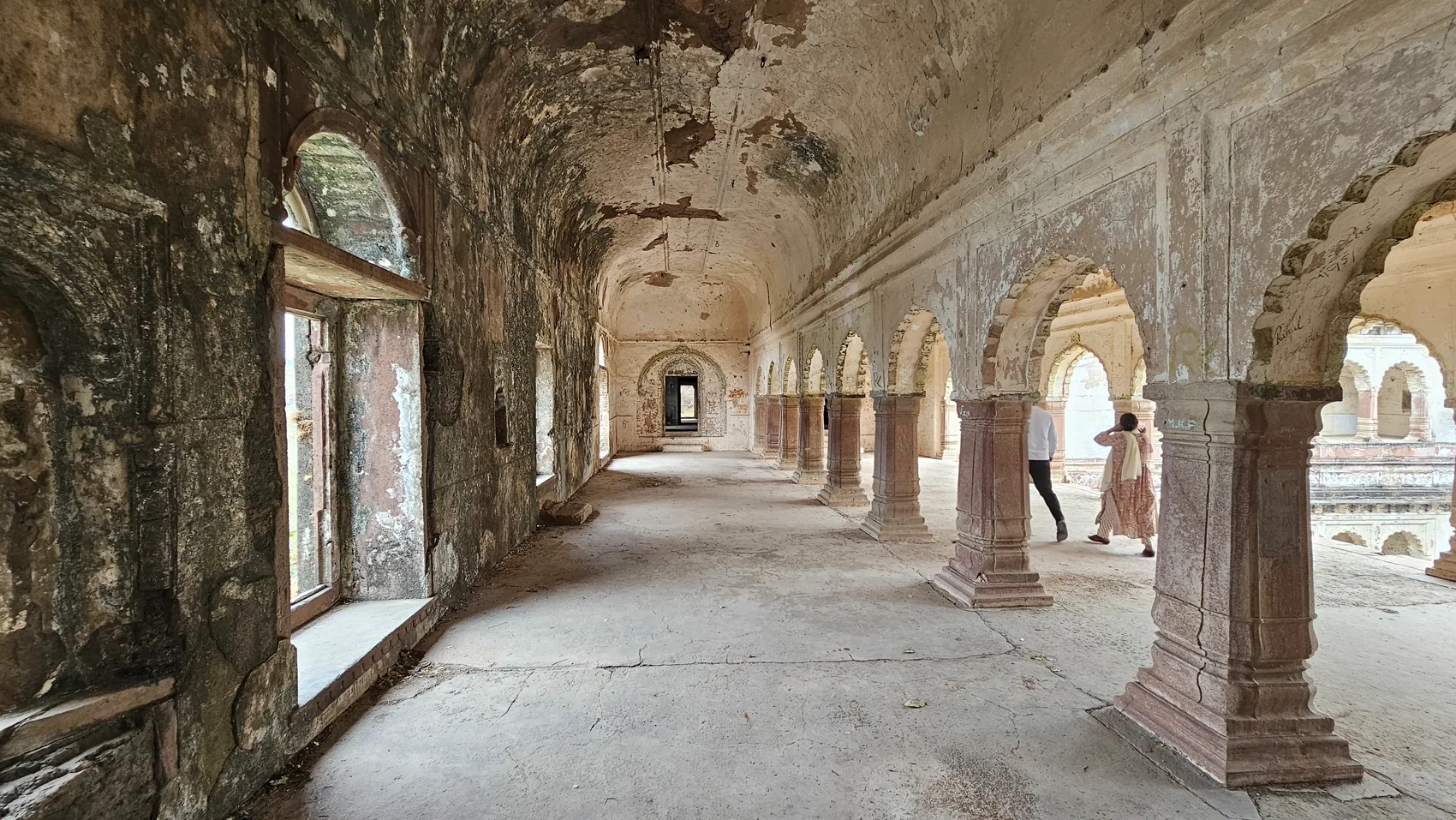
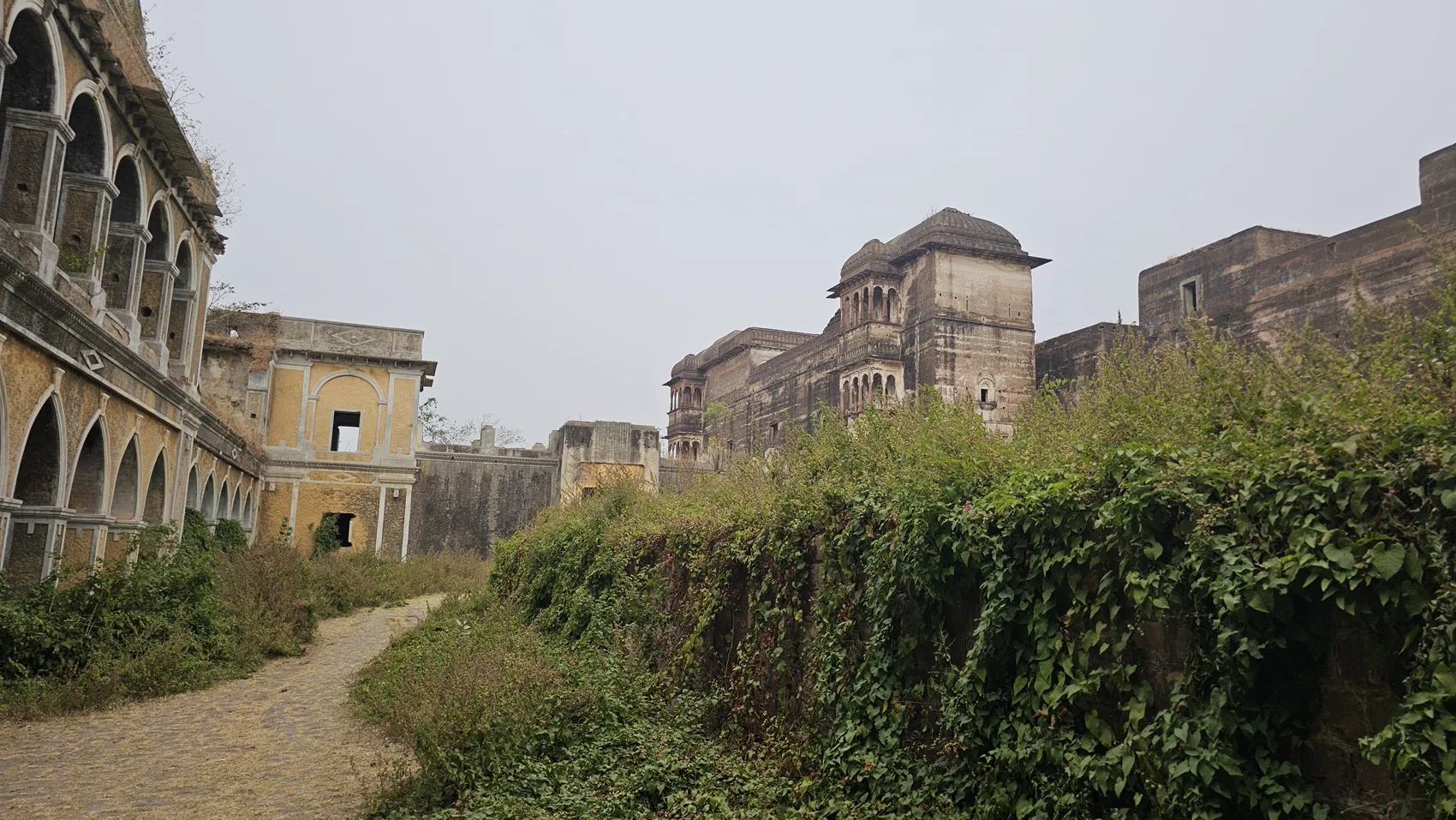
Step through, and the scale lands on you. This was no mere watchtower-fort: it is a palace, with some 304 rooms, four great halls, twelve courtyards and sixty-odd verandas spread across the hilltop in Rajput-Mughal sandstone. Founded in 1681 by Rawat Paras Ram, an Umat-clan Rajput who broke away from neighbouring Rajgarh to start his own little kingdom, it was named for Narsingh — the man-lion avatar of Vishnu.

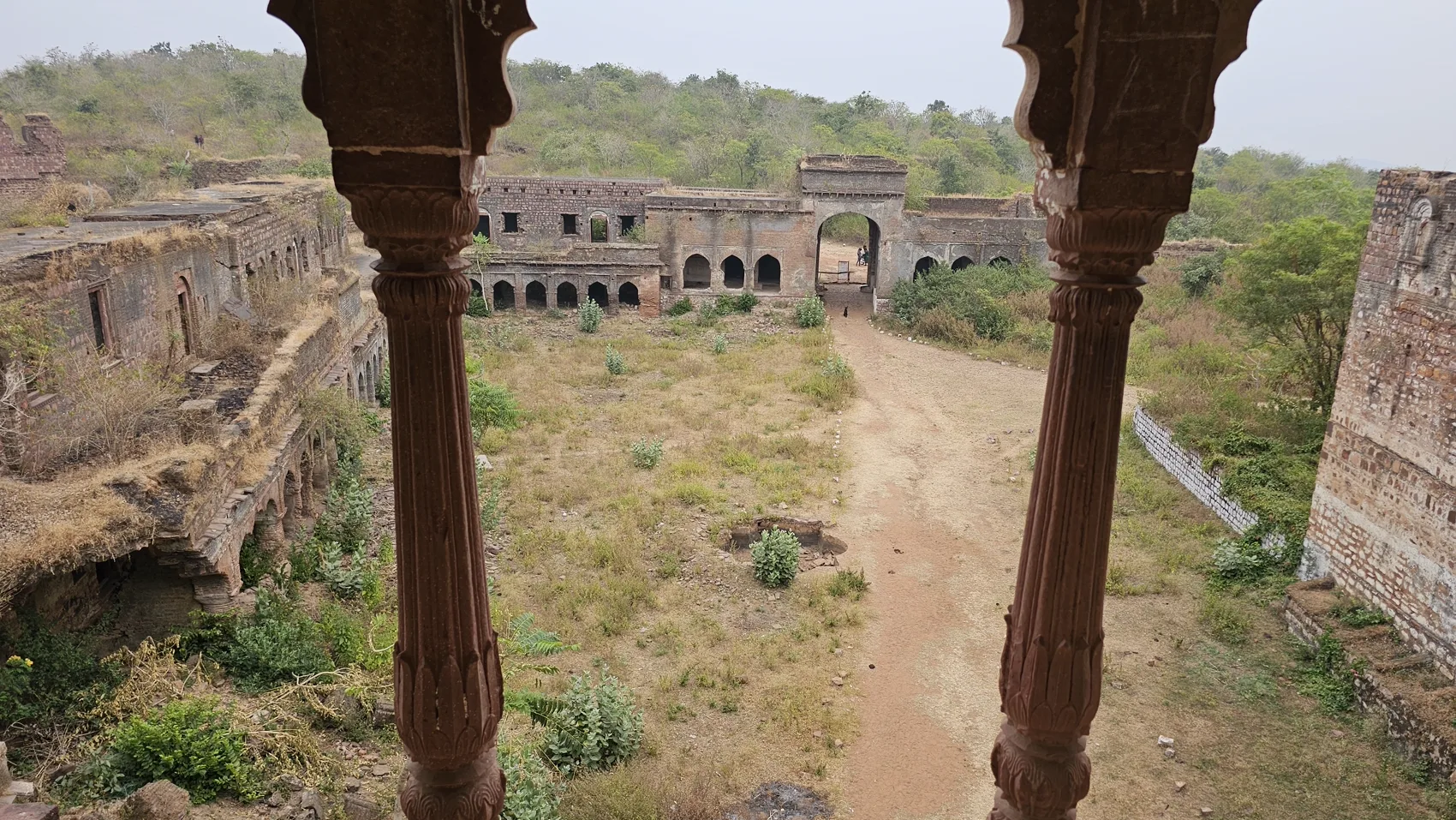
A window opens onto courtyard after ruined courtyard.

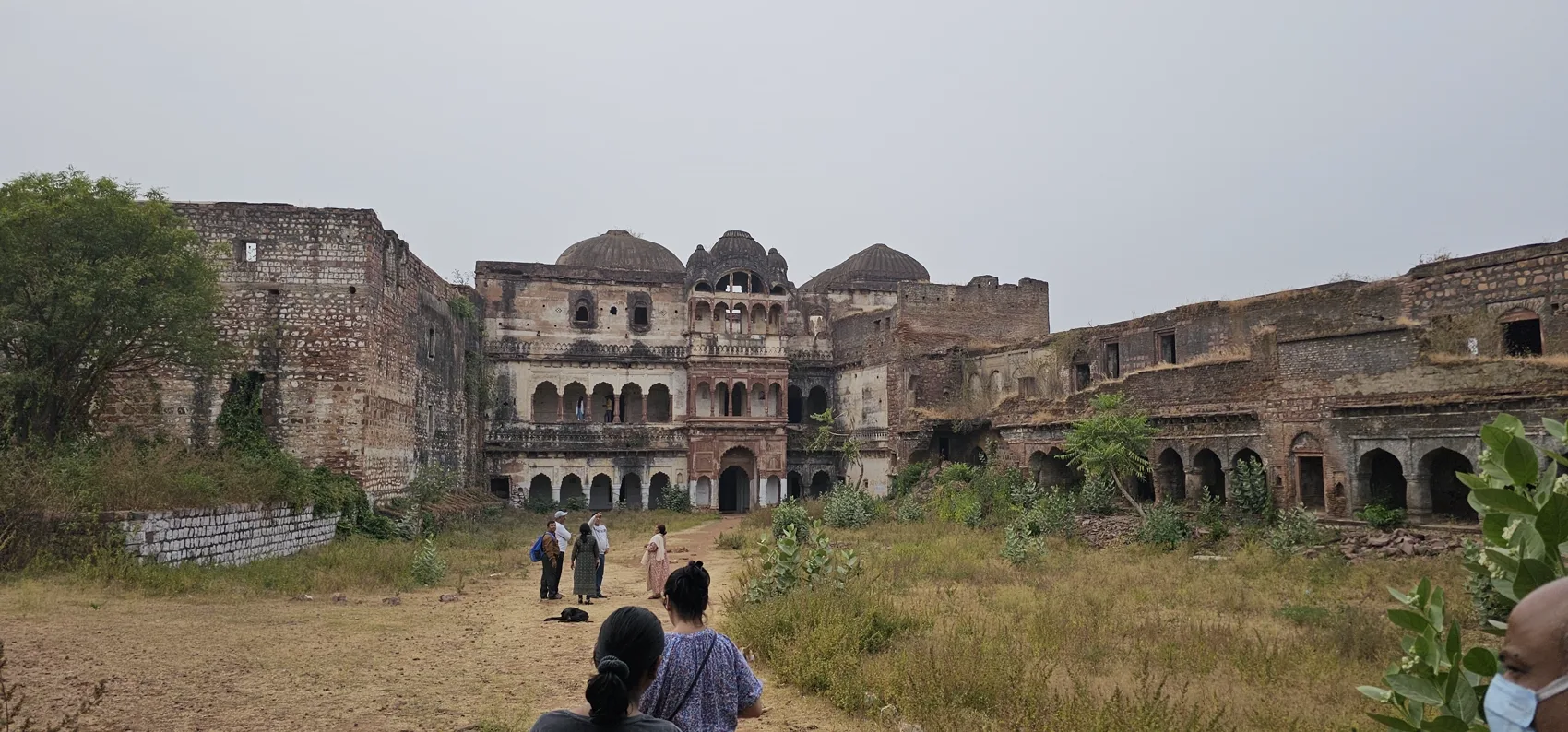
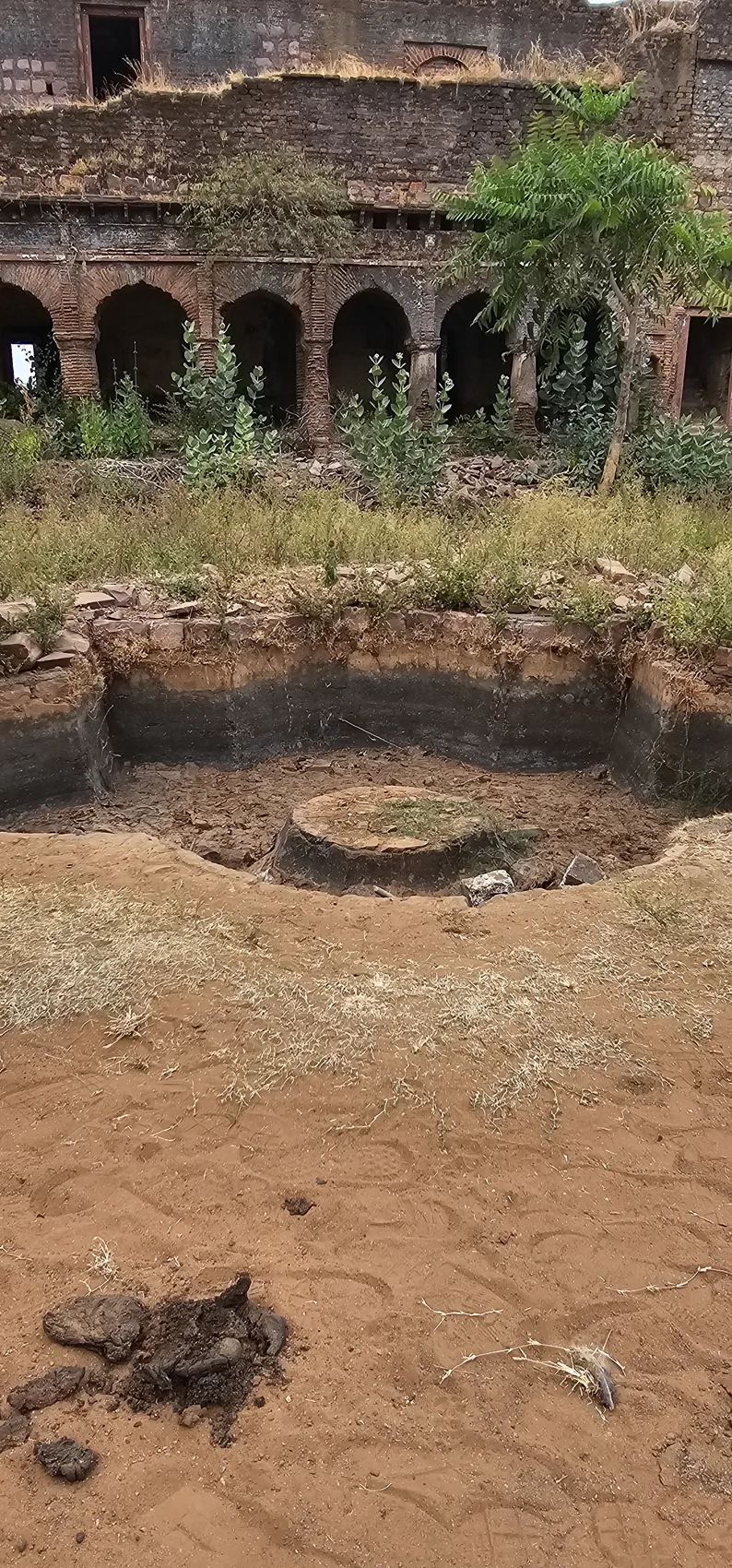
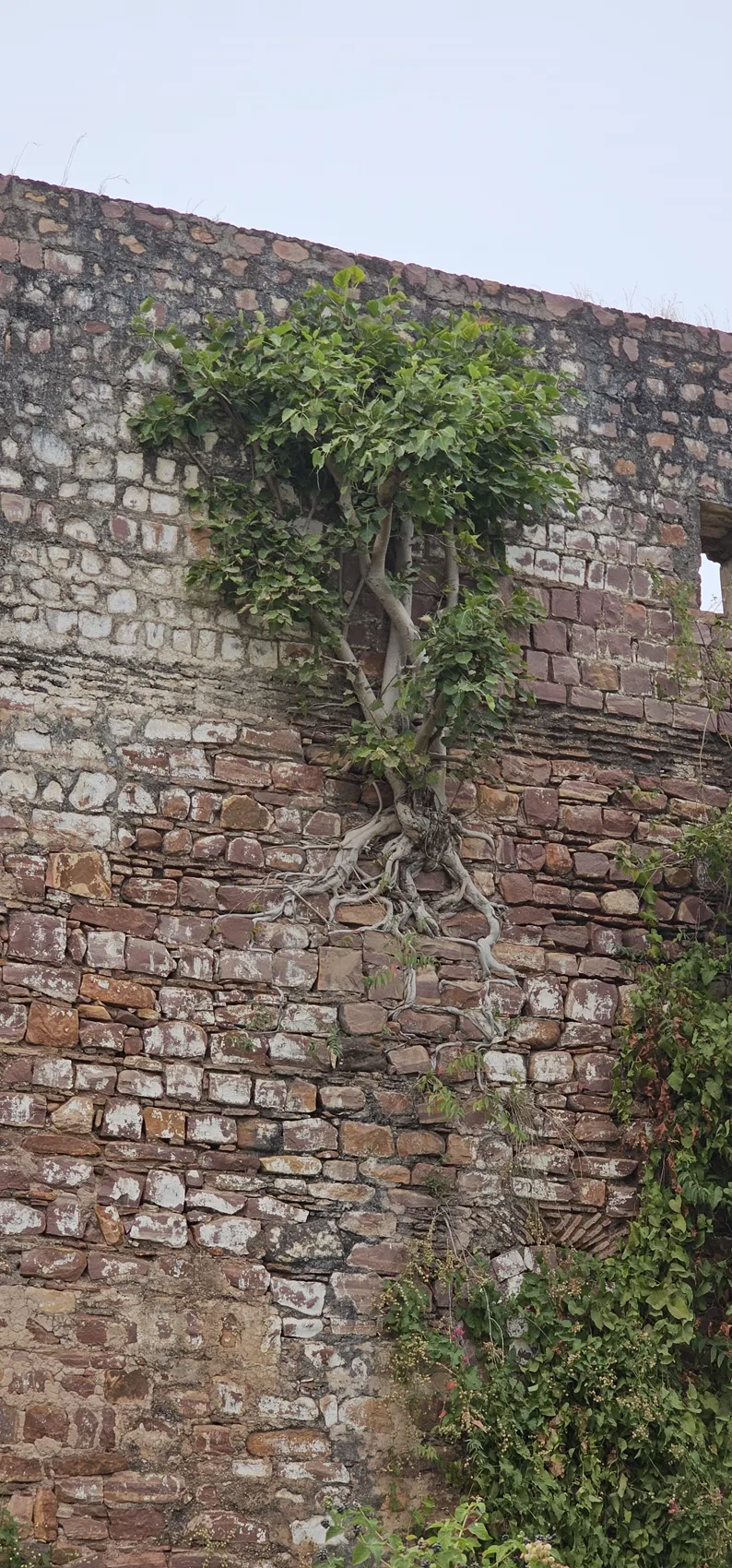
You wander through it almost alone — long arched halls where durbars were once held, a deep stone stepwell, carved colonnades, a tree bursting straight out of a rampart wall. Grand and gentle and sad all at once.
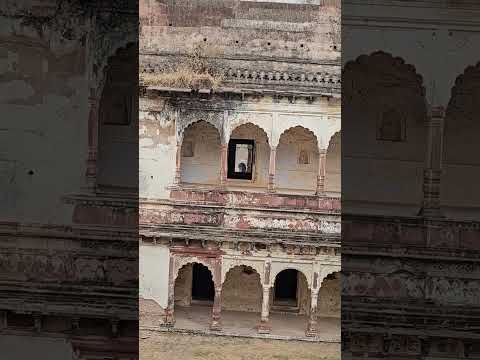
A pan across the carved jharokhas of the palace front.
Here’s the detail that stays with you: the rulers of Narsinghgarh were said to be the only royals in Madhya Pradesh or Rajasthan who actually lived inside their fort — right up to 1962, when the last Maharaja moved down to a house in the town. For nearly three centuries this hill was a home. Then, one year, everyone left.
The view
The lake below, the “Kashmir of Malwa”
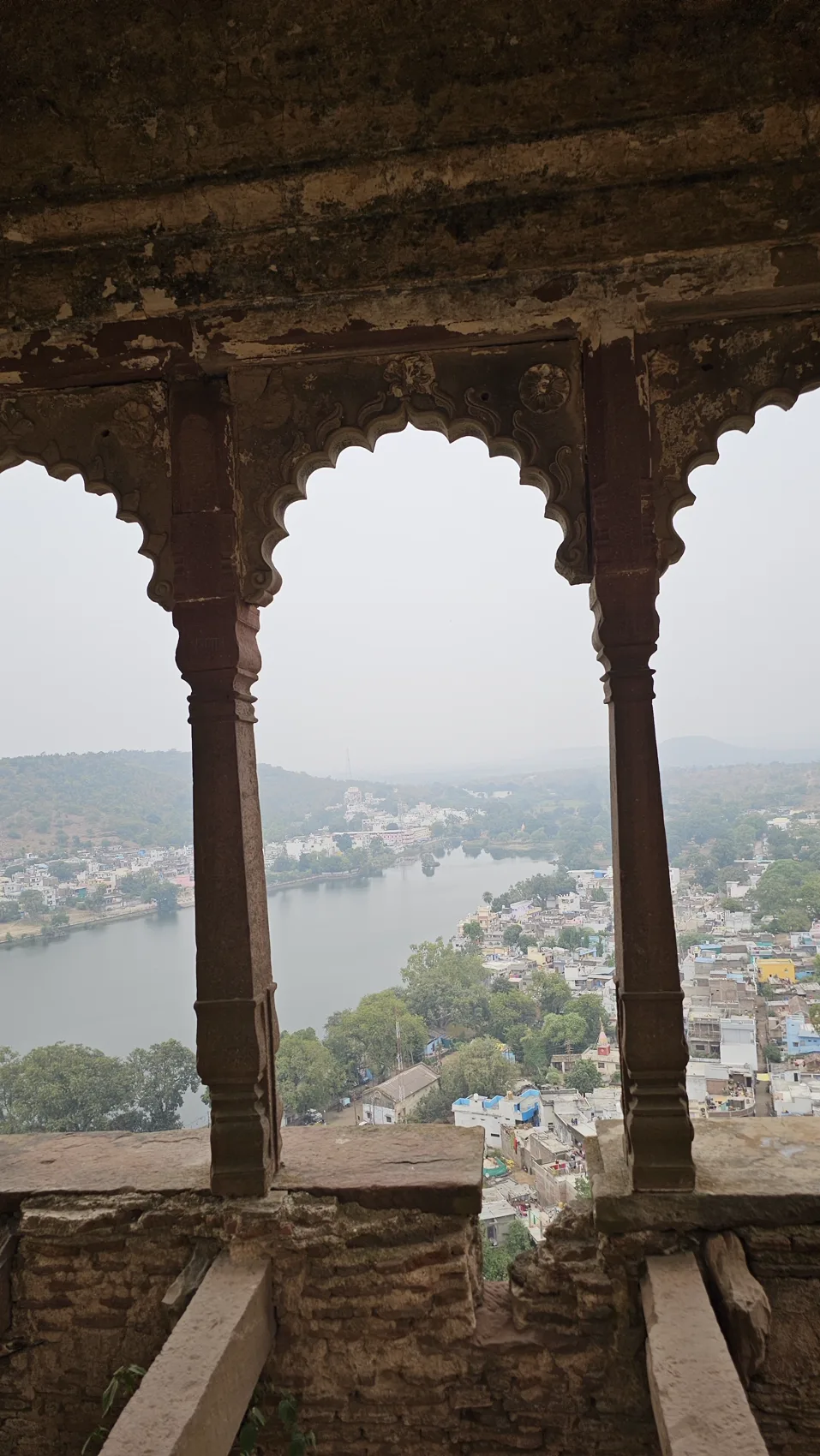
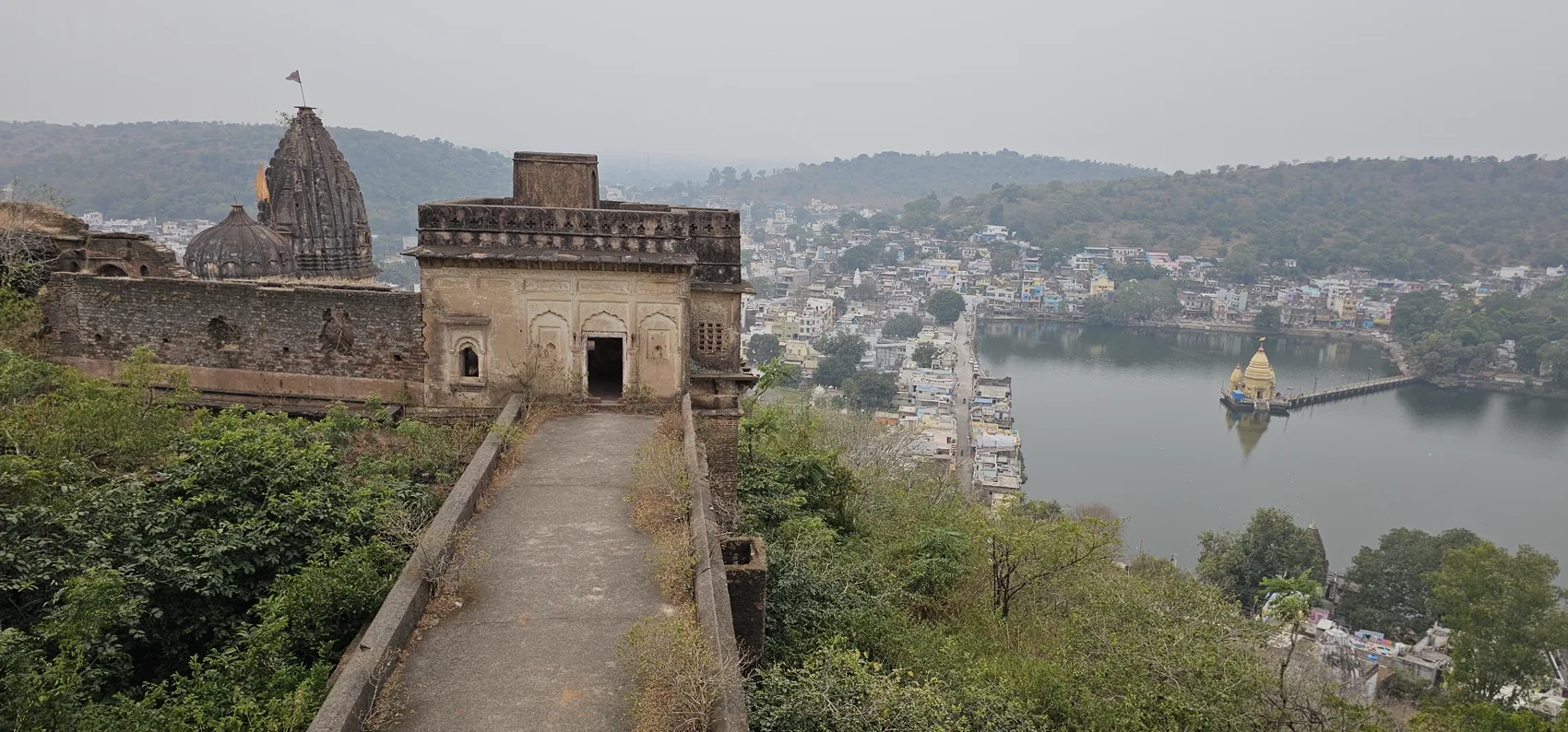
Walk to the edge, lean through one of the carved jharokha windows, and the reward is the whole reason kings built here: Parasram Sagar, the lake, lying mirror-still below the ramparts, the town spilling down to its shore and green hills rolling away beyond. Locals call this lake-and-hill country “the Kashmir of Malwa,” and from up here you forgive them the hyperbole.
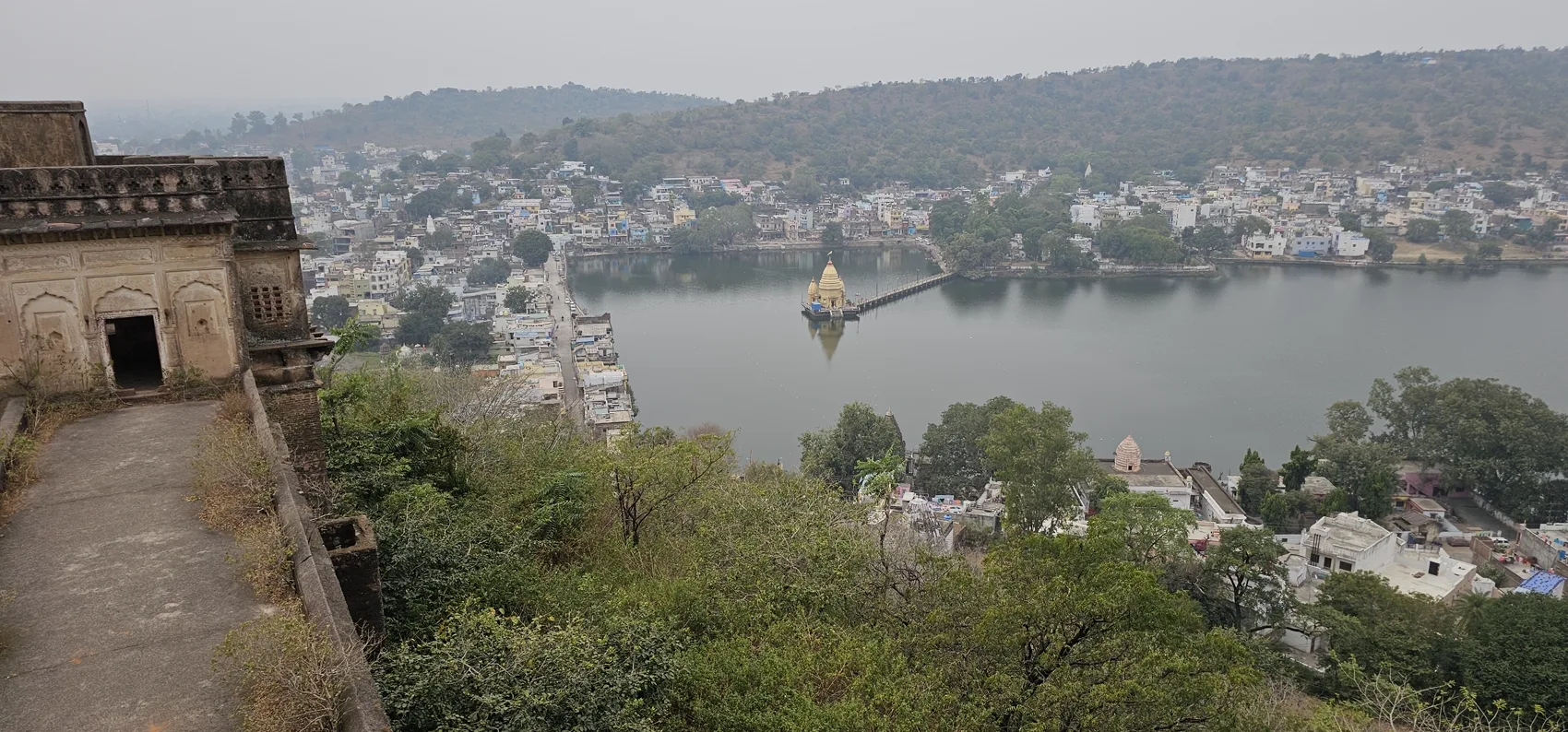

The hills and haze of Malwa from the fort.
The best part
A temple, and food cooked in the open
By late afternoon we picked our way back down to the cars, and on the way home stopped at a small hillside Ganesh temple — Mandir Shri Ganesh Chowk — for the part the kids had been waiting for. We’d brought our cooking kit, and right there, in the open by the temple, we made a proper meal: khichdi, and soft home-made fulkas, eaten together as the light went gold. After a day of forgotten kings, there is nothing quite like hot food, your own family, and a little temple bell.
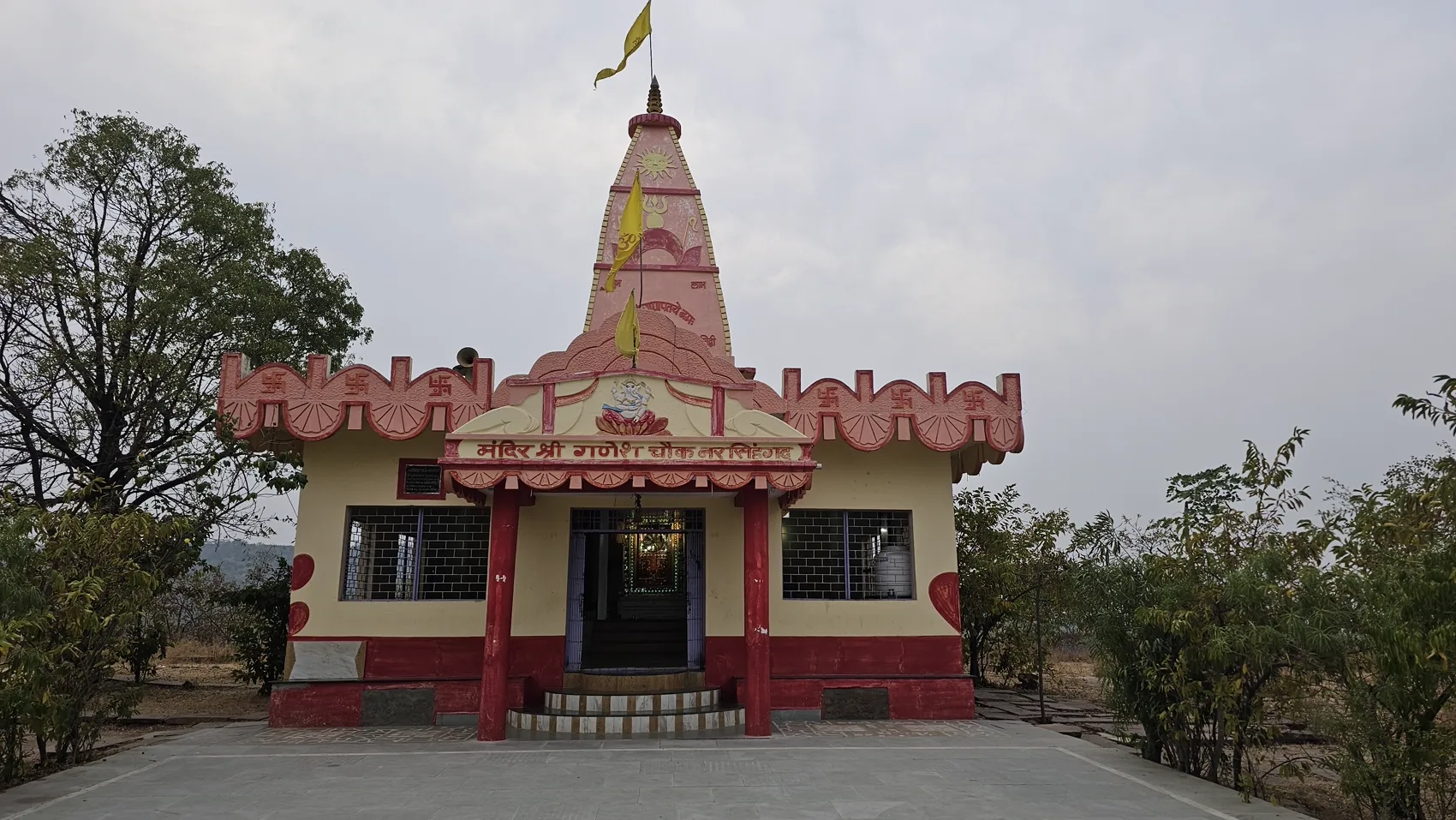
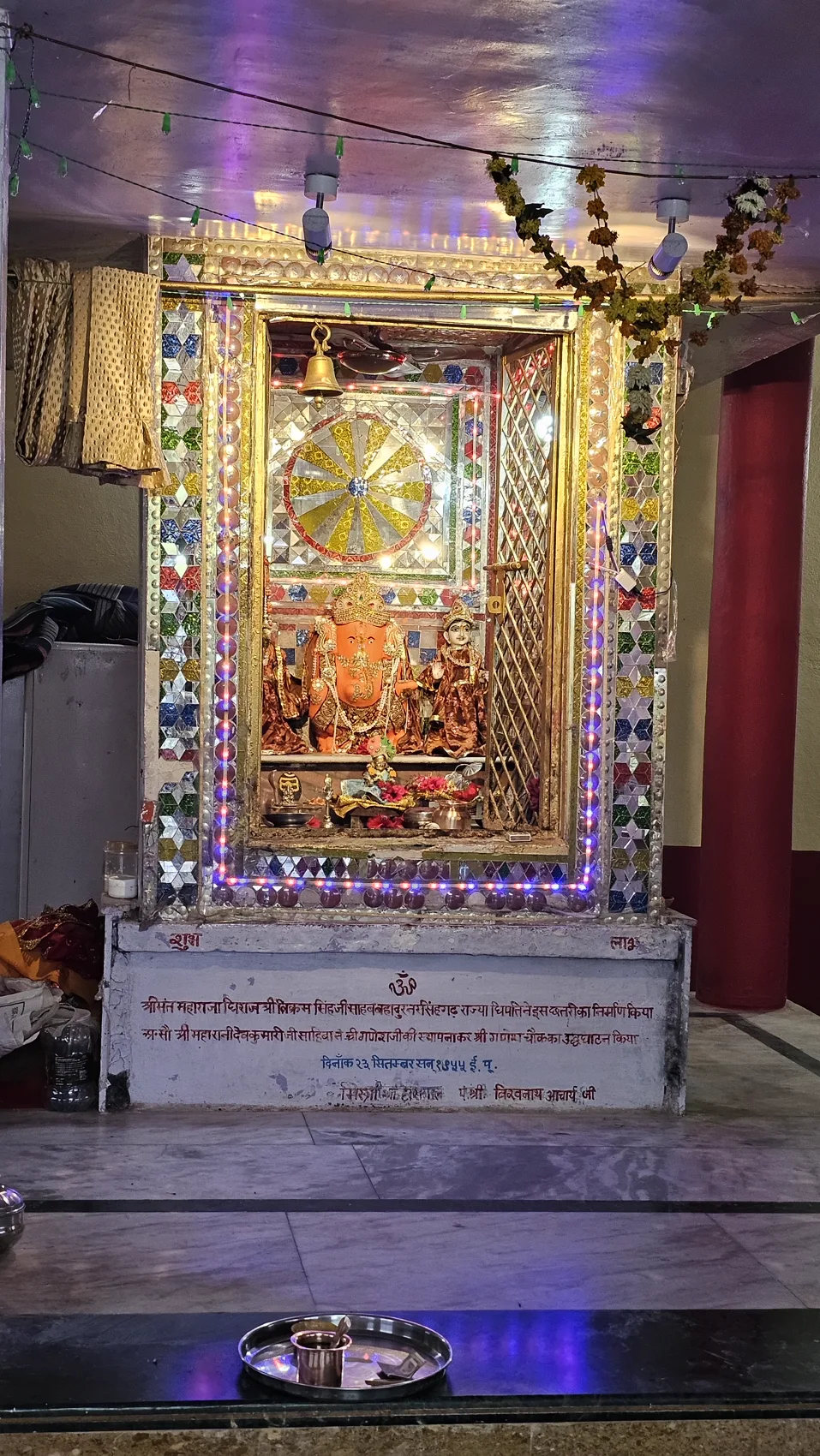
A day of forgotten kings — and then hot khichdi, your own family, and a temple bell.
Then we packed up and drove back to Bhopal in the dark, tired and happy, the way the best day-trips end. We’d gone looking for a fort the maps forget, and found one of the most quietly magnificent places in Madhya Pradesh — thanks, as ever, to the friend who keeps dragging us off to the good ones.
All photographs © bhopali.in, from our own visit on 26 November 2023. Narsinghgarh Fort is an unprotected, decaying heritage site — please tread gently and take nothing but pictures.