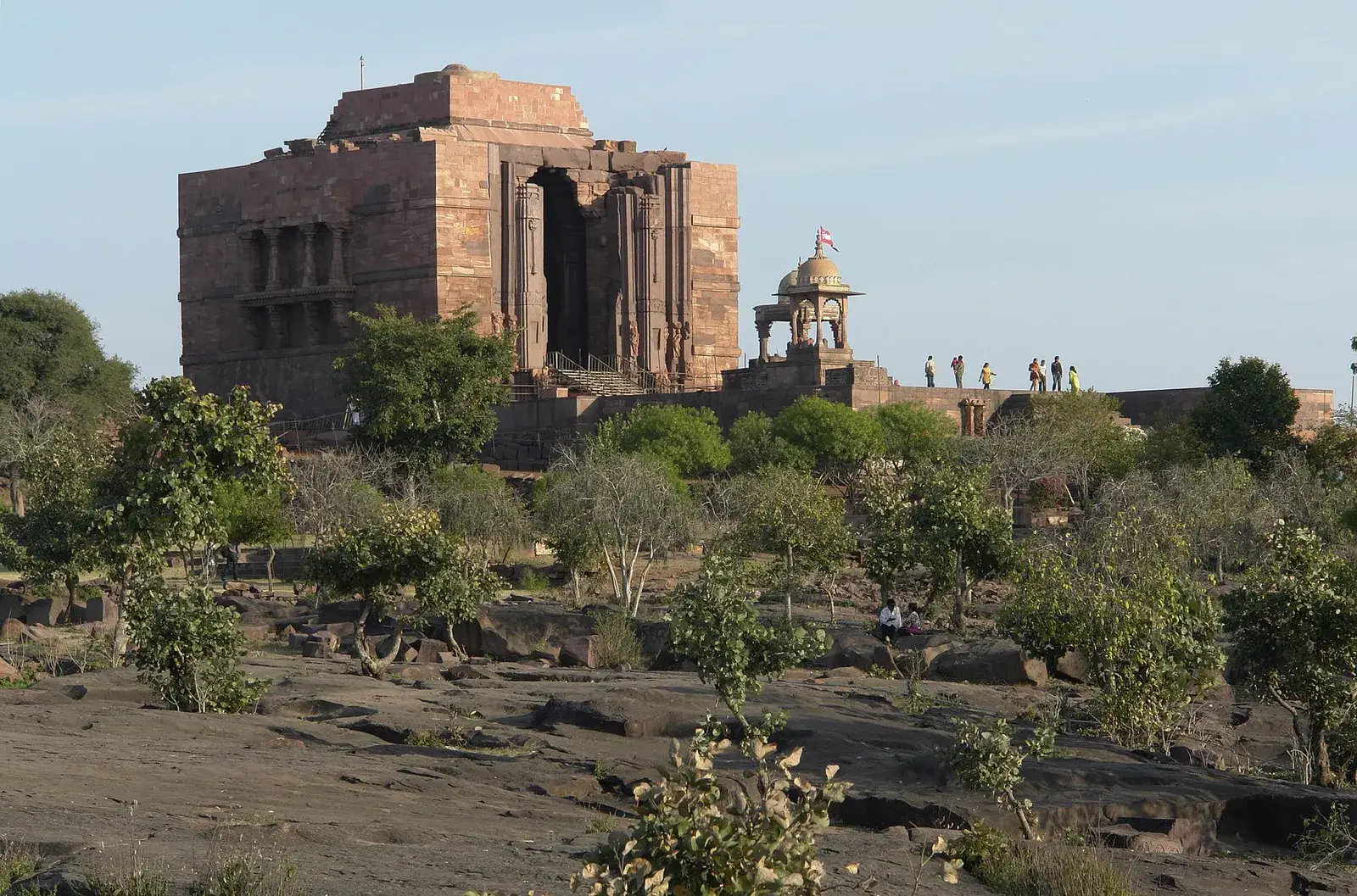
Bhojeshwar Temple is one of those rare places where you can see history mid-construction. This 11th-century Shiva temple at Bhojpur, about 28 km southeast of Bhopal, was never finished — and because of that, it tells you more about how great medieval temples were actually built than any completed monument could. At its heart sits a single-stone lingam roughly 7.5 feet tall, one of the largest in India.
The king who named Bhopal
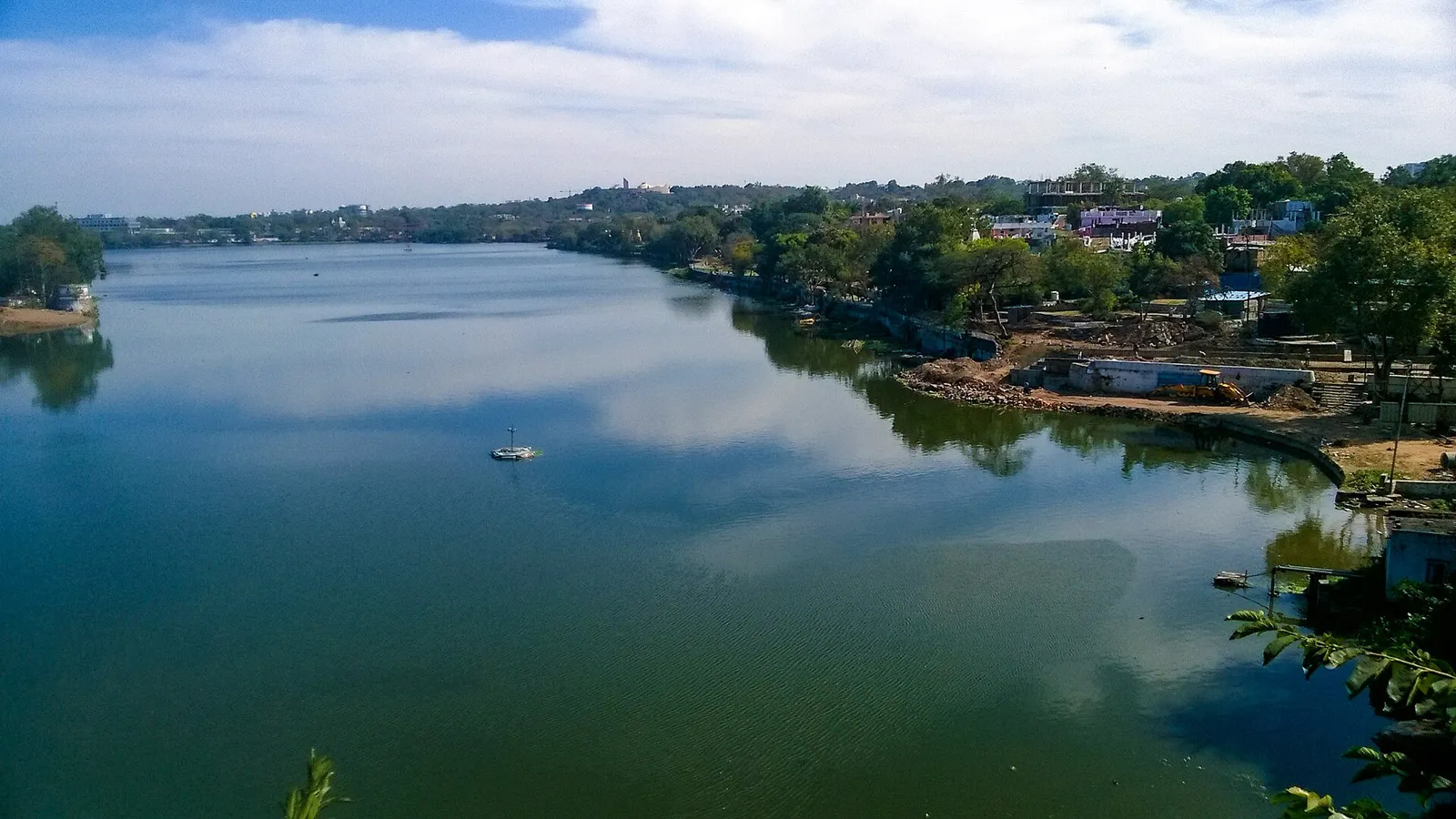
The temple is attributed to Raja Bhoja, the celebrated Paramara king of the 11th century — the same ruler whose name lives on in “Bhopal” (Bhoj-pal) and who built the great lake the city grew around. Bhoja was a scholar-king, and Bhojpur was clearly meant to be a statement: an enormous temple raised on a rocky outcrop above the Betwa river.
For reasons history hasn’t fully recorded, the work stopped. The sanctum and its colossal lingam were completed; the soaring superstructure was not.
Why the unfinished part is the best part
Walk around the back and you’ll find the temple’s most extraordinary feature: the earthen construction ramp still in place, the inclined embankment that medieval builders used to drag the massive stone blocks up to height. On the surrounding rocks are architectural drawings — full-size engravings of temple plans, mouldings and components that the masons used as their blueprints. There is almost nowhere else in India where you can read the working method of an ancient temple this clearly.
Inside, the lingam rises from a three-part stone platform, set beneath a dome that the four central pillars were built to carry. Its sheer scale in the dim sanctum is genuinely moving, whether or not you come as a pilgrim.
Making the trip
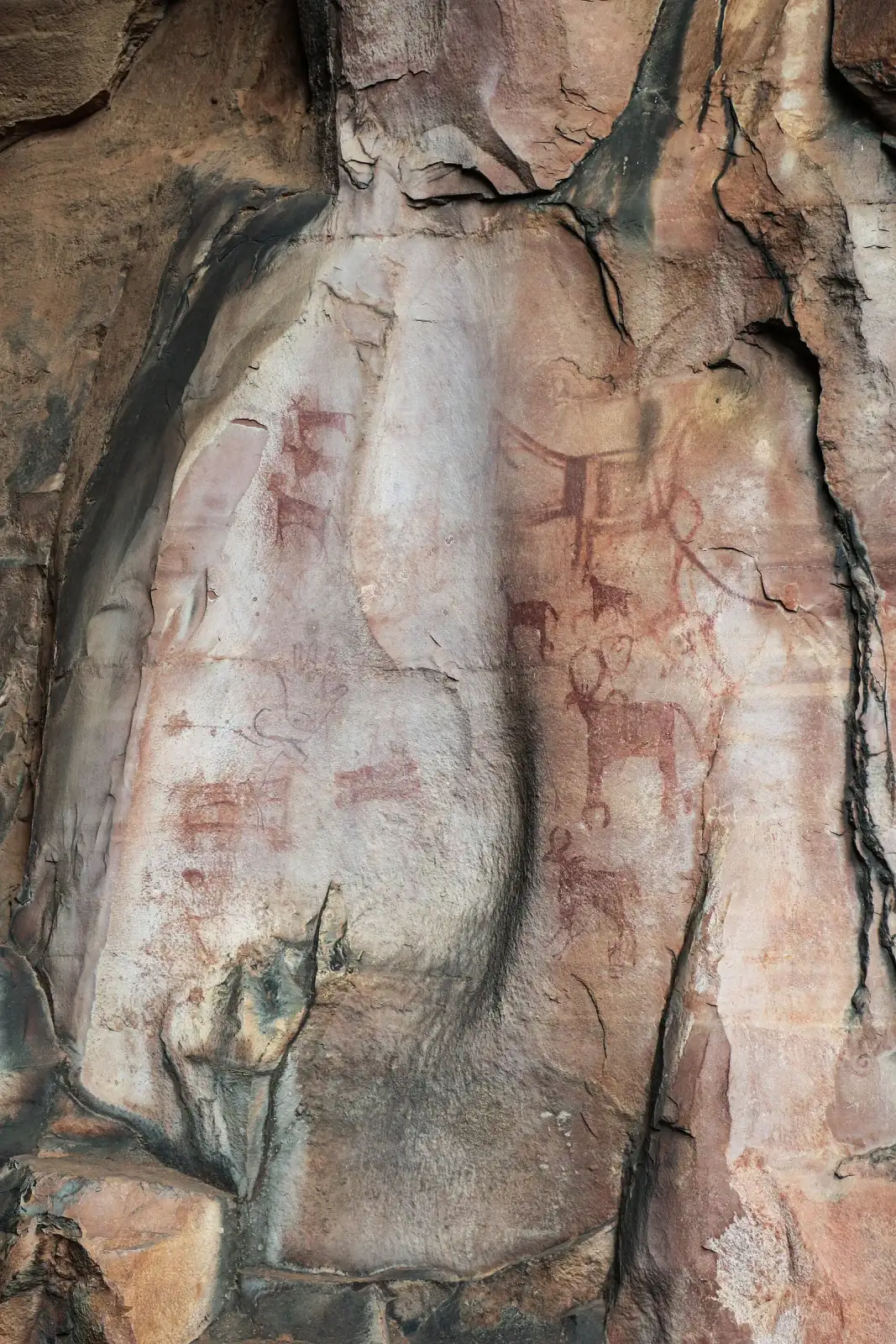
Bhojpur is an easy 45-minute to one-hour drive from Bhopal, and there’s no convenient public transport, so drive or hire a cab. The smart move is to pair it with the Bhimbetka rock shelters, which lie further along the same southern side of the city — together they make a superb single day of ancient Madhya Pradesh, from Stone Age paintings to a medieval royal temple.
Verified June 2026 against the Raisen district administration, ASI and other sources. As a living temple, please dress modestly and remove footwear at the sanctum.