Bhopal’s Moti Masjid is a small, perfect thing — a ‘Pearl Mosque’ raised by a queen who refused to wear a veil. Completed in 1860 by Sikandar Jahan Begum, one of the famous women rulers of Bhopal, it stands in the old city as a graceful, marble-fronted echo of Delhi’s Jama Masjid — and as a reminder that this was a city shaped, unusually, by powerful and reform-minded women.
A mosque built by a Begum
For much of the 19th and early 20th centuries, Bhopal was ruled by a line of Begums — women rulers who governed, built and reformed. Sikandar Jahan Begum, who commissioned the Moti Masjid, was among the most striking of them: trained in martial arts, opposed to the purdah system (she never wore a veil), and remembered for abolishing slavery in her state.
The mosque she completed in 1860 is intimate rather than imposing — and all the more elegant for it.
The “Pearl Mosque”
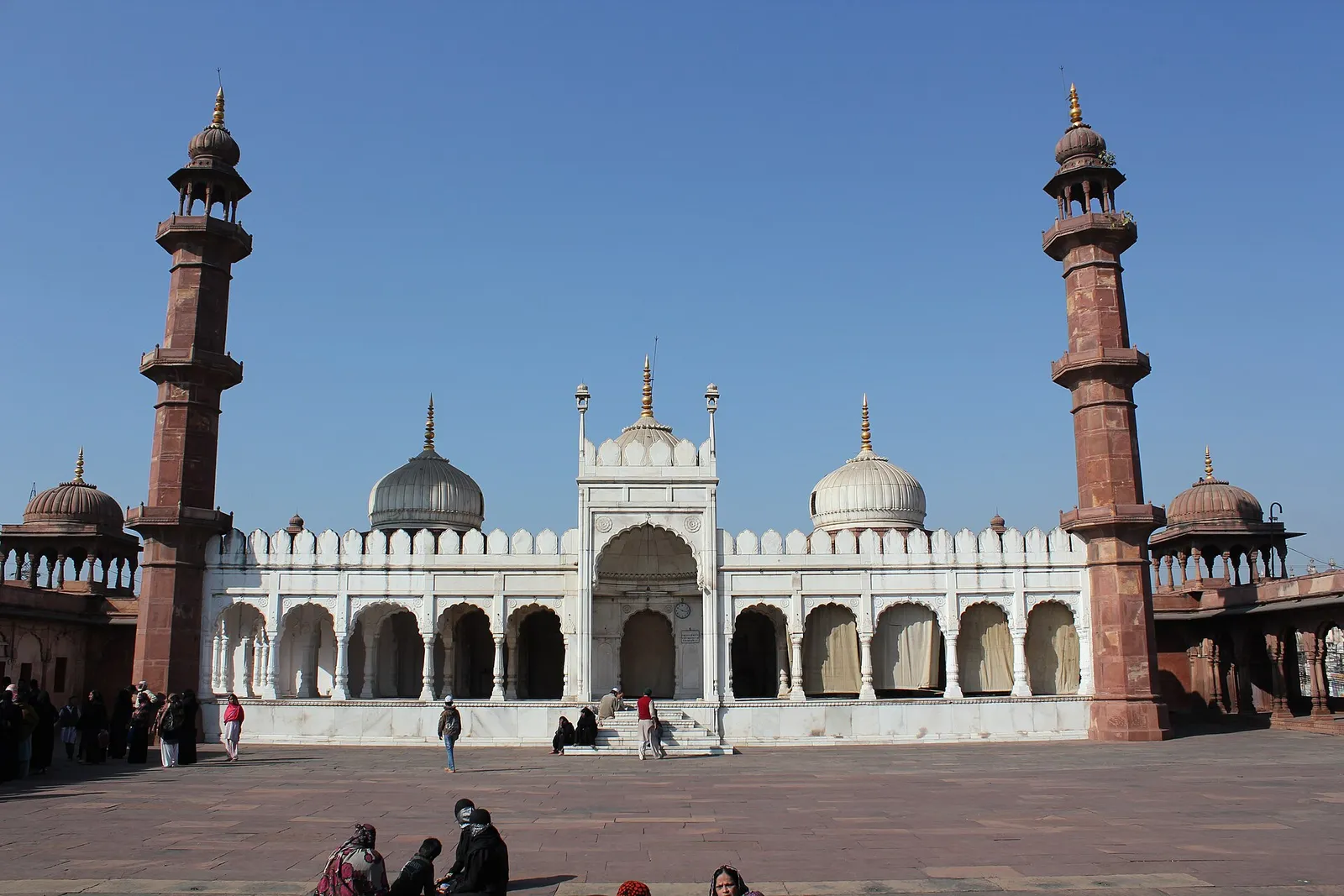
Moti means pearl, and the name fits: the mosque’s white-marble facade seems to glow softly against its red sandstone walls. Above rise three domes and two slender minarets, and within is a quiet courtyard with a fountain. The whole composition is modelled on the Jama Masjid of Delhi, scaled down to a human, contemplative size.
An old-city heritage walk
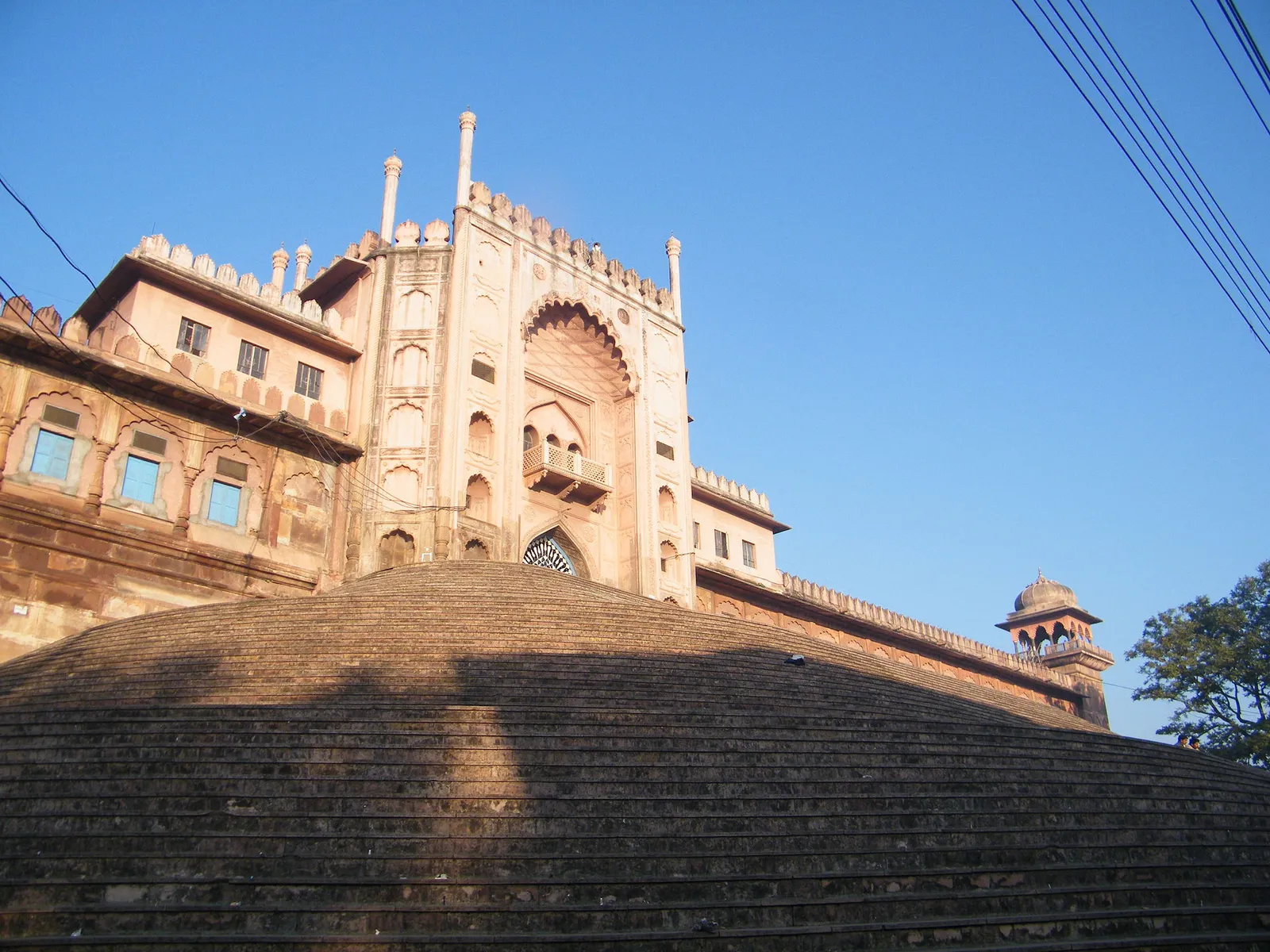
Moti Masjid sits in the Chowk, the dense heart of old Bhopal, so it’s best enjoyed as part of a walk. String it together with the towering Taj-ul-Masajid (one of India’s largest mosques), the carved Gohar Mahal by the lake, Jama Masjid, and the old-city bazaars selling everything from zari work to sev. Together they tell the story of the Begums’ Bhopal far better than any single stop.
History verified June 2026 against Wikipedia and Incredible India. As a living mosque, please be respectful of worshippers and prayer times.