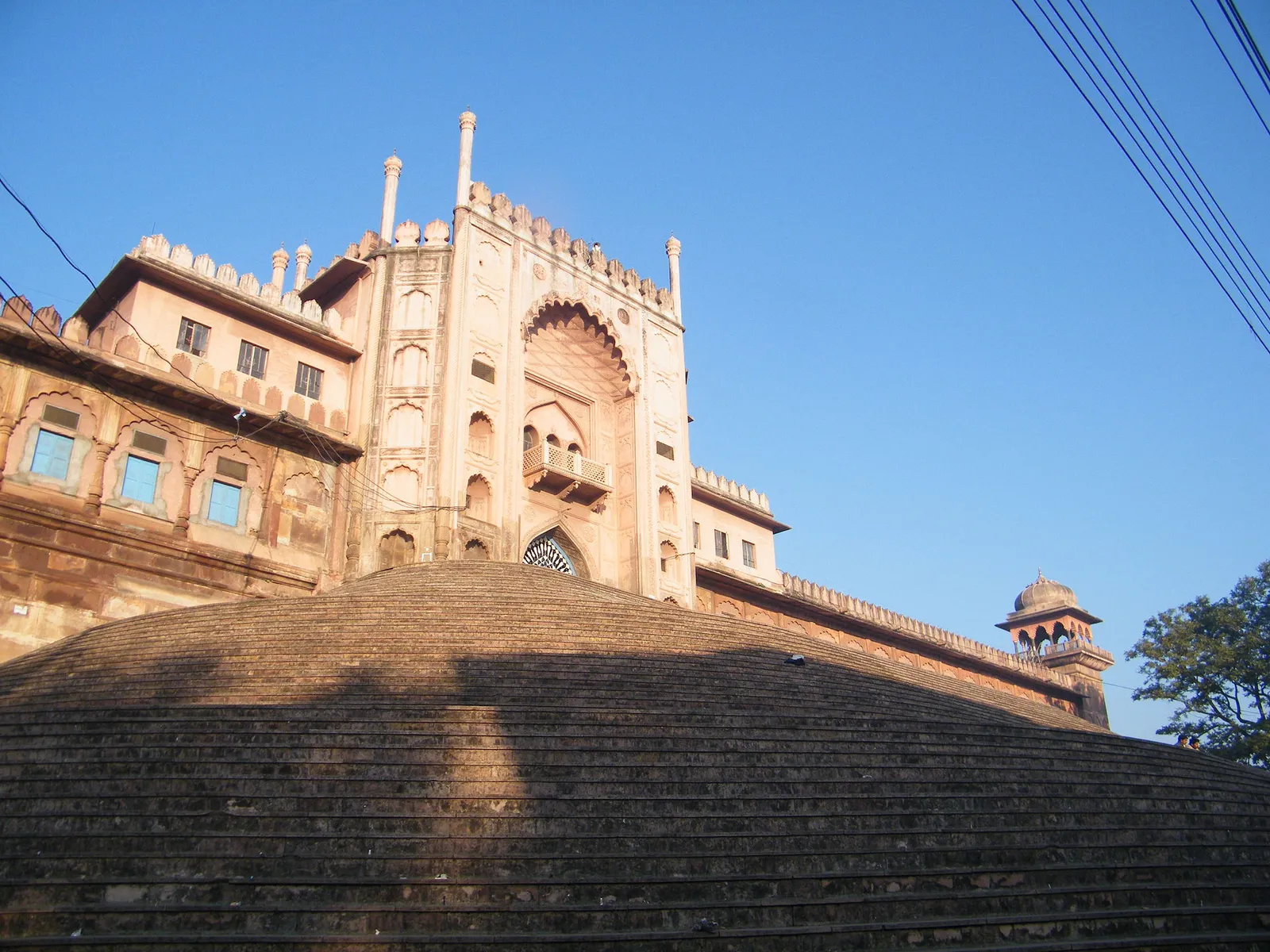
Taj-ul-Masajid is the largest mosque in India — and standing in its courtyard, you feel it. The vast open quadrangle, the pink-washed facade, the two enormous octagonal minarets rising eighteen storeys into the Bhopal sky: it’s built at a scale meant to humble you a little. “Taj-ul-Masajid” literally means “Crown of Mosques,” and the name is not an exaggeration.
A mosque built by queens
What makes this place genuinely remarkable isn’t just its size — it’s who built it. Construction began around 1871 under Nawab Shah Jahan Begum, one of the famous women rulers (Begums) who governed Bhopal for over a century. After her death the work was carried on by her daughter, Sultan Jahan Begum. Then funds ran short, and for decades the great mosque stood unfinished. It was only completed in the later 20th century — meaning this building quietly spans roughly a hundred years of Bhopal’s history.
That lineage of women rulers shaped Bhopal in ways you still see everywhere — and Taj-ul-Masajid is their grandest signature.
What to look for
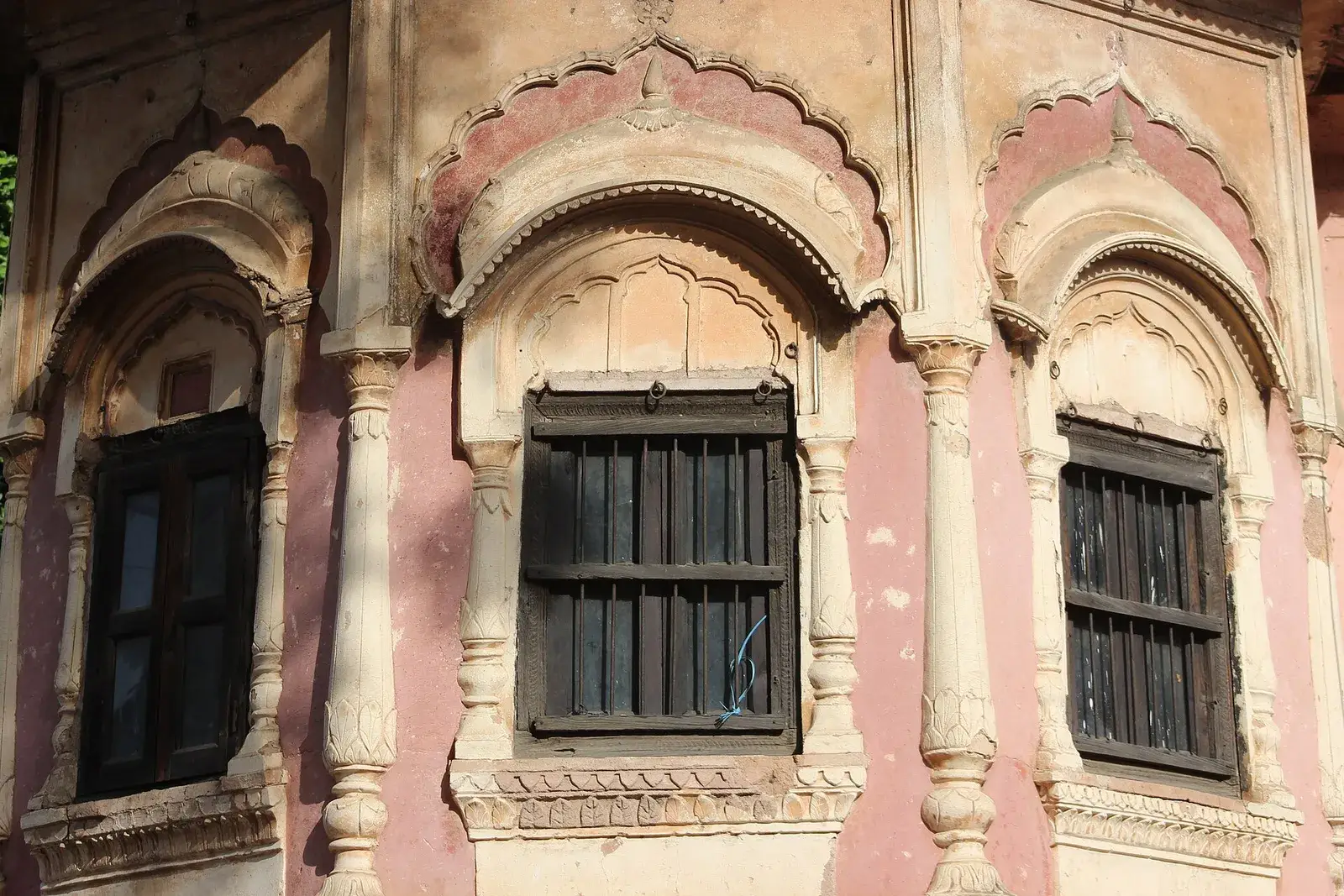
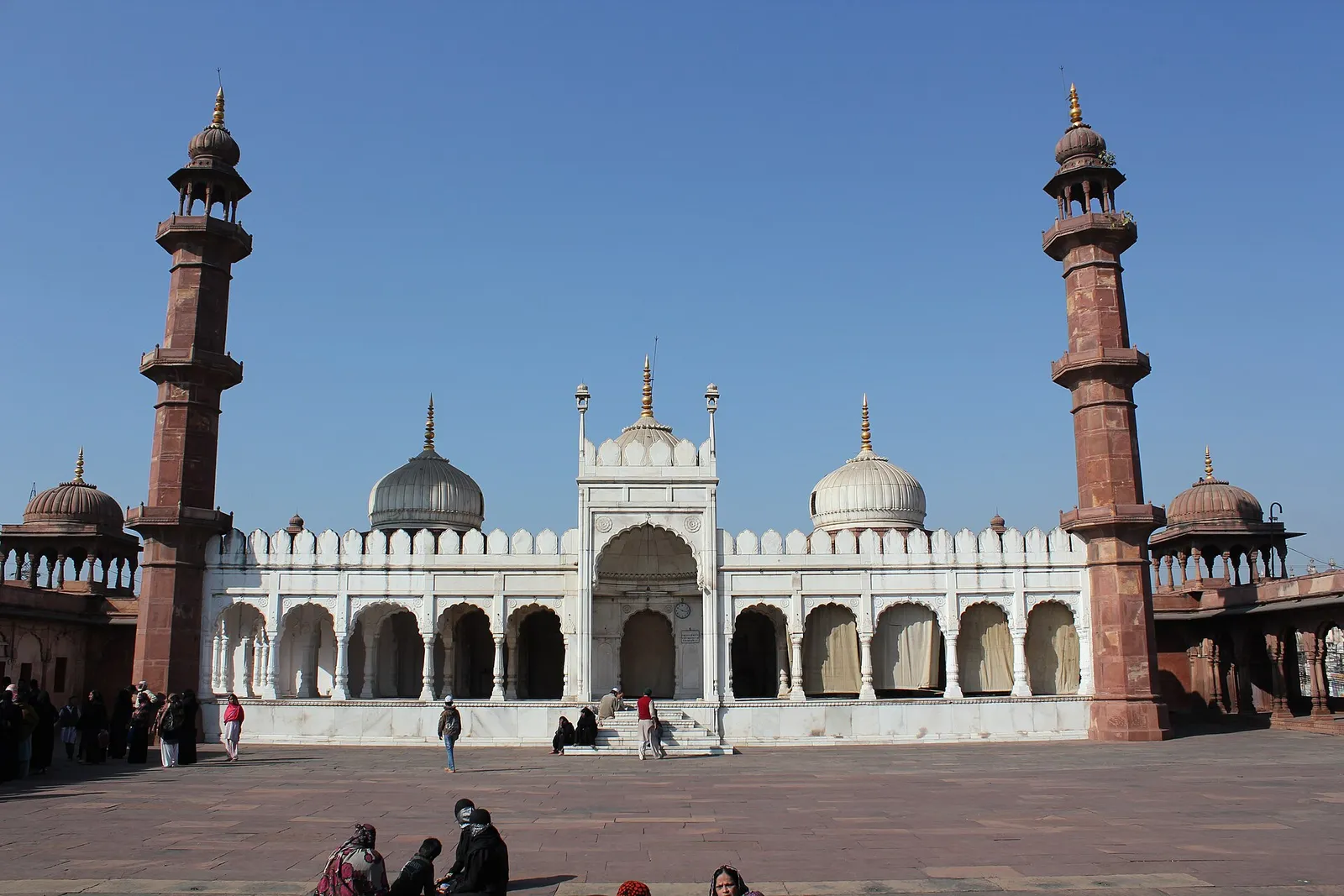
- The facade. The famous pink colour, the great central archway, and the marble domes are clearly inspired by the Mughal mosques of Delhi and Lahore — but the proportions here are the mosque’s own.
- The twin minarets. Two 18-storey octagonal towers topped with marble domes flank the entrance. They are the silhouette of old Bhopal.
- The prayer hall. Inside, rows of pillars and a quiet, cool vastness. The marble floor stretches further than you expect.
- The courtyard tank. A large ablution pool sits at the centre of the quadrangle, mirroring the architecture.
Practical tips
Come in the cool early morning or the hour before sunset, when the light turns the pink stone golden and the courtyard is calm. Entry is free; leave your shoes at the designated area. The mosque sits in Shahjahanabad, the old walled city, so it’s easy to fold into a half-day of old-Bhopal wandering — Gohar Mahal, Moti Masjid, and the crowded, wonderful Chowk bazaars are all close by.
If you visit during Ramadan or Eid, the atmosphere is extraordinary — but expect large crowds and limited access for non-worshippers.
History corroborated across multiple sources (Incredible India and others); visiting norms verified June 2026. As an active place of worship, access around prayer times is at the management’s discretion — please check locally.