bhopali.in
हिन्दी
The 9th-century Maladevi Temple at Gyaraspur rising against the rock of its hillside
Photo: Manish Mahadware / bhopali.in (© bhopali.in)
gyaraspur vidisha maladevi-temple hindola-torana bajramath athkhamba chaukhamba heritage day-trip near-bhopal asi

Gyaraspur — A Temple Hill Day Trip from Bhopal

· 8 min read
Share this

Some places make you wonder how they stayed a secret. Gyaraspur is one of them — a small town in Vidisha district, barely two hours from Bhopal, with a whole hillside of carved 9th- and 10th-century temples scattered across it. On the cool January morning we arrived, we very nearly had them to ourselves. This is the story of one full day there: three families, a convoy of cars, a picnic on a thousand-year-old ridge, and some of the most beautiful, least-visited ruins in all of Madhya Pradesh.

The road out of Bhopal

We left Bhopal at about half past nine, three families in a small convoy. The drive heads out past Raisen, Vidisha and Sanchi — country that has mattered for two thousand years — and with a couple of easy stops it took us roughly two hours. Mid-January meant perfect weather: neither hot nor cold, the fields still winter-green. A little after eleven, we were turning up the last slope to the Maladevi Temple.

Driving into Gyaraspur village

Maladevi Temple — a shrine carved into the hill

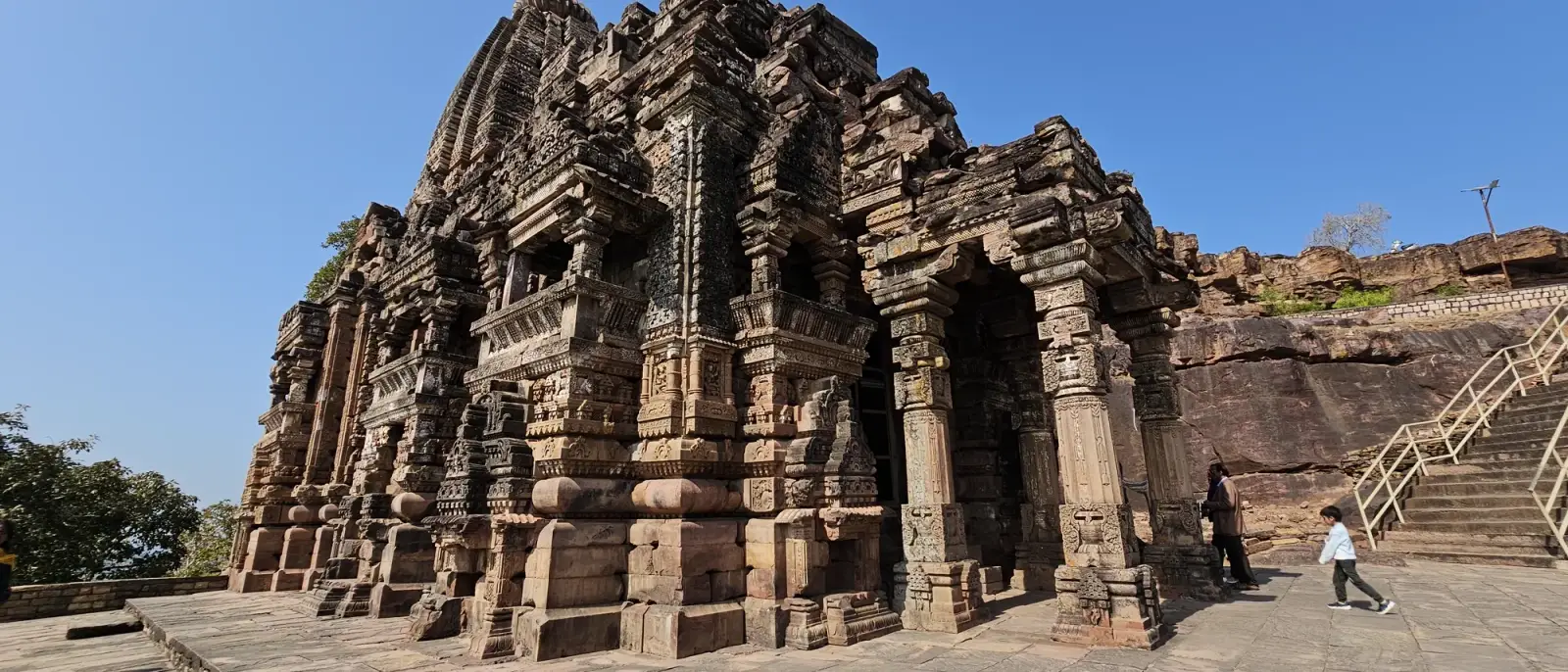
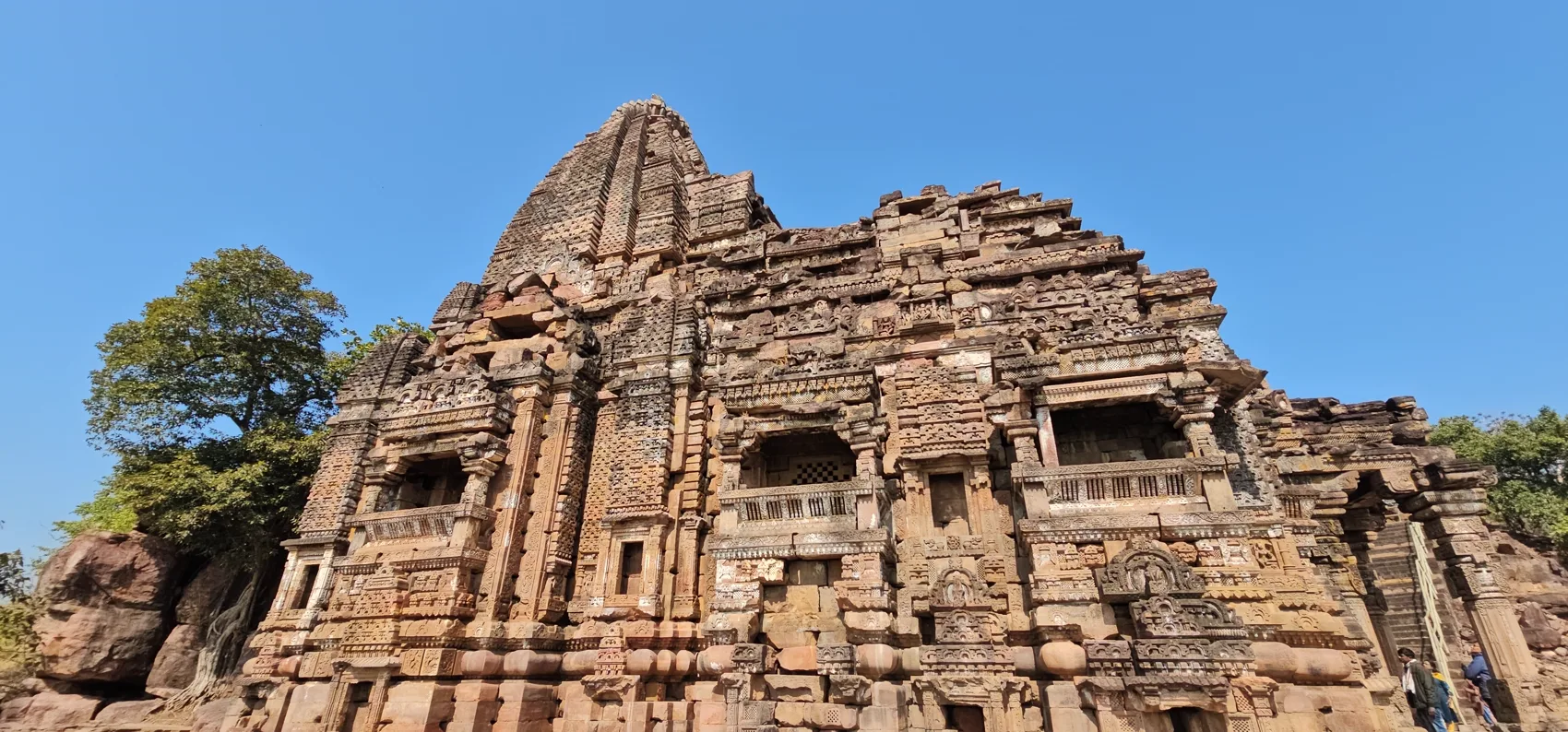
The first sight stops you. The Maladevi Temple stands on the slope of a hill, looking out over a wide green valley, its tall carved tower rising straight from the rock. It dates to the late 9th century, the golden age of the Gurjara-Pratihara dynasty — and it is unusual in the loveliest way: it is partly rock-cut. Part of the sanctum is hewn from the living rock of the hillside, and the rest was raised around it in finely finished stone, crowned by a soaring shikhara.

Walk around it and you read the layers of its long life. The outer walls are crowded with sculpture; inside the niches sit Jain Tirthankaras, which is why it is known today as a Jain temple. Yet other carvings hint at Hindu beginnings, and historians still argue over whether it began as a Devi or Vishnu shrine before passing into Jain hands. You are, quite literally, standing in front of a debate that has run for a thousand years.
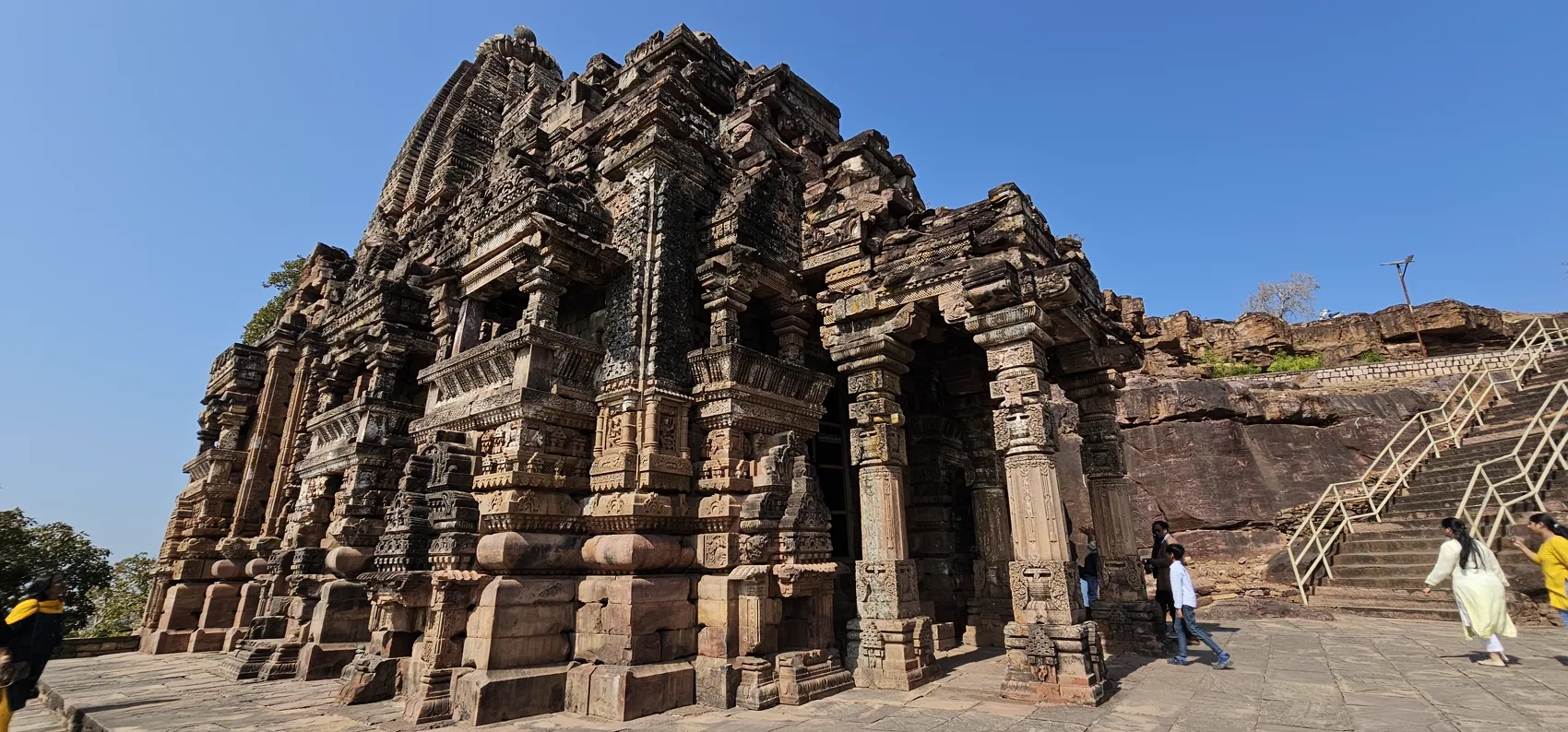
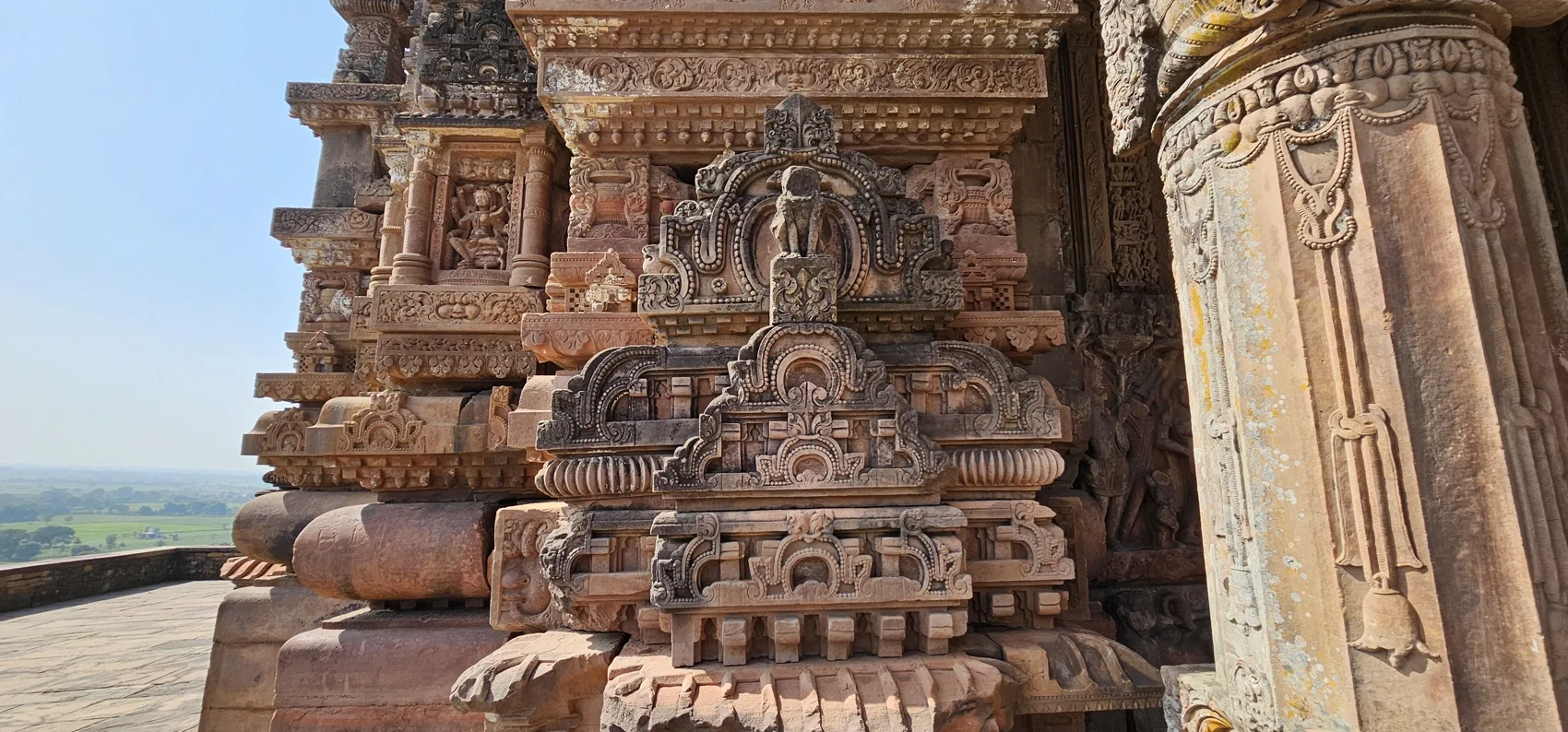
The richly carved facade and shikhara of the Maladevi Temple, Gyaraspur
The Maladevi Temple's carved facade and soaring shikhara.
The Maladevi Temple seen from the hillside, Gyaraspur
The temple on its hillside, looking out over the valley.
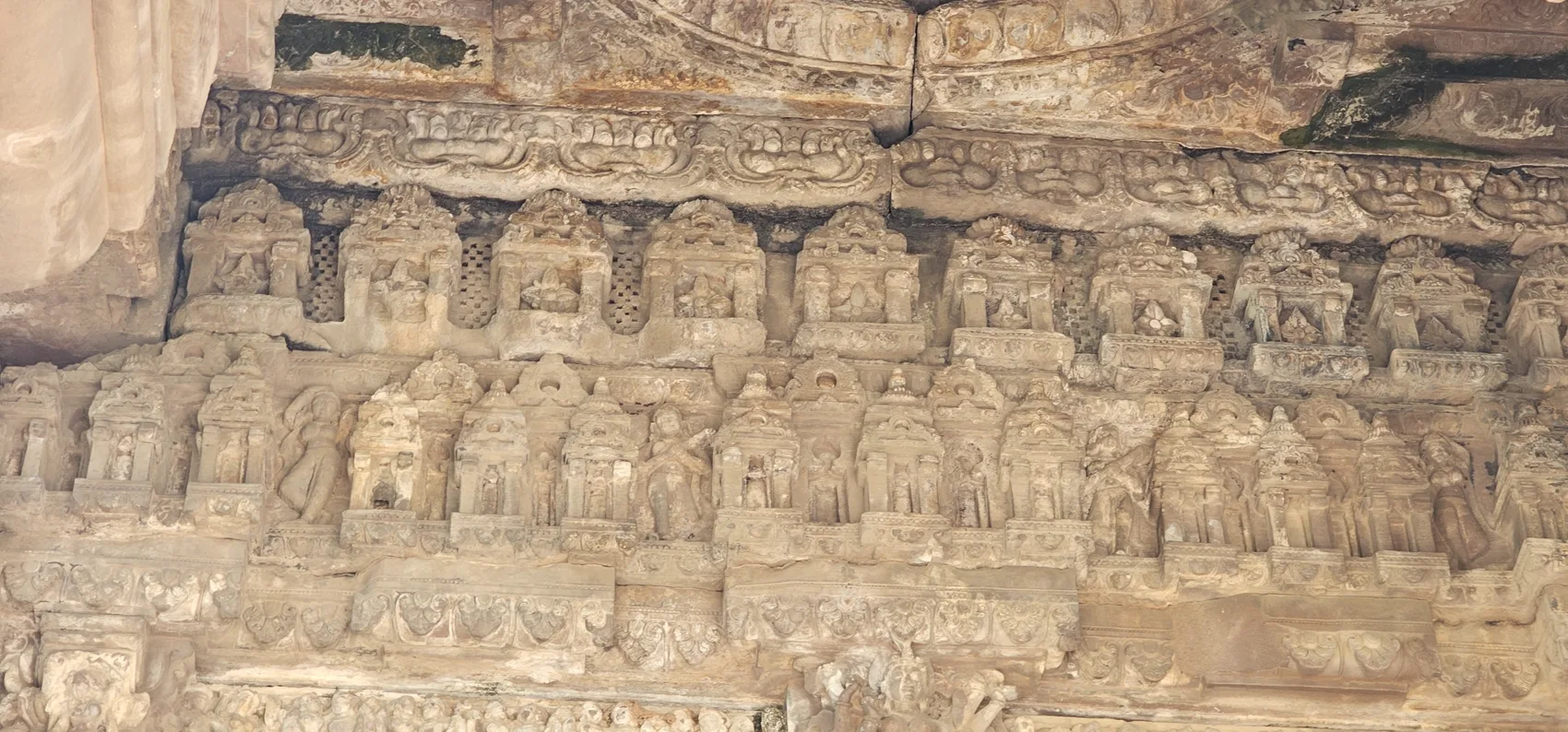
A carved frieze of figures on the Maladevi Temple
A frieze of carved figures along the temple wall.
A sculpted relief panel at the Maladevi Temple
A sculpted relief panel, softened by the centuries.
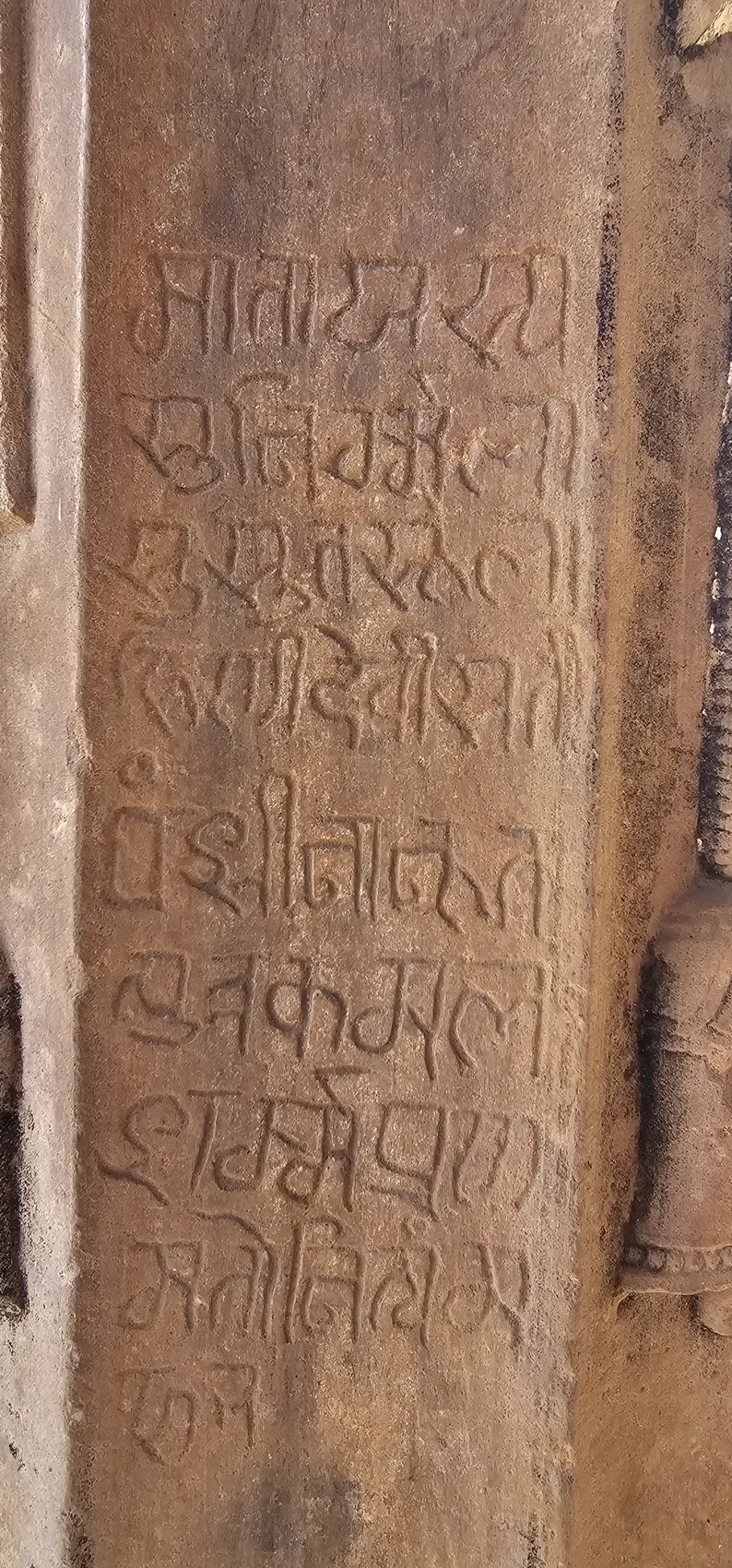
A weathered stone inscription at the Maladevi Temple
A weathered inscription cut into the temple stone.
The hilltop Maladevi Temple ruins

A picnic on the ridge

This is the part none of us will forget. We had carried lunch up with us — a proper potluck across three families, food simply reheated rather than cooked, with Maggi and coffee to follow. We spread mats on the grass beside the cars, the temple at our backs and the valley falling away in front, and ate slowly in the soft winter sun.

Then, because the breeze was just right and the children insisted, we flew kites off the edge of the ridge — paper kites climbing over a thousand-year-old hill while the coffee went cold. If you take one idea from this whole page, take this one: come with a picnic, and leave time to do nothing at all.
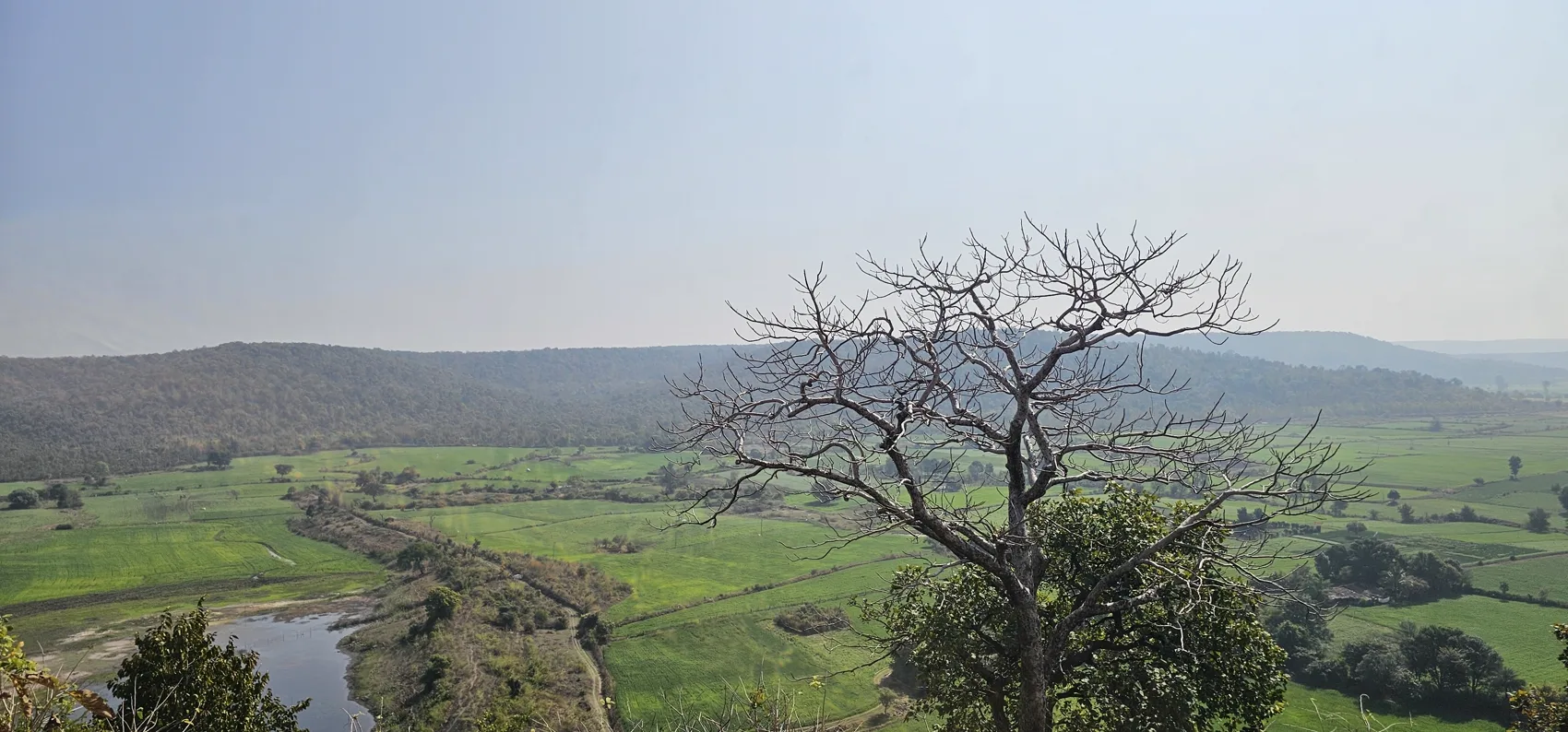
The green valley and farmland seen from the Maladevi temple ridge
The valley from the ridge — our picnic view.
The valley panorama from the ridge

Hindola Torana — a gateway to a vanished temple

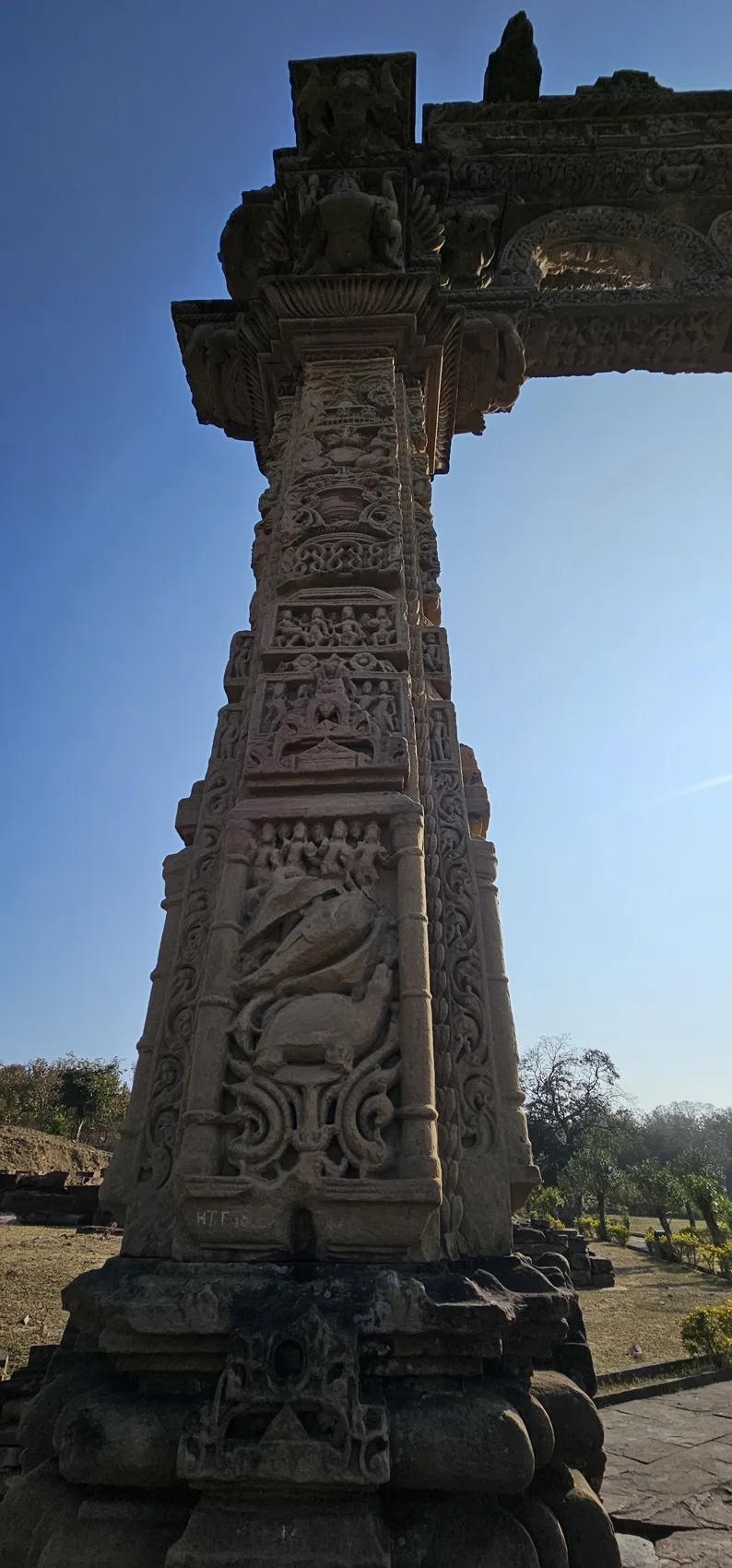
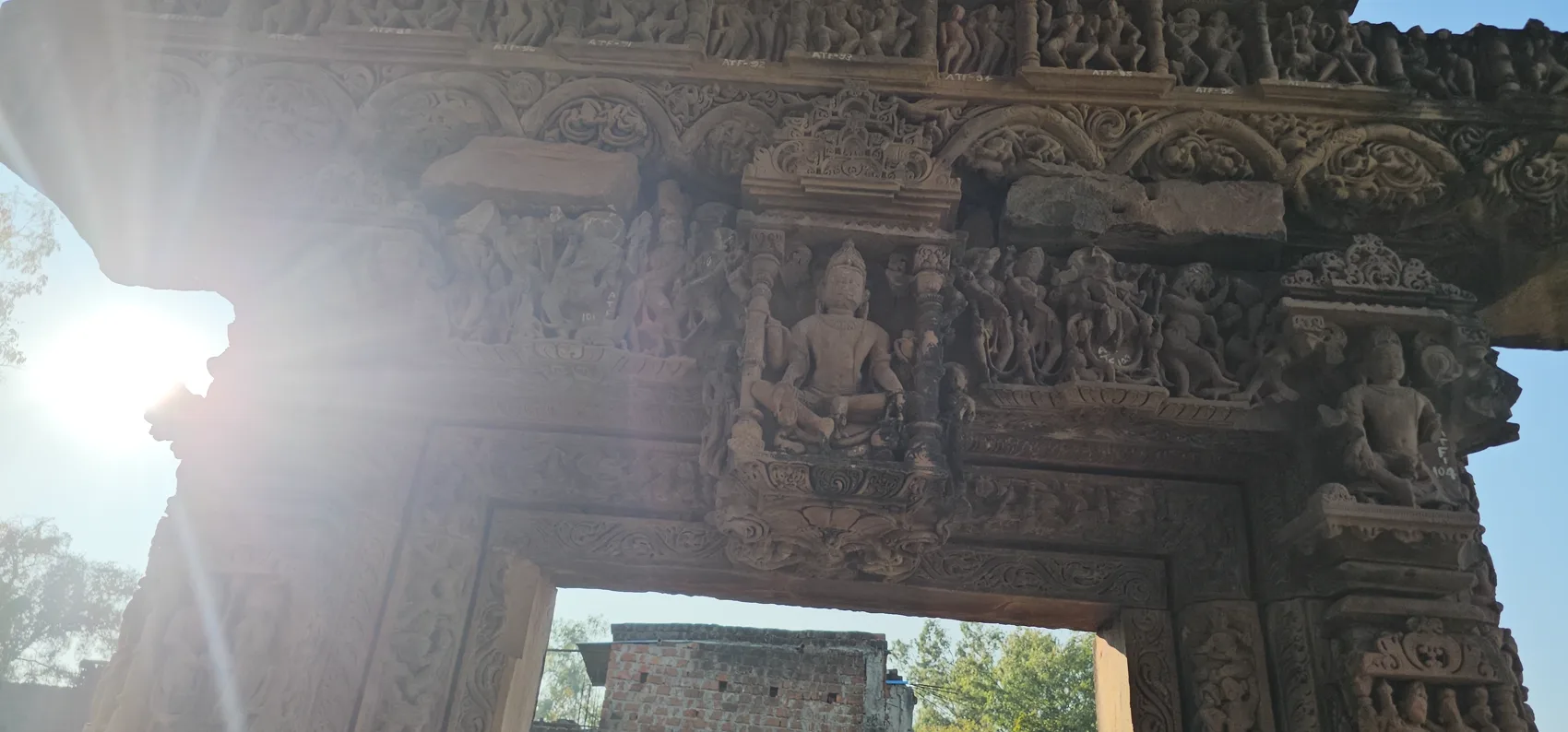
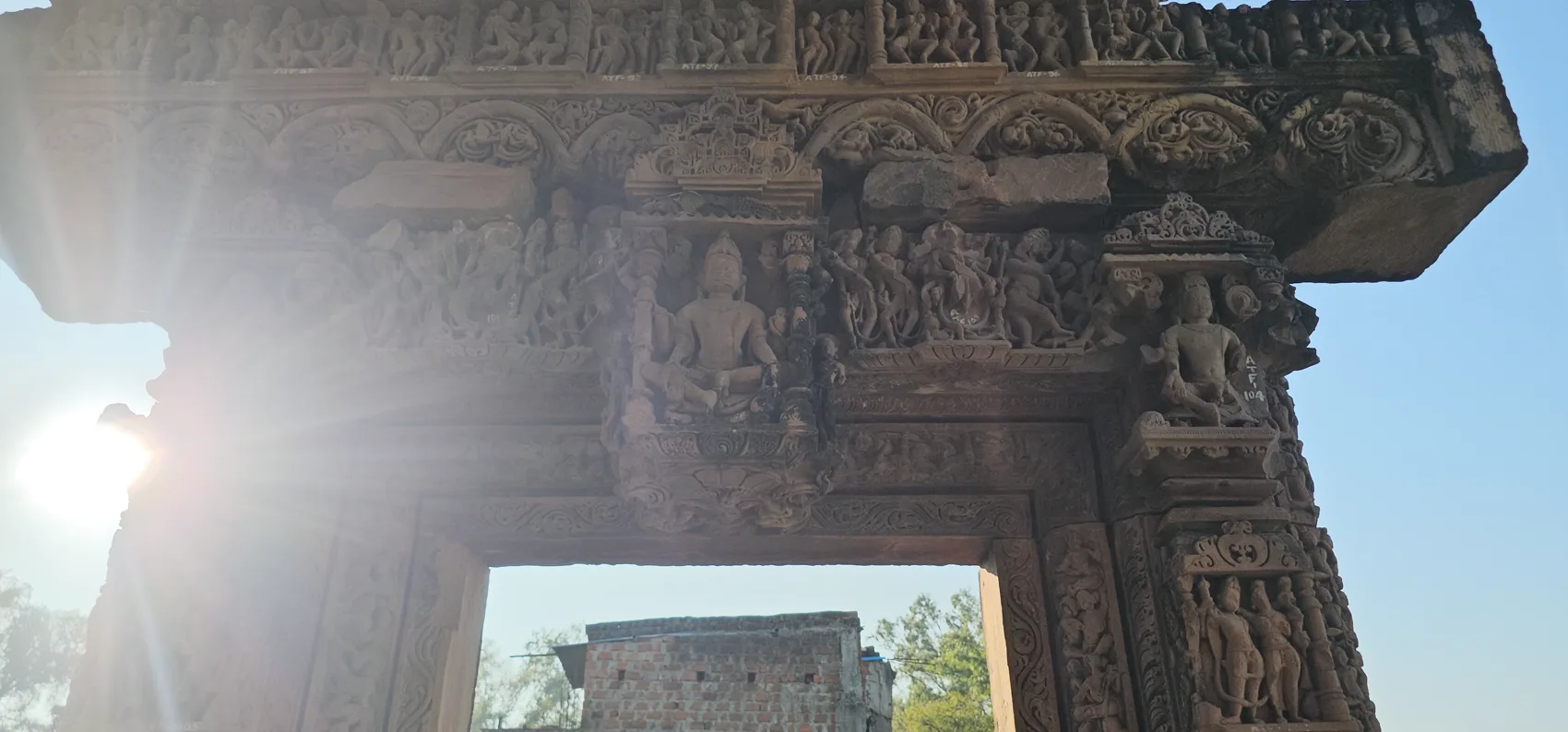
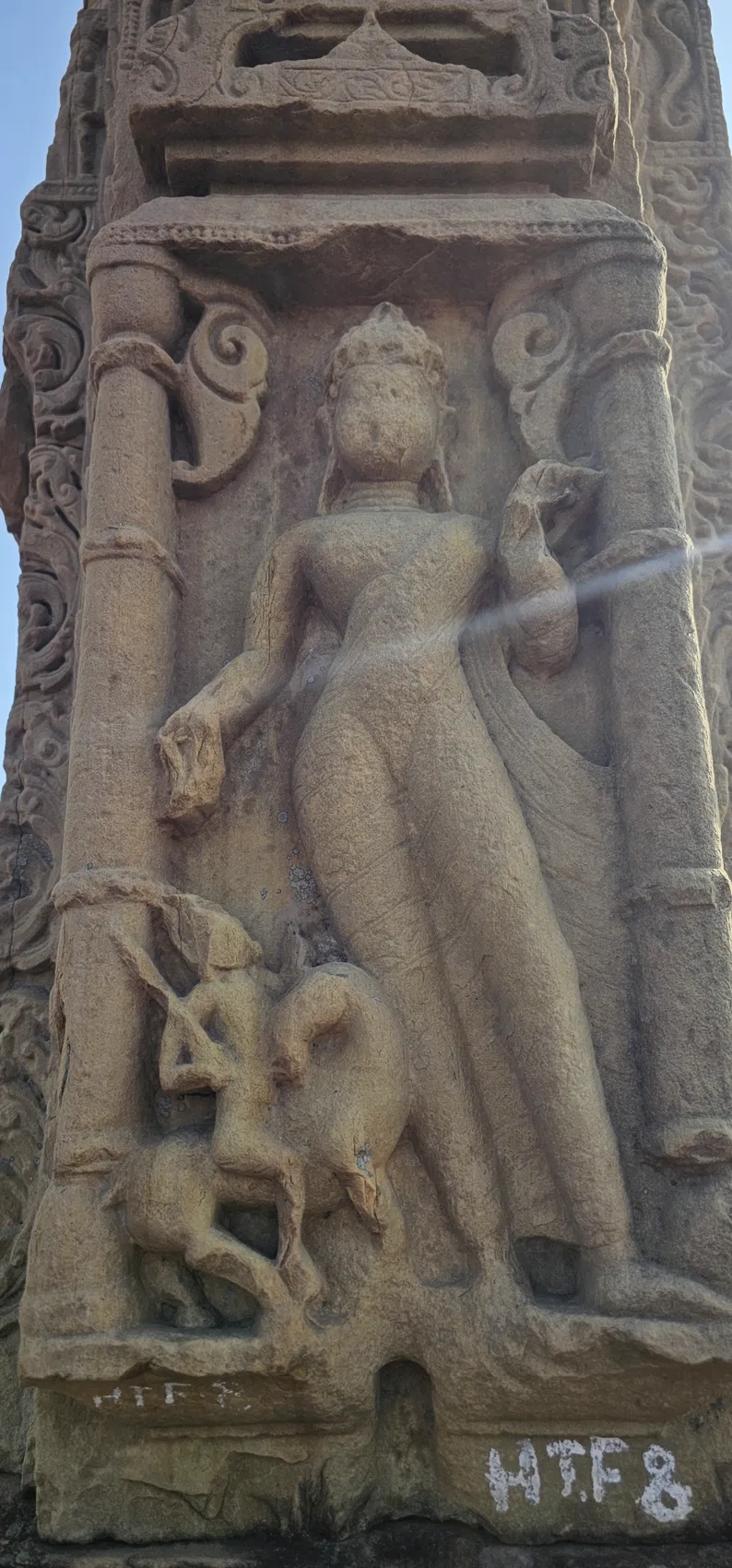
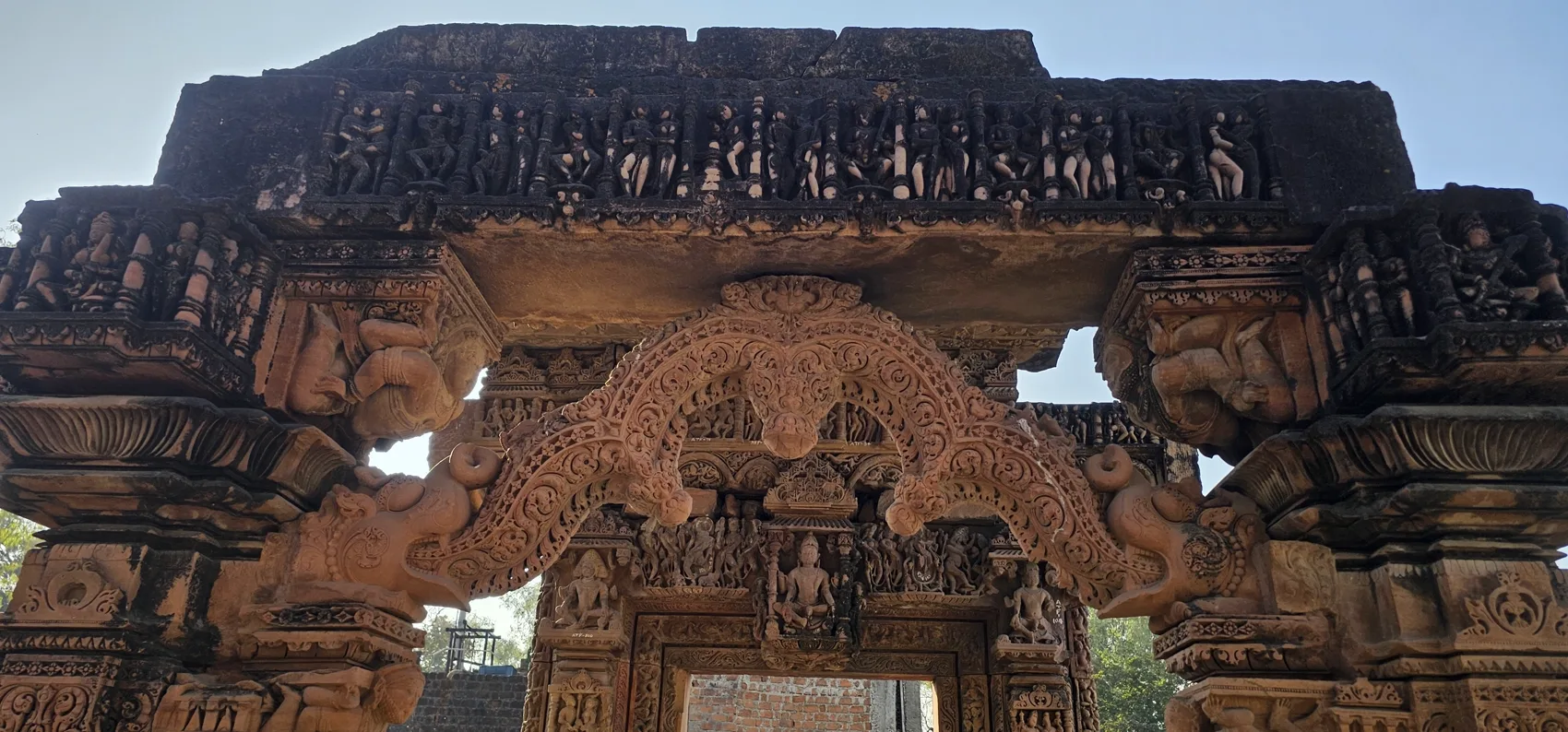
Down from the hill stand the ruins that give Gyaraspur its quiet fame. The most striking is the Hindola Torana — a 10th-century ornamental gateway that once led into a large temple, most likely of Vishnu. The temple is long gone; the gateway still stands, two tall pillars and a carved arch against an enormous sky. Look closely and the pillars are carved, panel by panel, with the ten incarnations of Vishnu — the dashavatara — fish and tortoise and boar and the rest, worn but unmistakable.
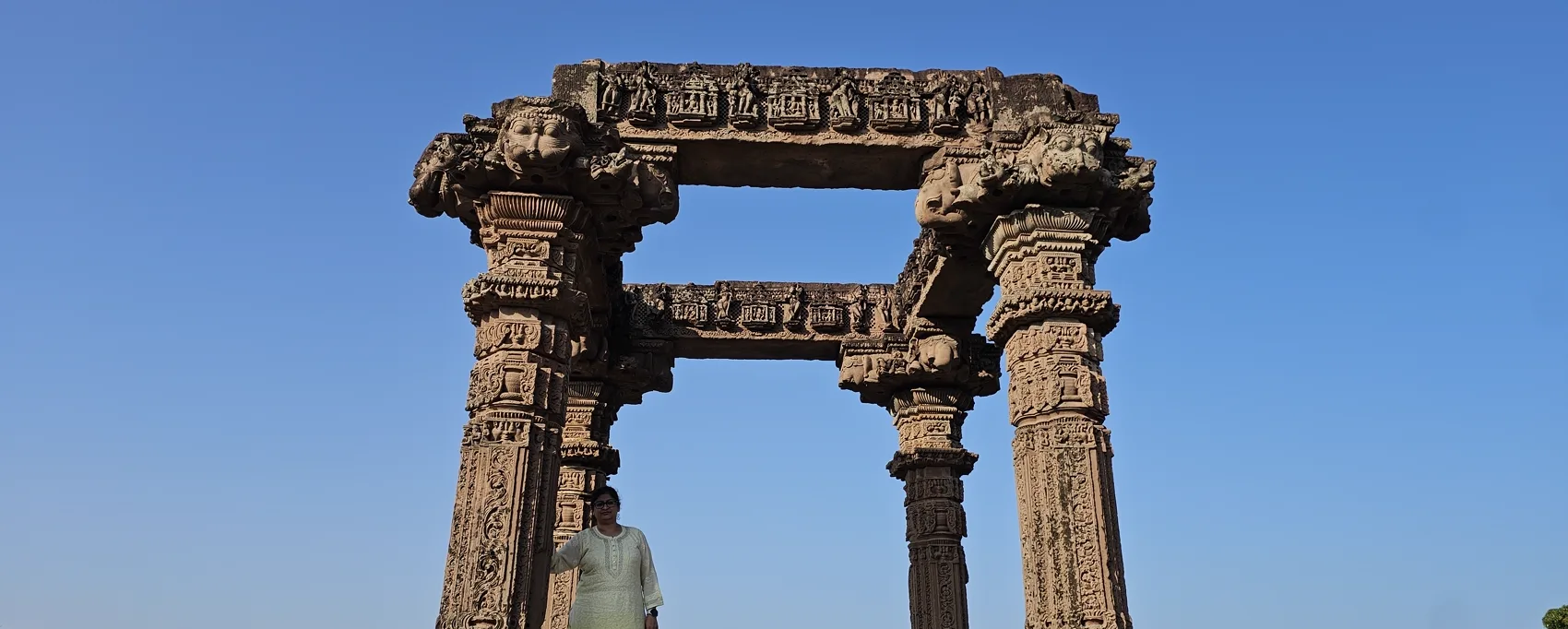
The 10th-century Hindola Torana gateway against a clear sky
The Hindola Torana, standing alone where its temple once was.
Carved panels showing incarnations of Vishnu on the Hindola Torana
The dashavatara — Vishnu's ten incarnations — carved up the pillars.
A richly carved pillar of the Hindola Torana
One of the torana's pillars, carved panel by panel.
The Hindola Torana gateway and Chaukhamba pillars

Chaukhamba and Athkhamba — four pillars and eight

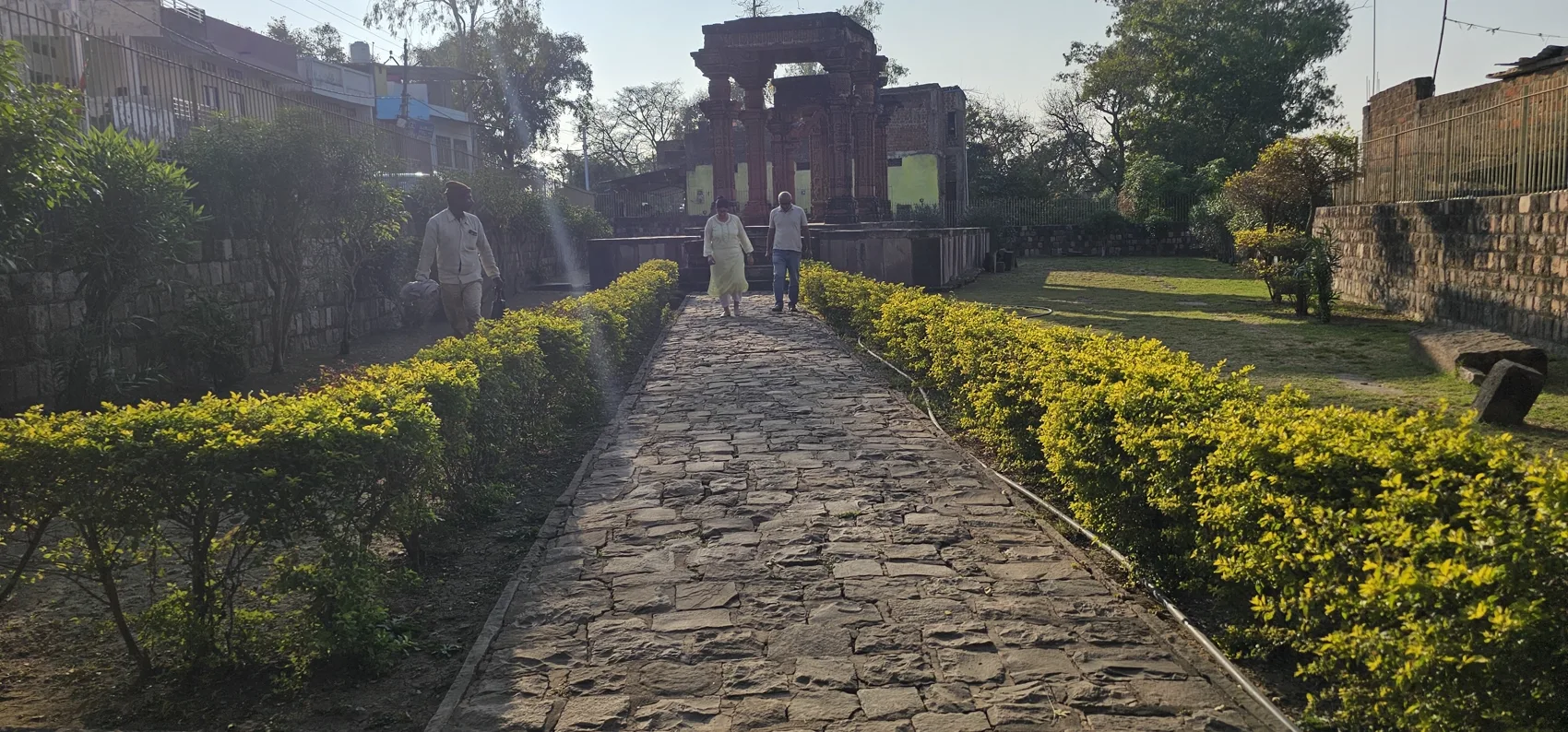
Right beside the torana stands the Chaukhamba, literally “four pillars” — a slender, square pavilion of carved columns that is all that’s left of yet another lost shrine. A short hop west brings you to the Athkhamba, “eight pillars,” the surviving columns and carved lintels of a 9th-century Shaiva temple that has otherwise vanished. Reached down a quiet hedged path, it’s a roofless frame of richly worked stone that glows when the low sun shines straight through it. Both are easy to miss and worth lingering over — the kind of ruins you get to yourself.
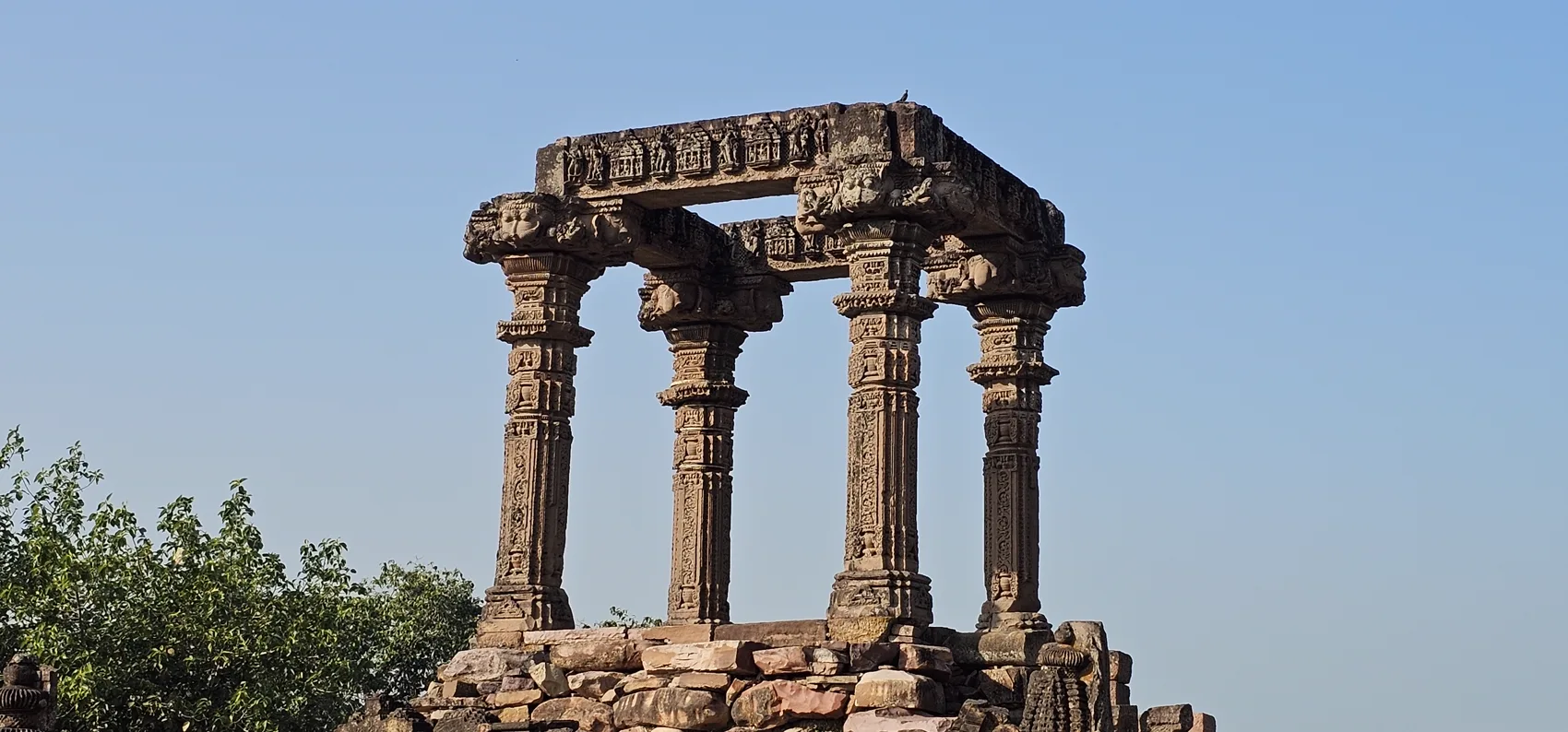
The four-pillared Chaukhamba pavilion at Gyaraspur
The Chaukhamba — 'four pillars', all that's left of one lost shrine.
The carved pillars and lintel of the Athkhamba, Gyaraspur
The Athkhamba — 'eight pillars' — and its carved lintel.
The Athkhamba ruins backlit by the afternoon sun
The Athkhamba glowing as the low sun shines straight through it.
The hedged path leading through the Gyaraspur ruins
The quiet hedged path that leads to the Athkhamba.
Afternoon sunlight through a ruined carved gateway at Gyaraspur
Afternoon light pouring through a ruined gateway.
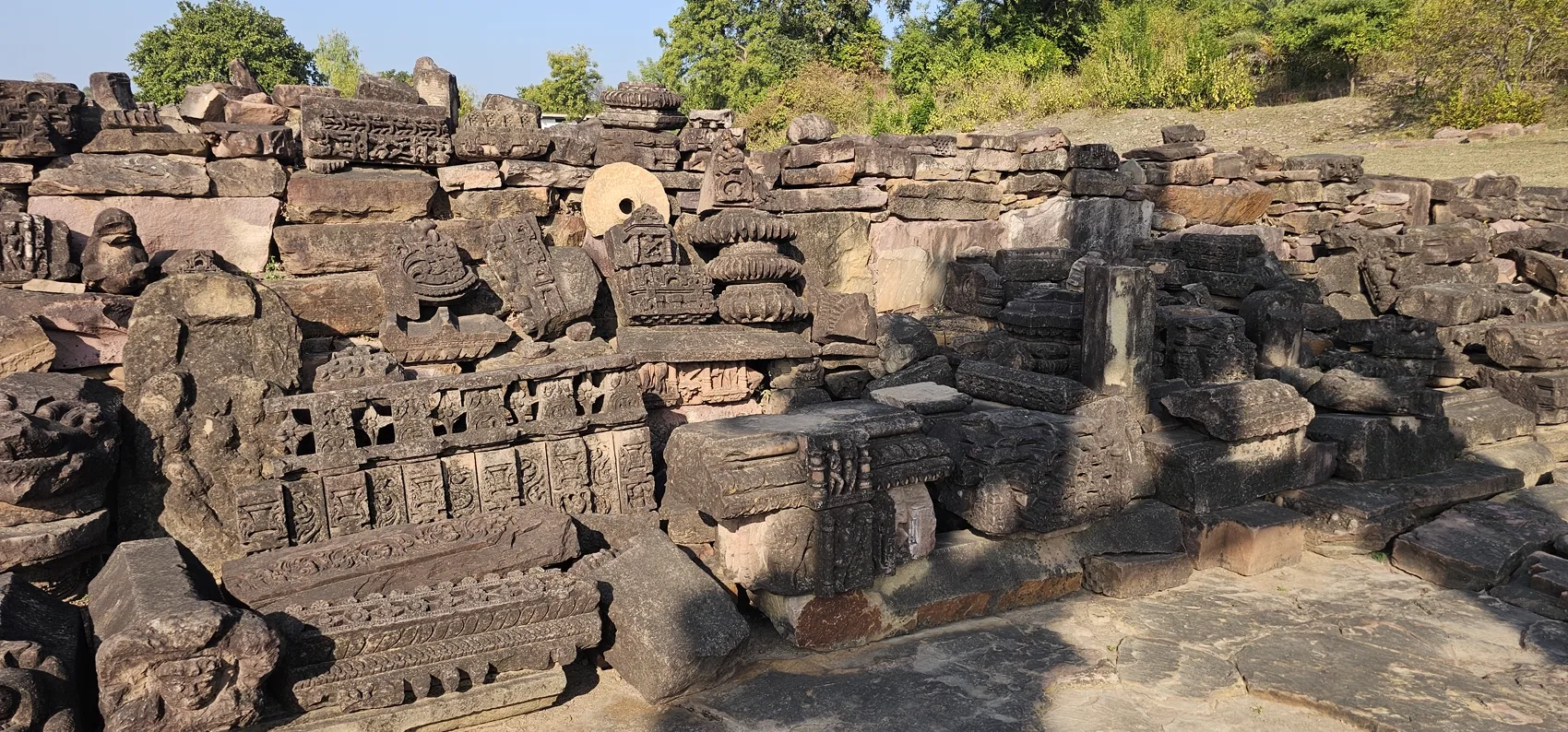
Carved stone fragments scattered among the Gyaraspur ruins
Carved fragments lie scattered where temples once stood.

Bajramath — three shrines in one

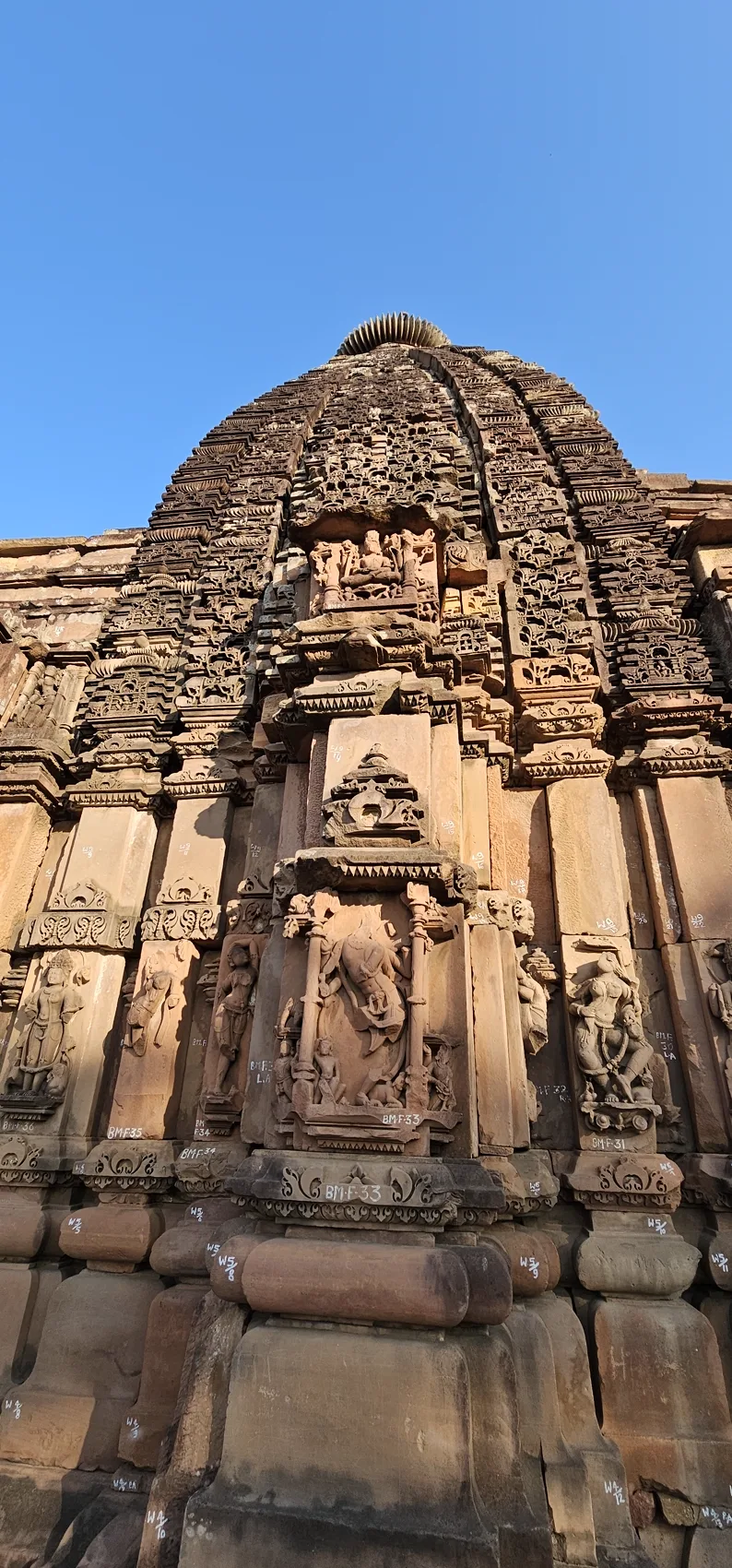
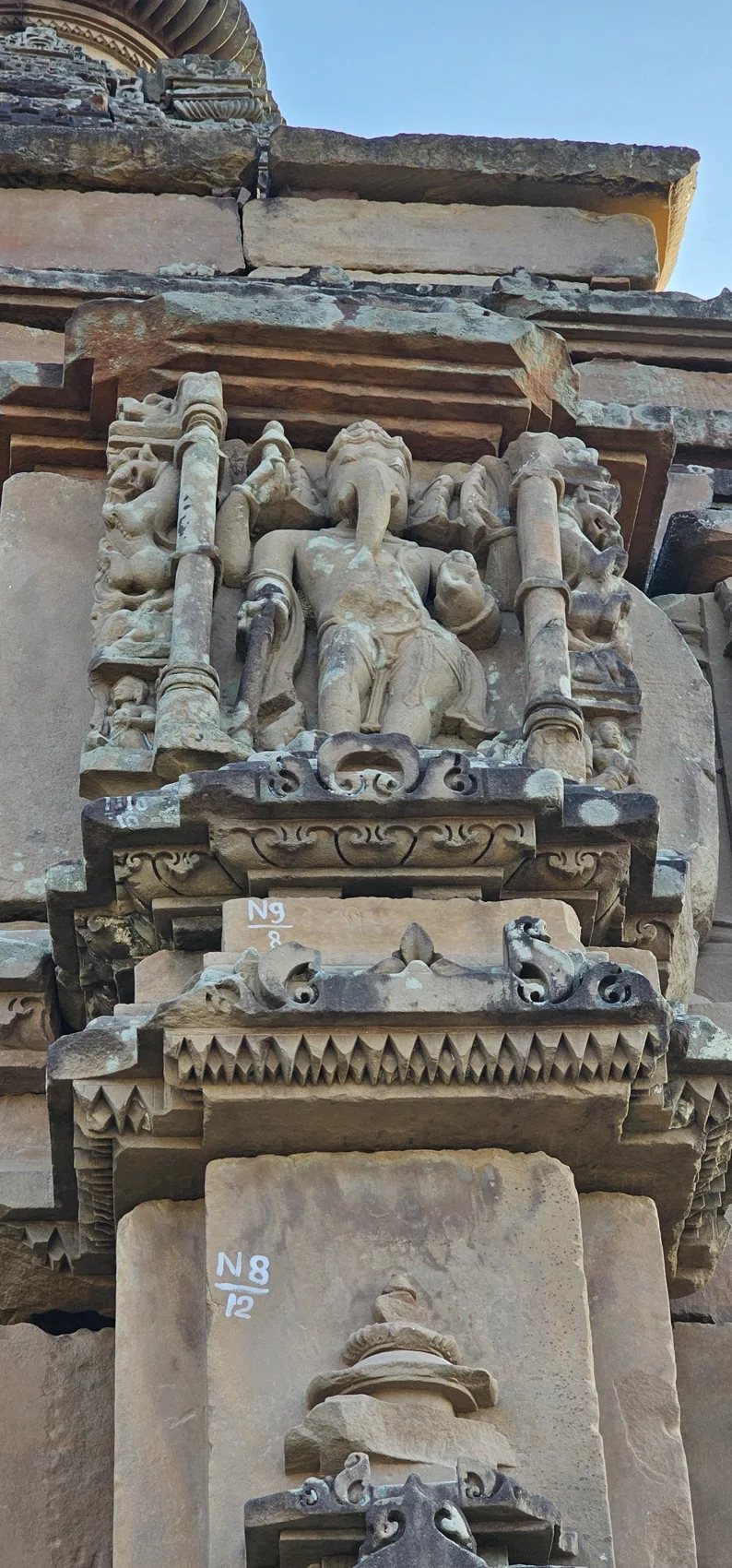
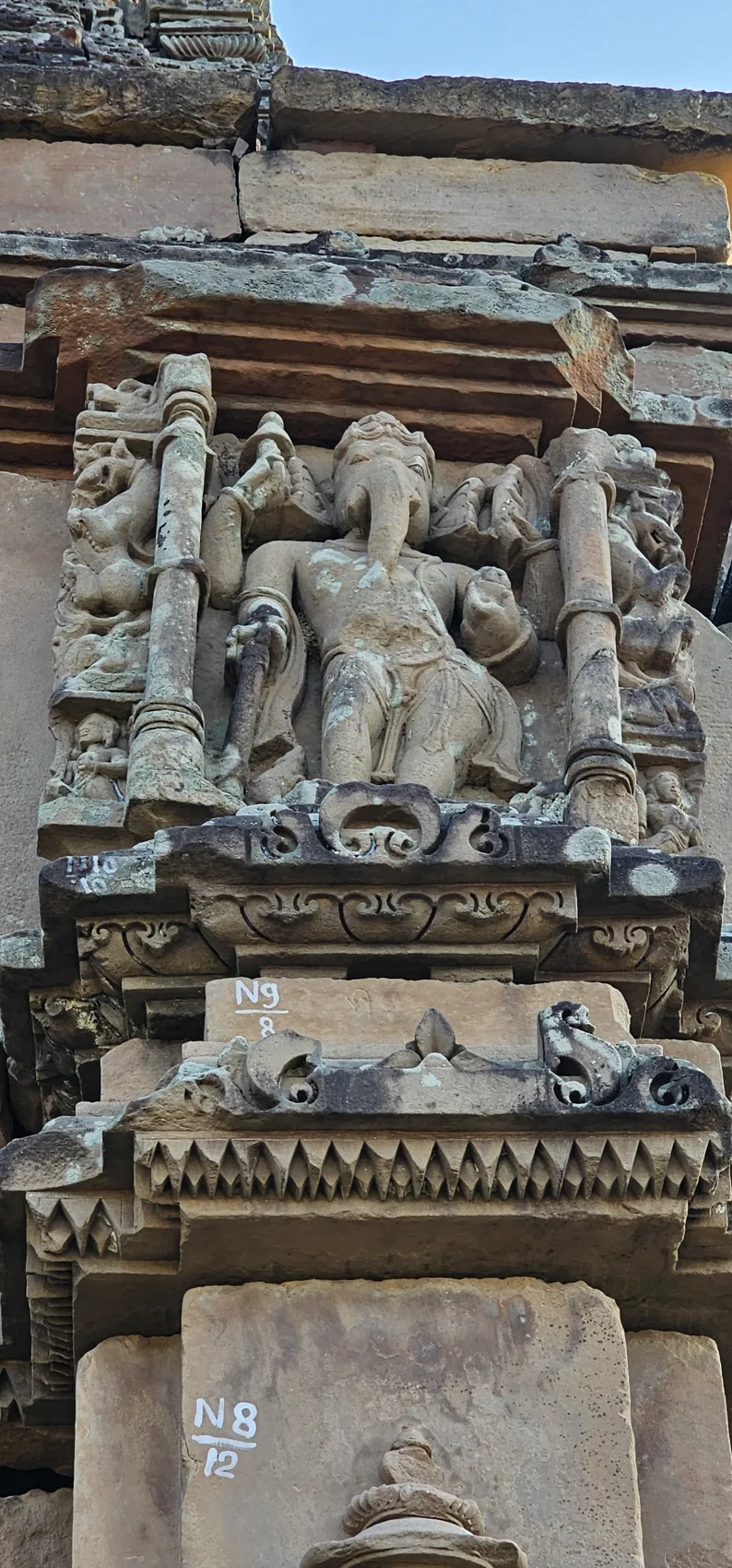
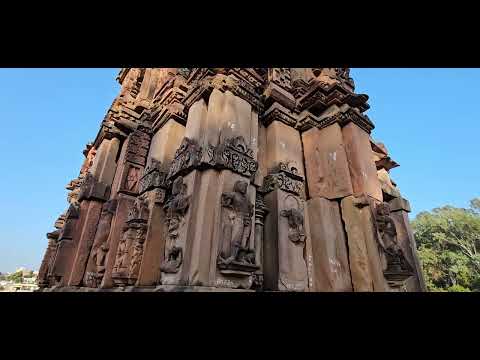
The Bajramath was where we lingered longest. It is a single temple with three shrines set side by side, and its original dedication is a small map of medieval India’s open-hearted faith: the central shrine to Surya, the sun god; the southern to Vishnu; the northern to Shiva. Today it is cared for by the Digambara Jain community — another temple that has quietly carried more than one religion through the centuries. Its shikhara is unusual in plan, and the walls are dense with sculpture; in the late-afternoon light the carved spire turned a deep amber.
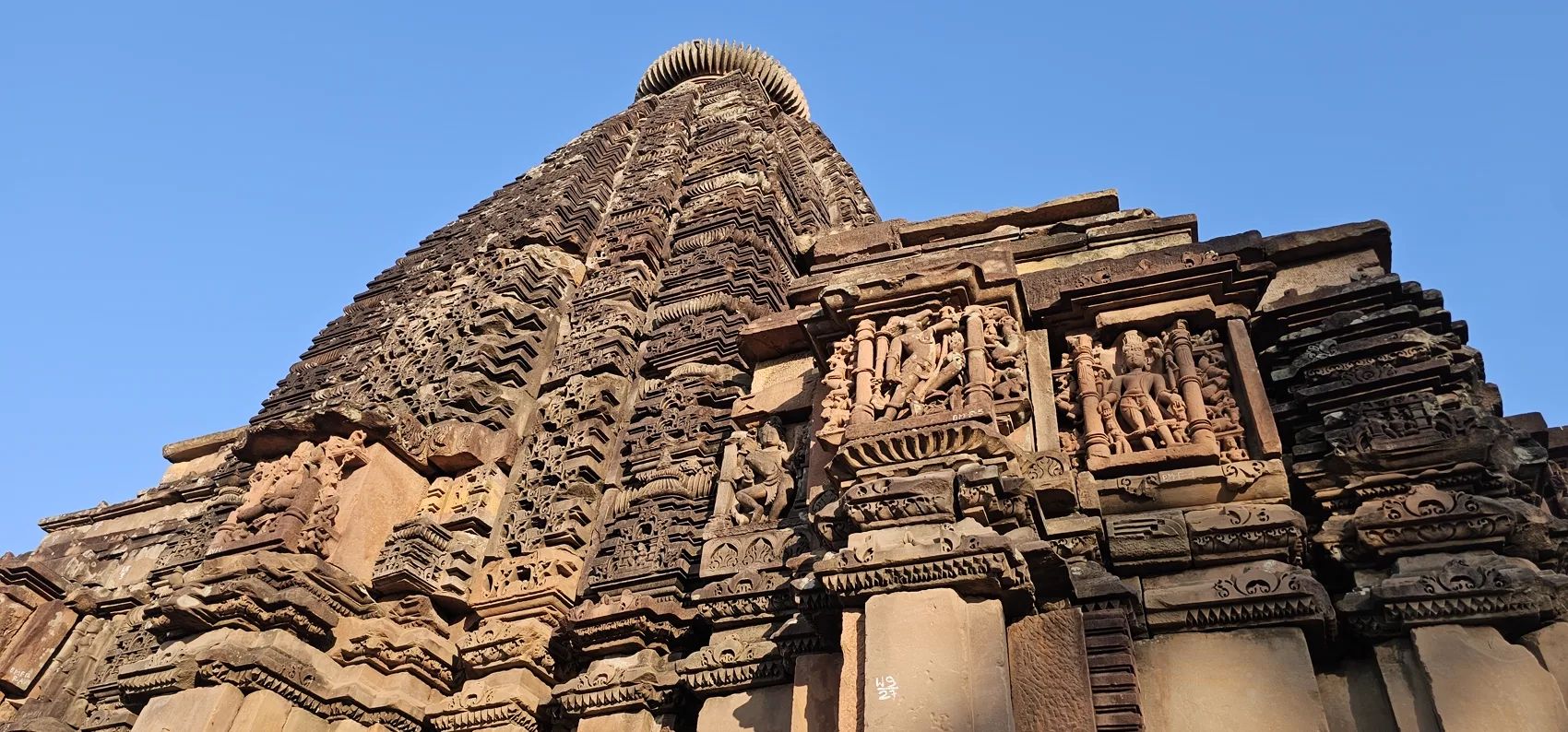
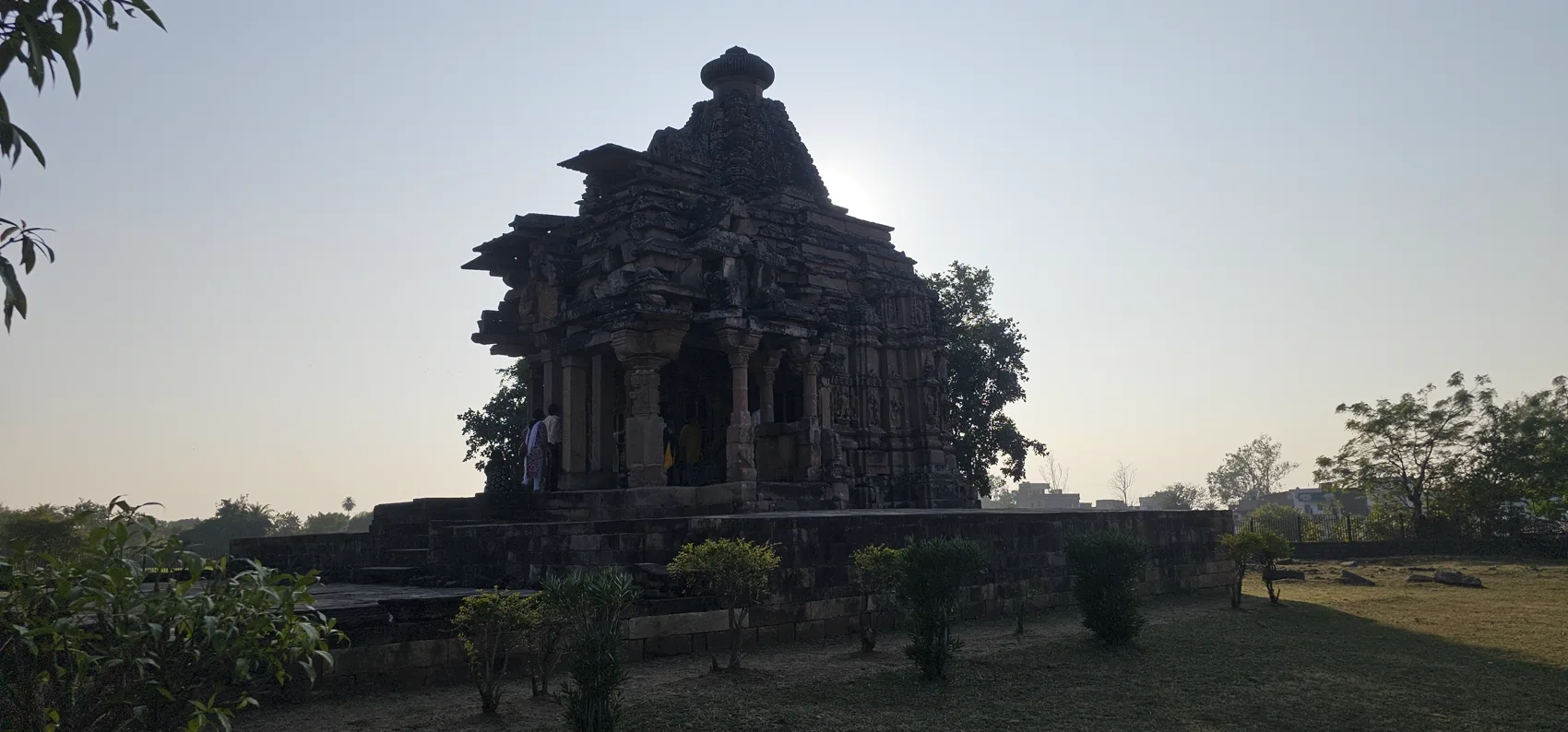
The Bajramath temple with its unusual triple-shrine shikhara
The Bajramath and its unusual triple-shrine spire.
The carved spire of the Bajramath temple at golden hour
The carved spire turning amber at golden hour.
A detailed relief on the Bajramath temple
A detailed relief on the Bajramath's dense walls.
Sculpted figures on the wall of the Bajramath temple
Sculpted figures crowd every surface.
A carved panel on the Bajramath temple, Gyaraspur
Another carved panel, deep in afternoon shadow.
The carved spire of the Bajramath temple

A living temple, and the road home

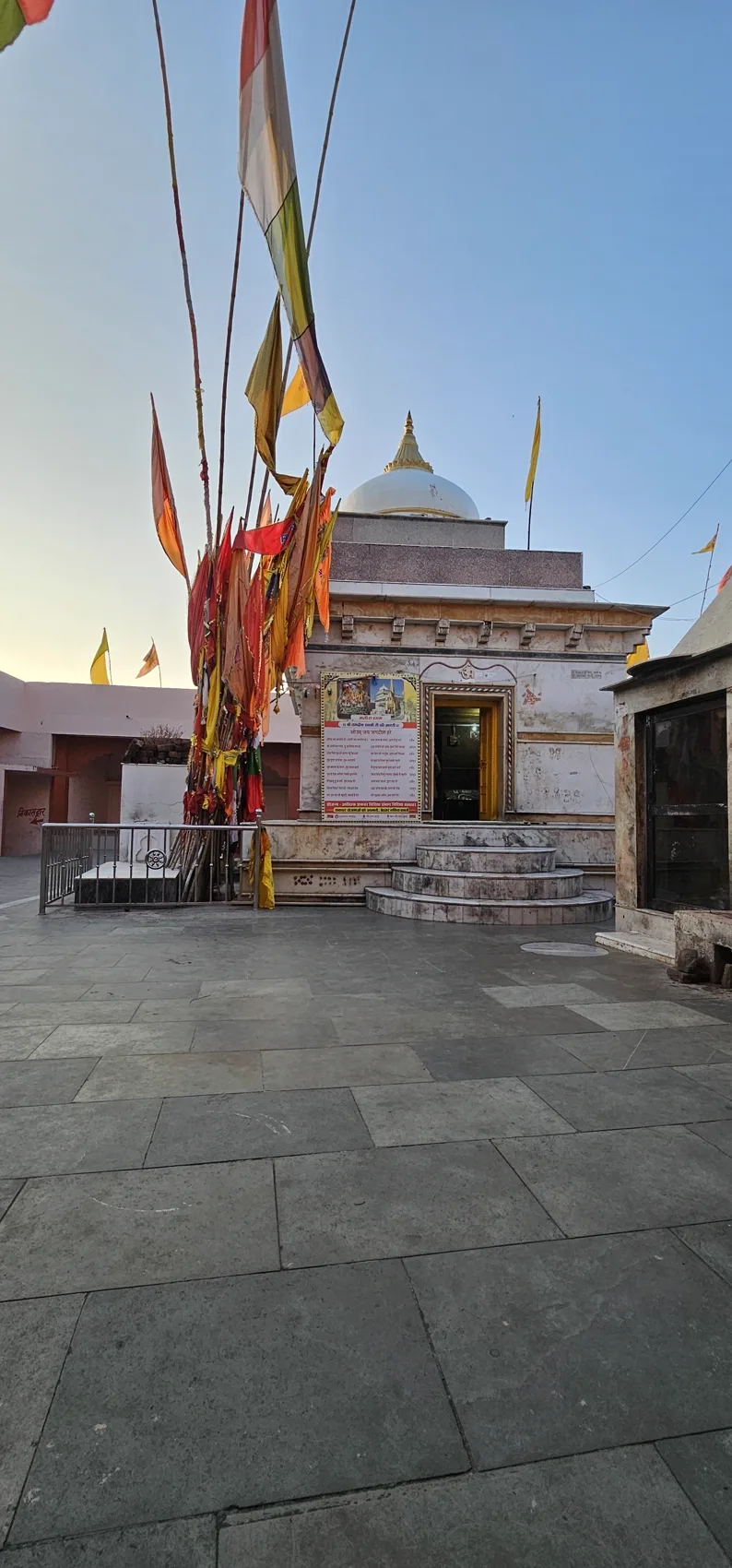
We ended the trail at the Jagdish Swami temple, and the contrast was lovely. After a day among silent, roped-off ruins, here was a temple still very much alive: whitewashed and bright, orange prayer flags snapping in the wind, worship going on as it has for generations. The old stones and the living faith, a few minutes apart.

By early evening we stopped in town for snacks, then pointed the cars back towards Bhopal. We were home by around eight — tired, sunburnt in the nicest way, and quietly amazed that a place this beautiful had been sitting two hours up the road all along.
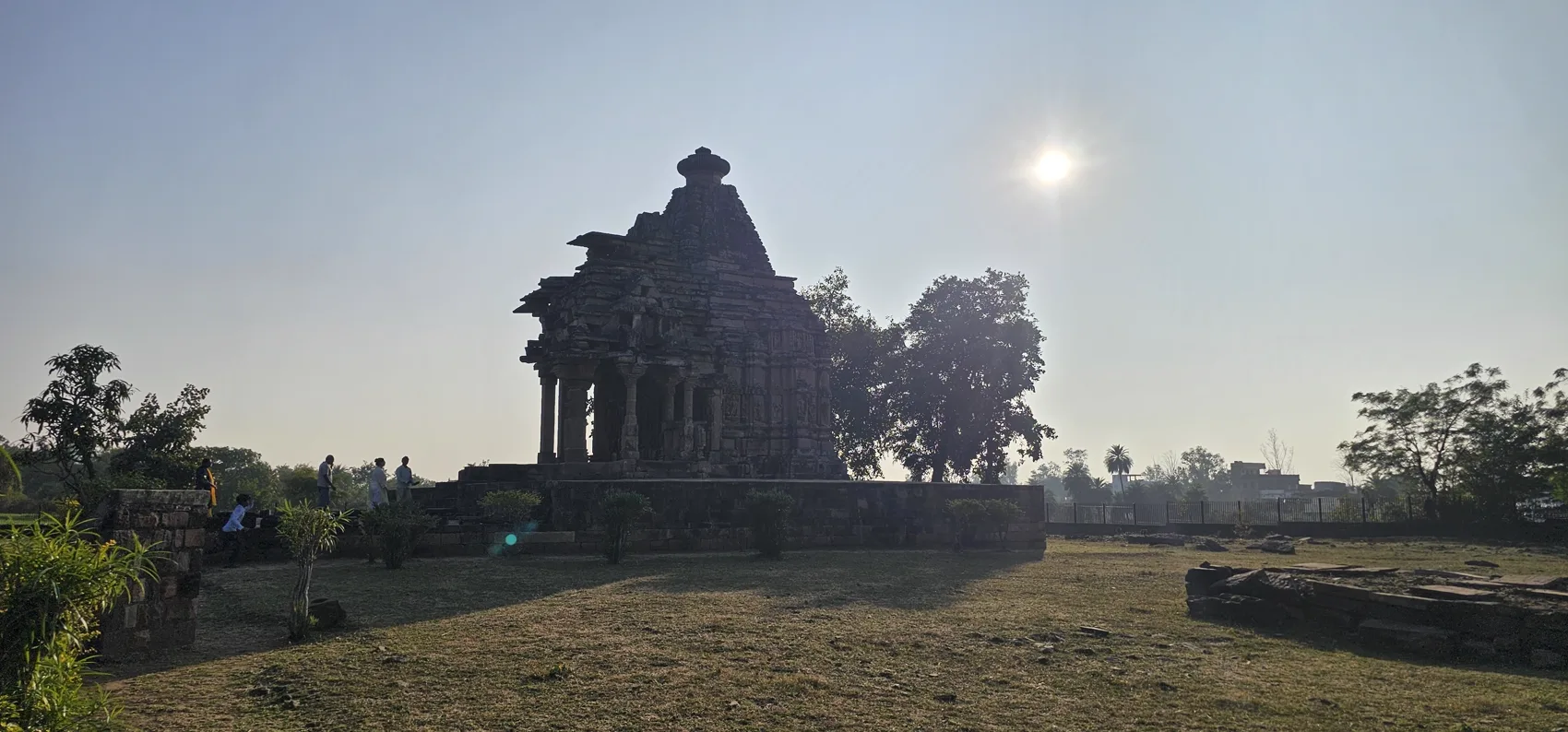
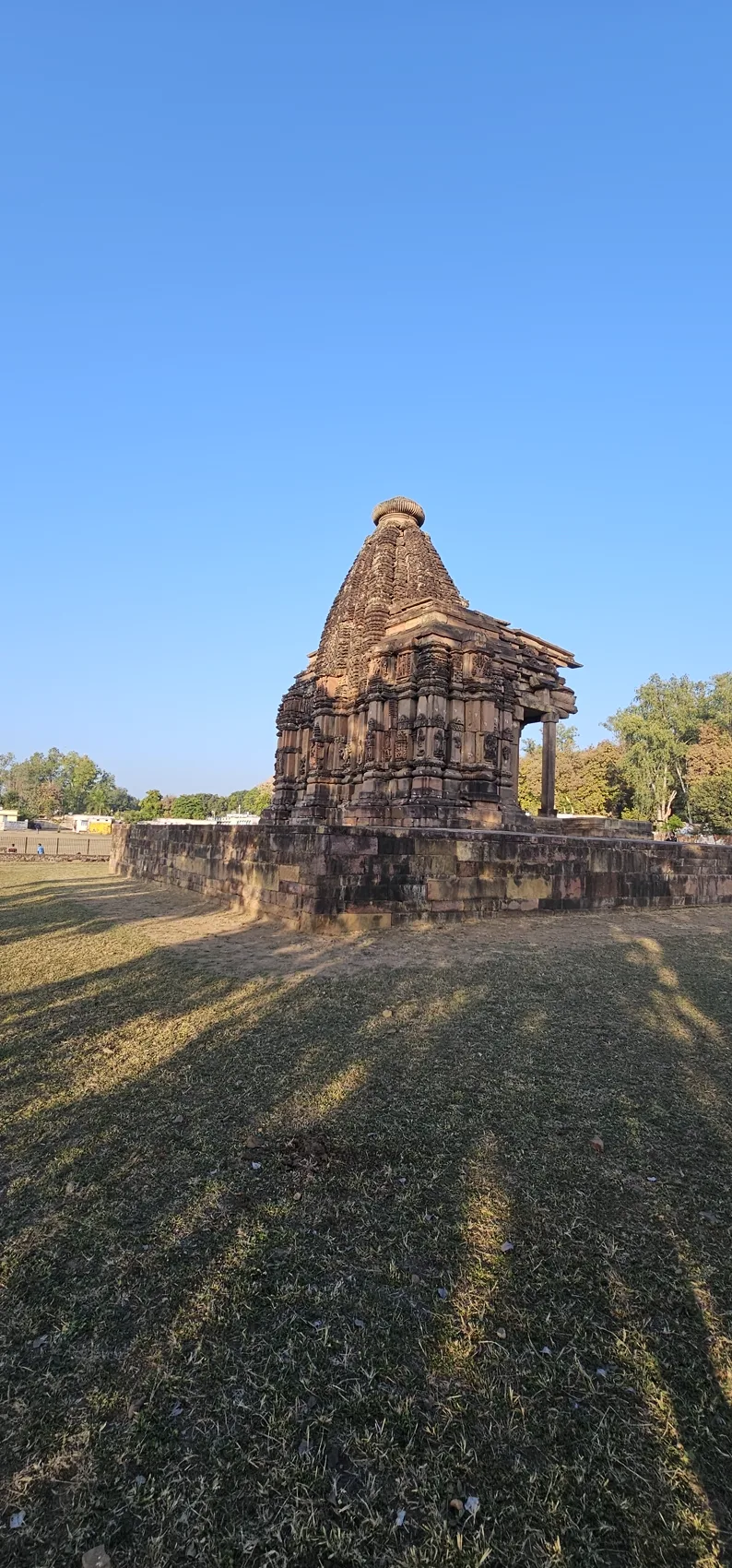
A Gyaraspur temple silhouetted at golden hour
A temple in silhouette as the sun drops.
A Gyaraspur temple in the evening light
The last evening light over the ruins.
The living Jagdish Swami temple at Gyaraspur, prayer flags flying
The living Jagdish Swami temple, prayer flags snapping in the wind.

More from the Journal: On the very same Bhopal–Vidisha route, read our Neelkantheshwar, Eran & Sanchi day trip — a temple, Gupta-era ruins and Sanchi’s night light show.


Verified June 2026 against Wikipedia, Madhya Pradesh Tourism, the ASI Bhopal Circle and other sources. All photographs © bhopali.in, from our own visit on 19 January 2025. The monuments are protected; please tread gently and take nothing but pictures.
MM

Manish Mahadware

Curious explorer from Bhopal. After ~20 years in IT, I now build websites, apps and AI-powered utilities for clients, make YouTube videos, and help people invest through mutual funds.

Why visit

  • A whole hillside of 9th–10th-century Pratihara-era temples — and almost no crowds
  • The hilltop Maladevi Temple, partly carved from the living rock, above a green valley
  • The Hindola Torana, a 10th-century gateway whose pillars carry the ten avatars of Vishnu
  • The Chaukhamba and Athkhamba — the elegant four- and eight-pillar ruins of lost temples
  • The Bajramath, with three shrines once dedicated to Surya, Vishnu and Shiva
  • An easy full-day loop from Bhopal, perfectly paired with Sanchi and Vidisha

Quick info

Timings
Open daily, roughly sunrise to sunset. The monuments are ASI-protected and unticketed; there are no fixed gates on most of them.
Entry fee
Free (ASI-protected monuments).
Best time
October to March. We went in mid-January and the weather was perfect — neither hot nor cold.
How to reach
About 100 km from Bhopal, ~2 hours by road via Raisen, Vidisha and Sanchi. There's no convenient public transport to the monuments themselves, so drive or hire a cab. It pairs naturally with Sanchi and the Udayagiri caves.

Info verified: June 2026 (Wikipedia; Madhya Pradesh Tourism; ASI Bhopal Circle; sahasa.in). Photos © bhopali.in.

Frequently asked questions

Where is Gyaraspur and how far is it from Bhopal?
Gyaraspur is a small town in Vidisha district, Madhya Pradesh — about 38 km north-east of Vidisha and roughly 100 km from Bhopal, around a two-hour drive via Raisen, Vidisha and Sanchi.
What is there to see in Gyaraspur?
A remarkable cluster of 9th–10th-century monuments: the hilltop Maladevi Temple, the Hindola Torana gateway, the Chaukhamba (four pillars) and Athkhamba (eight pillars), the Bajramath with its three shrines, and a nearby Buddhist stupa — plus the living Jagdish Swami temple. Together they show Hindu, Jain and Buddhist worship side by side.
How much time do you need, and is it a good day trip?
Yes — it's an excellent full-day trip from Bhopal. Give the monuments two to three relaxed hours, and pair the day with Sanchi and the Udayagiri caves, which lie on the way.
What are the timings and the entry fee?
The monuments are ASI-protected, open through daylight hours, and free to visit. Most stand in the open with no ticket gate. Always confirm locally.
When is the best time to visit Gyaraspur?
October to March, the cool Madhya Pradesh winter. We visited in mid-January and the weather was ideal. Avoid the peak of summer.
Is Gyaraspur good for families and children?
Very much so. The sites are open and easy to wander, the hilltop has space to relax, and there's almost no crowd. We made a day of it with three families, a packed picnic lunch and even some kite-flying on the ridge.