bhopali.in
हिन्दी
A natural rock shelter at Bhimbetka with prehistoric significance
Photo: Bernard Gagnon / Wikimedia Commons (CC BY-SA 3.0)
bhimbetka unesco prehistoric rock-art day-trip near-bhopal

Bhimbetka Rock Shelters Near Bhopal

· 2 min read
Share this

At Bhimbetka, you stand in front of art made by people tens of thousands of years before recorded history. Tucked into forested sandstone hills about 45 km south of Bhopal, these rock shelters hold some of the oldest known paintings on Earth — and some of the earliest evidence of human life anywhere on the Indian subcontinent. It’s a UNESCO World Heritage Site, and it quietly rearranges your sense of time.

What makes it extraordinary

Bhimbetka isn’t a single cave — it’s a landscape of around 750 rock shelters scattered across the hills, formed naturally where wind and water hollowed out the sandstone. Early humans sheltered here, and across an immense span of time they painted the walls and ceilings.

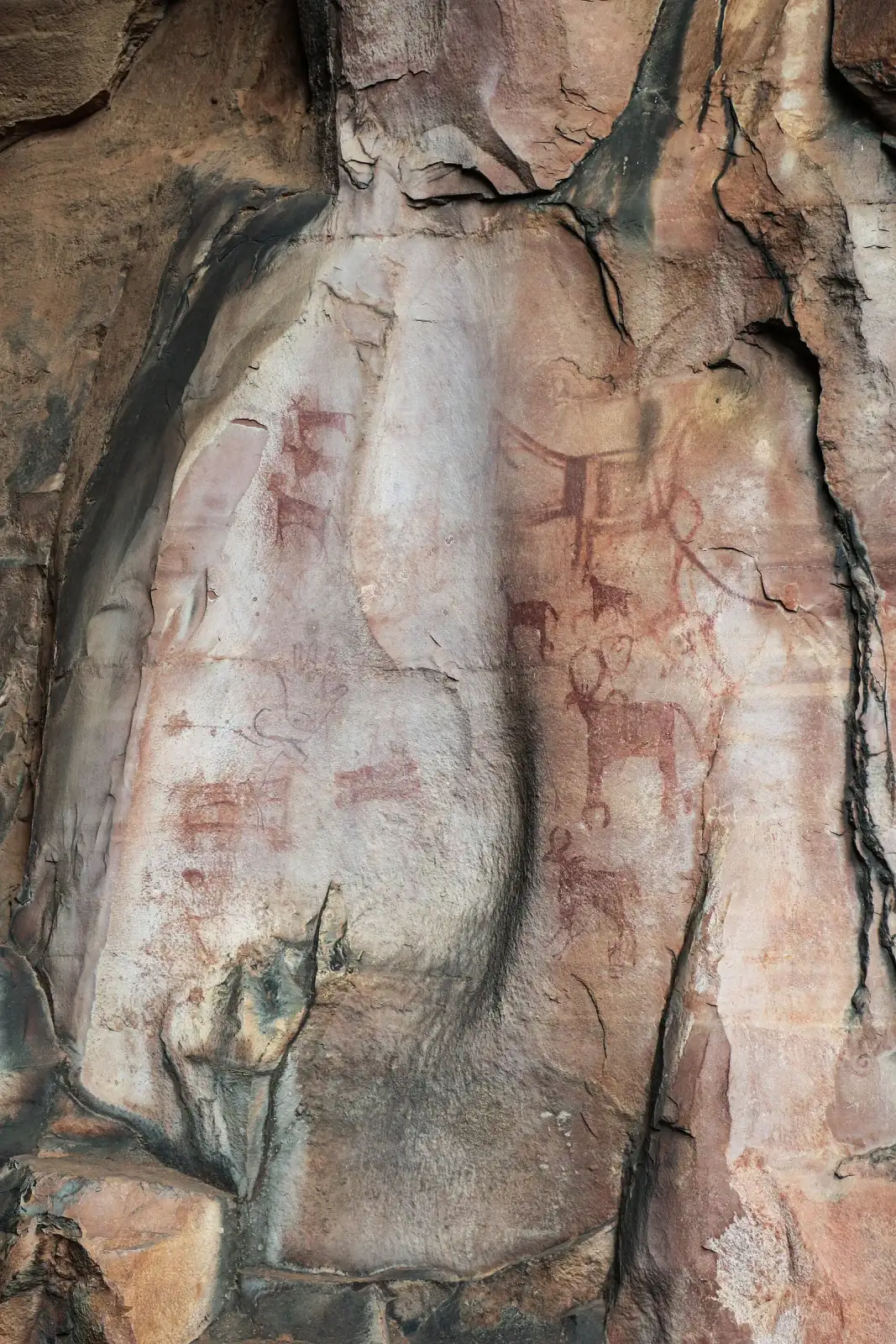
The paintings are made in natural red (ochre) and white pigments, and what’s striking is how alive they are: herds of deer and bison, tigers and elephants, hunters with bows, rows of dancers, people on horseback, scenes of daily life. Layer upon layer, painted over thousands of years by different generations — so a single rock face can hold both Stone Age and much later images. It is, in effect, humanity’s longest-running art gallery.

Walking the site

A marked trail loops past the most important shelters (the famous ones are numbered). Allow two to three hours to walk it slowly and actually look — the paintings reward patience, and many are faint. You’ll pass the dramatic balanced rock formations the hills are known for, and viewpoints over the Ratapani forest below.

Getting there & pairing it

Bhimbetka sits off the NH-46 (Bhopal–Hoshangabad road) within the Ratapani Wildlife Sanctuary. There’s no convenient bus to the shelters themselves, so drive or hire a cab for the day. The road climbs into the forest near the end — pleasant, but go carefully in the monsoon.

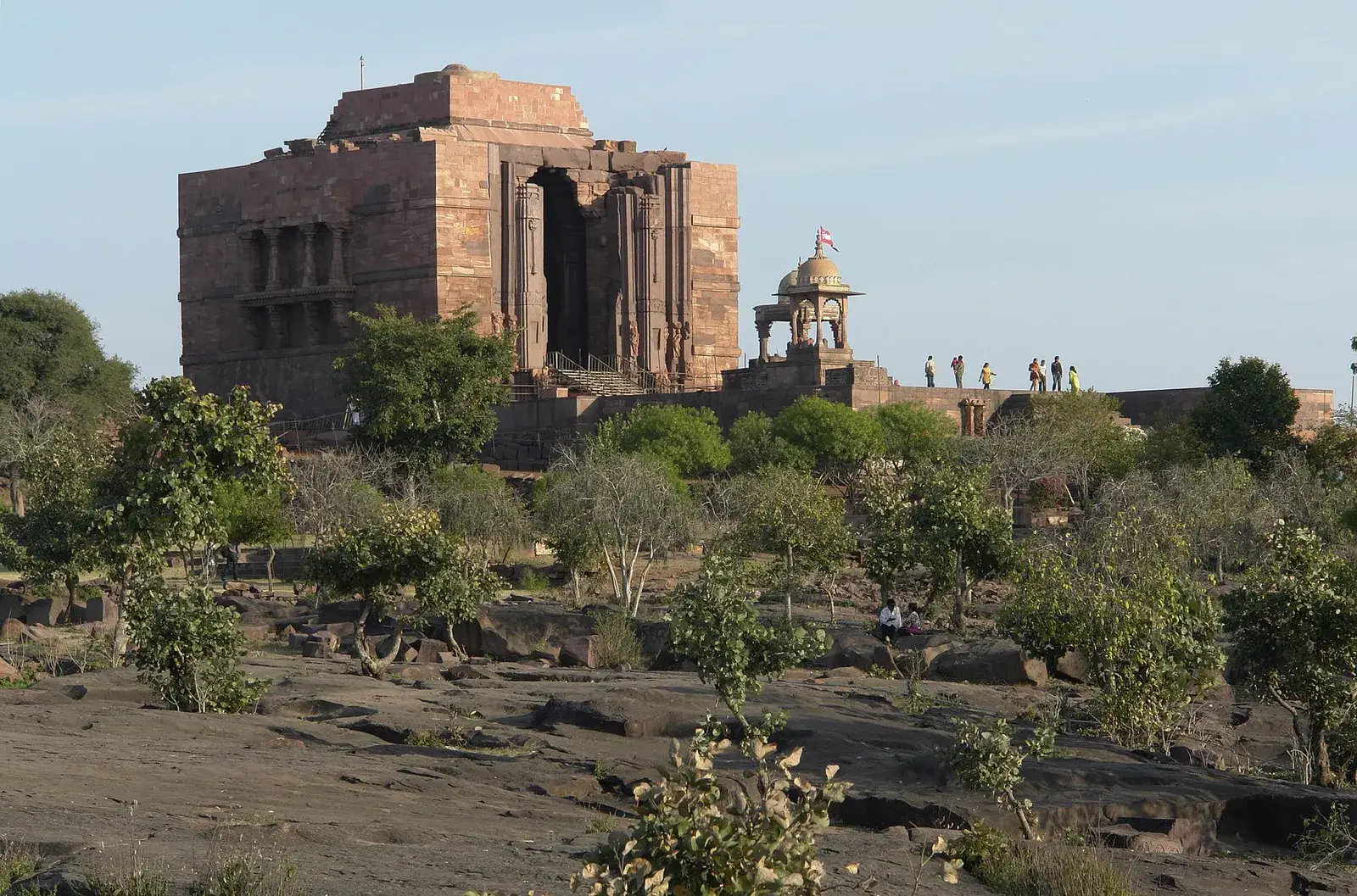
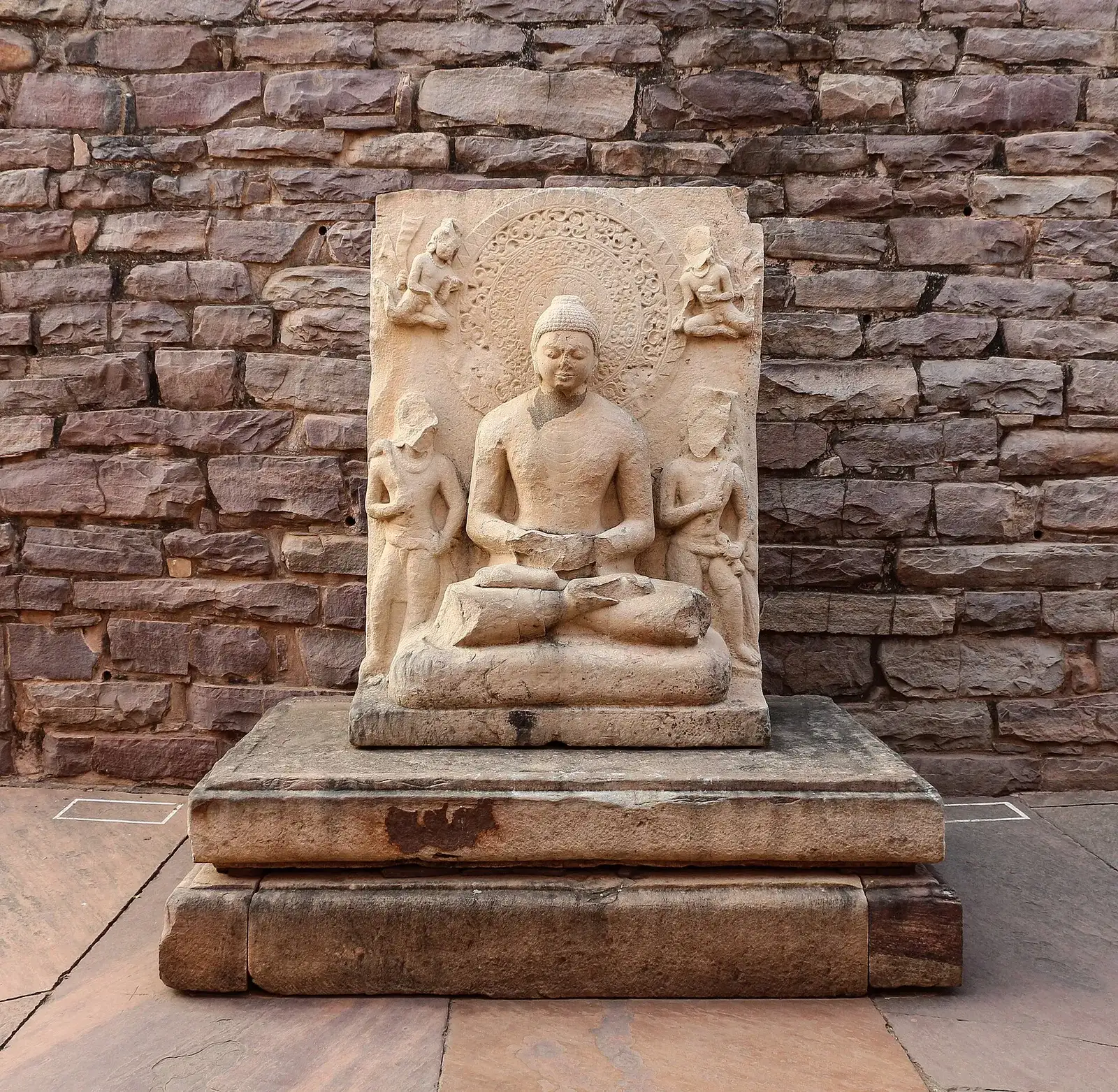
It pairs beautifully with the Bhojeshwar Temple at Bhojpur, which lies on the same side of the city, for a single day of “ancient Madhya Pradesh.” (If you’d rather do Buddhist history, Sanchi is the other great day trip, on the opposite side of Bhopal.)

Please don’t touch the paintings or the rock surfaces — the oils from skin damage pigments that have survived for millennia. We get to see them only because others didn’t.


Verified June 2026 against Madhya Pradesh Tourism, ASI and UNESCO. Exact entry fees and timings can change — please confirm at the ASI ticket counter.
MM

Manish Mahadware

Curious explorer from Bhopal. After ~20 years in IT, I now build websites, apps and AI-powered utilities for clients, make YouTube videos, and help people invest through mutual funds.

Why visit

  • UNESCO World Heritage Site with prehistoric paintings tens of thousands of years old
  • Some of the earliest traces of human life on the Indian subcontinent
  • Around 750 rock shelters across forested sandstone hills
  • An easy ~45 km day trip from Bhopal, often paired with Bhojpur

Quick info

Timings
Open all days, roughly sunrise to sunset (about 7 AM–6 PM). Visit in daylight; the painted shelters need good natural light.
Entry fee
Low for Indian visitors and higher for foreign nationals (ASI rates), plus a separate vehicle charge to drive up to the shelters. Reported figures vary across sources, so confirm the current rate at the ASI ticket counter. (Checked June 2026.)
Best time
October to March, late morning to mid-afternoon when light reaches into the shelters. Avoid the monsoon for the forest road.
How to reach
About 45 km south of Bhopal on the Bhopal–Hoshangabad (NH-46) road, ~1 to 1.5 hours by car. There's no convenient public transport to the shelters themselves — drive or hire a cab. The final stretch climbs into the Ratapani forest.

Info verified: June 2026 (Madhya Pradesh Tourism; ASI; UNESCO; Wikipedia)

Frequently asked questions

How old are the Bhimbetka paintings?
The oldest paintings at Bhimbetka are estimated to be many tens of thousands of years old, with the rock shelters showing evidence of human use stretching back to the Stone Age (Paleolithic). Later paintings were added over a very long span, up to the historical period — making the site a continuous record of human life.
How far is Bhimbetka from Bhopal and how do you reach it?
Bhimbetka is about 45 km south of Bhopal on the NH-46 (Hoshangabad road), roughly 1 to 1.5 hours by car. There's no direct public transport to the shelters, so it's best to drive or hire a cab for the day.
What are Bhimbetka's timings and entry fee?
It's open every day, roughly sunrise to sunset (about 7 AM to 6 PM). Entry is low for Indian visitors and higher for foreign nationals under ASI rates, with a separate charge to take a vehicle up to the shelters. Reported figures vary, so confirm the current fee at the ASI ticket counter.
Why is Bhimbetka a UNESCO World Heritage Site?
Bhimbetka preserves one of the world's largest and oldest collections of prehistoric rock art, alongside evidence of early human settlement. It came under ASI protection in 1990 and was inscribed as a UNESCO World Heritage Site in 2003.
What will I actually see there?
A walking trail links a series of natural sandstone shelters whose walls and ceilings carry paintings of animals (deer, bison, tigers, elephants), hunting scenes, dancers, and everyday life, drawn in natural red and white pigments.