You can drive out of Bhopal after breakfast and touch 2,300 years of history before dinner. On one January Sunday, two families did exactly that — a thousand-year-old Shiva temple that still rings with bells, a field of giant Gupta-era stone gods, a full moon over the road, and a laser show that lights up the Sanchi stupa in the dark. Almost nobody outside Bhopal knows this loop exists. Here is the whole day, and how you can do it too.
Out of Bhopal, into the fog
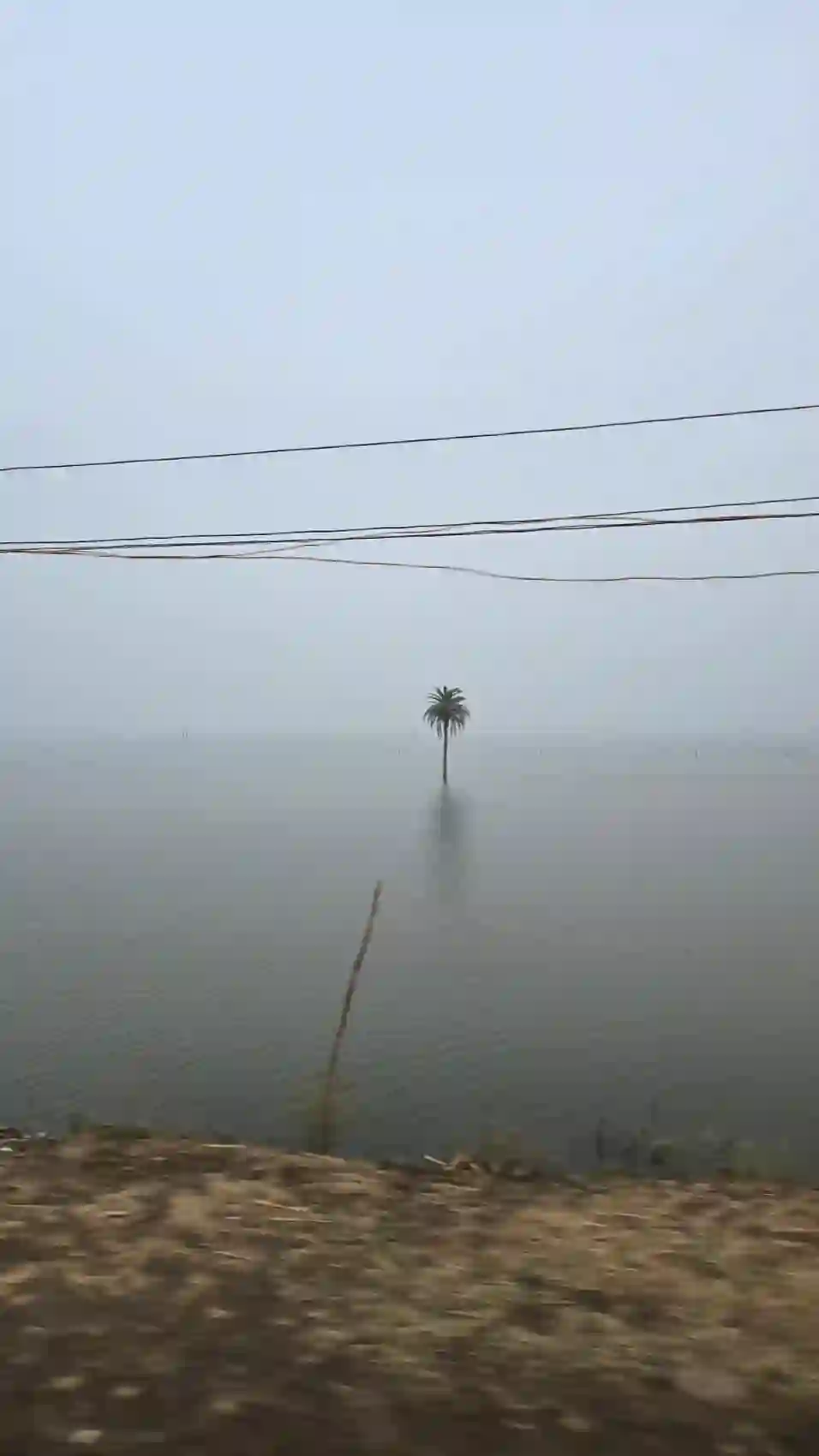
We were two families travelling together — the best kind of day trip, with room for chatter, snacks and children’s questions. We ate breakfast at home, gathered up, and drove north out of Bhopal while the winter fog still lay thick over everything. On the edge of the city the road ran past a wide lake wrapped in mist, a lone palm standing far out in the grey water — the kind of quiet, dreamy start that tells you the day will be good.

We made a quick washroom-and-tea stop at the MP Tourism complex at Sanchi, waved at the stupa on its hill (we would come back for it after dark), and kept going toward Vidisha and Udaypur. The countryside opens up fast once you pass Vidisha — wheat fields, small towns, and then, rising above a village, a stone spire you do not expect.
Neelkantheshwar: a thousand-year-old spire
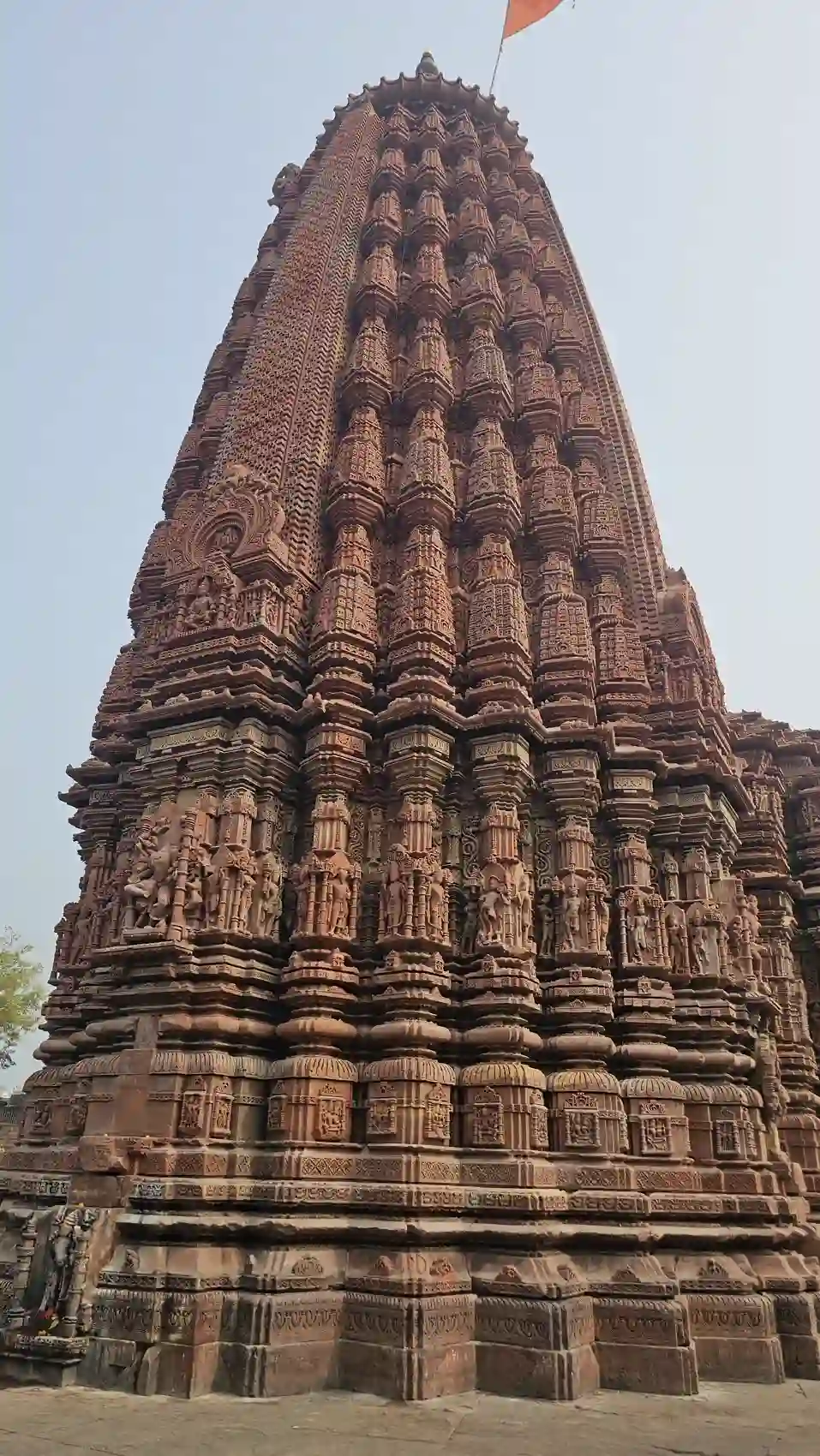

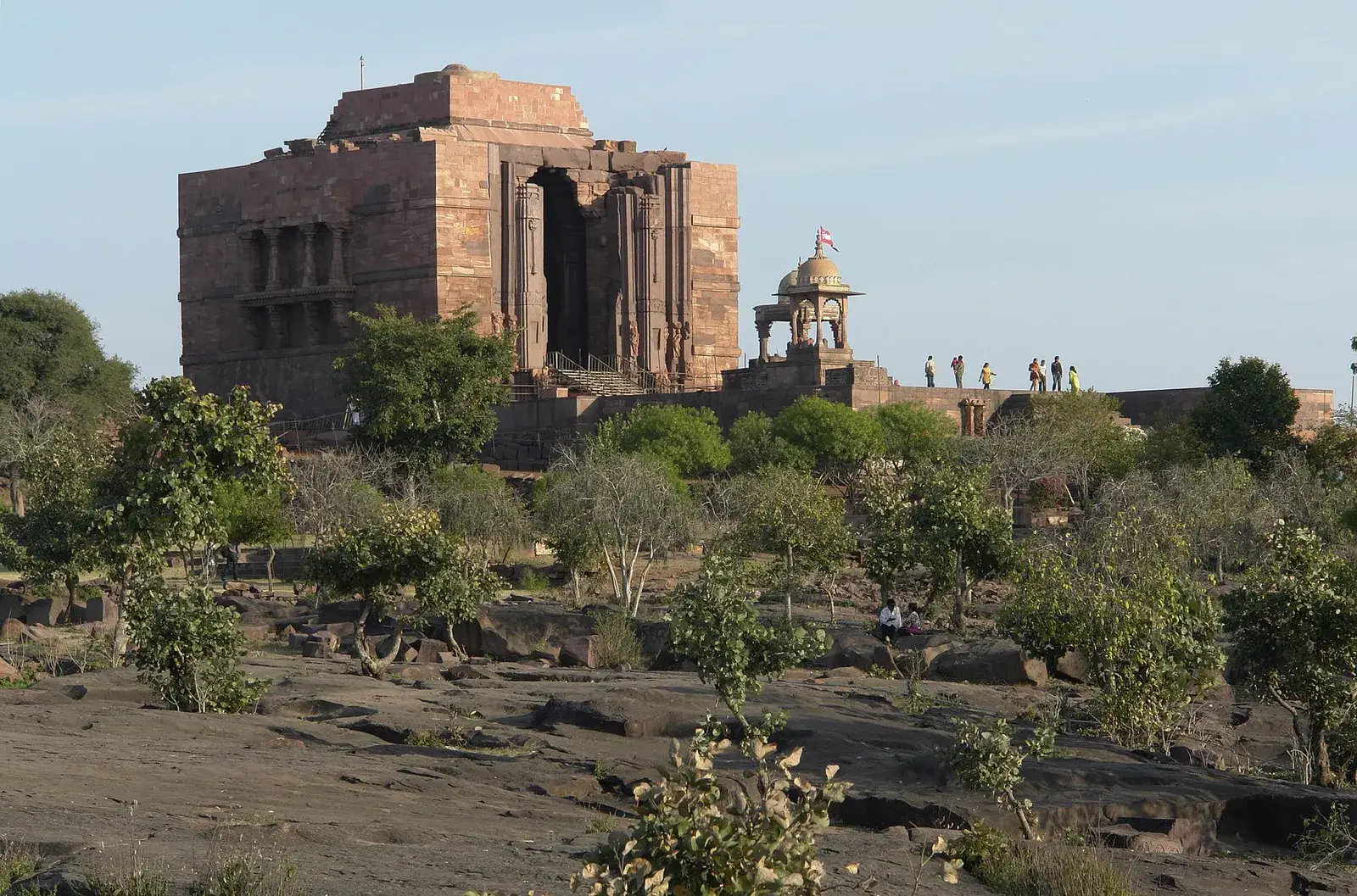
The Neelkantheshwar Temple — its formal name is the Udayeshwar Mahadev Temple — is a big surprise for a small village. It was built by the Paramara king Udayaditya, younger brother of the famous king Bhoja, and finished around 1080 CE. That makes it more than 940 years old. It is the only royal temple of the Paramara dynasty still standing, and it is protected by the Archaeological Survey of India.
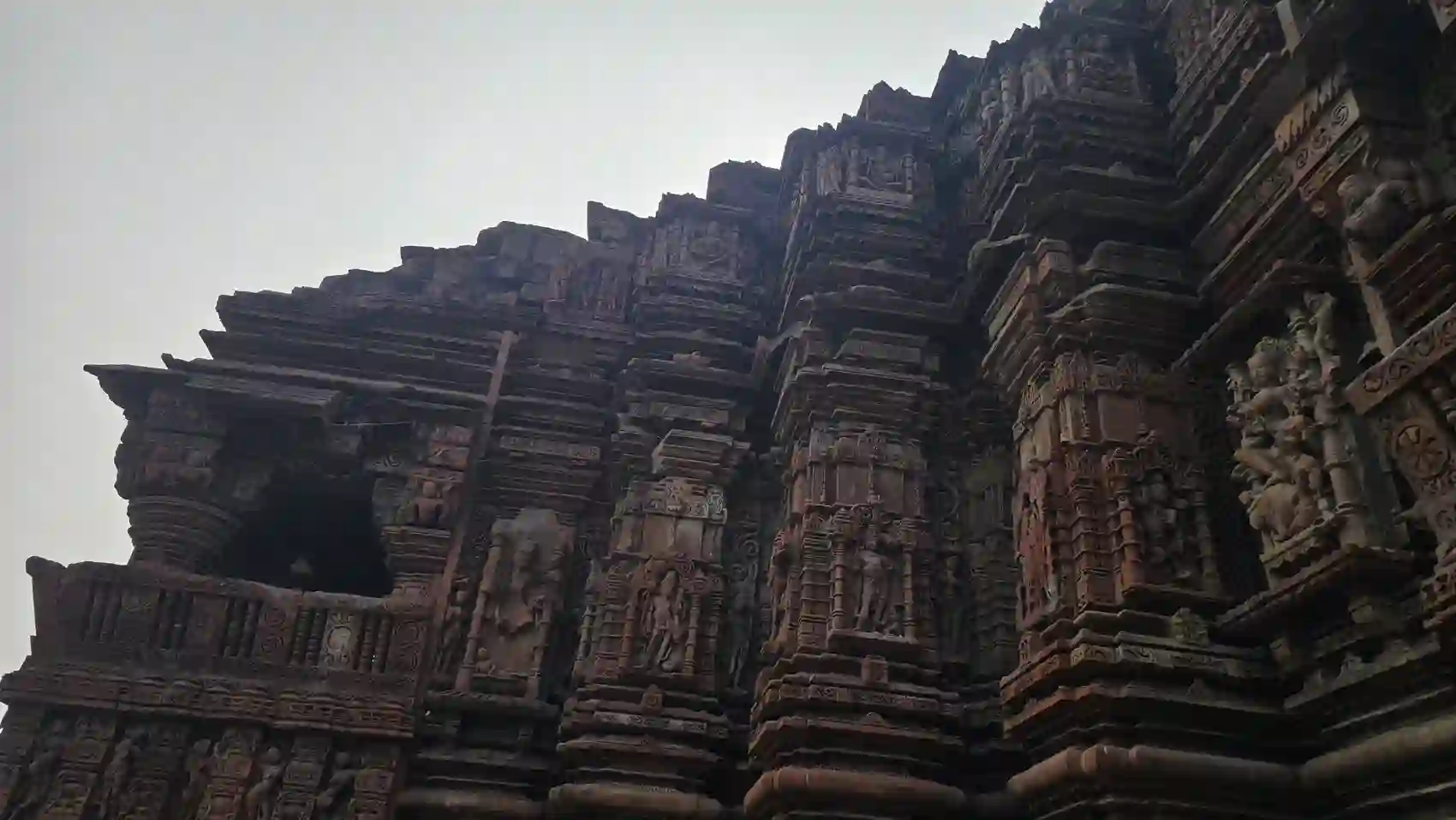
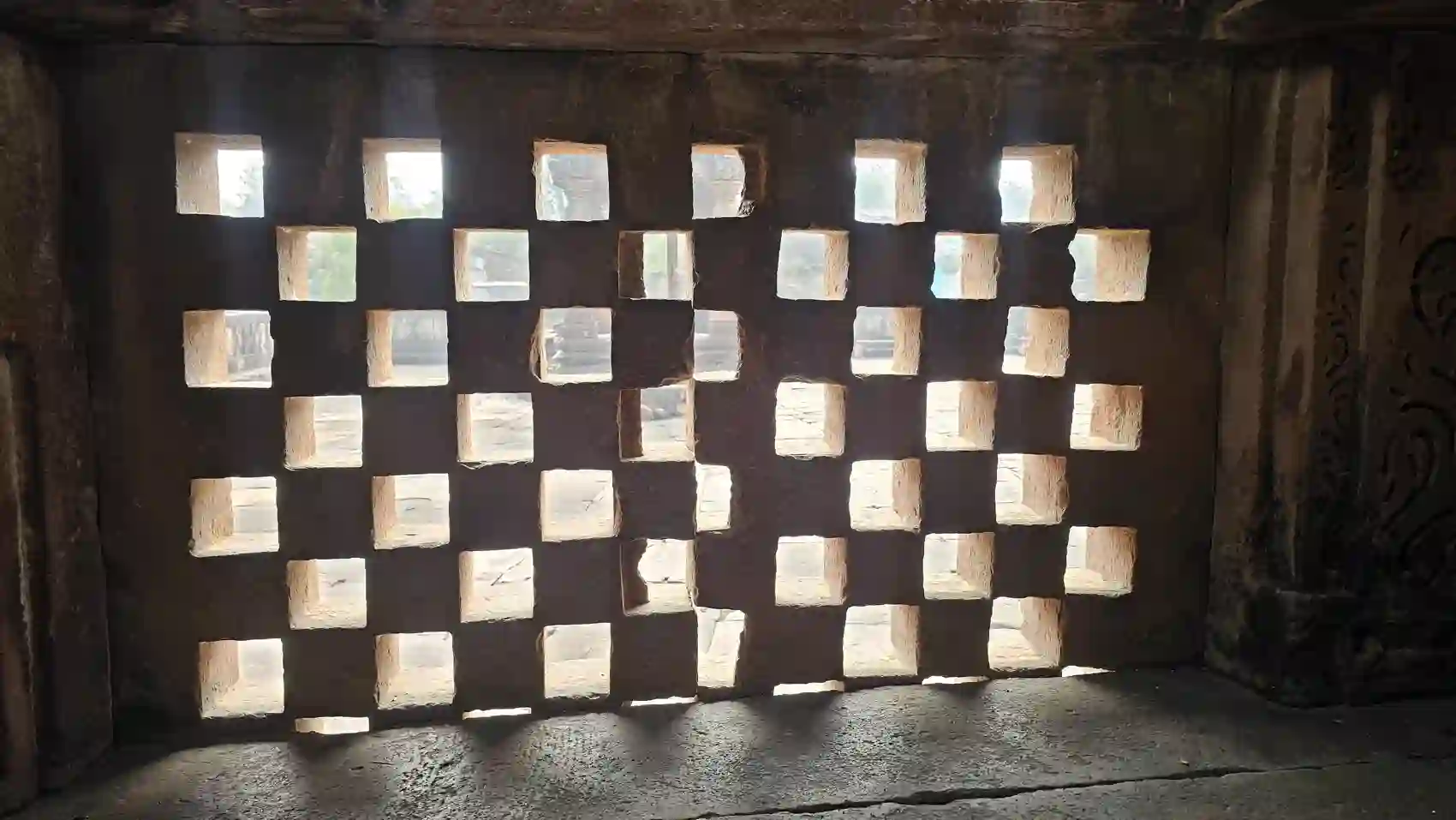
The temple is carved from red sandstone in a style called Bhumija. Look closely at the tall tower (the shikhara): it is covered with rows of small stone spires, all rising toward one peak, like a mountain made of smaller mountains. Every surface is worked — bands of gods, guardians and dancers climb the walls. The builders even cut lattice screens (jali) straight out of the sandstone, so daylight falls inside as soft squares of gold.

What the temple priest told us
We were lucky: the temple priest, Pandit Naveen Krishna Shastri, took time to walk us through the story. The name, he said, comes from Uday — sunrise: the temple faces east so the first ray of the morning sun falls on the face of the deity. Locally people also call it the “Dehra”, because the whole “body” of the temple is covered in carving so fine you could never manage it in clay — only patiently, in hard stone.
His best story was about how it was built. There is a legend that the temple went up “in a single night.” Really, he said, it took about forty-five years — because in the old tradition the builders cut and shaped the stones through the month and assembled the temple only on the most auspicious nights (the Pushya nakshatra). Piece by auspicious piece the great spire rose — “not one night,” as he put it, “one auspicious day,” again and again.
Inside, he showed us the black-stone Shiva Linga, kept under a protective cover that is opened only on special days, and a Parvati figure from the temple’s own time. Local tradition, he added, says invaders in later centuries tried to wall the temple up — but it survived. Nine hundred years on, the bell still rings here every morning.
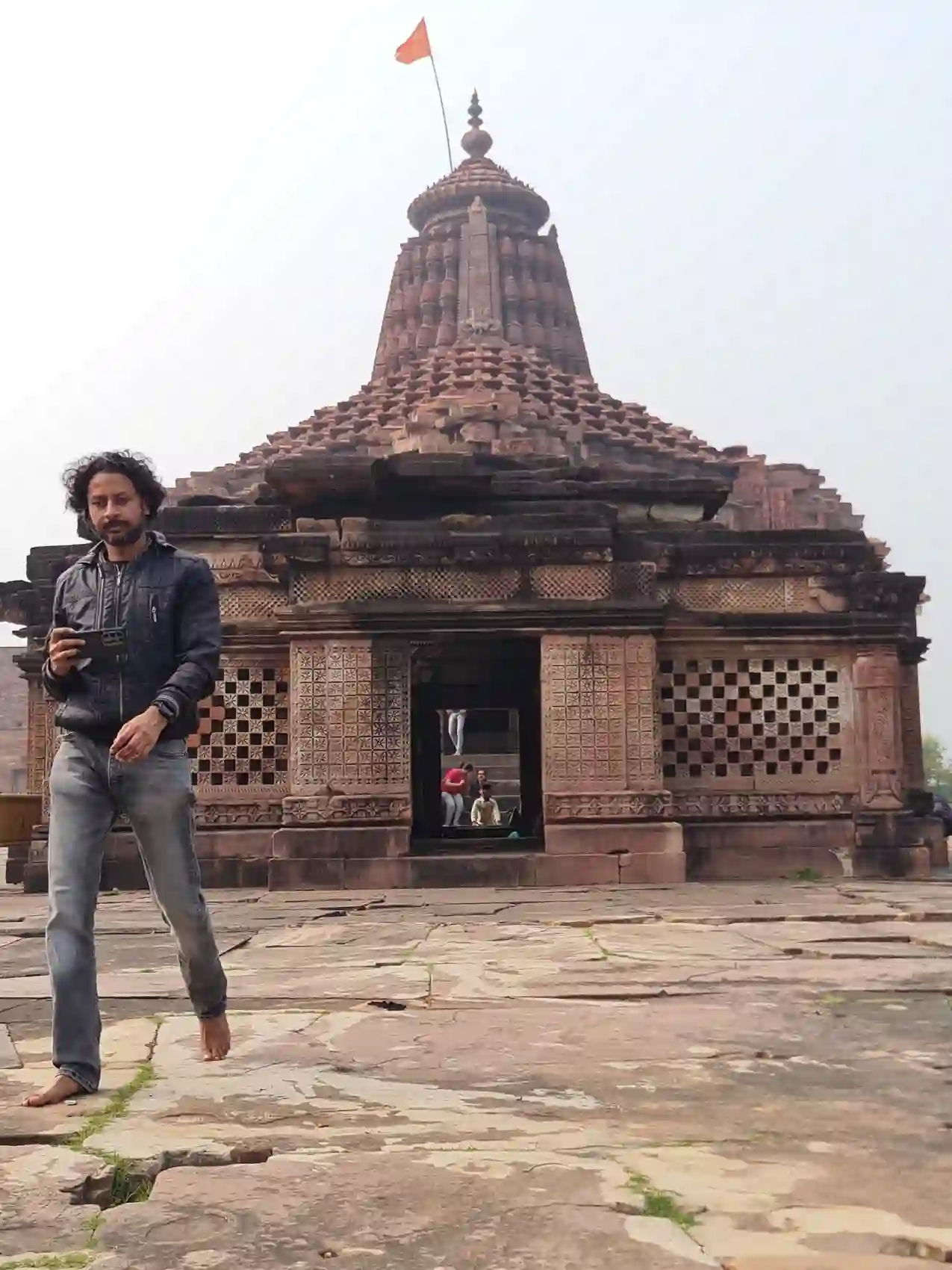
The temple was carefully restored in 1929 by the Gwalior State under the archaeologist M. B. Garde — the same age of Indian archaeology as Sir John Marshall, who restored the Sanchi stupa you can see at the end of this same day.
A hot meal, and a jackal in the fields
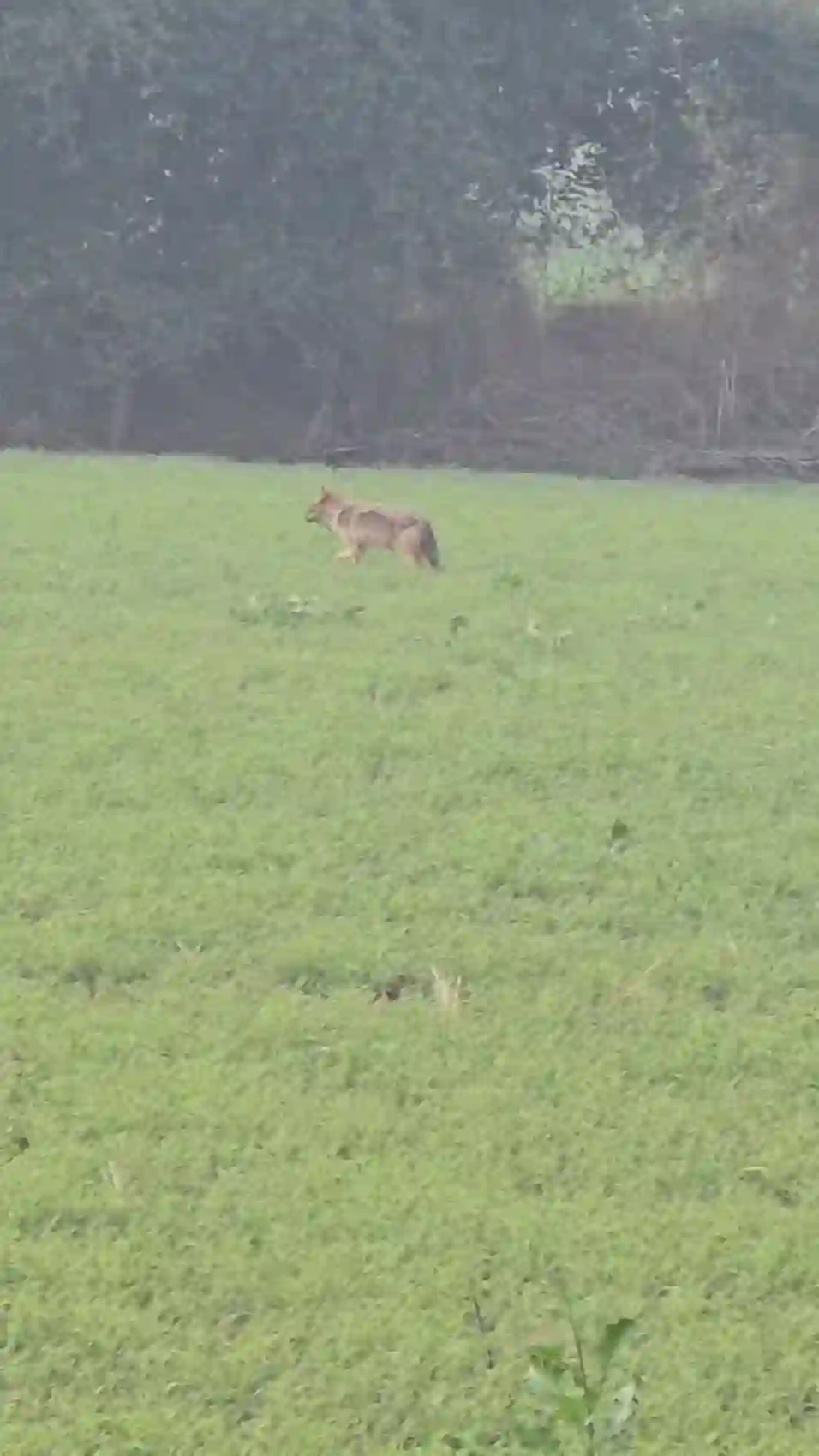
Here is our small secret for long day trips: we carry a camping stove and a little travelling kitchen. So somewhere past Udaypur we pulled off the road, set up by the car, and cooked a fresh, hot meal in the open — far tastier than anything from a packet, and one of the happiest parts of the day. Back on the road to Eran, the fields did us a favour: a golden jackal was moving quietly through the green winter wheat — ears up, tail low, completely at home. It trotted a few steps, paused to look at us, and slipped along the hedgerow. A lovely wild bonus on a day that was mostly about stone and history.

Eran: the giant boar and a field of Gupta gods
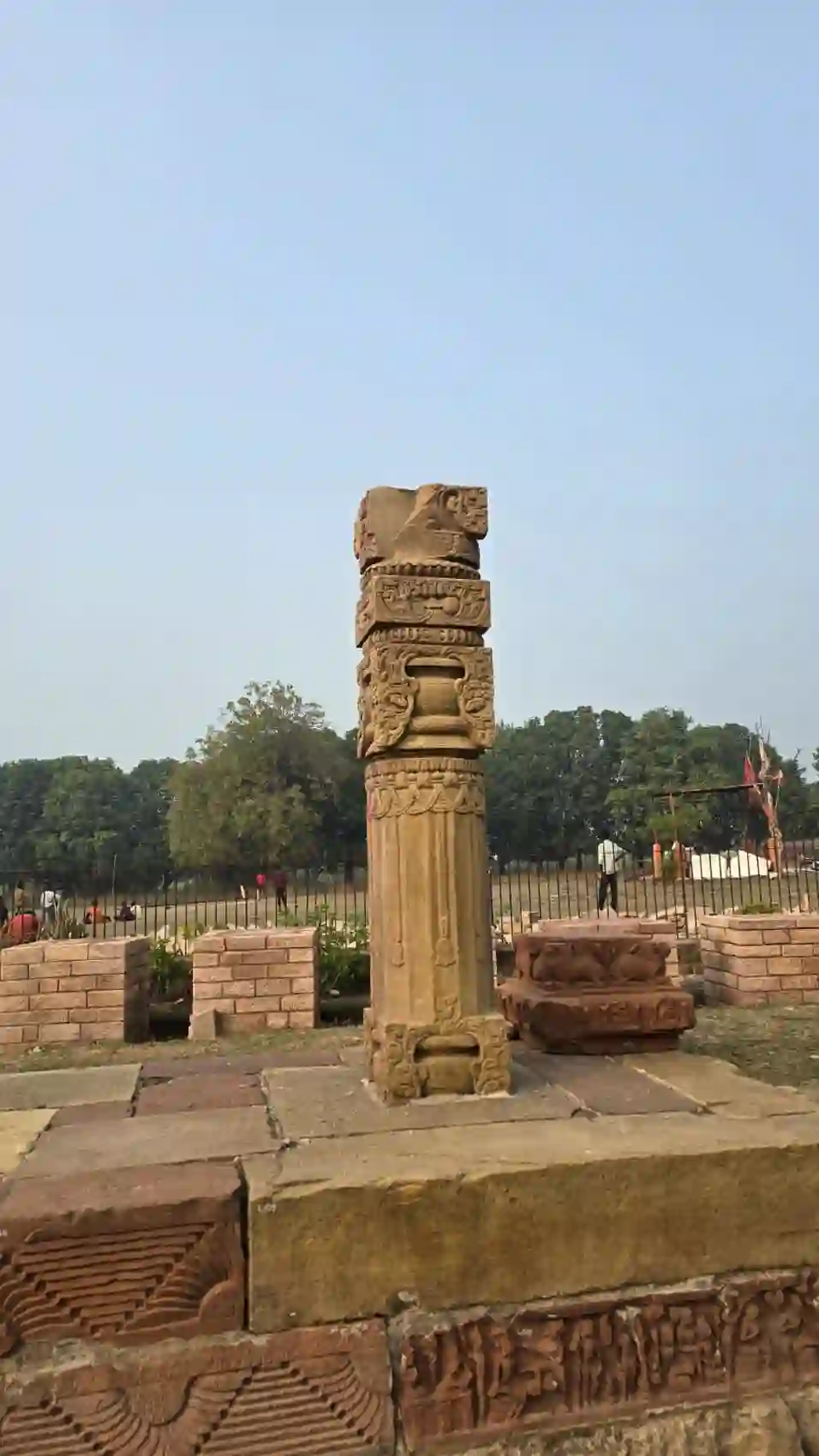
From Udaypur we drove on to Eran — a name most Indians have never heard, though it should be famous. Its ancient name was Erikina, and about 1,500 years ago it was an important town of the Gupta Empire. Today it is a quiet riverside field scattered with enormous stone gods, and you often have it almost to yourself.
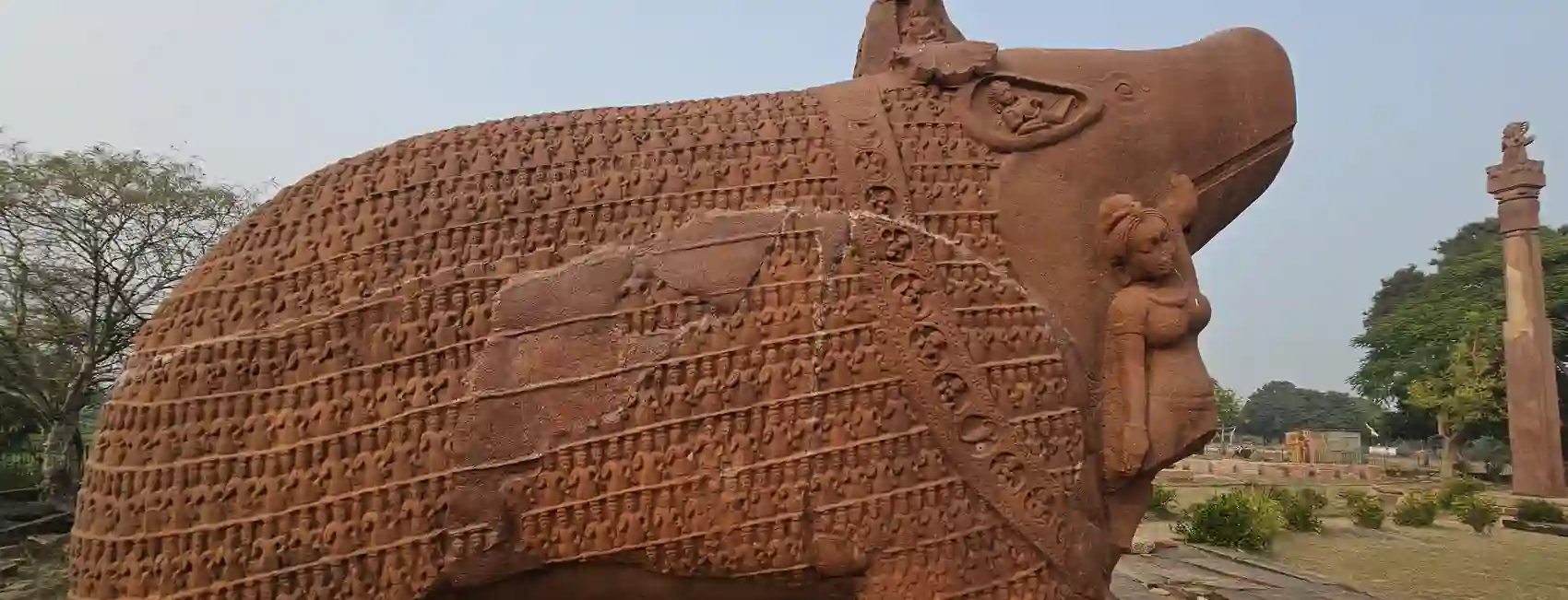
The giant stone boar stops you in your tracks. It is the Varaha — the boar form of Vishnu, who (the old story says) dived into the ocean and lifted the Earth to safety on his tusk. This one is about 4 metres long and 3 metres tall, and every inch of its body is carved with rows of tiny sages. Look near the snout and you can find the little figure of the goddess Earth.
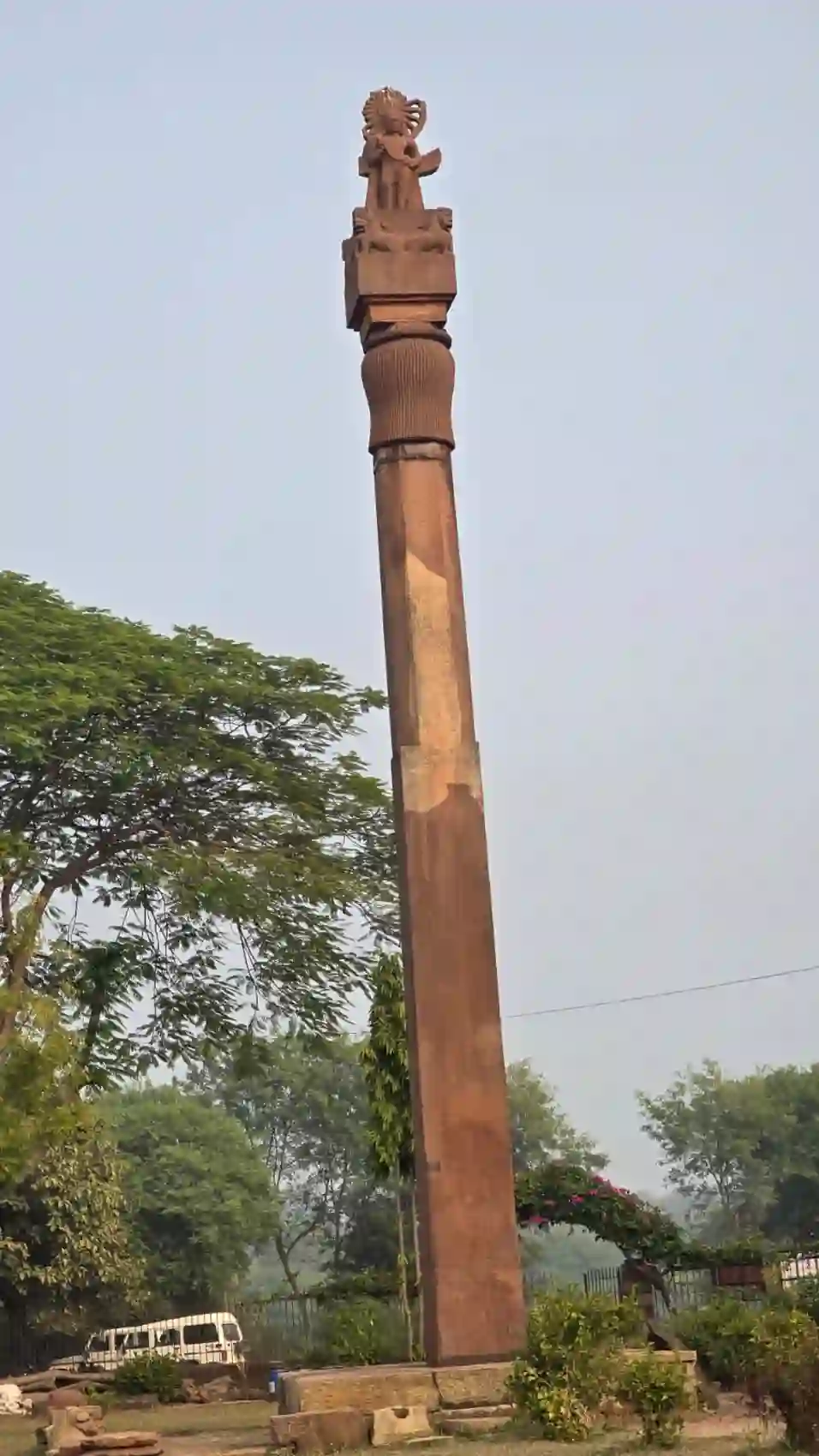
Eran is also written history you can stand next to. On the boar is an inscription of the Huna king Toramana (about 500–510 CE). Nearby, a tall monolithic Garuda pillar — a single ~13 m shaft of stone — carries an inscription of the Gupta king Budhagupta dated 484–485 CE. And Eran holds India’s earliest known memorial of “sati,” dated 510 CE. There is a Narasimha (the man-lion form of Vishnu) and a standing Vishnu too, and the ground has yielded thousands of very old coins — Eran was a great ancient mint.

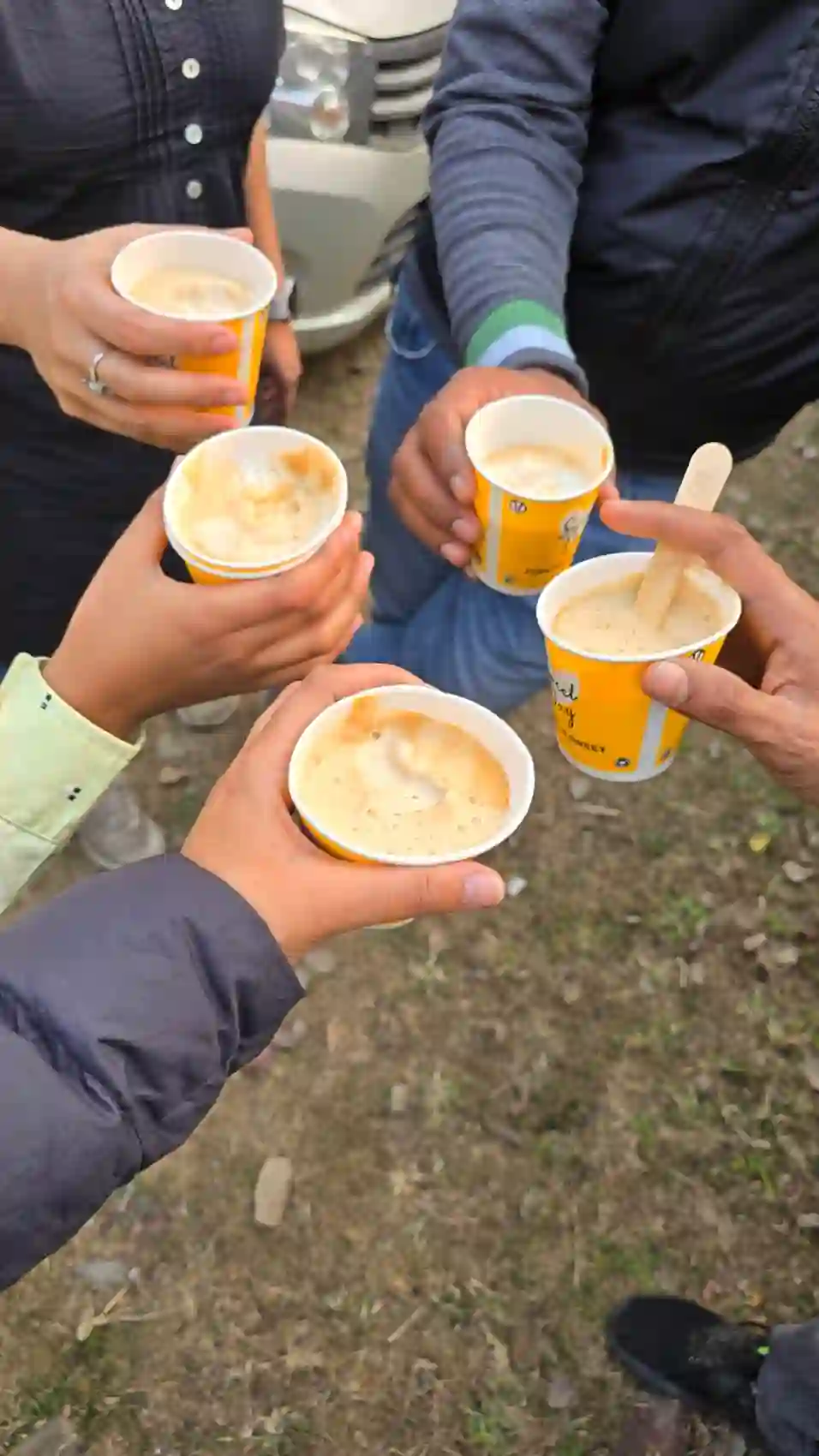
And then we did the most ordinary, perfect thing: we brewed hot coffee right there, among the ruins, and stood in a little circle passing the cups around. Frothy, milky, made on our own stove — coffee never tastes better than in a 1,500-year-old field with giant stone gods for company. This was the quiet emotional heart of the trip: no crowds, no ticket line, just history and friends and the steam off a paper cup.
A full moon, then Sanchi after dark
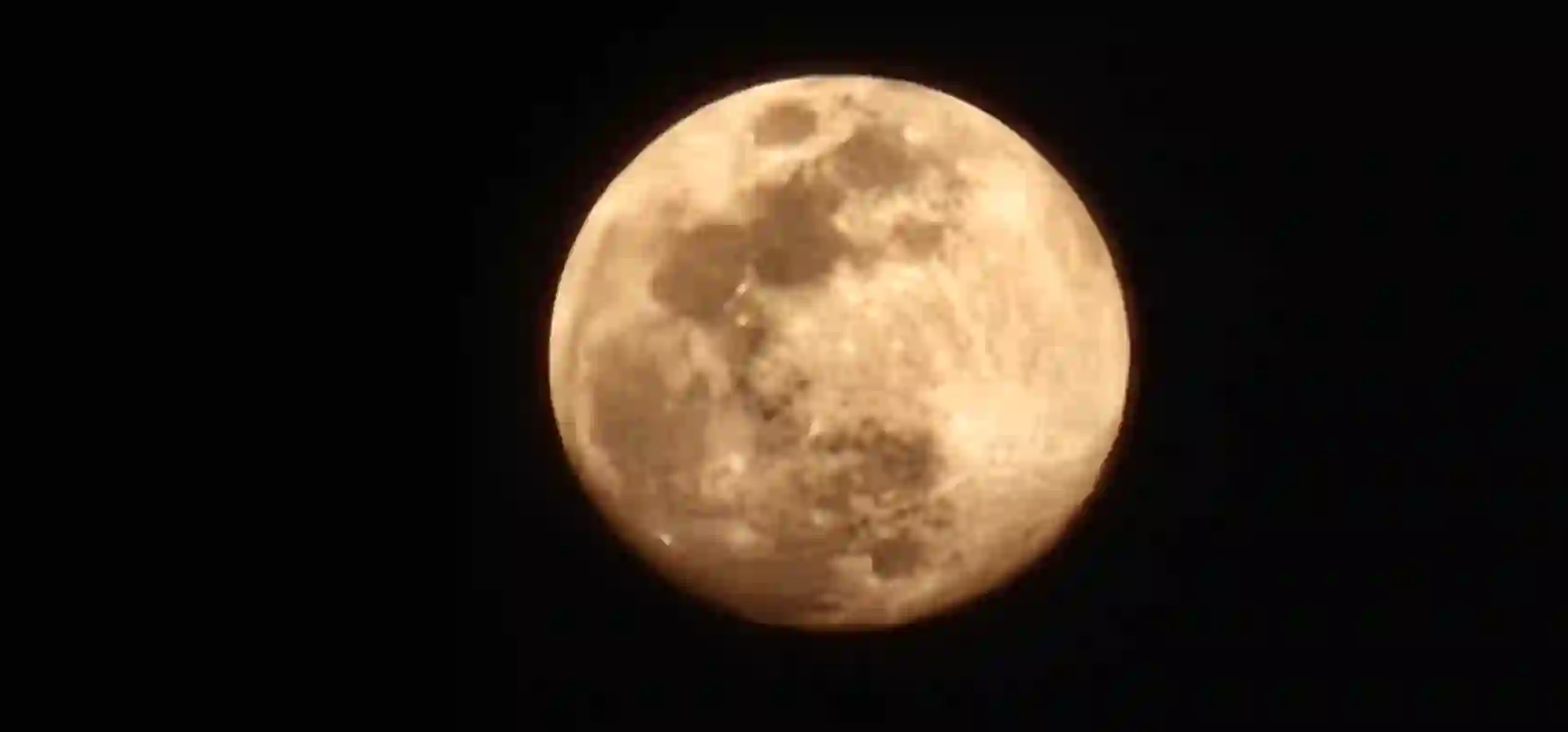
As we drove back toward Sanchi in the evening, a full moon rose over the fields near Gyaraspur, and we pulled over just to watch it. (Gyaraspur has its own wonderful cluster of old monuments — the Maladevi temple, the Hindola Torana and more — but that is a trip of its own; see our separate Gyaraspur guide.)
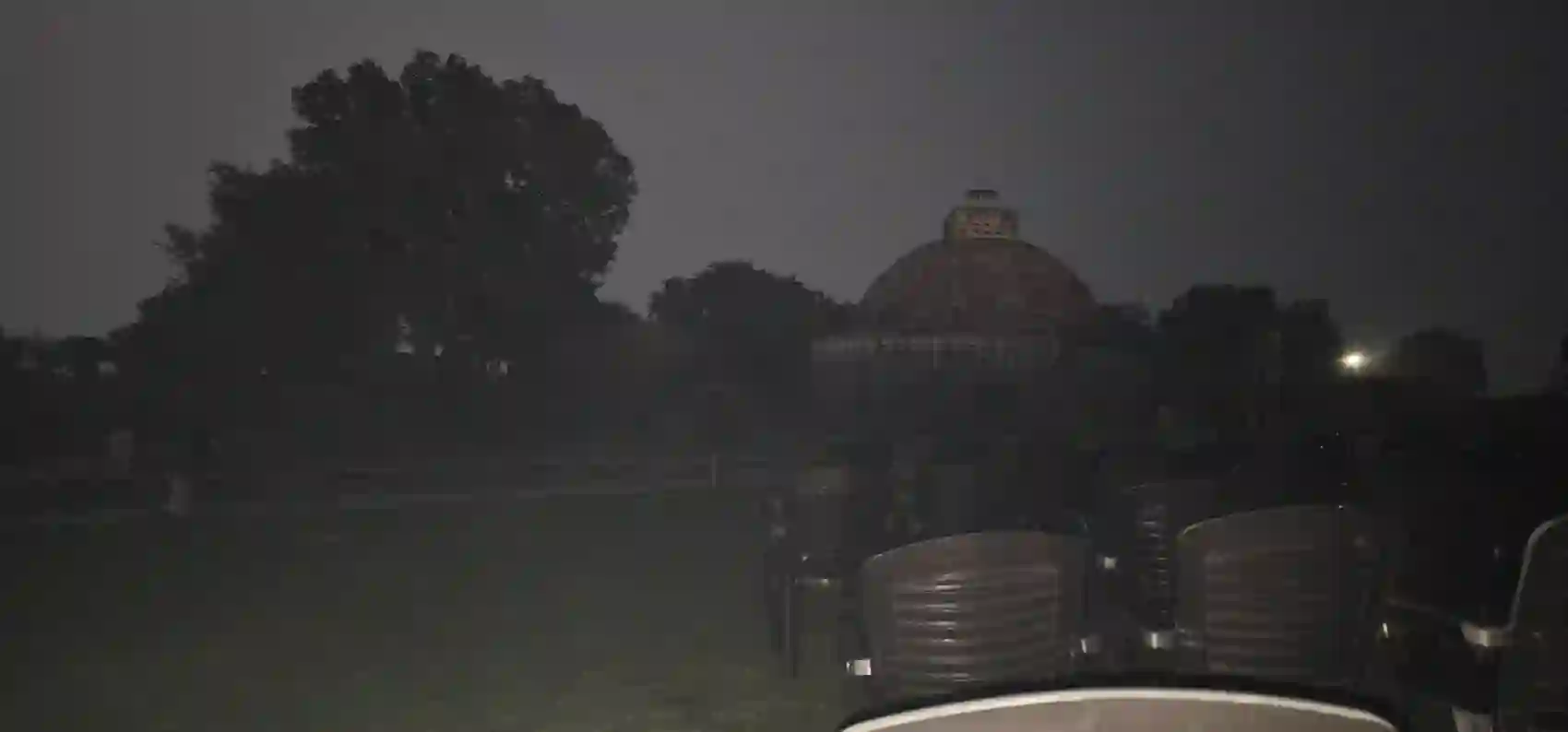
By the time we reached Sanchi, the great stupa was floating in the dark. Sanchi is one of India’s most important places — a Buddhist stupa begun by Emperor Ashoka in the 3rd century BCE, and a UNESCO World Heritage Site. Most people see it by day; we came for the night light & sound show, which uses lights, lasers and sound projected onto the stupas to tell the story of Ashoka and the Buddha. Sitting on the lawn in the cold January night, watching a 2,300-year-old monument light up and “speak,” is one of the best evenings you can have this close to Bhopal.
Dinner at the Utopia Resort
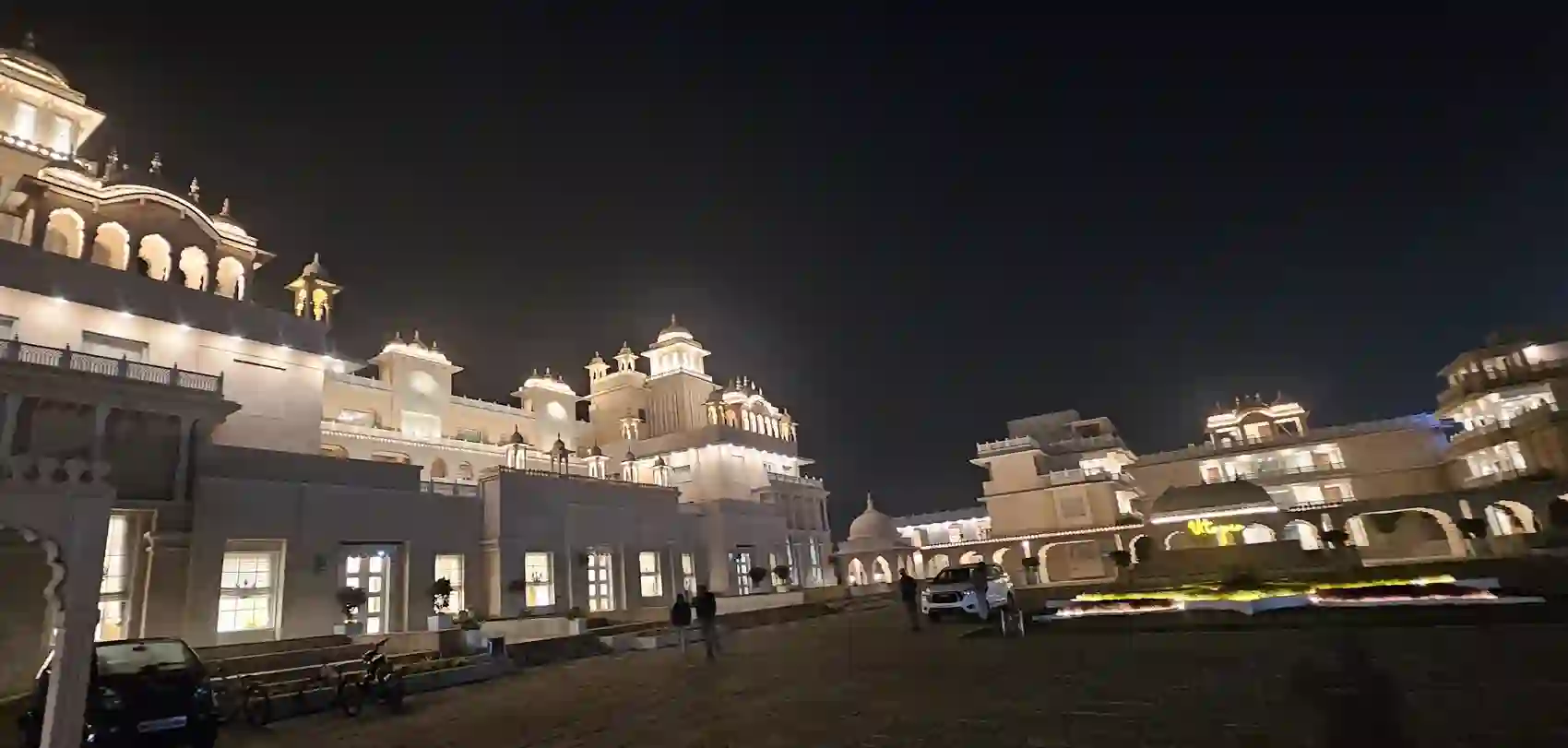
To finish, we drove the short hop to The Utopia Resort, about 3 km from the Sanchi stupa on the Bhopal–Vidisha highway. It is built like a Rajasthani haveli — white domes, arches and lamplight — and it feels a little unreal after a day among ancient stones. A warm, hearty dinner, and then the last hour home to Bhopal, tired and happy.

So much history, so close, and so quiet
The strange thing about Bhopal is how many extraordinary places sit within a two-hour drive — and how few people visit them. Neelkantheshwar and Eran are world-class monuments, yet on most days you will share them with almost no one. That quiet is a gift. All it takes is an early start, a full tank, and a little curiosity.
Plan your day trip
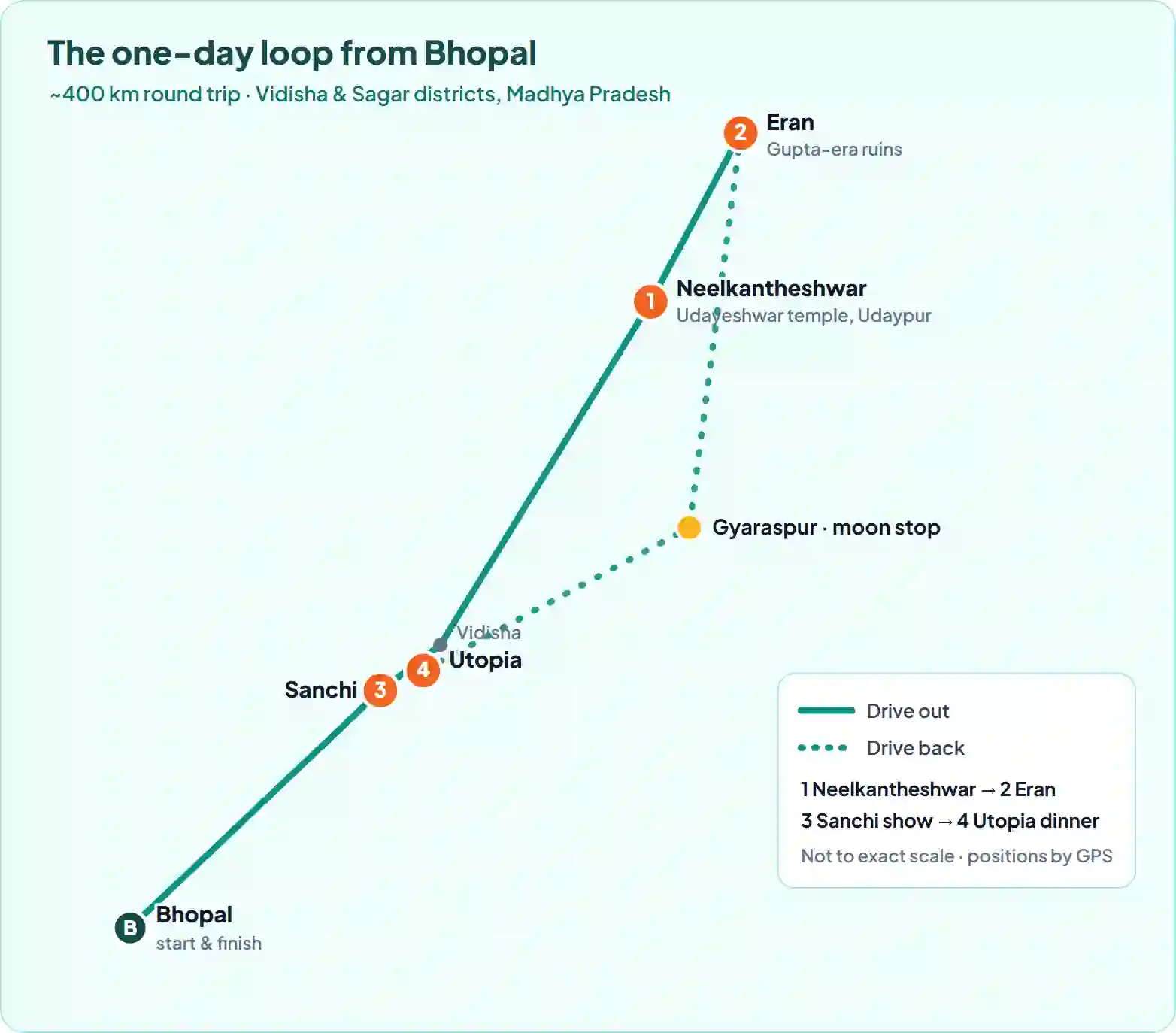
- Route: Bhopal → Vidisha → Udaypur (Neelkantheshwar) → Eran → back via Gyaraspur → Sanchi (night show) → Utopia Resort → Bhopal.
- Distances (approx., from Bhopal): Neelkantheshwar ~110–120 km; Eran ~145 km (farthest point); Sanchi ~50 km; whole loop ~400 km.
- Timings & entry: Neelkantheshwar — sunrise to sunset, free. Eran — daylight, free. Sanchi light & sound show — counter ~6:30 pm, entry ~7 pm, ~₹100 (Indian) / ~₹300 (foreign); the daytime monuments are a separate ticket.
- Best time: November to February.
- Tips: Carry water and lunch (Eran has no shops). Dress modestly for the temple. Timings and fees change with the season — confirm locally before you go.
Photo gallery
More from the Journal: On another day trip in the same direction, read Gyaraspur — a forgotten hill of ancient temples near Vidisha.
Written from our own visit on 12 January 2025. History checked against the Archaeological Survey of India, the Vidisha district administration and other published sources; the temple narration is by Pandit Naveen Krishna Shastri. Out of respect for privacy, we do not publish recognisable photos of people.