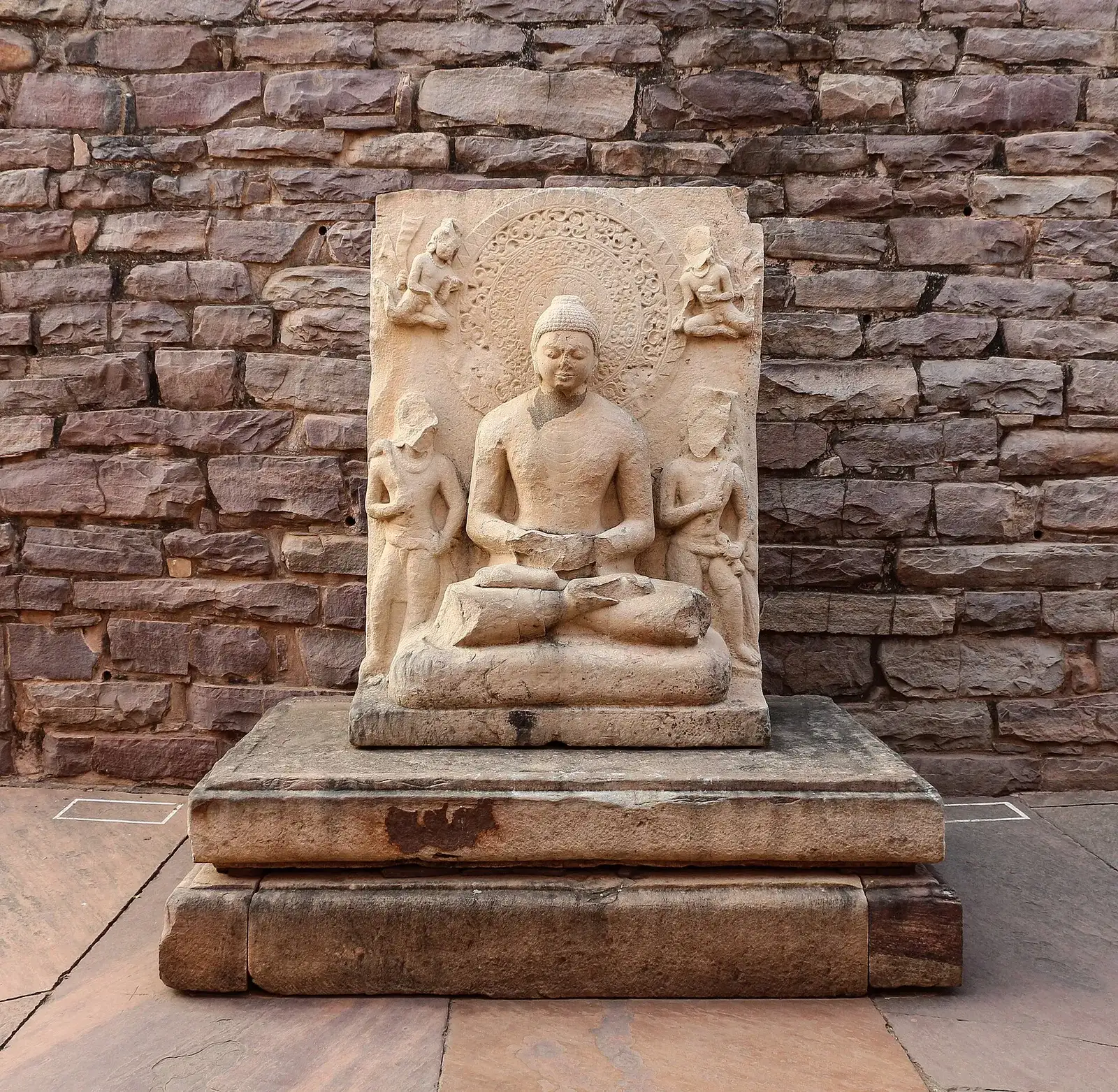
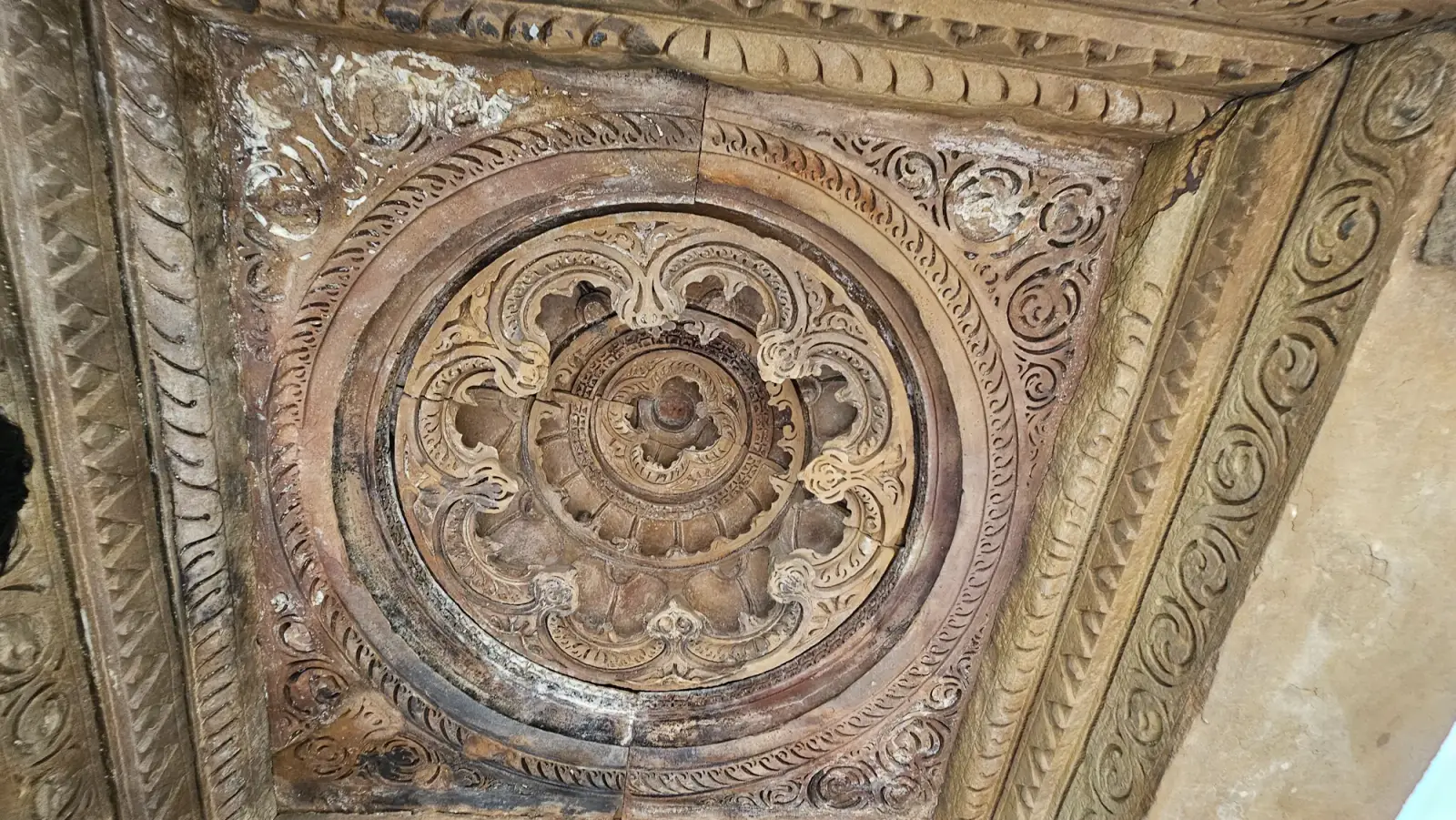
Stone keeps time; water keeps secrets. Over one Independence Day weekend, two families drove out of Bhopal into the monsoon — east to the thousand-year-old temples of Khajuraho, out to a river that has sawn a canyon through granite older than complex life at Raneh Falls, and finally to Bhimkund, a hole of impossible blue water no one has ever measured. This is the whole journey — the story, the guide’s tales, and everything you need to make the same trip yourself.
The short version: Khajuraho is a UNESCO World Heritage cluster of Chandela temples (c. 950–1050 CE); of 85 originals, about 25 still stand with their spires intact. From Bhopal this trip clocked 391.2 km one way (Sagar–Shahgarh–Bamitha) at 20.6 km/L — roughly a 7-hour drive with stops. Raneh Falls is a granite canyon on the Ken river, 22 km from Khajuraho, thunderous in the monsoon, and you drive your own car in. Bhimkund is a bottomless blue spring-kund 95 km away, free to visit. Go in the monsoon (Jul–Sep) for waterfalls in flood, or Oct–Feb for classic clear-sky temple days.
Open the route in Google Maps: Bhopal → Rahatgarh → Khajuraho ↗ · the way home: Khajuraho → Bhimkund → Bhopal ↗ · OpenStreetMap ↗
Independence Day, and a river throwing itself off a cliff
The trip began, as the best ones do, in a WhatsApp group. A hotel PDF appeared, a Panna jungle lodge was dreamed about and laughed away after one look at the tariff, and Hotel Clarks Khajuraho was booked — deluxe rooms, breakfast included, advance paid by UPI. Two families would go: mine, and my childhood friend’s — his wife and their two kids alongside my wife and our son. His own car wasn’t up to an 800-km monsoon drive, so a third childhood friend entered the story without ever leaving Bhopal: he lent his Honda City. I took my WagonR Stingray, a small unglamorous car that has carried me to more places than any car has a right to. At 06:58 on Independence Day morning I filmed its trip meter: 0.0 km.

Toll plazas draped in giant tricolours, a small flag flying on our dashboard the whole way. Three hours east, we heard Rahatgarh before we saw it — the Bina river, fat with monsoon, throwing itself off the rocks at Rahatgarh (Bhalkund) Waterfall while the kids pressed against the fence with their flags and the gorge smoked below.
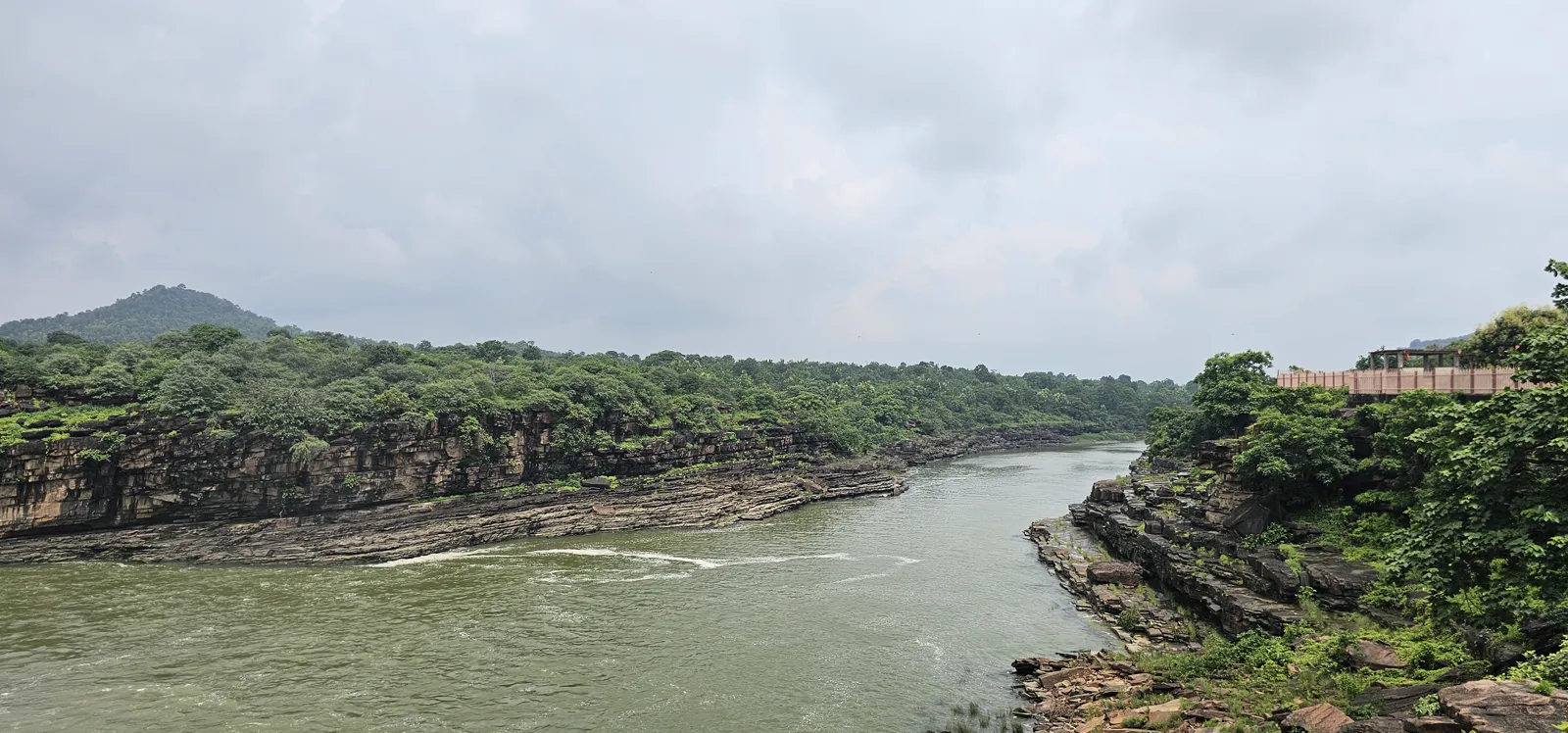
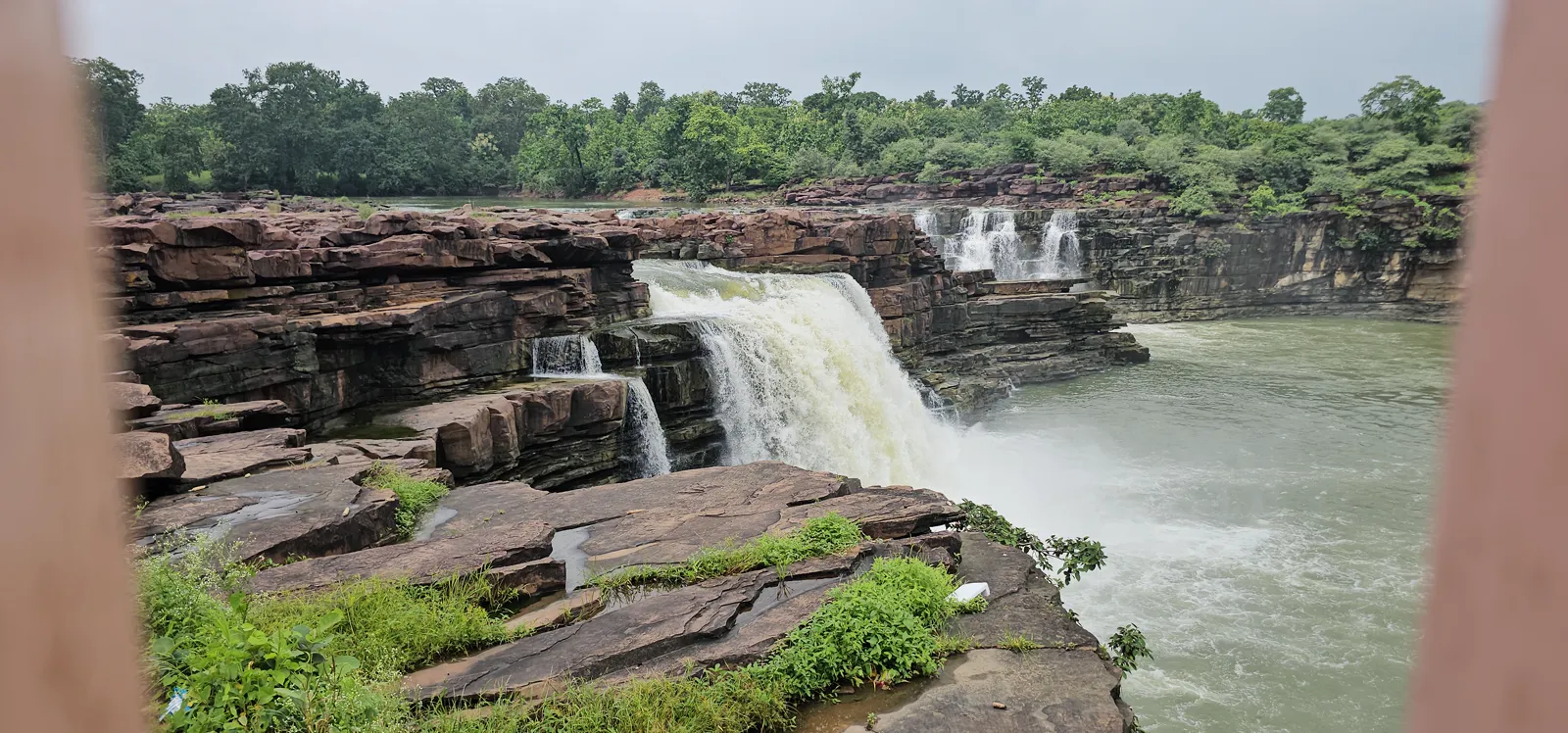
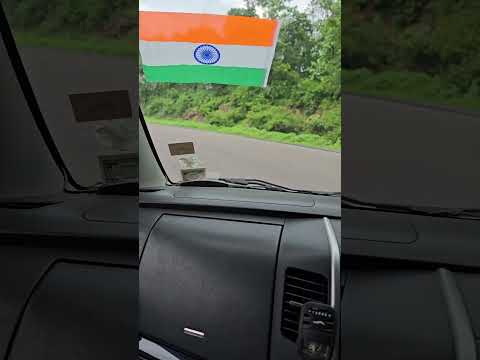

Rahatgarh / Bhalkund Falls drops about 50 ft (15 m) on the Bina river in Sagar district, on the Bhopal–Sagar road — a famous monsoon picnic spot. The old Rahatgarh fort, with 26 towers, still stands in the town. It is roughly 138 km from Bhopal.
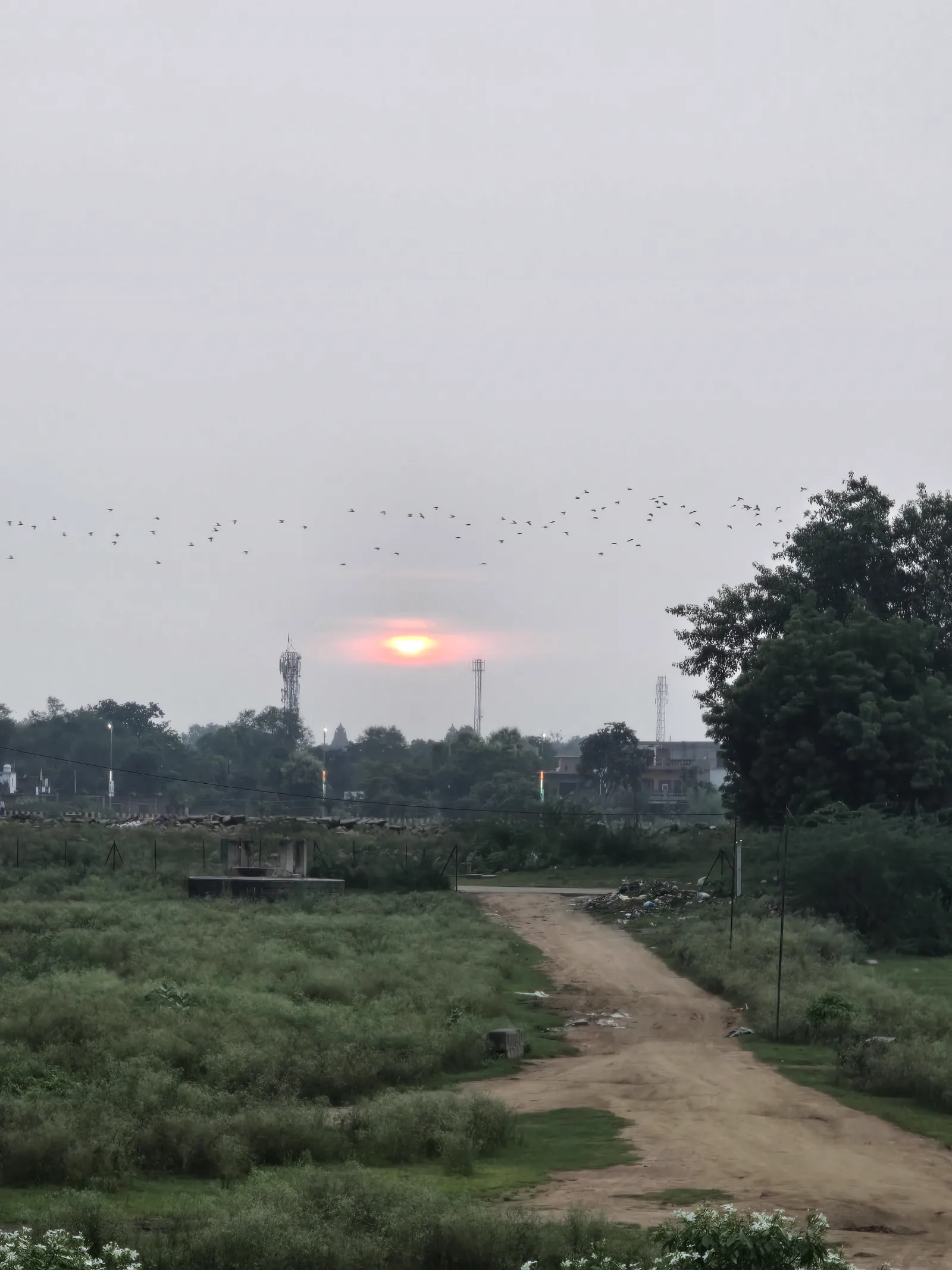
Past Sagar, at half-one, we found what no itinerary can plan: a green embankment near a village called Bilguwan, lunch spread out beside the cars, kids waving the tricolour at passing trucks, wildflowers doing the decorating. Rain chased us the rest of the way.
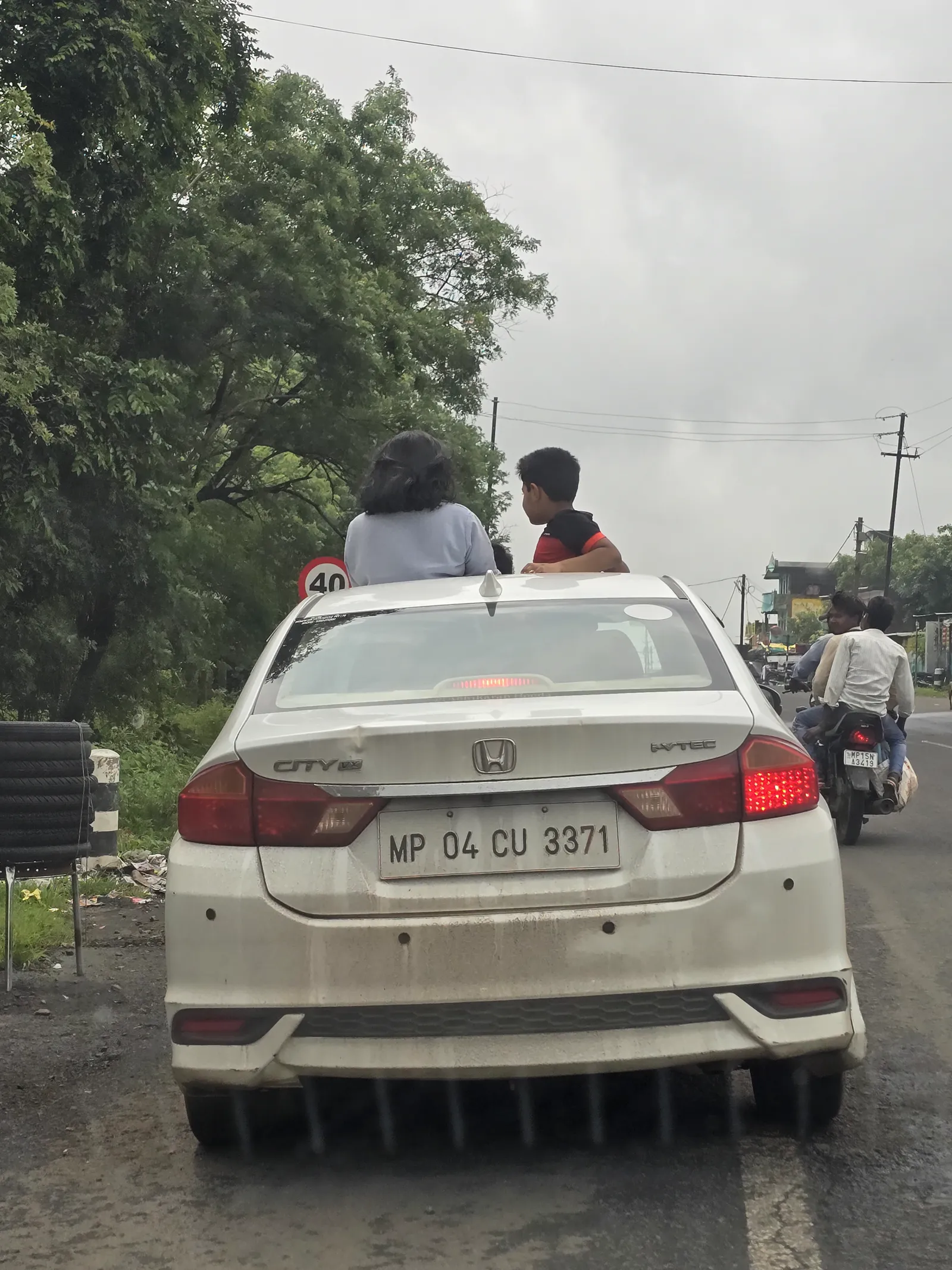
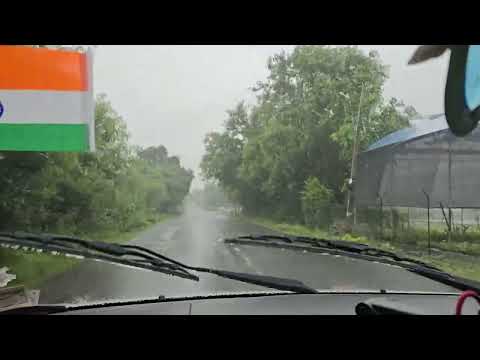
At 16:59 I filmed the trip meter again: 391.2 km. A swan folded from towels waited on the bed; the kids were in the pool before the luggage was out of the boot; dinner ended with a dessert shaped like a frog.
Trip computer · Bhopal → Khajuraho, Day 1 — certified by the WagonR Stingray’s own trip meter, on video, start to finish: 06:58 start · 16:59 arrival · 391.2 km · 20.6 km/L.

A guide who was part chemist, part historian, part tantric
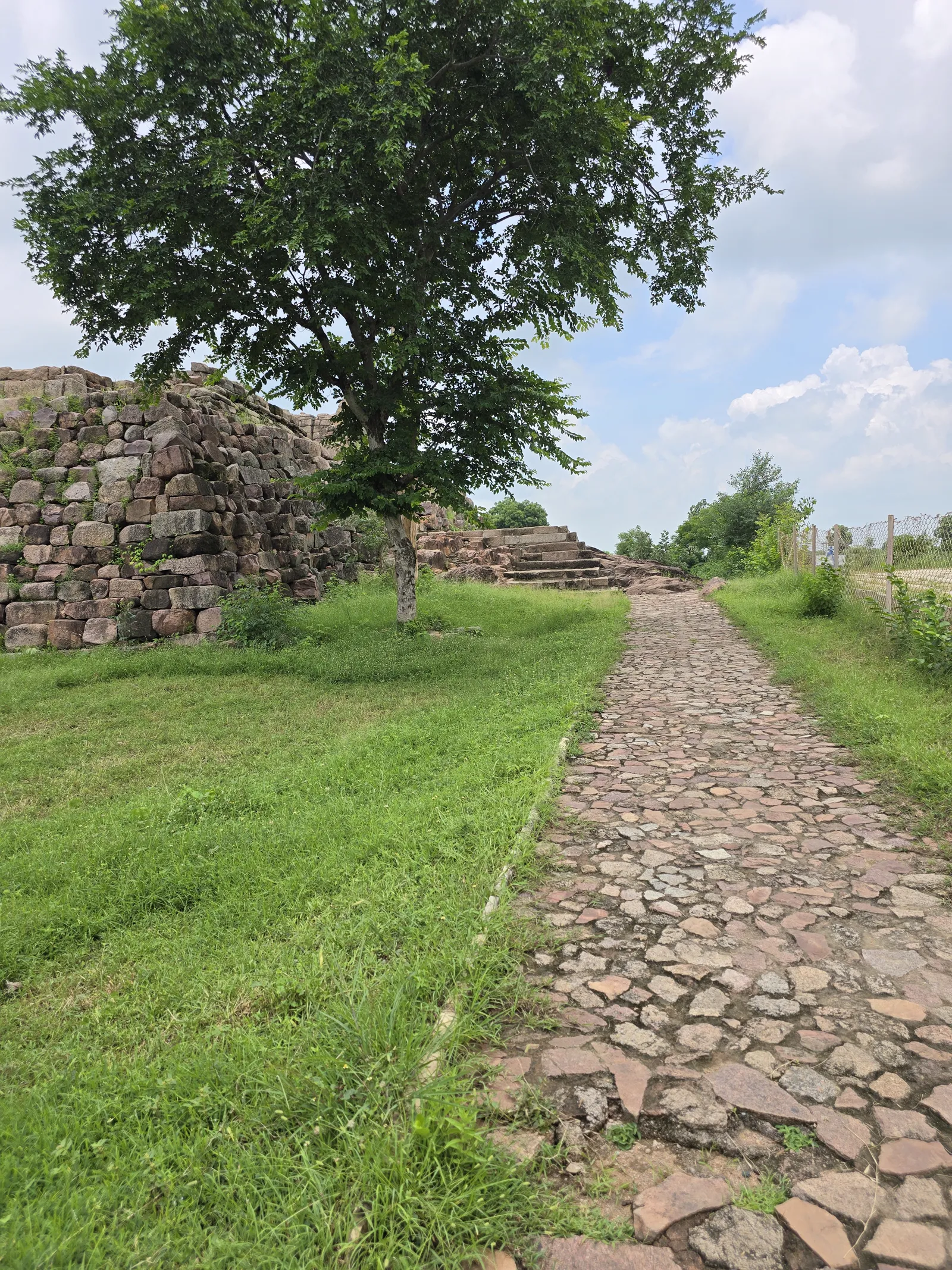
A gym session at dawn (remember this — the day punished my confidence), egrets patrolling the lawns, and then a guide who turned out to be part chemistry teacher, part historian, part tantric philosopher. At the granite Chausath Yogini — Khajuraho’s oldest temple, sixty-seven cells for the yoginis, standing since roughly 885 CE — he opened with science.
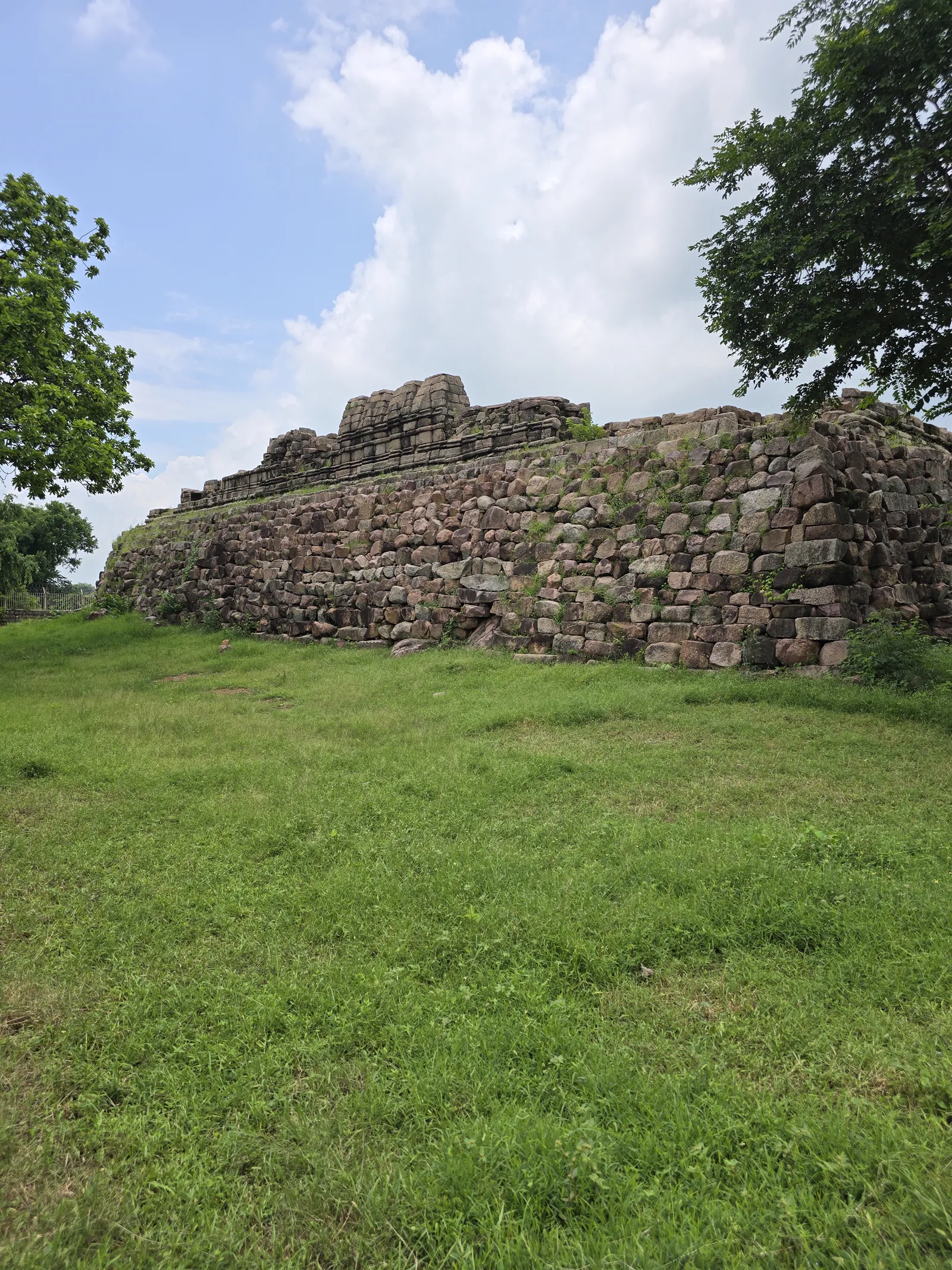
Our guide said: “No industry here, no acid rain. SO₂ plus rainwater makes sulphuric acid — that is what eats old stone. Khajuraho has none of it. No earthquakes either. And the invaders’ artillery rarely reached this deep. That is why, of eighty-five temples, twenty-five still stand — with their spires intact.”
Even the name, he said, came from the khajur — the date palms Ibn Battuta saw when he passed in the 1330s. “The palms are gone; the name stayed.”

Lunch at Raja Café opposite the gate, then the Western Group all afternoon. At the Lakshmana temple he showed us mason’s numbering still scratched into thousand-year-old blocks — flat-pack assembly instructions, a millennium early.
Our guide said: “There is no cement anywhere. Iron clamps hold the stones; ramps raised them, like the pyramid-builders. Three generations of sculptors — grandfather, father, son — carved these walls. The sandstone came across the Ken from Panna’s quarries because it answers the chisel. And look — mason’s numbers on the blocks. IKEA, one thousand years early.”
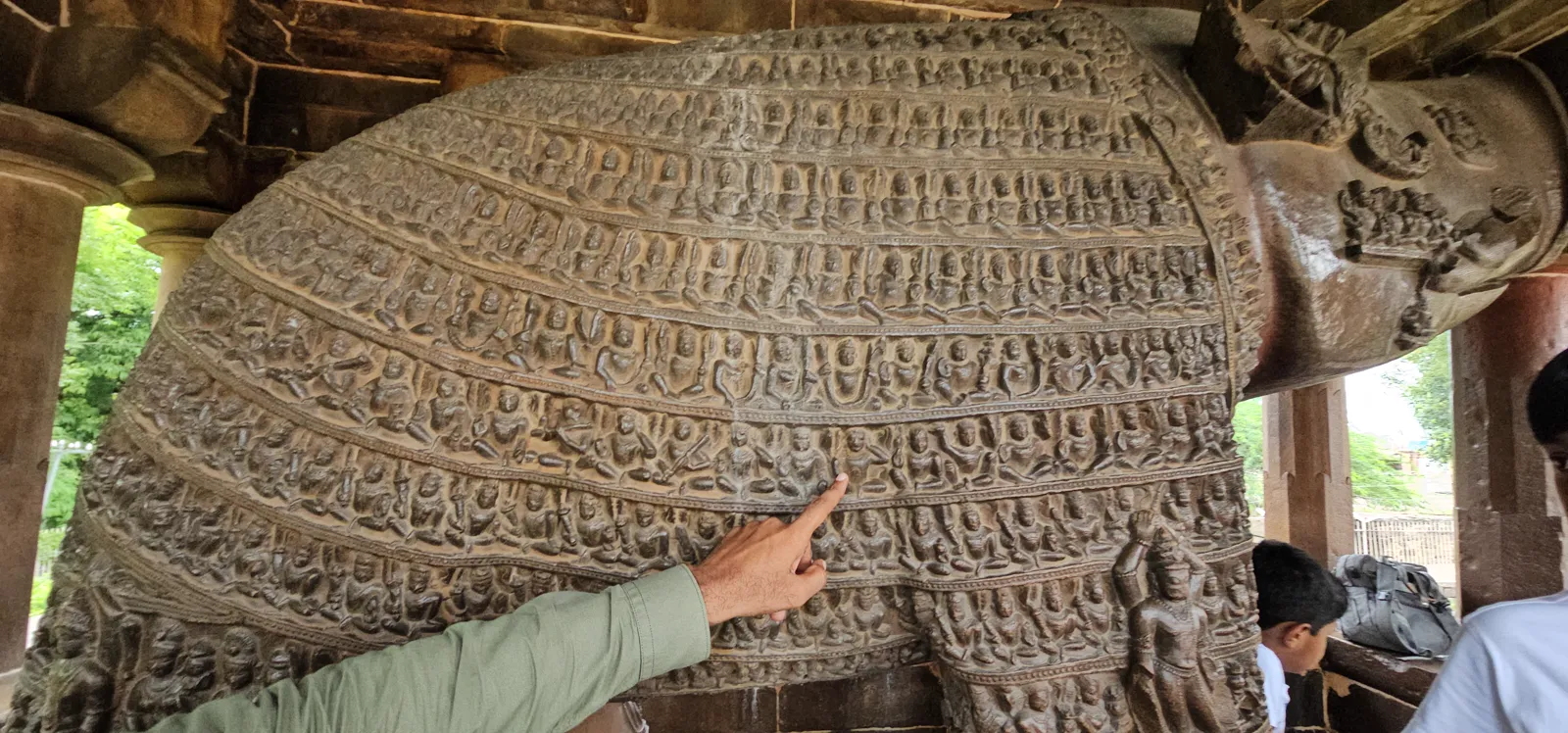
He read the Sanskrit dedication aloud — “Om… namo… Vasudeva” — then bounced sunlight off a steel plate into the sanctum to light up the three-faced Vaikuntha Vishnu, lion on one side, boar on the other. At the Varaha shrine the great monolithic boar wore hundreds of tiny gods.
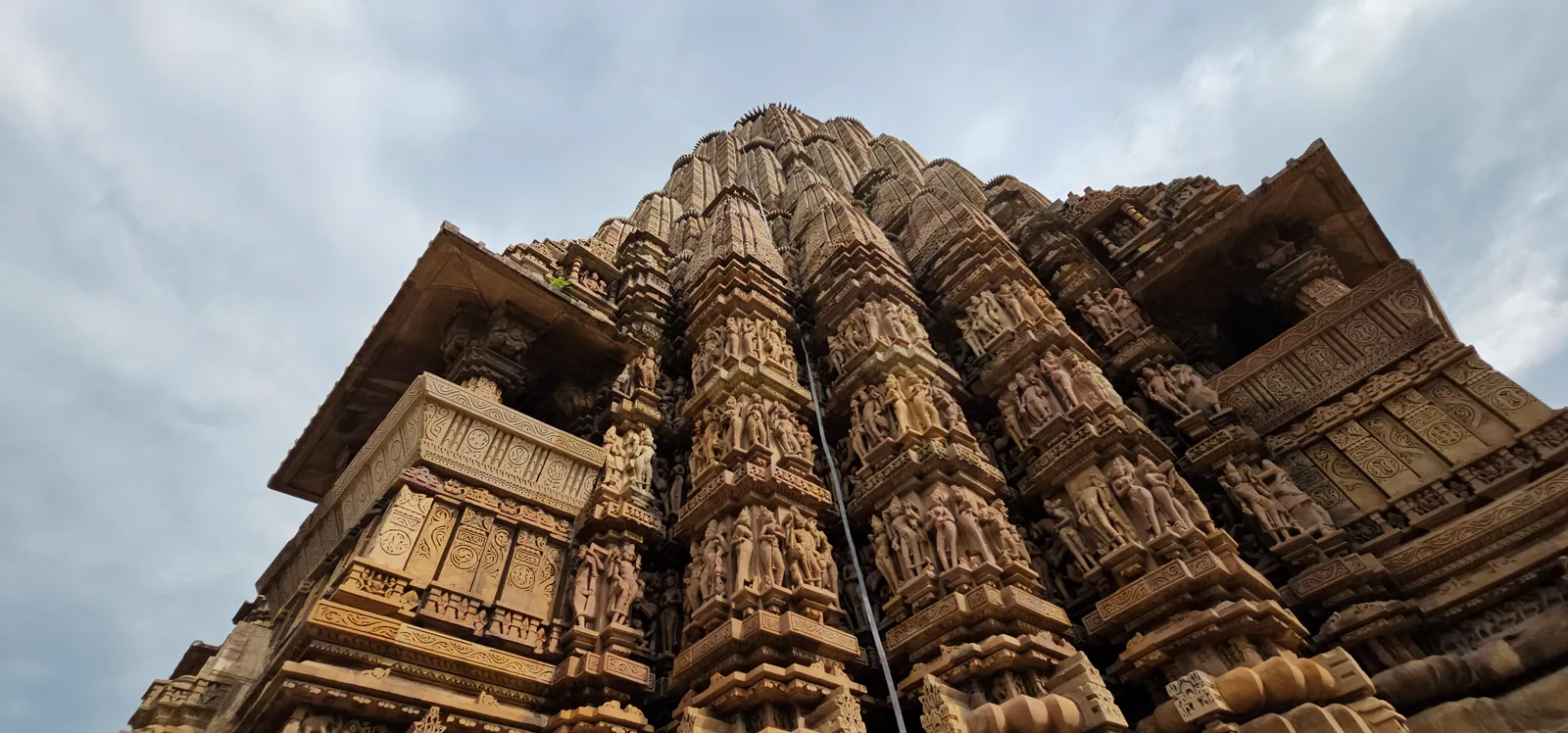

At Kandariya Mahadeva — thirty-one metres of sandstone Kailash, its name from kandara, the cave, built to celebrate turning back Mahmud of Ghazni — he taught us to read the walls: the crowned apsaras from heaven and the plain ones from the village; the lady removing a thorn from her foot; the lady blushing at love-marks; Rati, consort of the love-god, with a scorpion carved on her belly — “desire stings; they had no better word for it.”
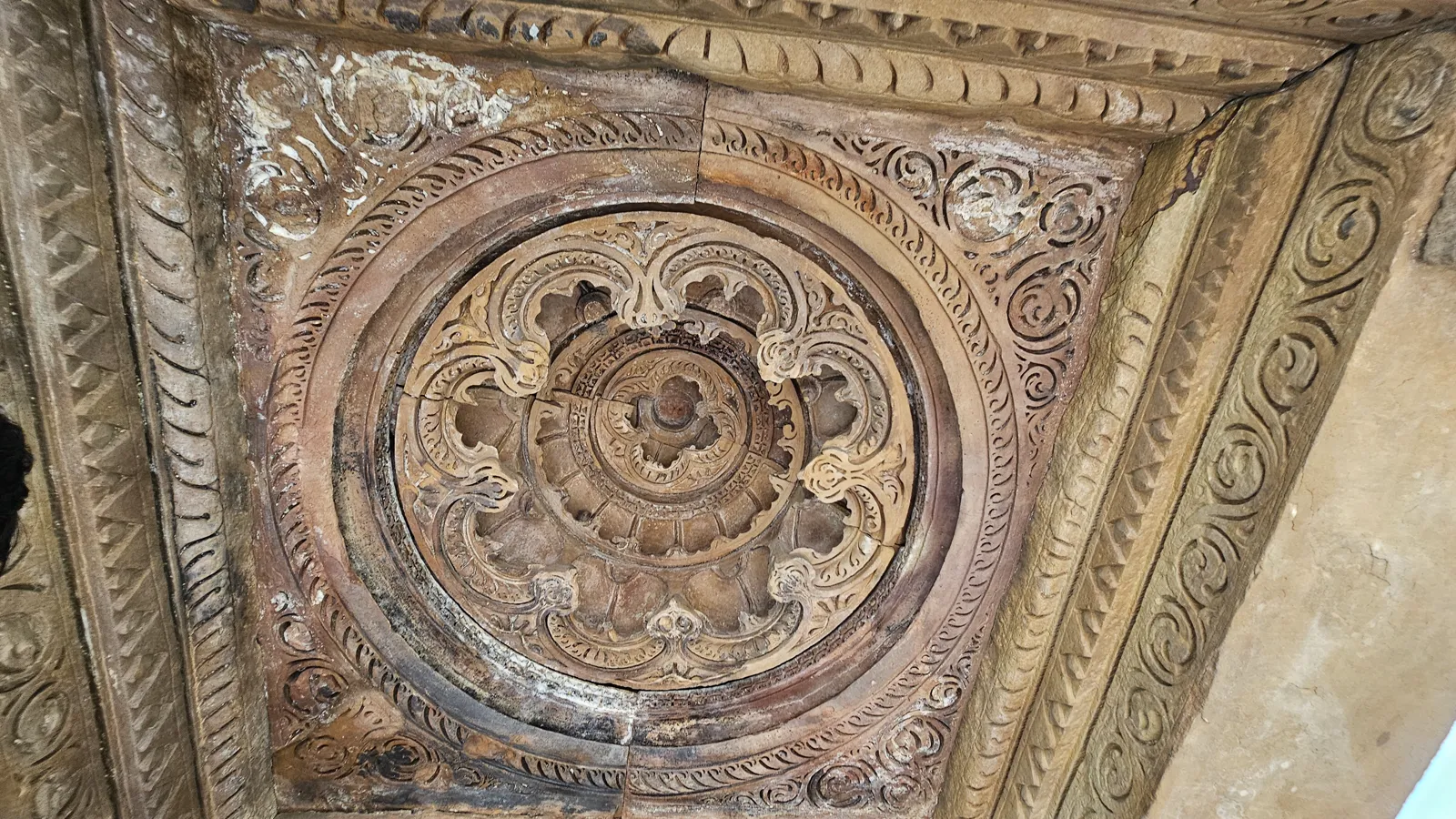
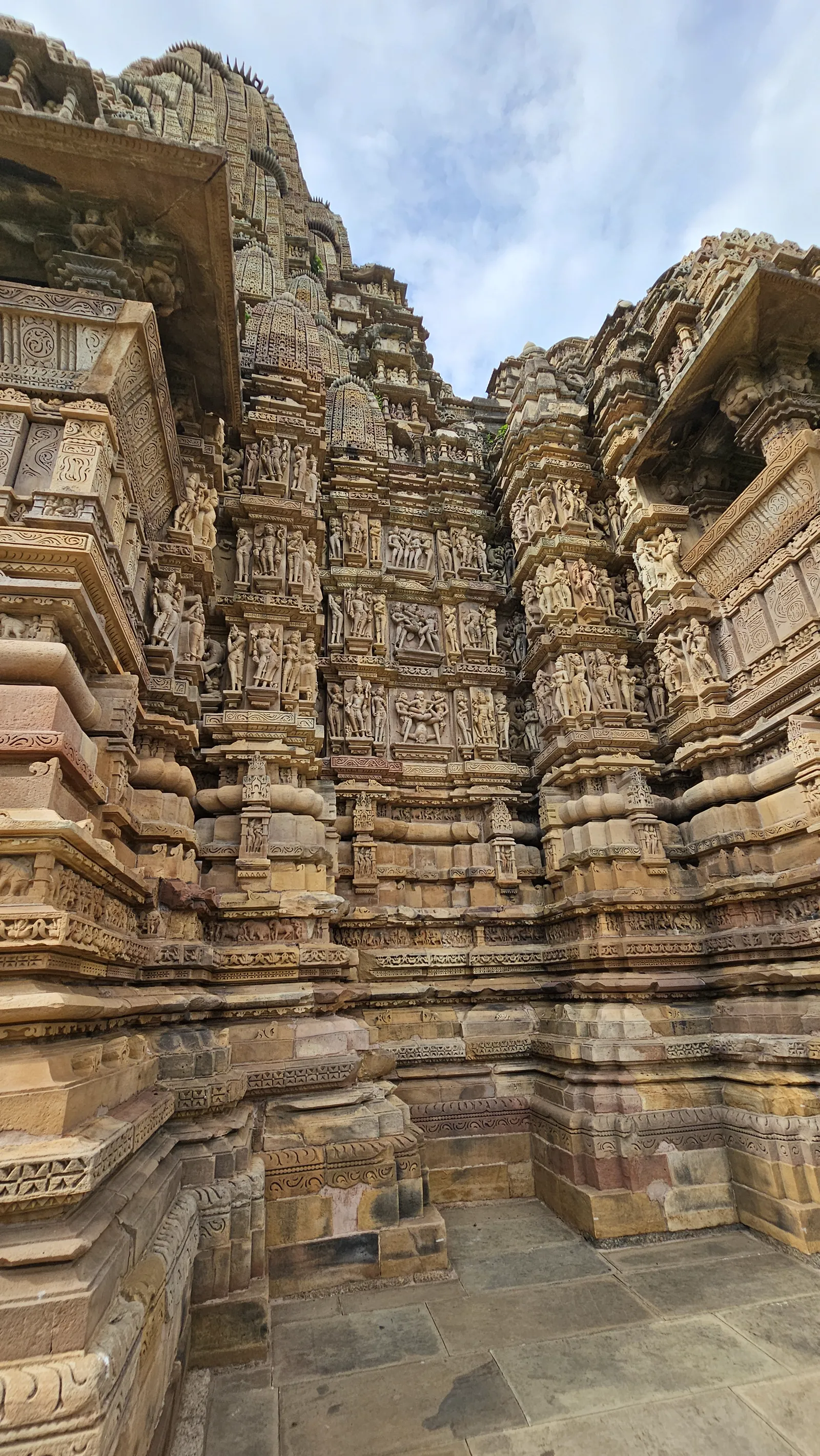
Our guide said: “This is documentation — tenth-century India carved in stone: the dress, the jewellery, daily life, the status of women. The crowned apsara with a lotus is celestial; the plain one is a village woman. The erotica is barely a tenth of it, and only on the outer walls. Yoga and bhoga are two roads to the same door. Leave your desires outside — the sanctum inside is perfectly plain.”

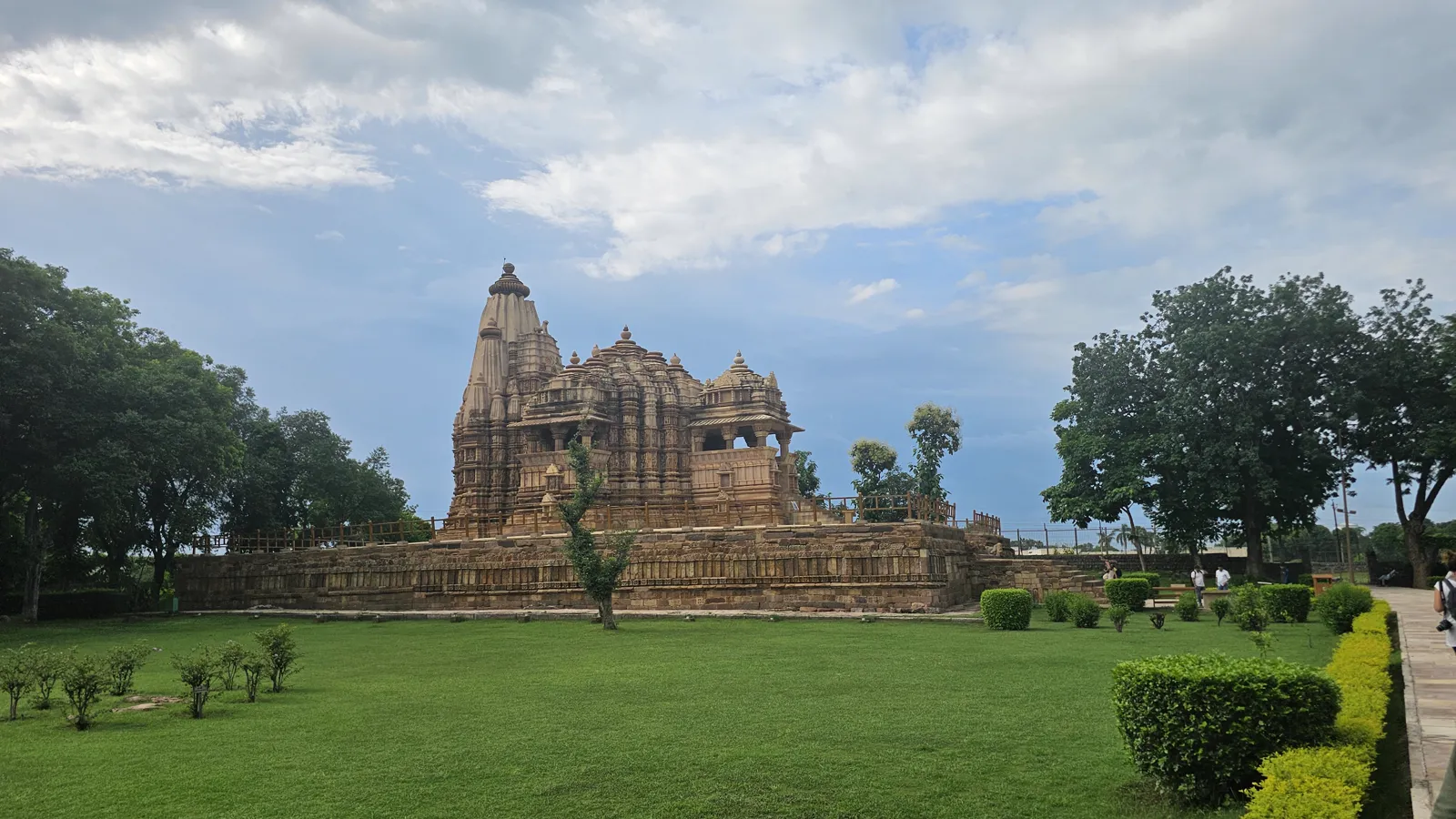
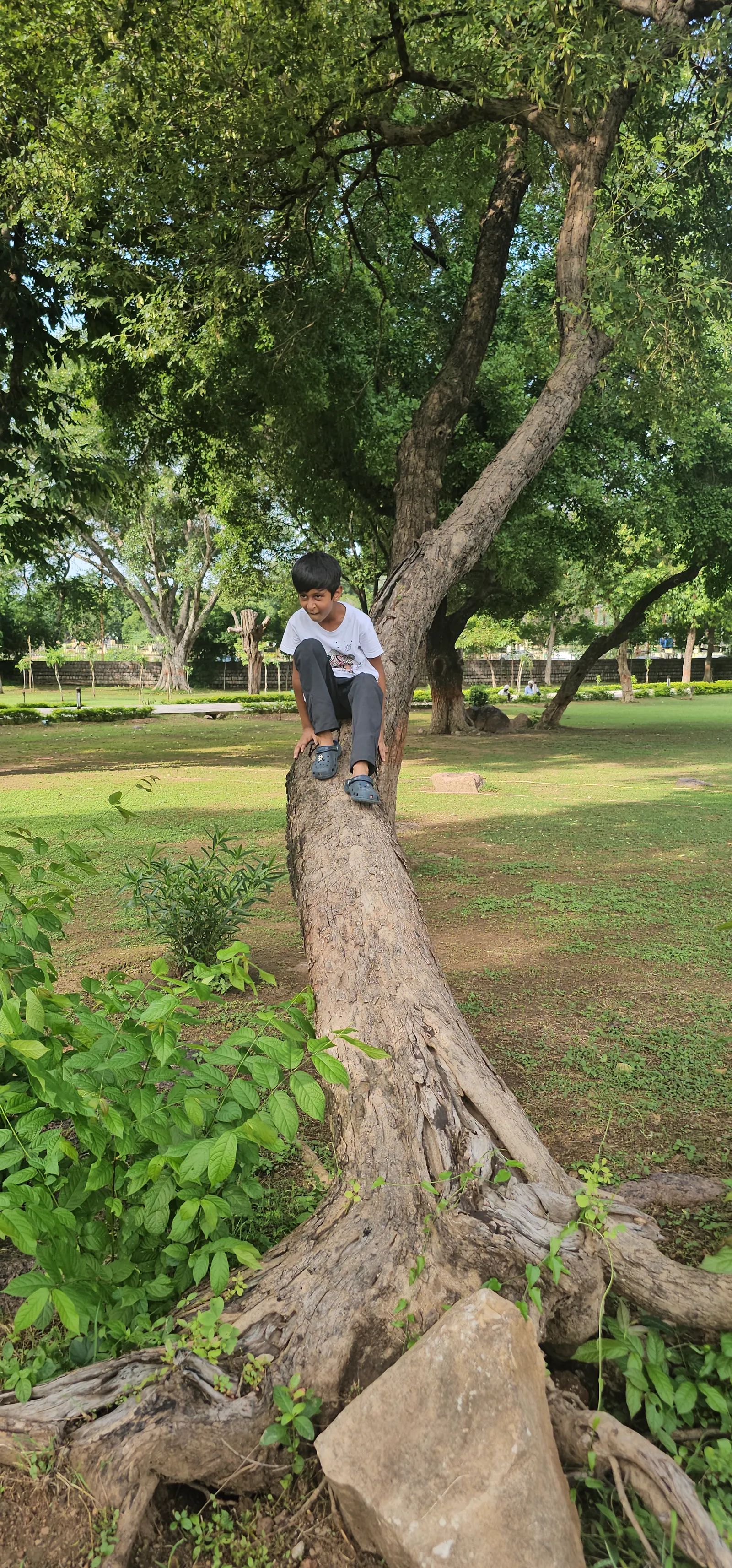
Somewhere between two ASI plaques my buffet-loaded stomach staged its own rebellion, and I can personally certify that the most urgently important monument in a World Heritage complex that afternoon was the washroom. I emptied out, recovered slowly, and rejoined history. The kids, unbothered, flew toy planes on the lawns and climbed a tree older than their combined ages. Night swim at eight — and one small, improbable footnote. My childhood friend and I raced a length of the hotel pool. He is a merchant navy man — real oceans are his daily commute — and by every law of nature the race was his before it began. Somehow, that one evening, I touched the wall first. It was surely luck, or his generosity, or a pool far too short to count; a man who has crossed the seas doesn’t lose to me twice. But the kids cheered, and I am quietly keeping the memory. Then dinner at Pinch of Salt in town at a quarter to eleven — holiday rules.
A canyon in flood, and your own car doing a jungle safari
Twenty-two kilometres out, the Ken river has sawn a canyon through pink-and-grey granite older than complex life — Raneh Falls, in full August flood, chocolate water thundering between rose-coloured walls inside the Ken Gharial Sanctuary (a Panna Tiger Reserve barrier receipt, guide fee ₹125, vehicle number scribbled in ballpoint). The magic: you drive your own car in.
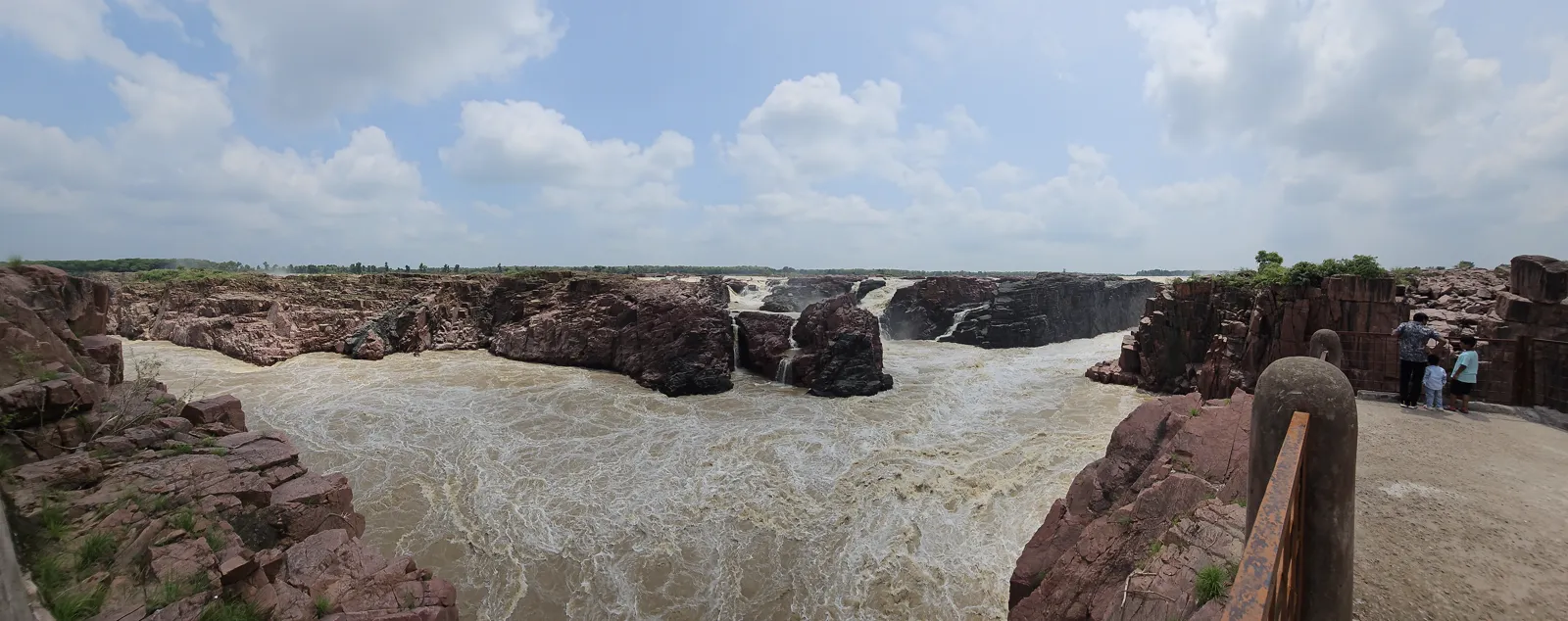
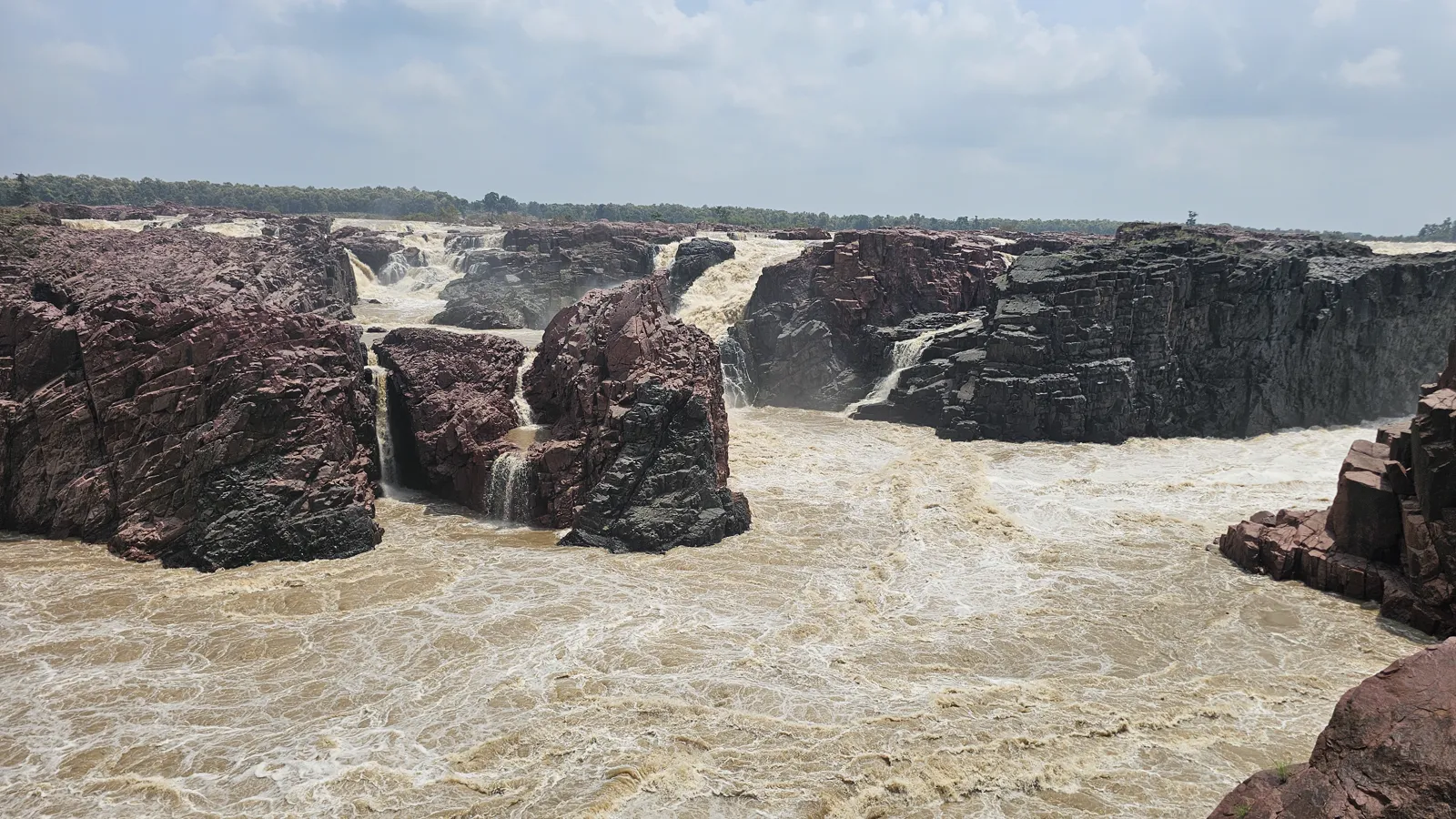


The canyon runs about 5 km long and up to 30 m deep, in pink granite, red jasper, green dolomite, black basalt and brown quartz — often called the “mini Grand Canyon of India.” It sits inside the Ken Gharial Sanctuary (45.2 sq km), administered under Panna Tiger Reserve. Monsoon means the falls at full fury; winter means the coloured rock fully visible.
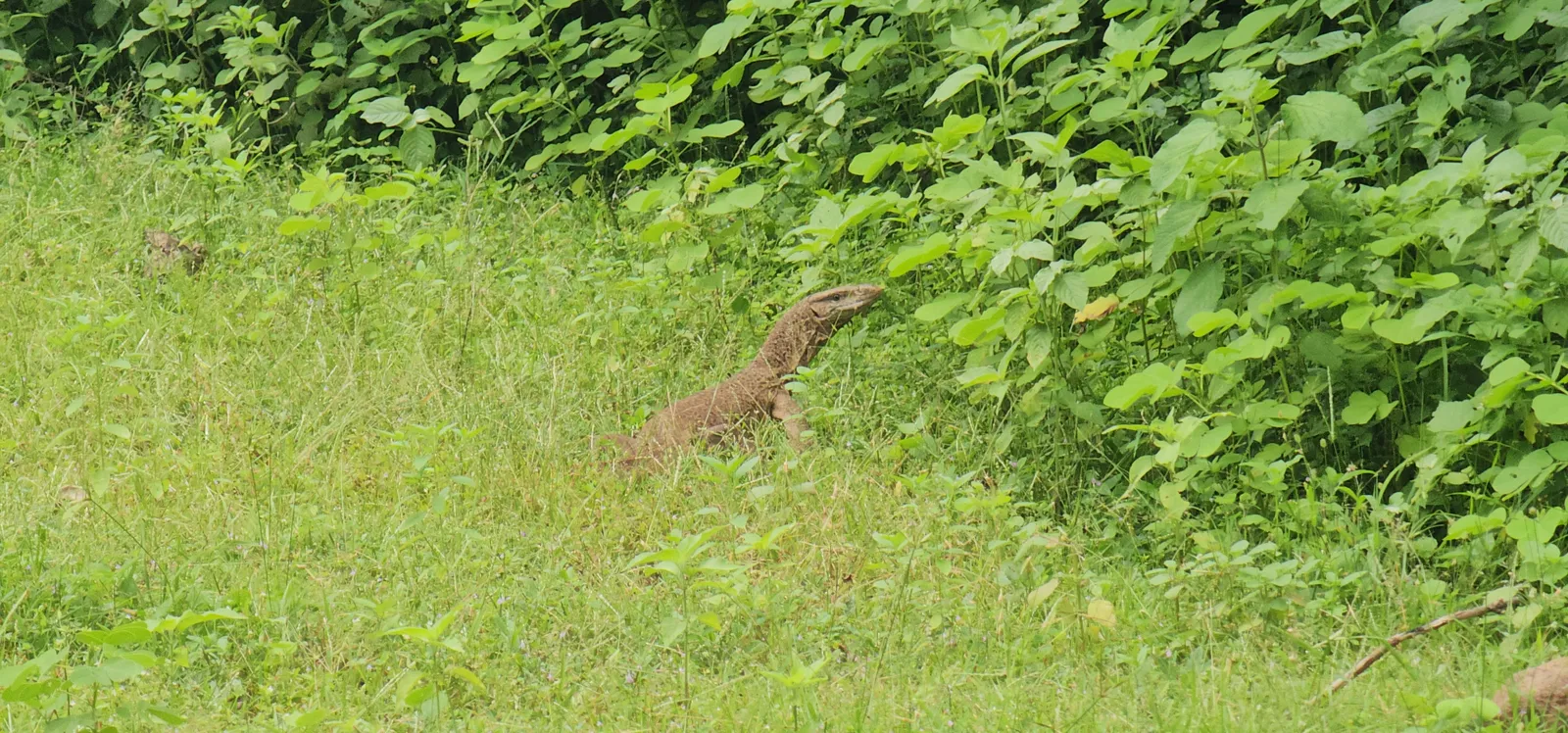
The Honda City did a jungle safari — spotted deer in the undergrowth, langurs on the rocks, and a monitor lizard straight off the fauna board at the gate.

Unlimited thali at Badri Seth Marwadi Bhoj, then the quiet temples. At Chaturbhuj — “our Sunset Point,” said the guide — the only west-facing temple at Khajuraho waited for the evening light to walk through its door and up the nine-foot god inside.
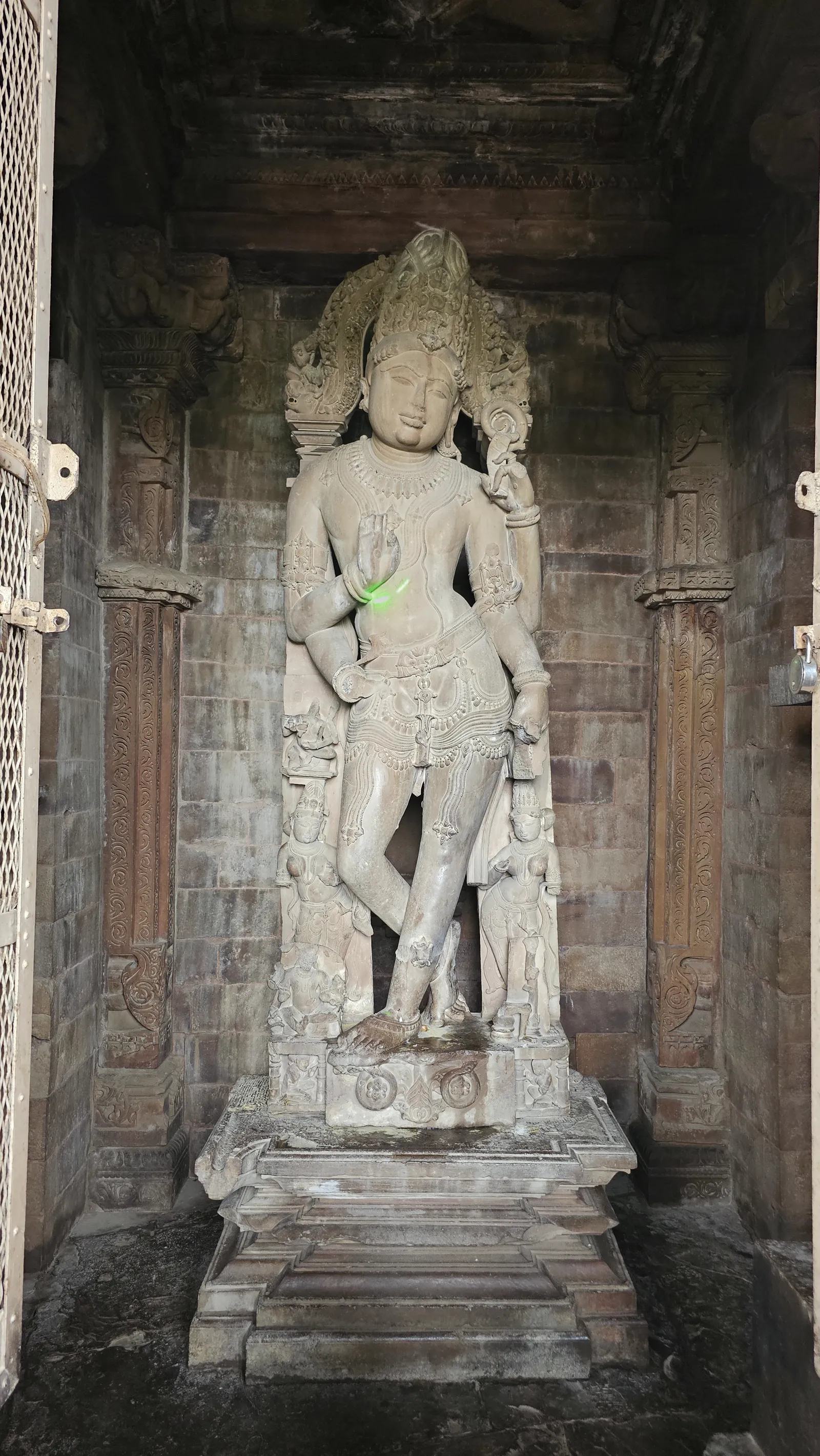
Our guide said: “This is the only west-facing temple at Khajuraho — our Sunset Point. Around a quarter to seven the sun walks through the door and climbs the statue. On the wall, Ardhanarishwara — half male, half female, one side curved, one side straight. Every man carries the feminine, every woman the masculine. They carved our chromosome story nine hundred years ago. And notice — no erotic carving anywhere on this temple.”

Then the Jain temples of the Eastern Group and little Javari at dusk, under a sky suddenly full of wheeling birds. Pool. Raja Café again, because when something works, you repeat it.

Bhimkund — where the water finally won
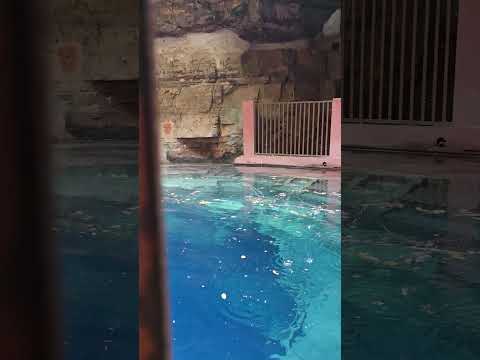
Out at 10:42, home the long wild way — single-lane roads tunnelling through the drenched green forest of Buxwaha — to see one last thing. Bhimkund is a hole in the earth inside a low cave, filled with water so blue it looks lit from below. Bhima of the Mahabharata opened it with his mace, the locals say, to quench Draupadi’s thirst; divers — and, they’ll tell you, a Discovery Channel team — went looking for the bottom and never found it. Fish hang in the clear water like ornaments.

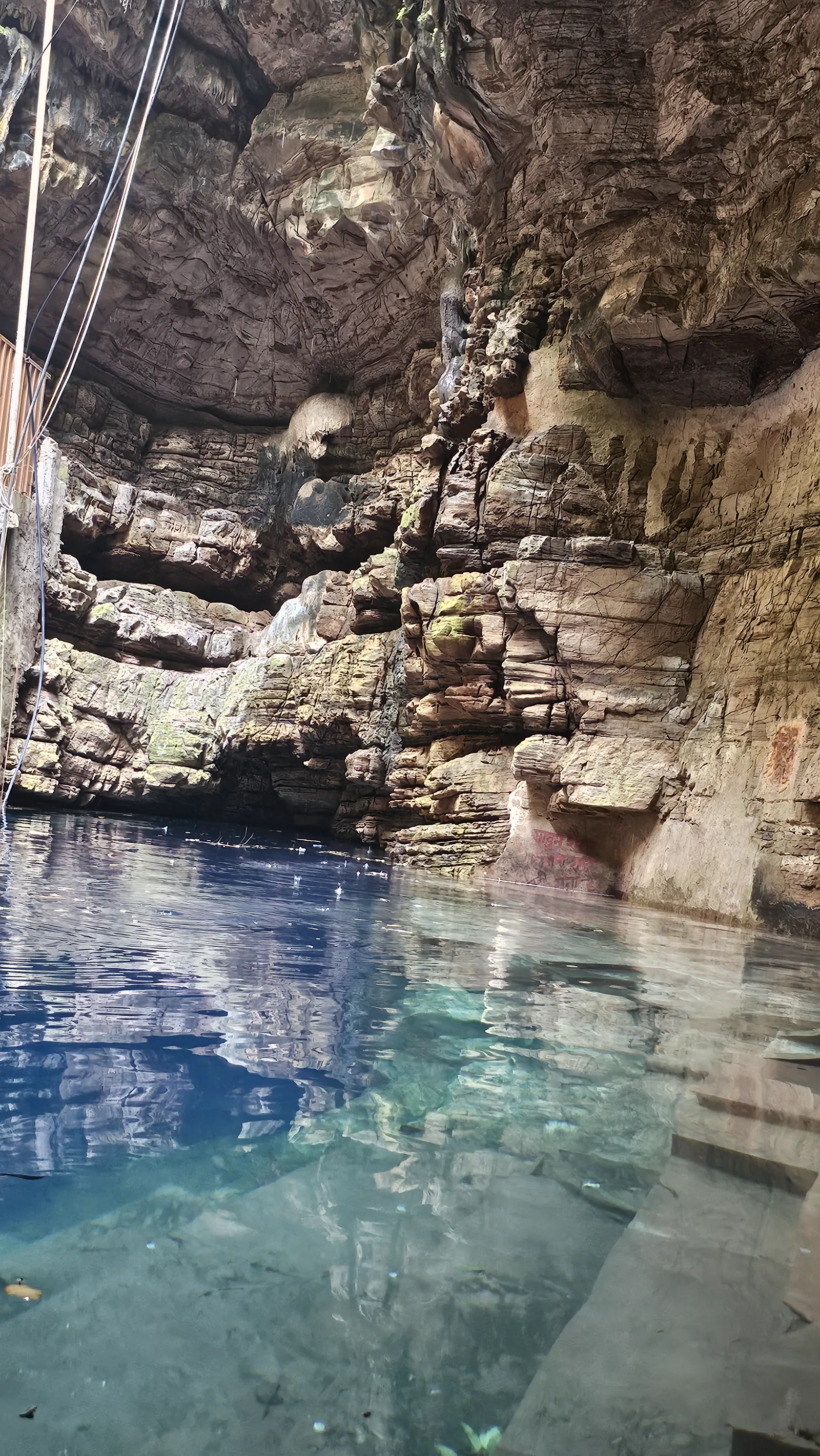

And here, at the deepest water of the trip, I made my finest decision of all four days. My son looked at my phone and said: “Papa, it’s waterproof.” Reader — I dipped it. The phone came back out; the water, quietly, went in. The rating on the box said water-tight. Bhimkund disagreed, and the camera never worked again.
The phone that mapped the whole journey met its match at the journey’s deepest water. Water won.
Here is the beautiful part: that phone was the trip’s cartographer — every GPS pin in this story came from it. After 1:03 pm that day it never tagged another photo. We drove home chastened and happy, stopped for dinner under the Buddhist mudra-hands of MPT Gateway Retreat, Sanchi, and rolled into Bhopal with roughly 840 km on the clock — 391.2 of them certified by the Stingray’s own trip meter, at an average of 20.6 km per litre.
Epilogue. Stone keeps time; water keeps secrets. The Chandelas’ stone tells you everything — every god, every dancer, every mason’s number on every block. The water tells you nothing: not the bottom of Bhimkund, not the age of the Ken’s granite, not why a waterfall on the Bina makes four adults and three kids go silent at once. Go in the monsoon, when both are at full strength. And keep your phone in your pocket.
Khajuraho’s temple groups, explained
The surviving temples fall into three clusters plus a couple of outliers. Here is how they sit on the ground, and what each is worth to a visitor.
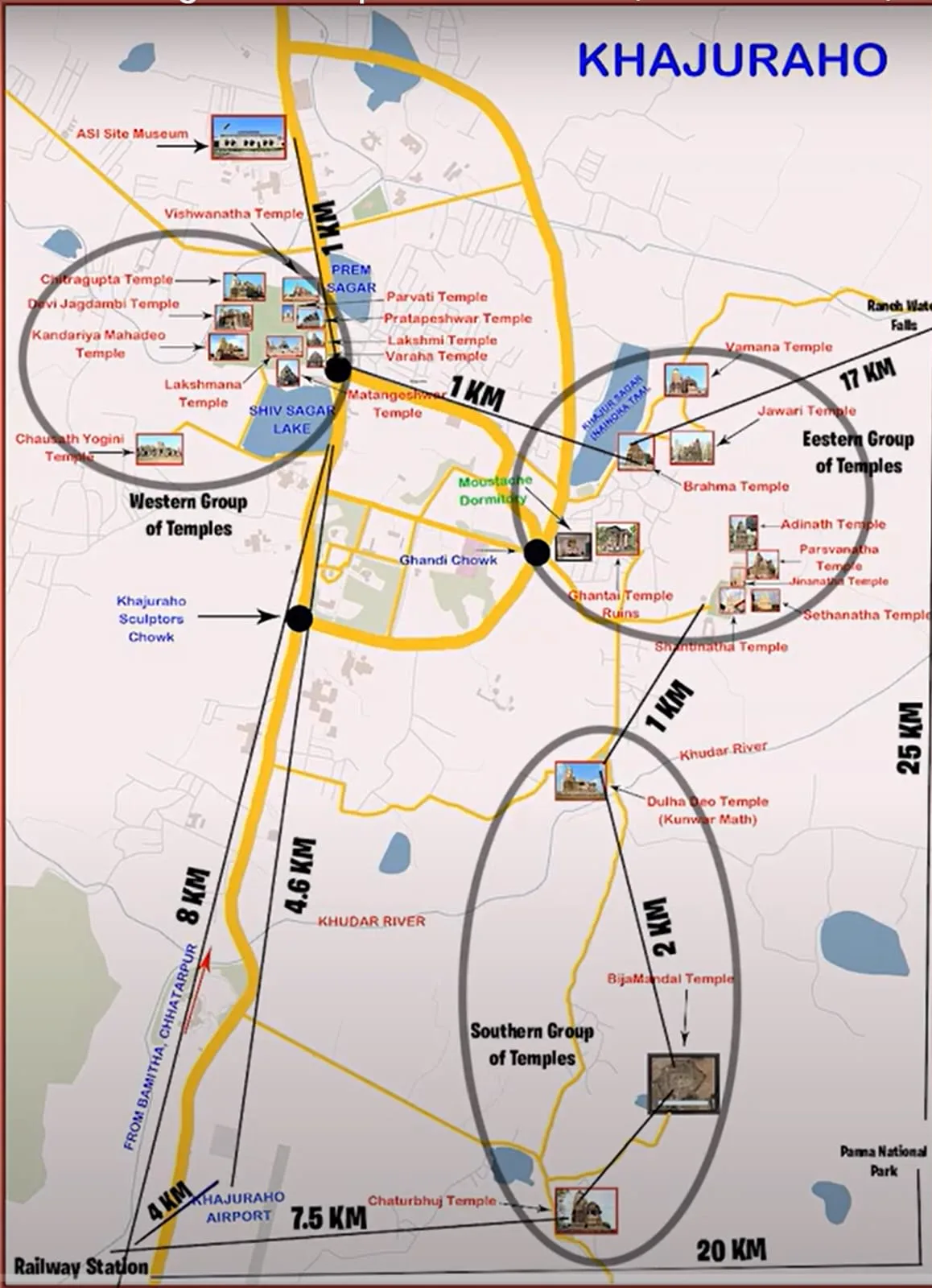
Western Group (ticketed). The famous main complex — landscaped lawns, the biggest and best-preserved temples: Kandariya Mahadeva (tallest, ~31 m, 870+ sculptures), Lakshmana (three-headed Vaikuntha Vishnu, dedicated 954 CE), the Varaha shrine (the monolithic boar), plus Vishvanatha, Chitragupta (the only Surya temple) and Matangeshwara (a living temple). Time: 2.5–4 hrs · Ticket: ₹40 Indian / ₹600 foreigner · sunrise–sunset. A Sound & Light show runs in the evening.
Eastern Group (free). Jain and Hindu temples spread through the old village — quieter, still partly in worship: Parsvanatha (the largest Jain temple here), Shantinatha (in active Jain worship), and the small, finely carved Javari and Vamana. Time: 1–1.5 hrs · free · lovely at golden hour.
Southern Group (free). A scattered pair about 3 km south — worth it for the sunset and one special statue: Chaturbhuj (the only west-facing temple, no erotic carving, a 2.7 m Vishnu), Duladeo (the last major Chandela temple, c. 1130 CE) and Beejamandal (an unexcavated mound said to be larger than Kandariya). Time: 1 hr · free · come at sunset for Chaturbhuj.
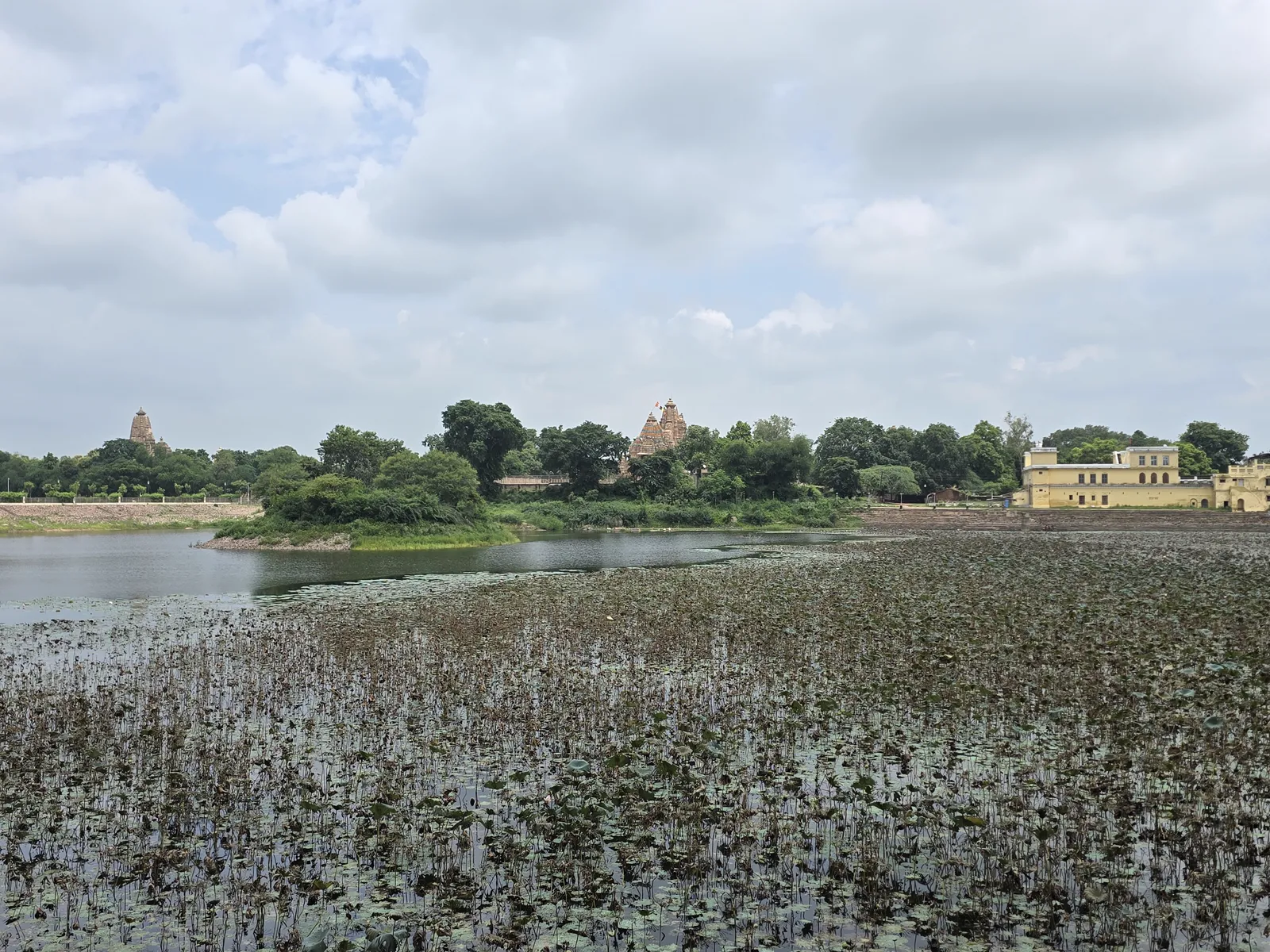
Also: Chausath Yogini (the oldest temple, granite, ~885 CE) and lotus-filled Shivsagar lake sit just west of the main complex. Ticket prices are 2024-era — confirm current ASI rates when you book.
How to reach Khajuraho, and everything to plan
By road from Bhopal (our real numbers)
We drove Bhopal → Vidisha → Sagar bypass → Shahgarh → Chhatarpur → Bamitha → Khajuraho. The trip meter read 391.2 km one way, and we left at 06:58 and reached at 16:59 — about 10 hours door to door, including two long stops (roughly 7 hours of actual driving). Our WagonR averaged 20.6 km per litre. Roads were good NH-standard for most of it, with single-lane forest stretches near Buxwaha on the way back.
| Leg | Distance | Notes |
|---|---|---|
| Bhopal → Rahatgarh Falls | ~139 km | Monsoon waterfall stop |
| → roadside lunch (Bilguwan) | ~101 km | Green embankment on NH934 |
| → Khajuraho | ~141 km | Day-1 odometer total: 391.2 km |
| Khajuraho → Bhimkund | ~95 km | Via Buxwaha forest roads |
| Bhimkund → Bhopal (via Sanchi) | ~278 km | Dinner at MPT Sanchi |
| Whole circle | ~830–840 km | Four days |
By rail & air
Rail: Khajuraho railway station is about 8 km from the temples, with some direct trains (including from Delhi). Bigger junctions are Satna (~115 km) and Jhansi (~175 km). Air: Khajuraho Airport (HJR) is ~4 km south, with limited/seasonal flights via Delhi and Varanasi.
Where to stay & eat (first-hand)
- We stayed: Hotel Clarks Khajuraho, Bamitha Rd — deluxe room ₹4,000/night with breakfast (CP). Pool, gym, lawns. There is a whole hotel strip along the Bamitha road for every budget.
- Lunch by the temples: Raja Café, opposite the Western Group gate — so good we went twice.
- Dinner in town: Pinch of Salt, Khajuraho town — where “holiday rules” got us fed at a quarter to eleven.
- Veg thali: Badri Seth Marwadi Bhoj — unlimited thali near Raneh; and MPT Sanchi makes a good dinner stop on the way home.
Raneh Falls — fees & the own-car safari
Roughly ₹50 per person + ₹300 per car + a mandatory guide (₹125 on our receipt). The barrier receipt is issued under Panna Tiger Reserve. The best part: you take your own vehicle in with the guide, so you get a mini jungle drive to the canyon. Monsoon = falls in flood; winter = the coloured rock fully on show.
Bhimkund — free, and a warning
Free to visit, about 95 km from Khajuraho near Bajna village, Buxwaha tehsil. It is a natural spring-fed kund inside a cave — also called Neelkund for its blue. It is a place of worship: dress modestly, remove shoes near the shrine, don’t litter. And — from painful personal experience — do not dip your electronics. “Papa, it’s waterproof” is not a depth rating.
Best season
| Season | What you get |
|---|---|
| Monsoon · Jul–Sep | Rahatgarh & Raneh in full flood, green everywhere, fewer crowds. Our trip. |
| Winter · Oct–Feb | Classic clear-sky temple days, comfortable weather — the standard best season. |
| February | The Khajuraho Dance Festival (usually 20–26 Feb), classical dance against the temple backdrop. |
Our 4-day plan (copy it)
- Day 1 — Bhopal → Rahatgarh Falls → roadside lunch → Khajuraho (391 km). Check in, pool, dinner.
- Day 2 — Chausath Yogini + Shivsagar in the morning, the Western Group all afternoon with a guide. Dinner in town.
- Day 3 — Raneh Falls & the Ken Gharial Sanctuary in the morning, Chaturbhuj (sunset) + the Eastern Group in the evening.
- Day 4 — Khajuraho → Bhimkund → home via Sanchi (dinner). Whole circle ≈ 830–840 km.
The trip in pictures
More from the Journal: the same road home ends where another of our day trips begins — the Sanchi night show in Neelkantheshwar, Eran & Sanchi. For another long Madhya Pradesh road trip, read Pench Tiger Reserve, the real forest behind The Jungle Book.
Written from our own visit, 15–18 August 2024. History and figures checked against the Archaeological Survey of India, UNESCO, MP Tourism, and the Sagar and Chhatarpur district administrations, cross-checked with on-site signboards we photographed. Folklore — Bhima’s mace at Bhimkund, the “bottomless” kund, the guide’s tantric readings — is retold here as local legend and our guide’s telling, not established fact. Distances and ticket prices are approximate (2024-era) — please confirm locally before you travel. Out of respect for privacy, we do not publish recognisable photos of people.