Pench Tiger Reserve is the real forest behind The Jungle Book. This is the “Seoni” jungle where Rudyard Kipling set Mowgli, Baloo, Bagheera and Shere Khan. We are four school friends, and one November weekend we drove here from Bhopal to look for a tiger. We never saw the tiger. What we saw instead, we will remember for the rest of our lives.
The long drive from Bhopal
It started in a small mess, the way good trips often do. We had to swap cars at home so our families would not be stuck, and each of us was picked up from a different part of Bhopal. We were late before we even left. But no one from Bhopal starts a road trip hungry — so we met up, ate big plates of poha-jalebi with samosa and kachori, grabbed cold drinks on the way, and drove south.
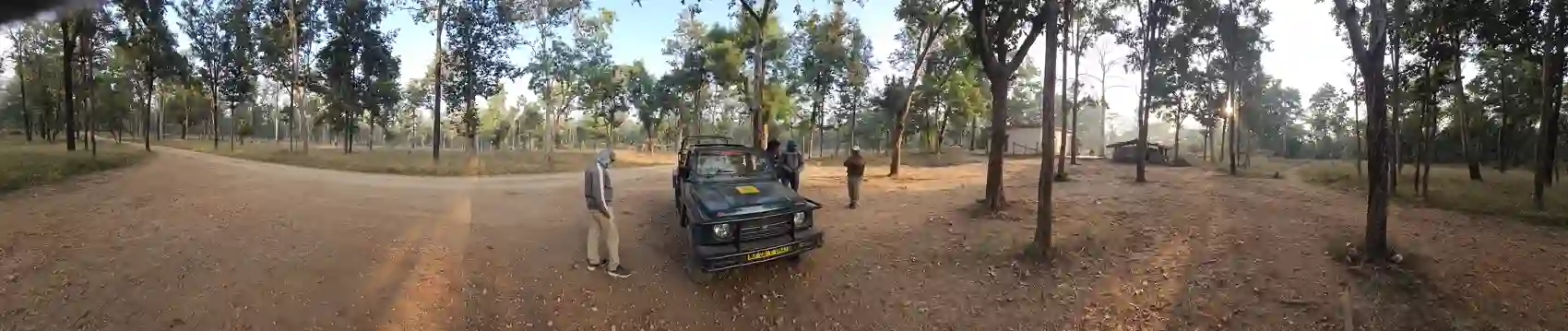
Pench is a long drive from Bhopal — about 7 to 8 hours. We reached the edge of the forest as the light was fading, checked into the MP Tourism (MPT) lodge near the Turia gate, and slept early. We had a safari booked before sunrise. The lodge was clean, comfortable and a minute from the gate — exactly what you want when your alarm is set for 5 a.m.
Into the forest of Mowgli
The jeep turns off the road, and everything changes. Pench is open teak and sal forest over low hills, with the Pench River running through it. It is bright and golden, not the dark, scary jungle of cartoons. You can see at once why a writer fell in love with it. And the animals come straight out of the storybook.
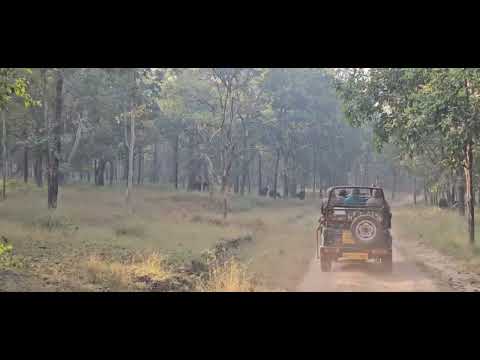
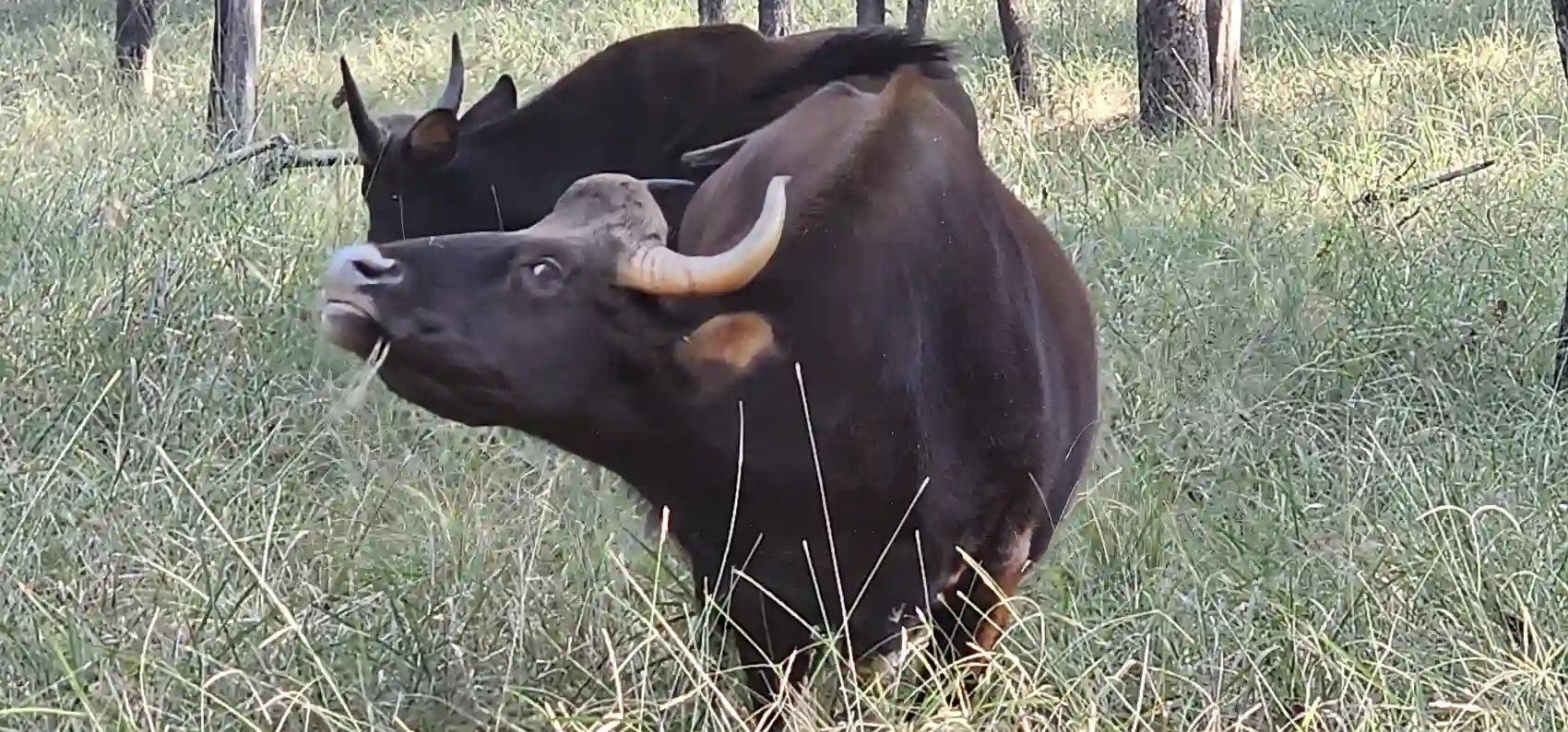
First a grey langur — Kipling’s Bandar-log — watching us from a tree. Then chital (spotted deer), glowing in the morning light. And then the big one: a gaur, the Indian bison, all muscle, grazing as if it owned the meadow. It does.

The birds alone are worth the trip. A hawk-eagle on a bare branch, and a noisy wetland full of storks, egrets and herons. Pench has more than 300 kinds of birds.

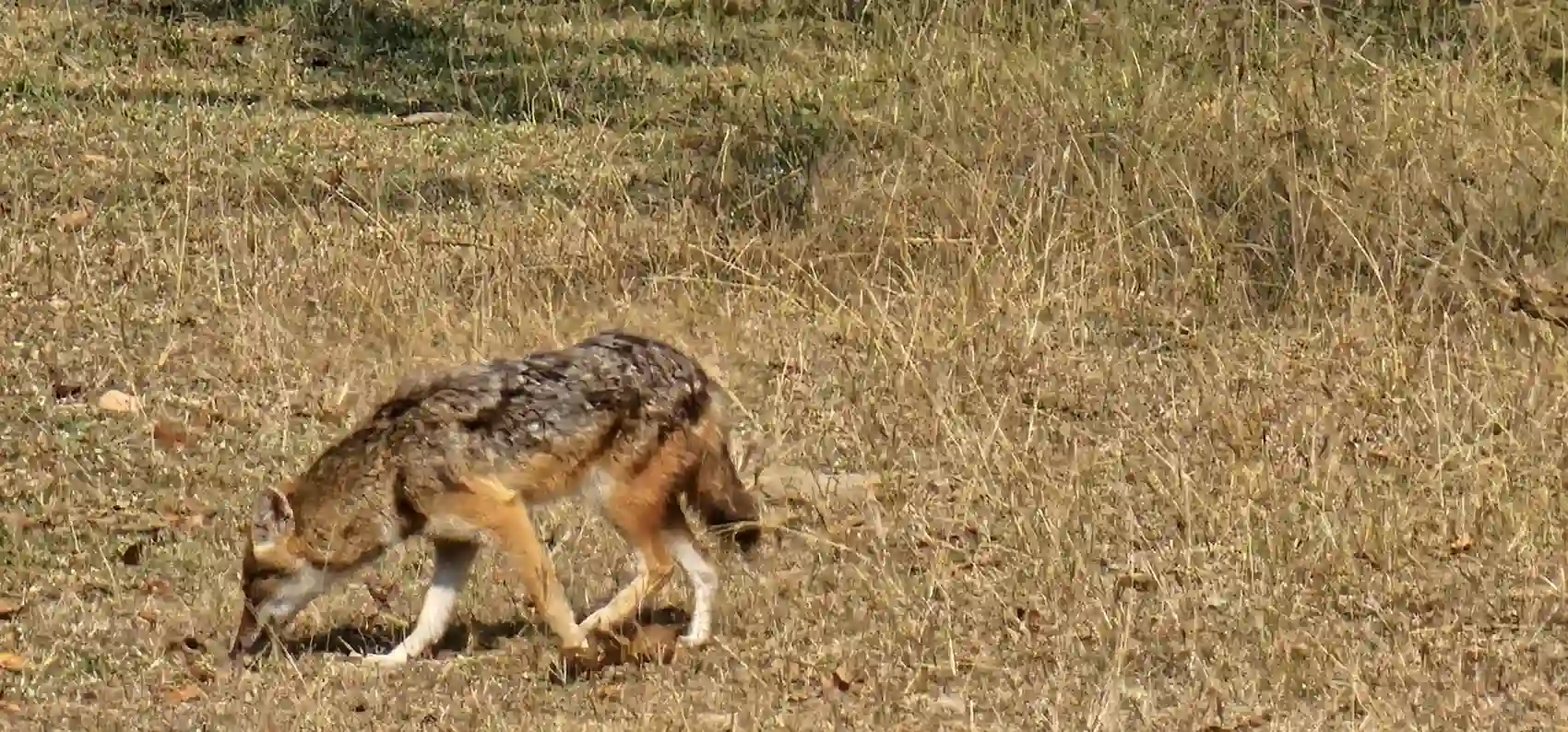
Then a golden jackal trotted into view — low and quick through the grass, pausing once to look back before slipping away. The jackal is the jungle’s clever opportunist, always working the edges of the action.
A whole jungle — but no big cat
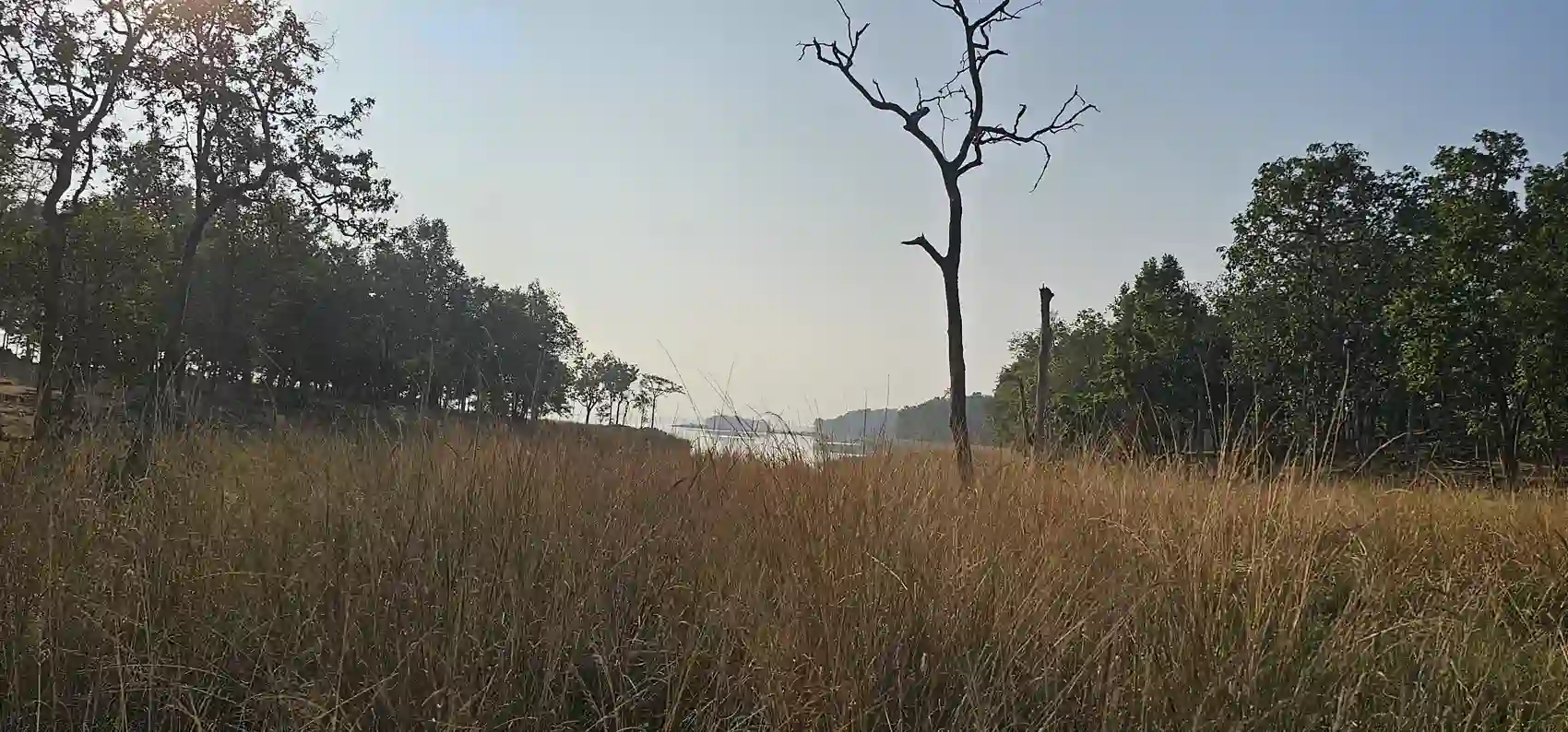
When you go to a tiger reserve, your heart wants only one thing. By the end of that first long day — a second drive, the hot noon, the slow golden evening — we had seen almost the whole jungle except a single big cat. No tiger. No leopard. Just a cat-shaped hole in a beautiful day. We drove out to a wide, calm lake and watched the grass turn from green to gold as the sun dropped. It was lovely. It was peaceful. It was still cat-free.

The people who protect Pench
That evening we got something most visitors don’t: a presentation by the Forest Department, and a long, kind chat with Shri Rajneesh Kumar Singh, Deputy Director of Pench Tiger Reserve, and his team. It changed how we saw the whole trip. The numbers are striking: the reserve runs 104 patrolling camps and deploys around 800 field staff, who walk about 25,000 km every month on patrol. Every adult tiger is mapped — the team showed the territories of 13 adult male tigers alone. And where the highway NH-44 cuts through the forest, they built nine wildlife underpasses (one nearly 750 metres long) so tigers, leopards and wild dogs can cross safely underneath.
Rajneesh sir gave us a simple tip: if you want to support the park, buy something from the souvenir shop at the centre. The money goes to the Pench Worker Society, which helps front-line forest staff with soft loans and medical costs. We bought a few things, gladly — it is the easiest way to put a little back into the forest and the families who guard it.
The Alchemist, and a promise in the dark
That night we did what old friends do when the day is done: we talked, late and easy, the years falling away. The “no cat” day came up, of course. And I said the thing I really believe — the line from Paulo Coelho’s The Alchemist (and yes, from a Shah Rukh Khan film too): when you truly want something, the whole universe helps you get it. So I said it out loud, half-joking, half-serious: tomorrow, we will see a big cat.
Dawn — and then she came
We were up before the sky turned grey, back in the jeep, cold and hopeful. The morning gave us the usual gifts — gaur, a sambar stag, eagles — and the clock kept ticking toward the long drive home.

Then the forest went quiet in a new way. A full-day film crew in the jeep ahead had spotted something. Our driver edged forward and pulled us up right beside them, with a clear view.
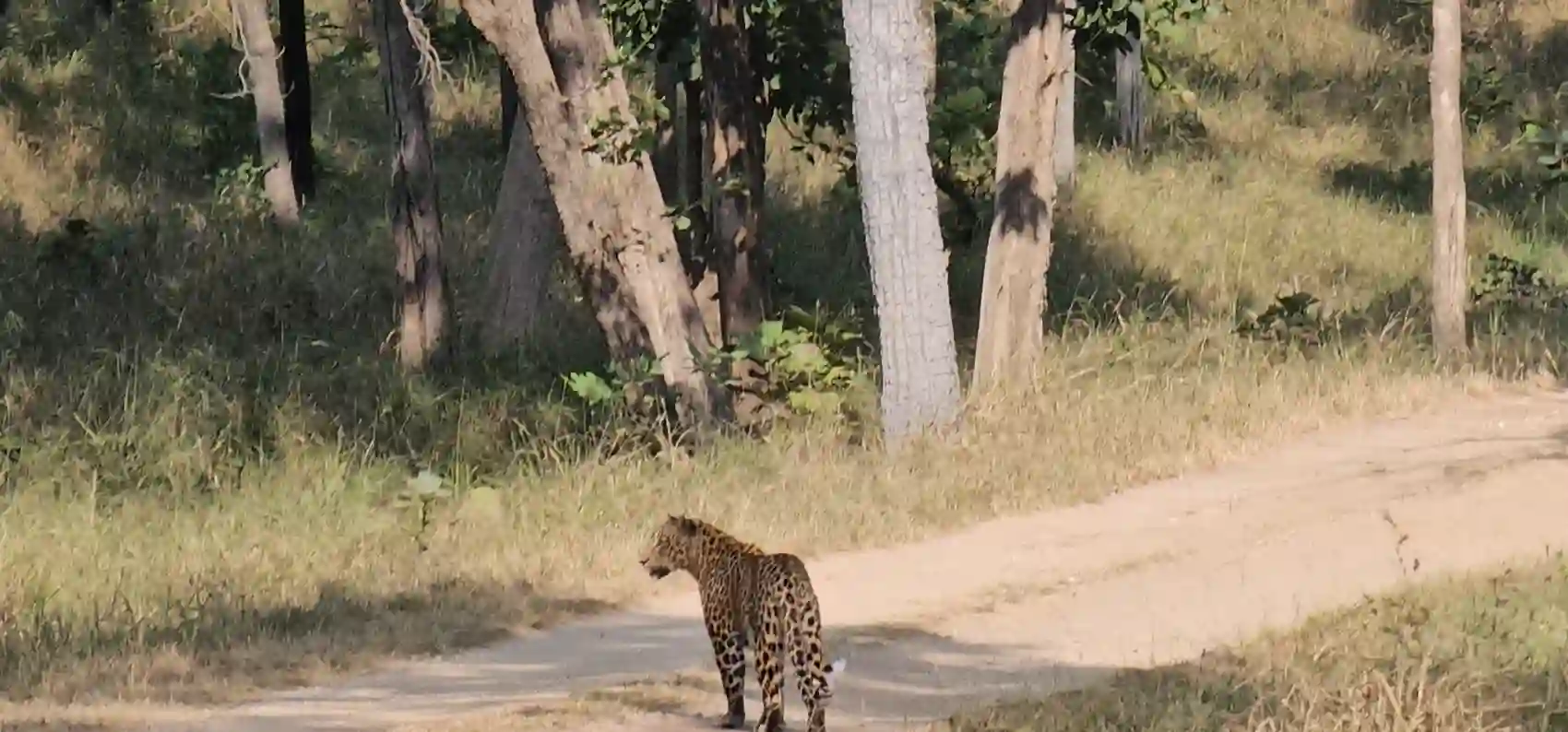
She came up from behind us, slow and calm: a young female leopard, gold with black rosettes, walking onto the open track as if she had all the time in the world. A real Bagheera. Nobody breathed.

She stepped down into a shallow, rocky water channel, crouched at the muddy edge, and drank — slow and steady, her tongue flicking the water, her eyes flicking up to us between sips. For 20 to 25 minutes she simply let us be there, close enough to count her spots.
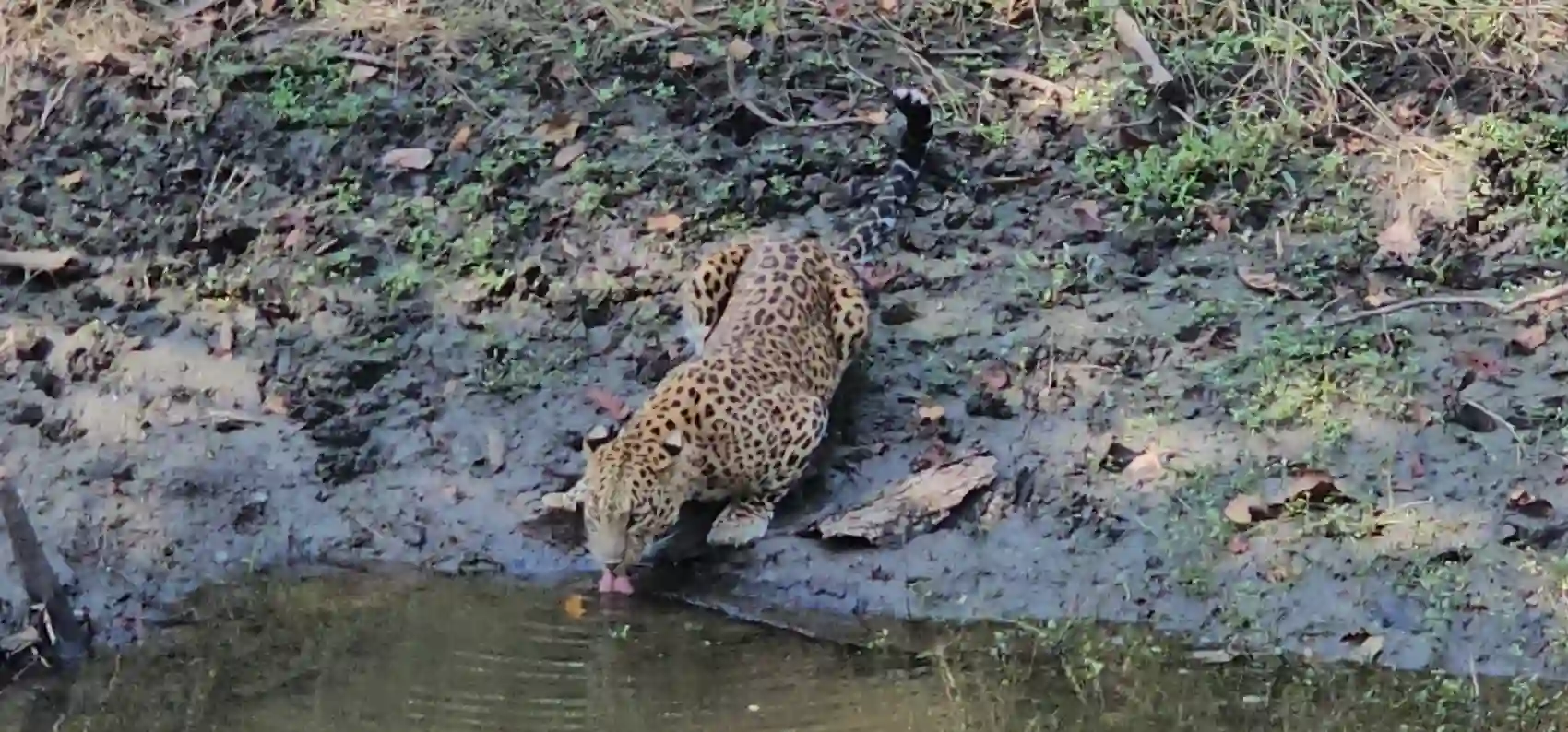
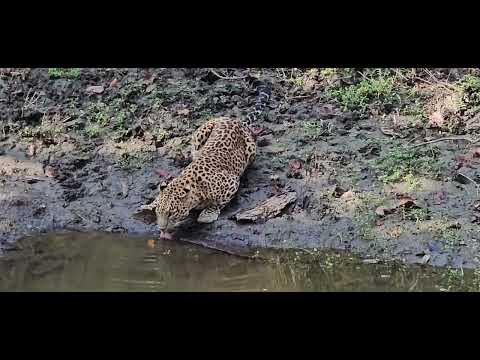
Then the jungle gave her away. A lone chital caught her scent and began its alarm call — that sharp, ringing bark that runs through the forest like a warning bell. The leopard’s head turned. She stood, took a few slow steps toward the deer — and the deer bolted. Unbothered, she climbed the far bank and slipped into the grass, taking the morning with her.
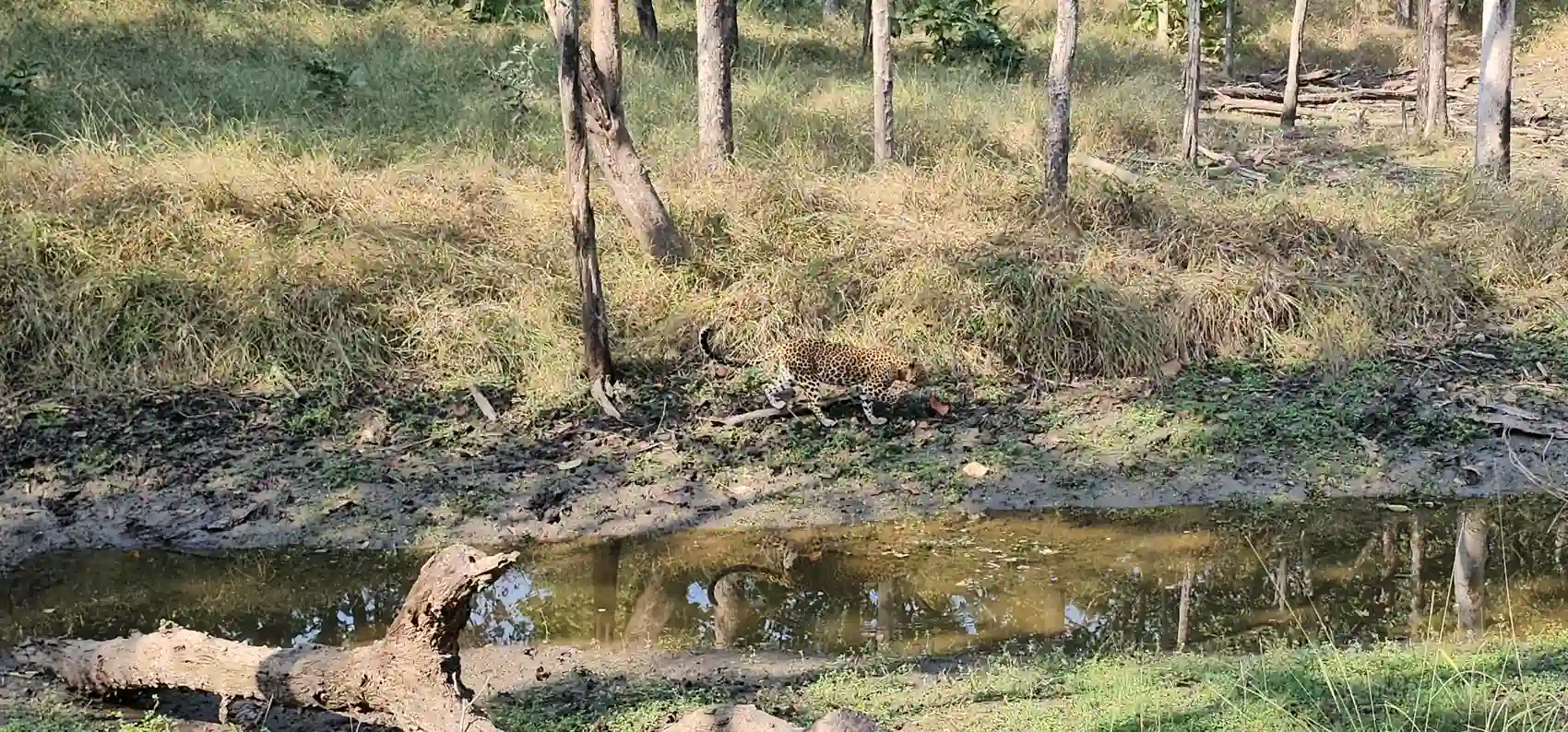
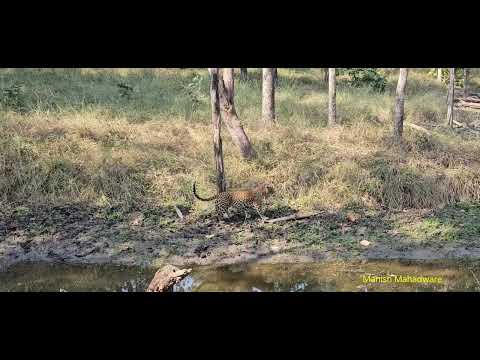
A note on Bagheera: Kipling’s Bagheera is a black panther, which is simply a black leopard — the same animal with a darker coat. Leopards are shy and mostly active at night, so a young female out in the open at a waterhole, in good light, for over 20 minutes is a sighting people wait years for.
The drive home
One last splash of colour saw us out — an Indian roller, an electric-blue bird, on a branch like a goodbye gift. Then we were on the highway north, grinning, telling the story to each other again and again. There was one more twist: it was 19 November 2023, the day of the Cricket World Cup final, and we followed every ball on the way back. India lost. It hurt. But it could not really touch us. We had driven into Kipling’s jungle chasing a ghost, made a wish in the dark, and watched it come true at the water the next morning.
About Pench Tiger Reserve
Pench Tiger Reserve (also called Pench National Park) is a protected forest in the Seoni and Chhindwara districts of southern Madhya Pradesh, India, with a smaller part across the border in Maharashtra near Nagpur. It lies in the lower hills of the Satpura range, along the Pench River, and is best known as the setting of Kipling’s The Jungle Book.

Key facts, including figures from the reserve’s own Forest Department briefing:
- Total tiger reserve area: about 1,179.63 sq km (core 411.33 sq km — a 292.857 sq km national park plus a 118.473 sq km sanctuary — and 768.30 sq km of buffer).
- History: sanctuary in 1977, national park in 1983, the 19th Project Tiger reserve in 1992, with an eco-sensitive zone added in 2019.
- Wildlife: tiger, leopard, gaur (Indian bison), dhole (wild dog), sloth bear, jackal, striped hyena, chital, sambar, nilgai, langur and 300+ bird species.
- Protection: around 800 field staff, ~25,000 km patrolled every month, and 104 patrolling camps.
- The Jungle Book: Kipling drew on a true “wolf boy” story reported in this area in 1830; the characters map onto real Pench animals — Baloo the sloth bear, Bagheera the leopard, Shere Khan the tiger.
- Getting there: ~390 km (7–8 hours) from Bhopal to the Turia/Khawasa gate; Nagpur airport is ~120 km away. Stay at MP Tourism’s Kipling’s Court or Mowgli’s Den near the Turia gate.
Photo gallery
More from the Journal: If you loved this, read An Hour with the Tigress Laila — Churna, Satpura, our other Madhya Pradesh tiger-safari story from Bhopal.
Verified June 2026 against Wikipedia, MP Tourism, Pench Tiger Reserve (penchtiger.org) and reporting on the NH-44 Kanha–Pench corridor underpasses; area and conservation figures are from the reserve’s own on-site Forest Department presentation. All photographs and video © bhopali.in / Manish Mahadware, from our trip on 18–19 November 2023. With thanks to Shri Rajneesh Kumar Singh and the Pench team. Please keep wild places wild — follow your guide, keep your distance, and take nothing but pictures.