The alarm went at three. By half past, we were on an empty highway out of Bhopal, 185 kilometres of dark road between us and a forest gate that would not wait. I drove fast. We had a full-day permit for Satpura’s Churna range — the last weeks of the season, before the monsoon shut it — and, if we were honest, no real hope of a tiger. You go for the forest. The tiger, if it comes at all, is a gift.
That morning, the forest gave us a tigress called Laila — and an hour we will spend the rest of our lives describing.
Getting there · 3:30 AM
A pre-dawn gamble
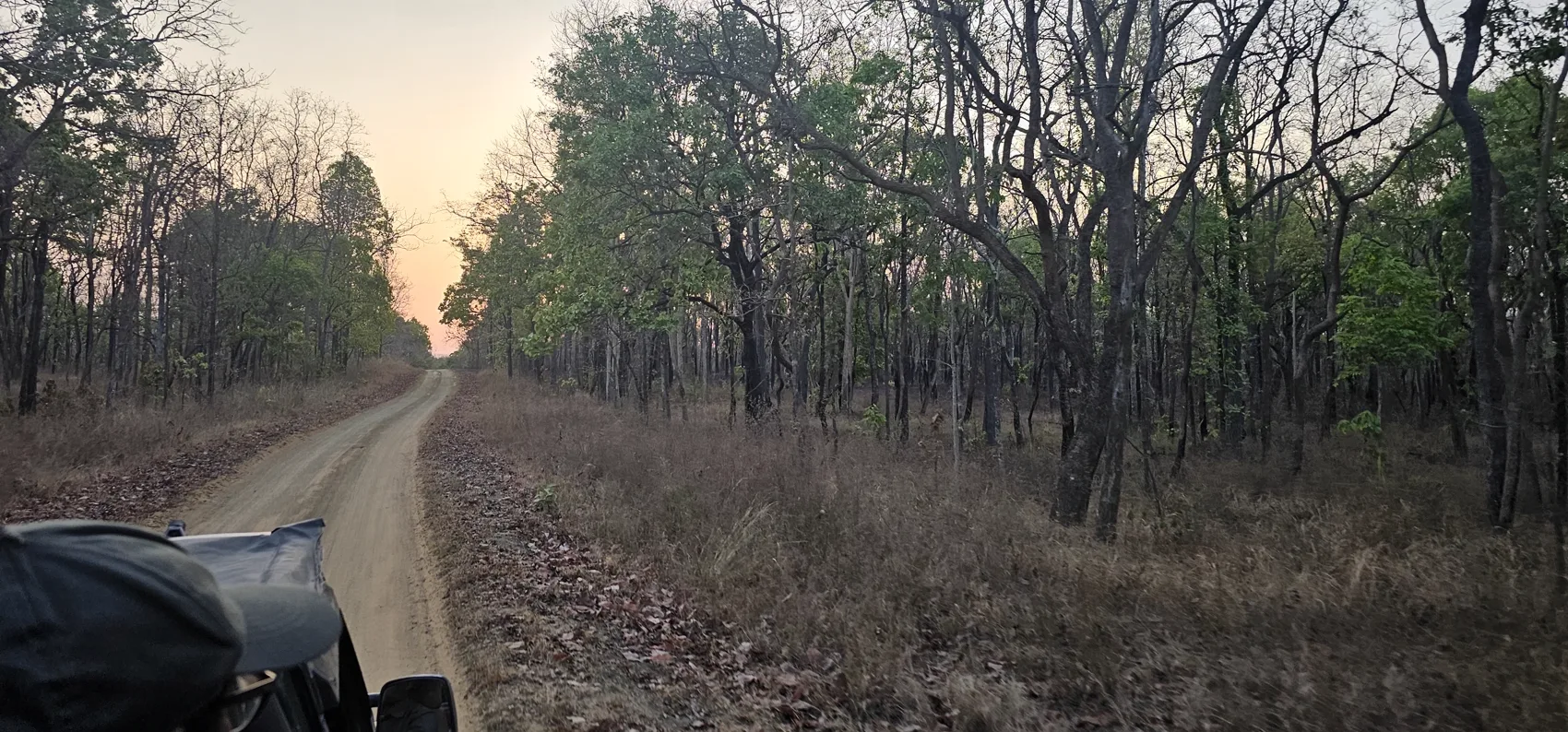
Churna sits about 185 km from Bhopal — out past Obaidullaganj, Hoshangabad, Itarsi and Bhaura, normally three and a half hours, four. We didn’t have them. On roads empty enough to fly, we made the gate in a little over two and rolled through the checkpoint into a forest still blue with dark. One world ended at that gate; another began.

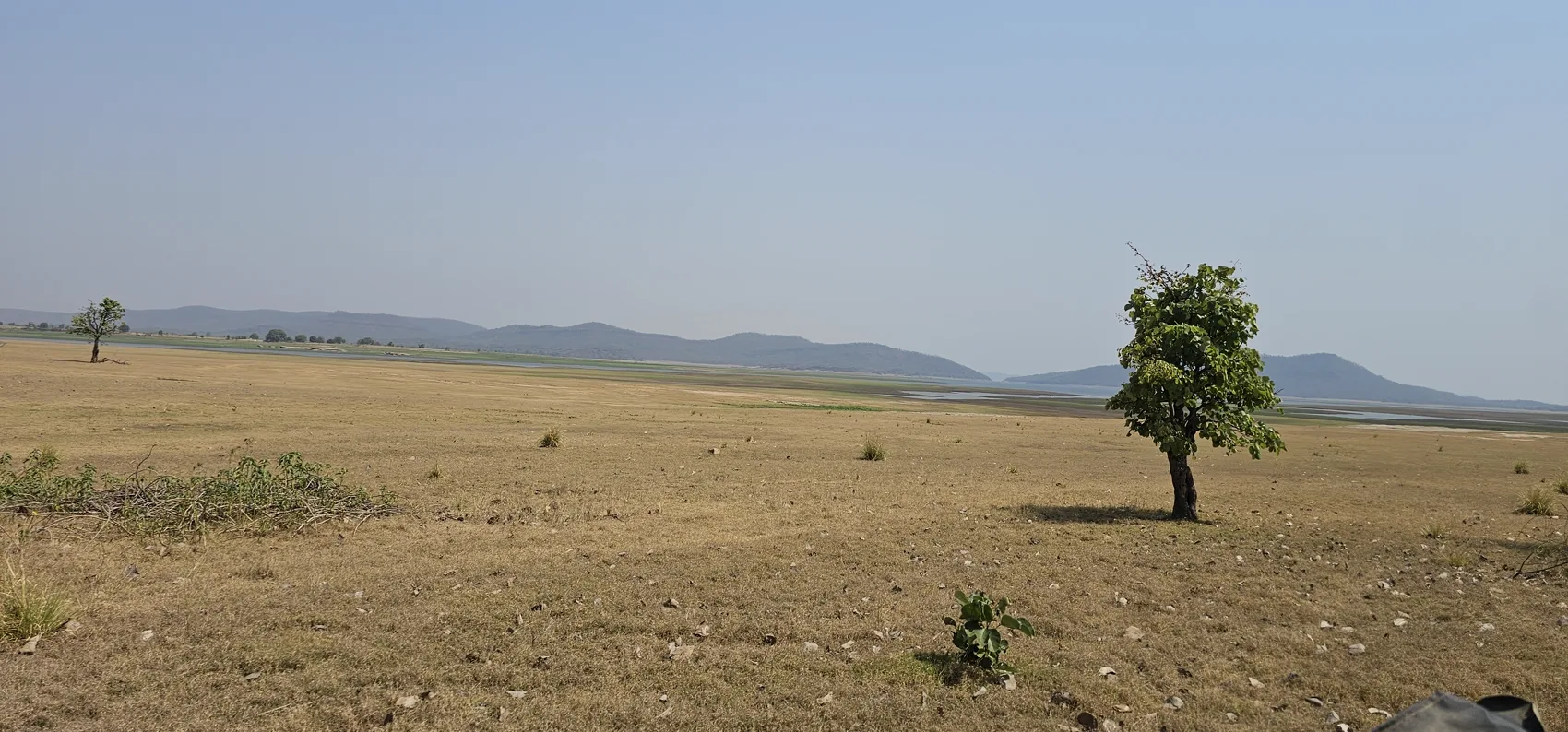
There was a reason to push. Satpura’s core zones close at the end of June for the monsoon, and this was early May — the season’s last stretch, the forest tinder-dry, the heat already a presence by sunrise. That heat is the safari’s secret: it drives everything to water.
First light · ~6:00 AM
Into the forest at dawn
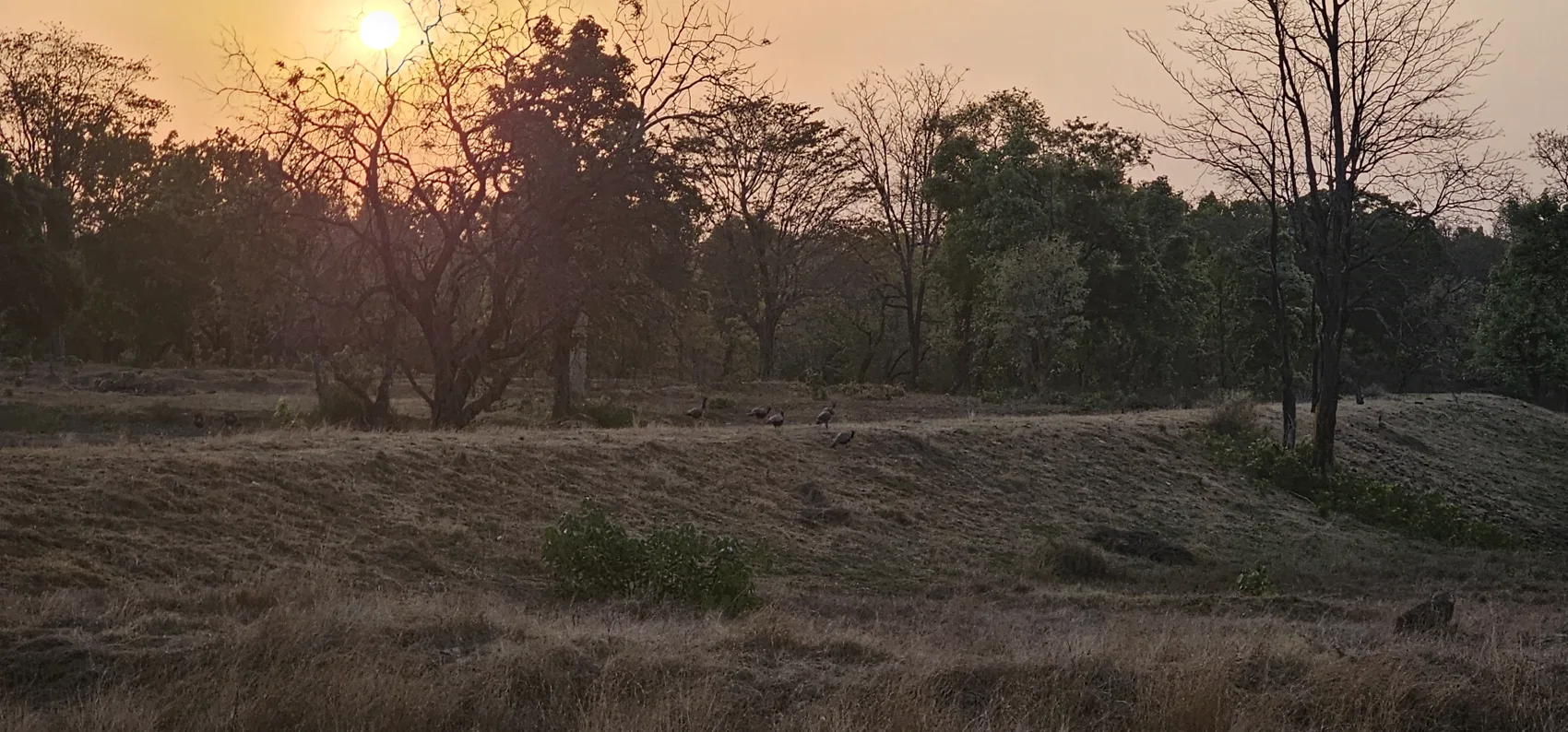
The first hour is all atmosphere. The sun came up molten over the grassland. A waterhole held the sky without a ripple. The teak caught light for that short, soft window before the day turns to furnace.
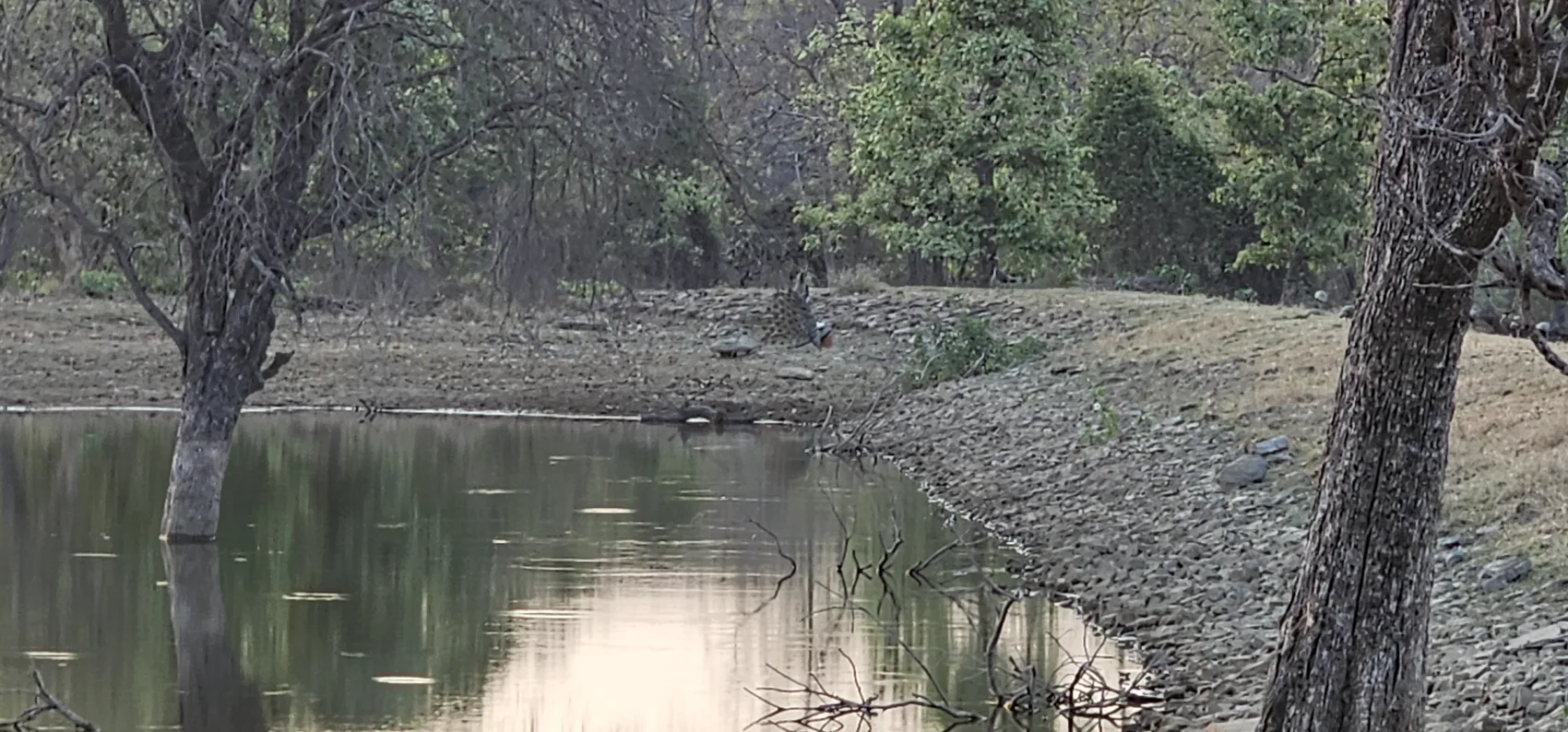
The forest wakes · 6:00 – 7:30 AM
A cast of characters before the tiger
A tiger is the end of a long sentence the forest writes first. It began with a nilgai — the blue bull, India’s largest antelope, all shoulders and suspicion, stepping stiff-legged through the trees.

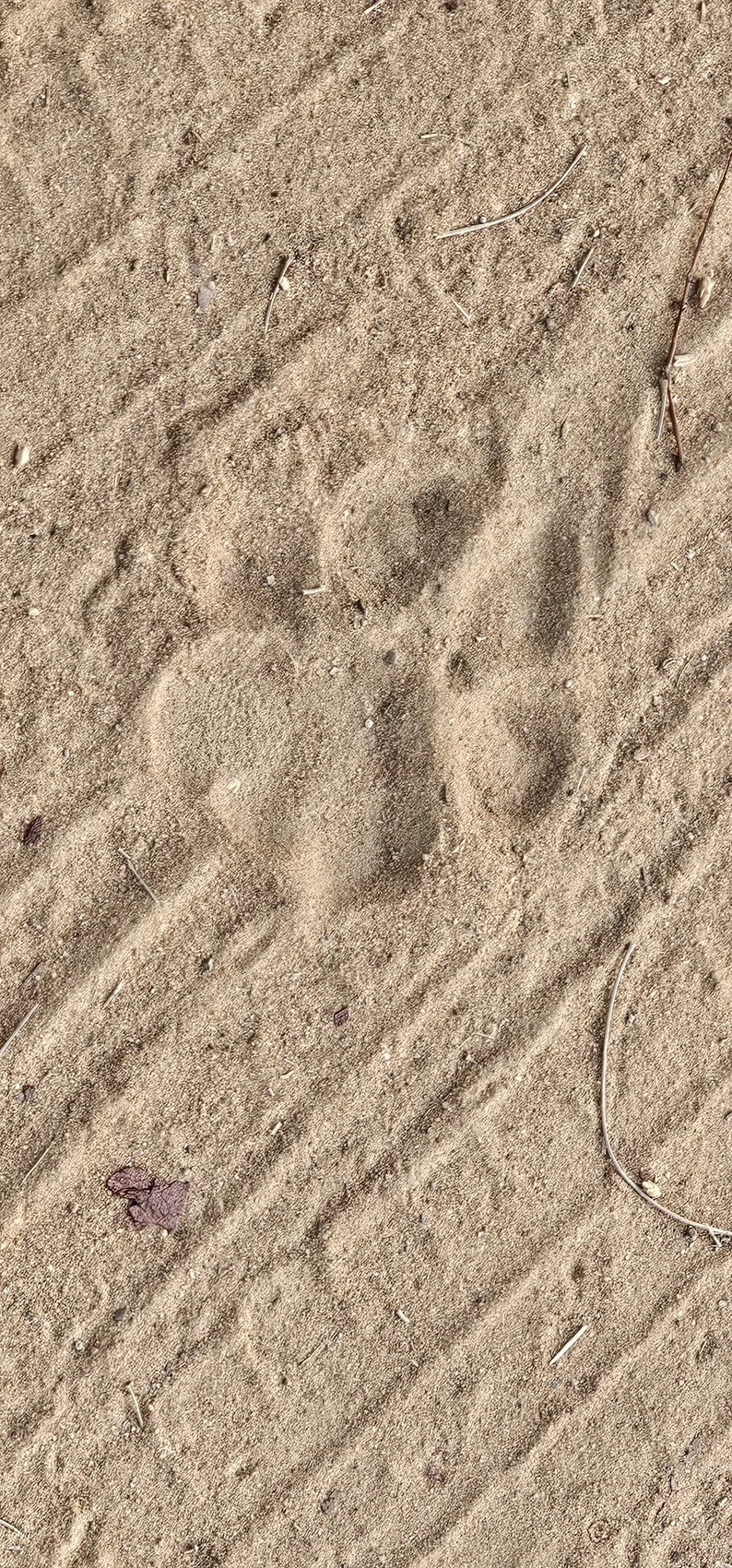
Then our driver stopped and pointed at the ground. Pressed into the dust were pugmarks — round, broad, and fresh. A tiger had walked here, and not long before. The morning changed after that. We weren’t sightseeing now; we were tracking.

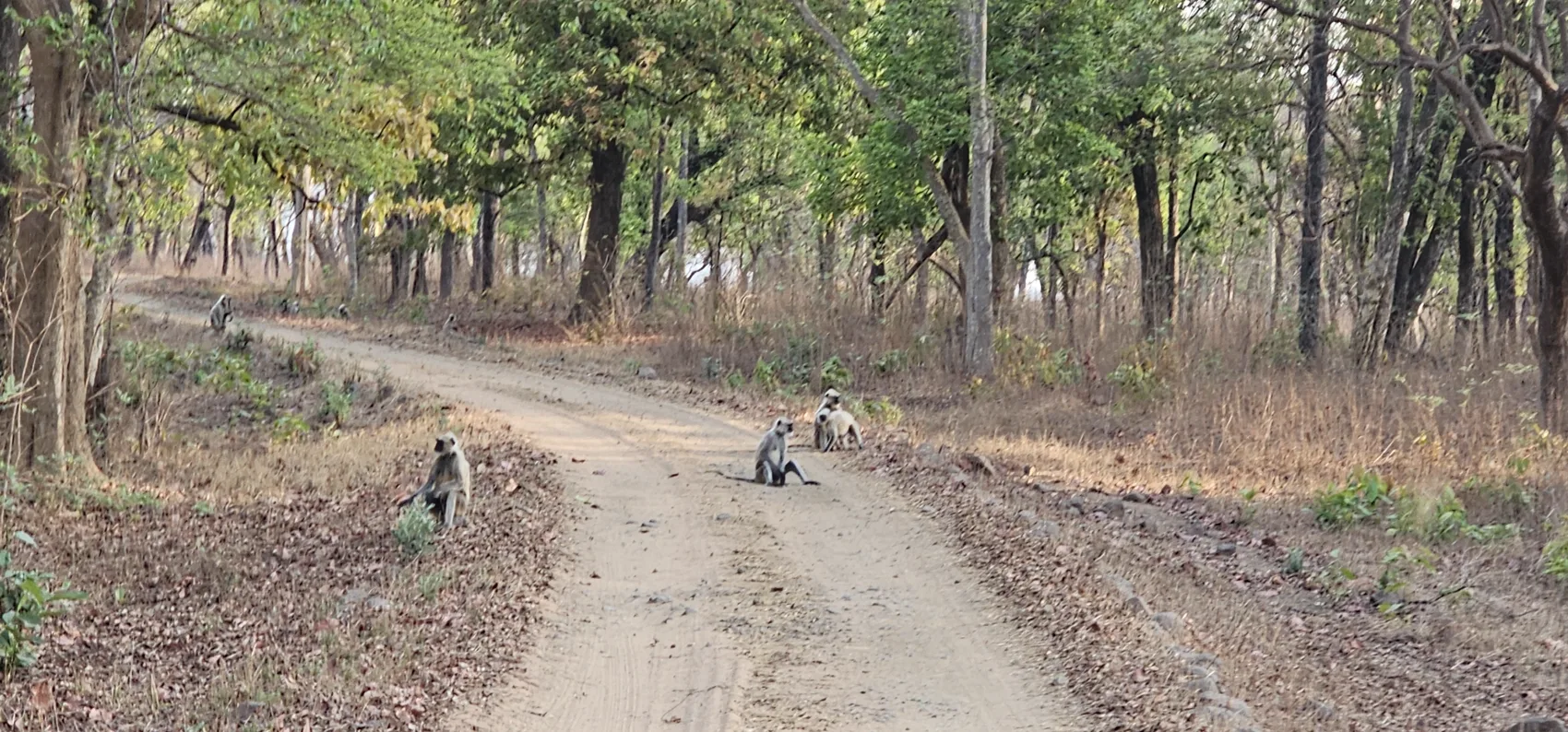
The forest kept us busy while we searched. A peacock worked the edge of a pool. A troop of grey langurs held the middle of the track and watched us pass — the forest’s alarm system, and our best informant. A mongoose crossed once, fast, and was gone.


Left: a peacock by the waterhole. Right: a mongoose darting through the grass.
The sighting · ~8:07 AM
And there she was — Laila
The guides read the forest like a page. We followed the tracks, cut the engine, listened. The langur alarm climbed through the canopy and held. And then, between two teak trunks, the dapple resolved into stripes. A tigress. The guides knew her on sight: Laila.
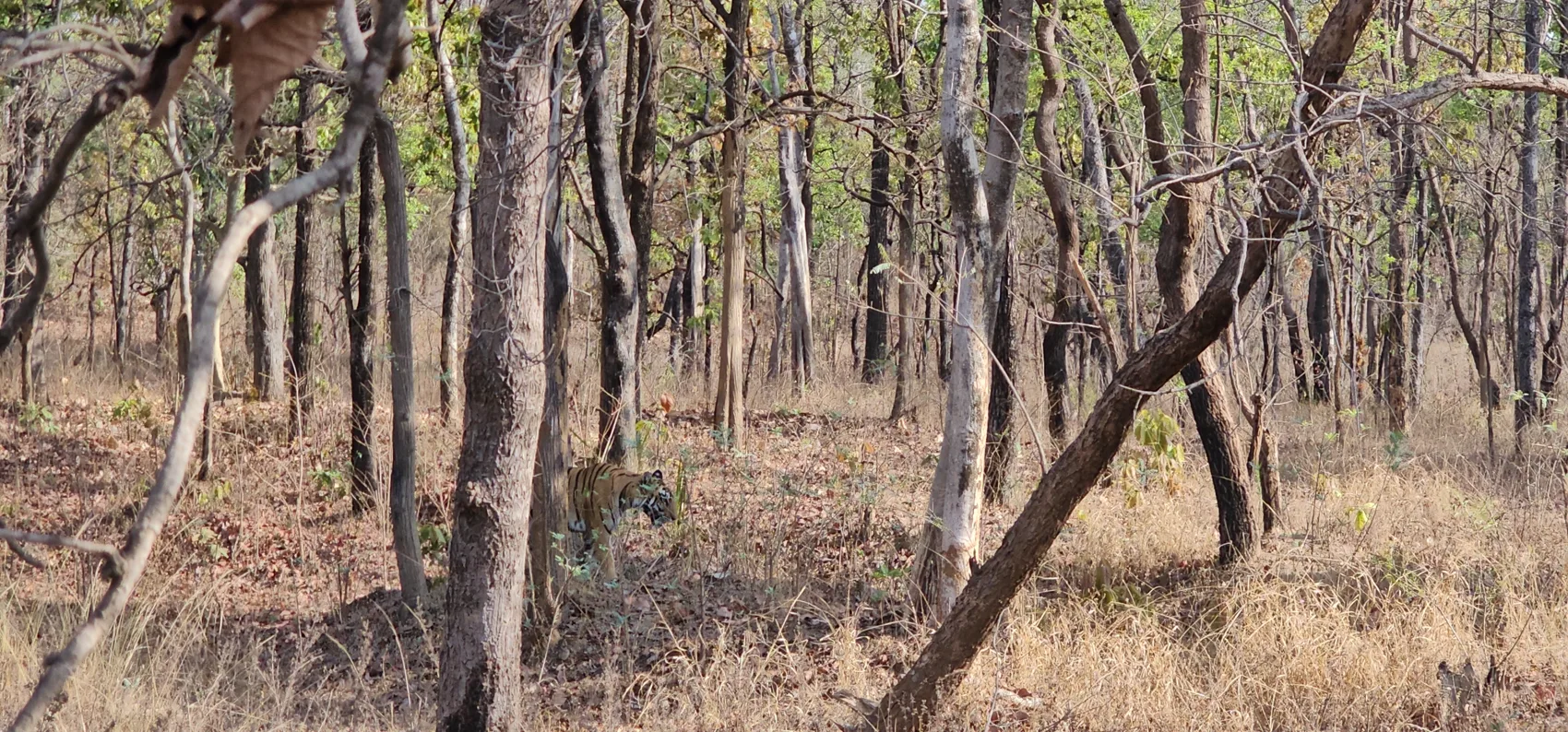
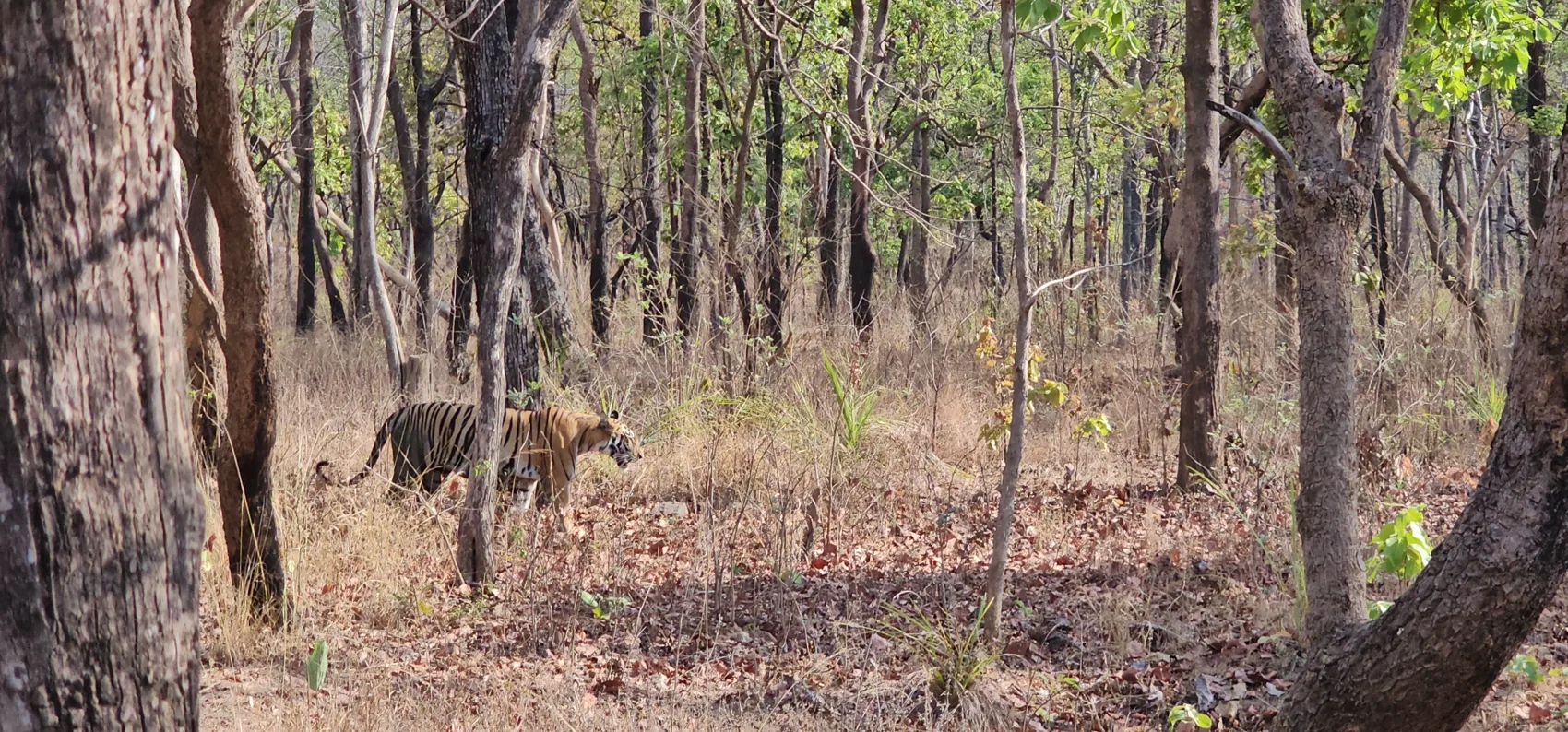
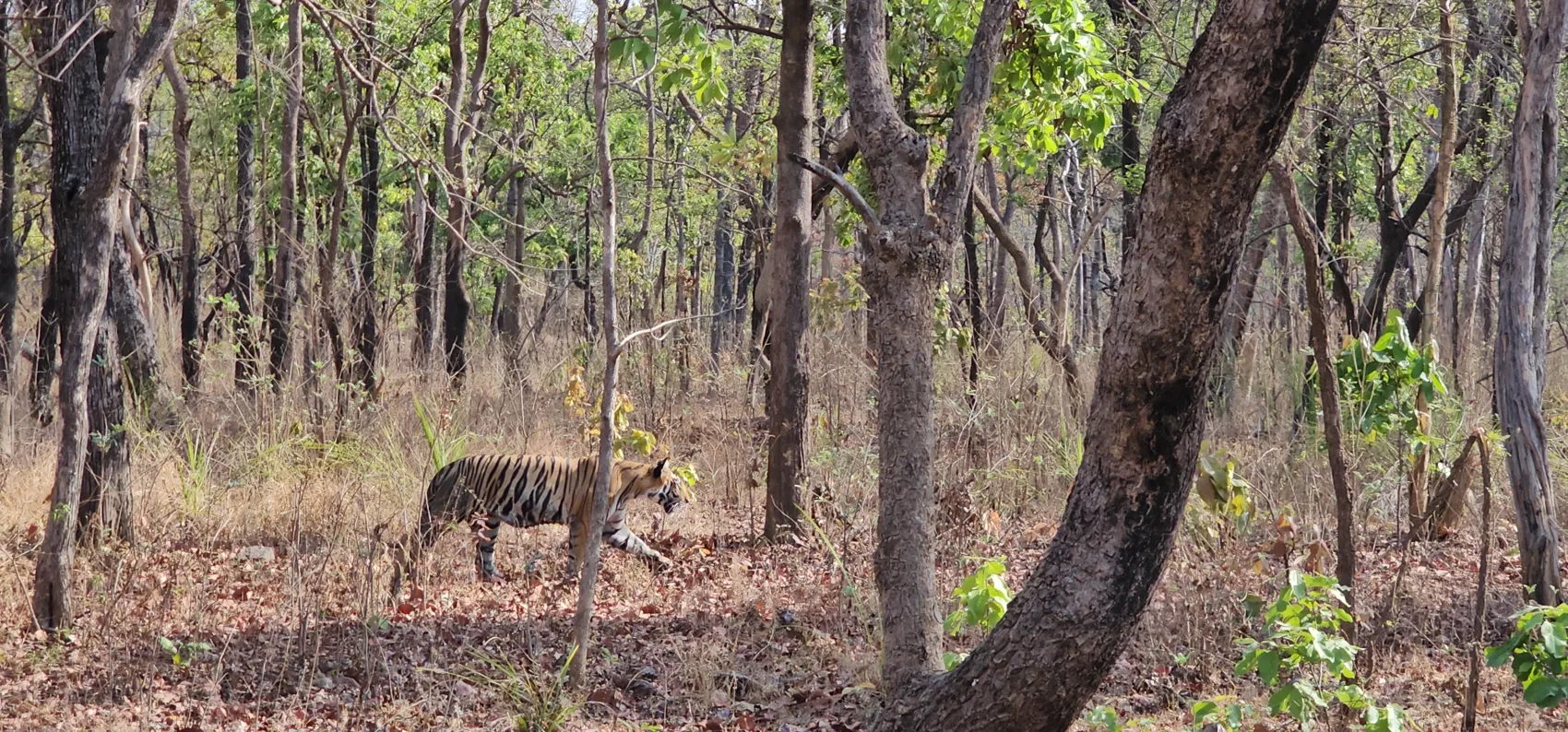
It should have been a glimpse. It became an hour. She was entirely at ease, and we simply went where she went — walking the forest with that unhurried, rolling power no photograph quite holds.
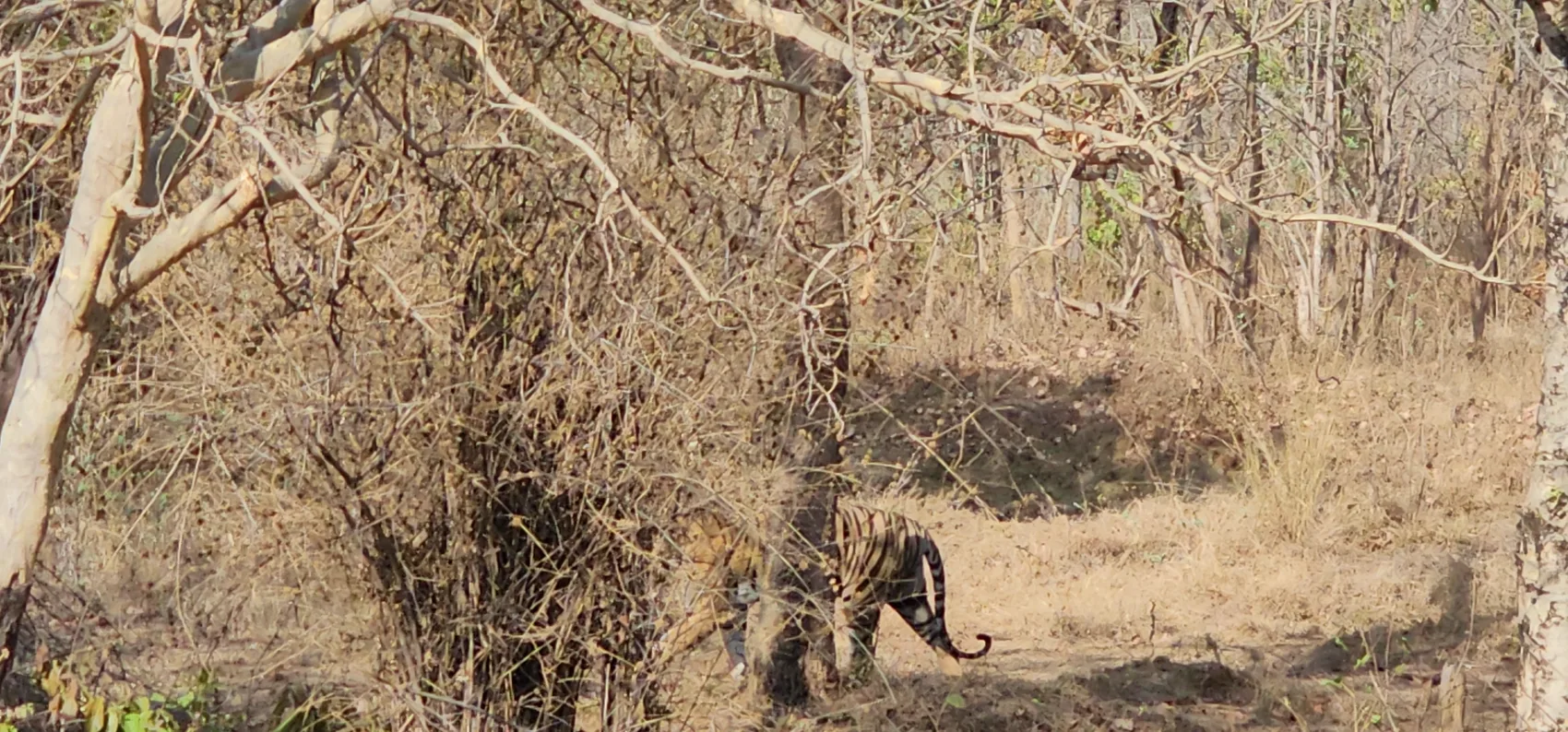
Moving towards us · ~8:10 AM
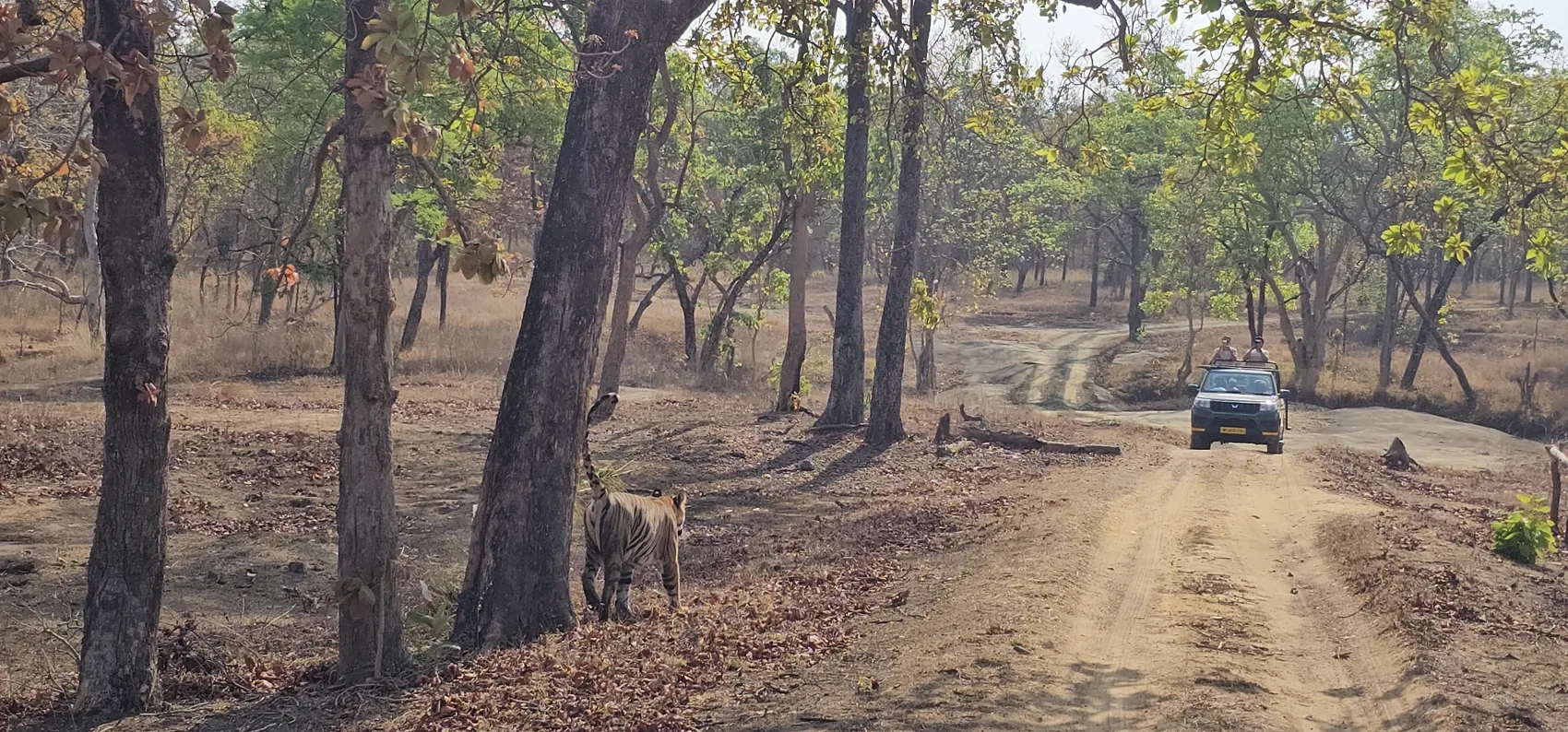
Onto the track, straight at us
Then she gave us the moment you don’t dare ask for. She stepped onto the track and walked straight at us — unhurried, indifferent, the most dangerous animal in the forest treating our gypsy as scenery. Nobody in the vehicle breathed.

The most dangerous animal in the forest, walking straight at us — and bored by it.
And this was Mallupura — not the zone Churna is famous for tigers. We had no business being this lucky.
Marking her territory · ~8:32 AM
Leaving her signature
As she walked, she worked. Laila marked her trees — a pause here, a message left there for the next tiger down the line. The langurs tracked her overhead and never let up. Once she threw a sudden, lazy lunge at a bird — all that power switched on for half a second, then off.
At the water · ~8:40 AM
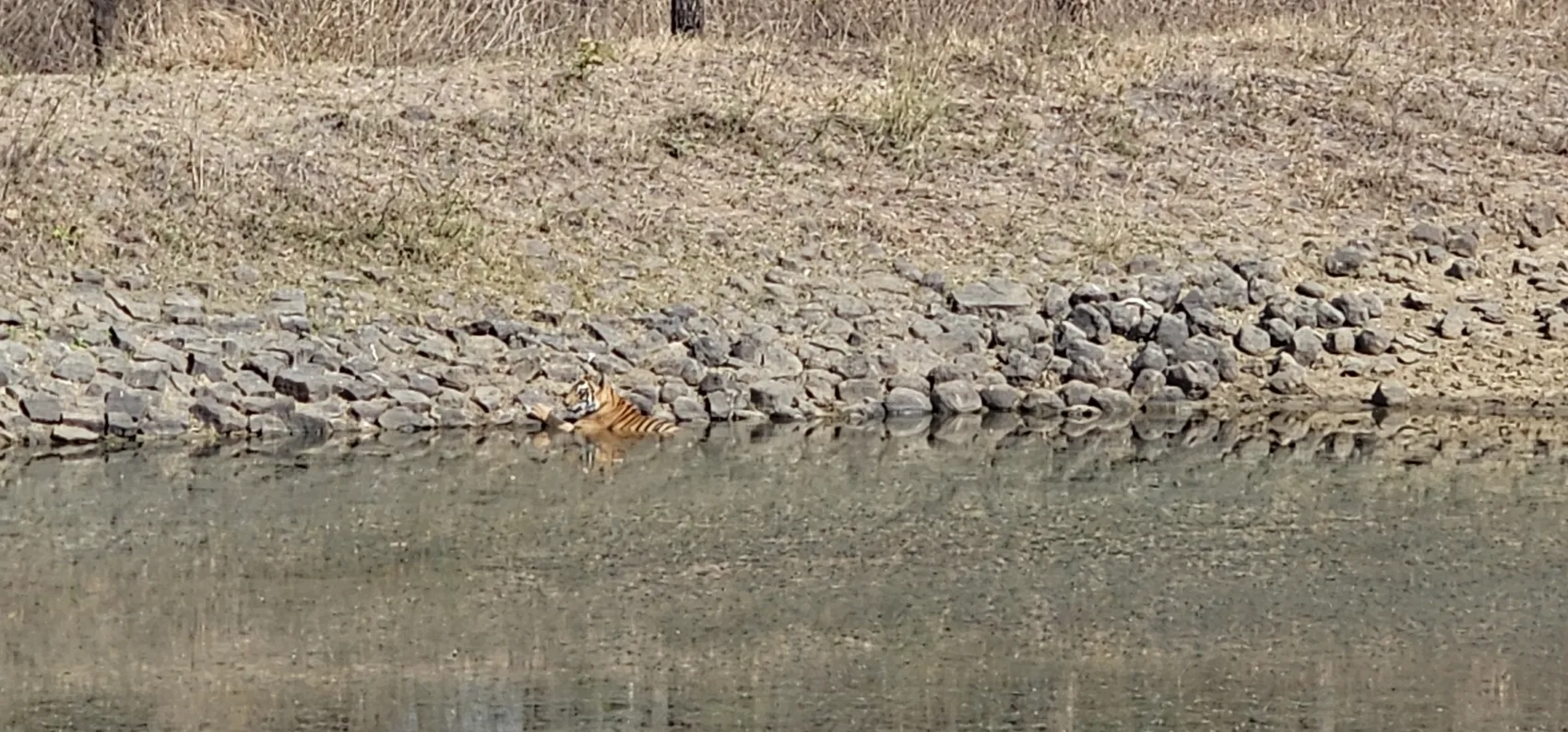
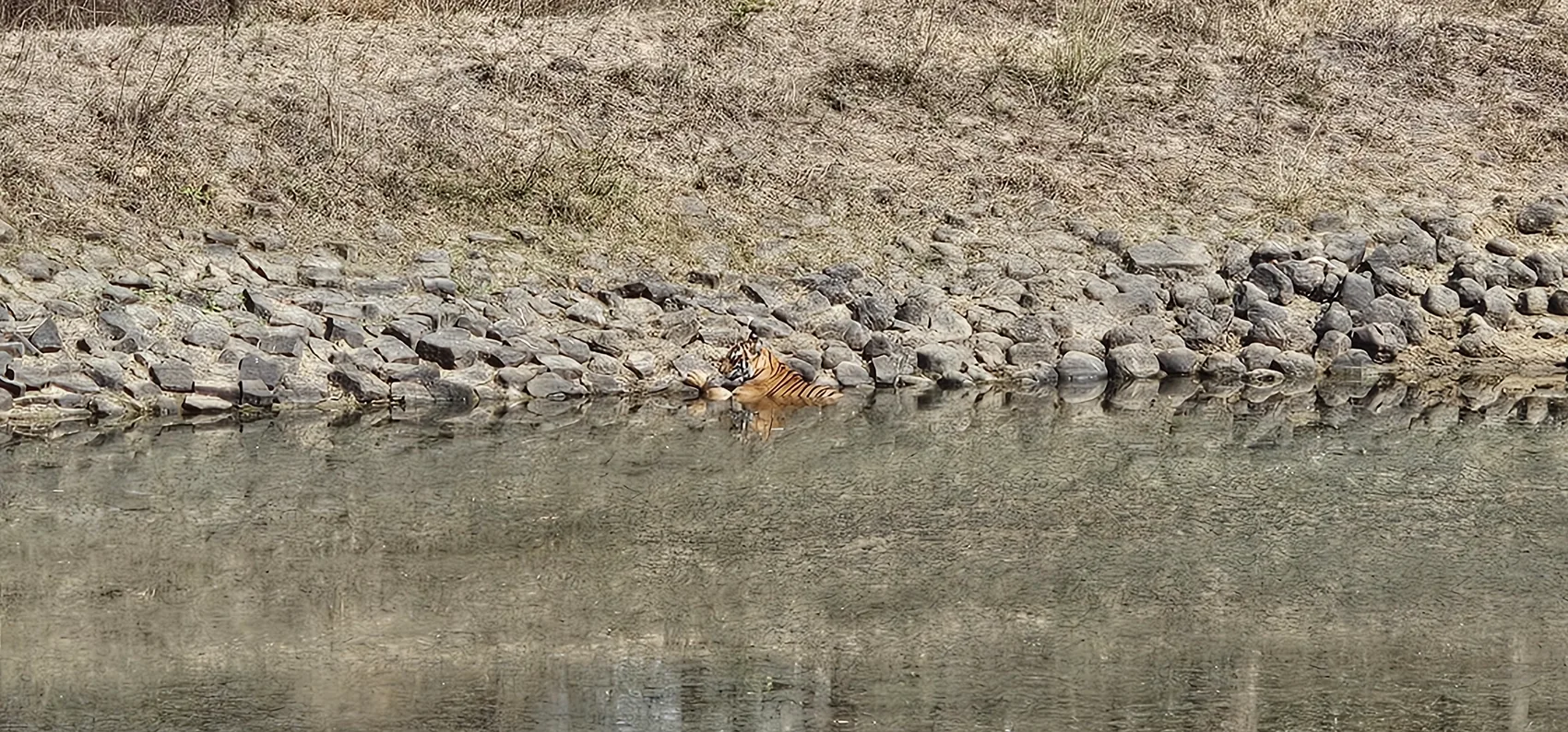
Laila cools off
The heat was climbing now, and she did the only sensible thing — went to water. Down a rocky bank, and then she settled at the edge of a pool and let the morning cook, the forest hanging upside-down in the still surface.

One last walk · ~8:50 AM
And then she was gone
Rested, she rose and walked once more through the open forest — one last gift of her broad back and shifting stripes — then stepped into the trees and was simply gone, the way tigers go. We sat in the new quiet, not quite believing it.

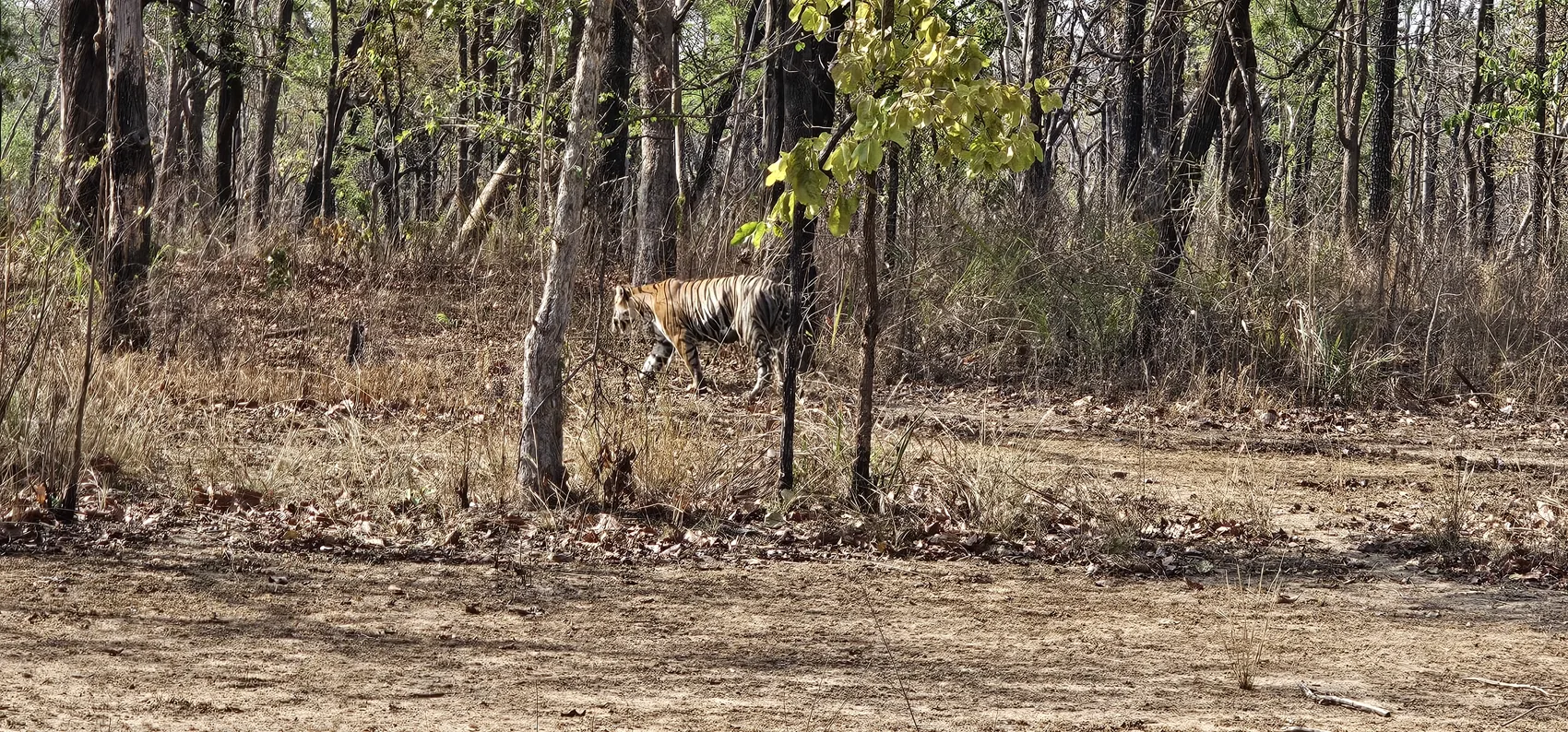
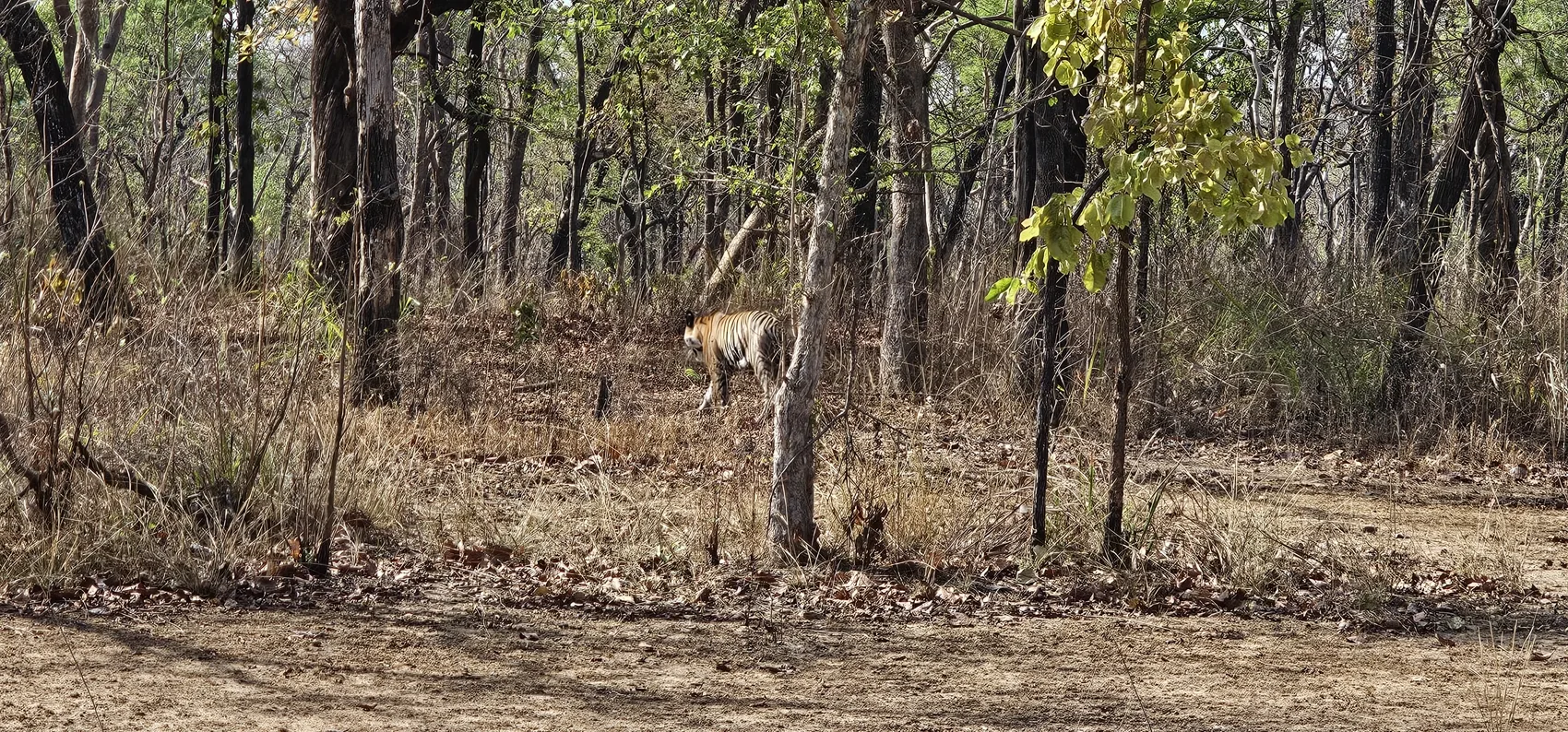
Laila melts back into the trees — and the forest fills in around us again, chital and all.
A break in the forest · ~9:45 AM
Breakfast at the heart of the wild
Full-day safaris break at a designated clearing deep in the forest — a gazebo, a couple of huts, a washroom, a swing in the shade. We ate, the children swung, the heat pressed down. After a tiger before breakfast, even instant coffee tasted earned.

And home · from ~10 AM
The long road back
The safari let us out into the white glare of a May afternoon — sunburnt, wordless, happy. We stopped for lunch at a roadside place in Itarsi and drove the rest of the way home still talking about her: the tigress we followed for an hour, in the one zone where we had no right to find her. You go for the forest; the tiger is a gift. That morning, the forest gave us everything.
More from the Journal: Read Pench Tiger Reserve: The Jungle Book Forest — the dawn we met a leopard, our other Madhya Pradesh tiger-safari story.
Verified June 2026 against Satpura Tiger Reserve safari information (MP Forest Department, bigcatsindia.com and others). All photographs © bhopali.in, from our own safari on 4 May 2025. “Laila” is the name the local guides use for the tigress. Please keep wild places wild — follow your guide, keep your distance, and take nothing but pictures.