You’re walking down a narrow lane in Bhopal’s old city Chowk, past textile shops and spice stalls and the general press of a market that has been in more or less continuous use for two centuries. Then you turn a corner — and stop.
Standing on a city street, squeezed between ordinary buildings, surrounded by the noise and smells of a working bazaar, is a three-storey palace whose architecture makes no sense by the logic of its surroundings. Gothic pointed arches rise above the ground floor. Mughal jharokha balconies project from the second storey. European Baroque ornamental details cover the upper parapet. The whole thing is painted a warm cream-yellow, finials rising at the roofline, and it stands there as if it has been waiting for you to notice it.
This is Shaukat Mahal — one of the strangest and most beautiful buildings in Madhya Pradesh, and almost completely unknown to visitors who don’t already know to look.
The Story Behind the Building
The Begums of Bhopal were, by any measure, extraordinary. Between 1819 and 1926, the state was ruled by four successive women — Qudsia Begum, Sikandar Jahan Begum, Shah Jahan Begum, and Sultan Jahan Begum — each of whom administered, modernised, and patronised the arts in ways that made Bhopal one of the most progressive princely states in India. They built mosques, courthouses, roads, schools, and palaces. They dealt with the British Resident on equal terms. They wore the veil by choice and commanded armies.
Shaukat Mahal was built in the mid-19th century, during the reign of Sikandar Jahan Begum. The architect, by most accounts, was a Frenchman — reportedly a descendant of the Bourbon royal family who had come to India in the aftermath of the French Revolution and settled into a life of architectural practice in the subcontinent. His name does not survive in the records with certainty. What survives is his building.
The commission produced something that reflects the cosmopolitan ambitions of the Bhopal court: a building that speaks multiple visual languages simultaneously. Gothic and Mughal, European Renaissance and Nawabi Indo-Islamic — not as pastiche, but as genuine synthesis.
Reading the Facade
Stand across the street and look carefully. The ground floor opens in pointed Gothic arches — the same form you’d find in a European cathedral or English Victorian government building. But the proportions have shifted; they’re taller and more slender than Gothic convention, giving the building a vertical delicacy.
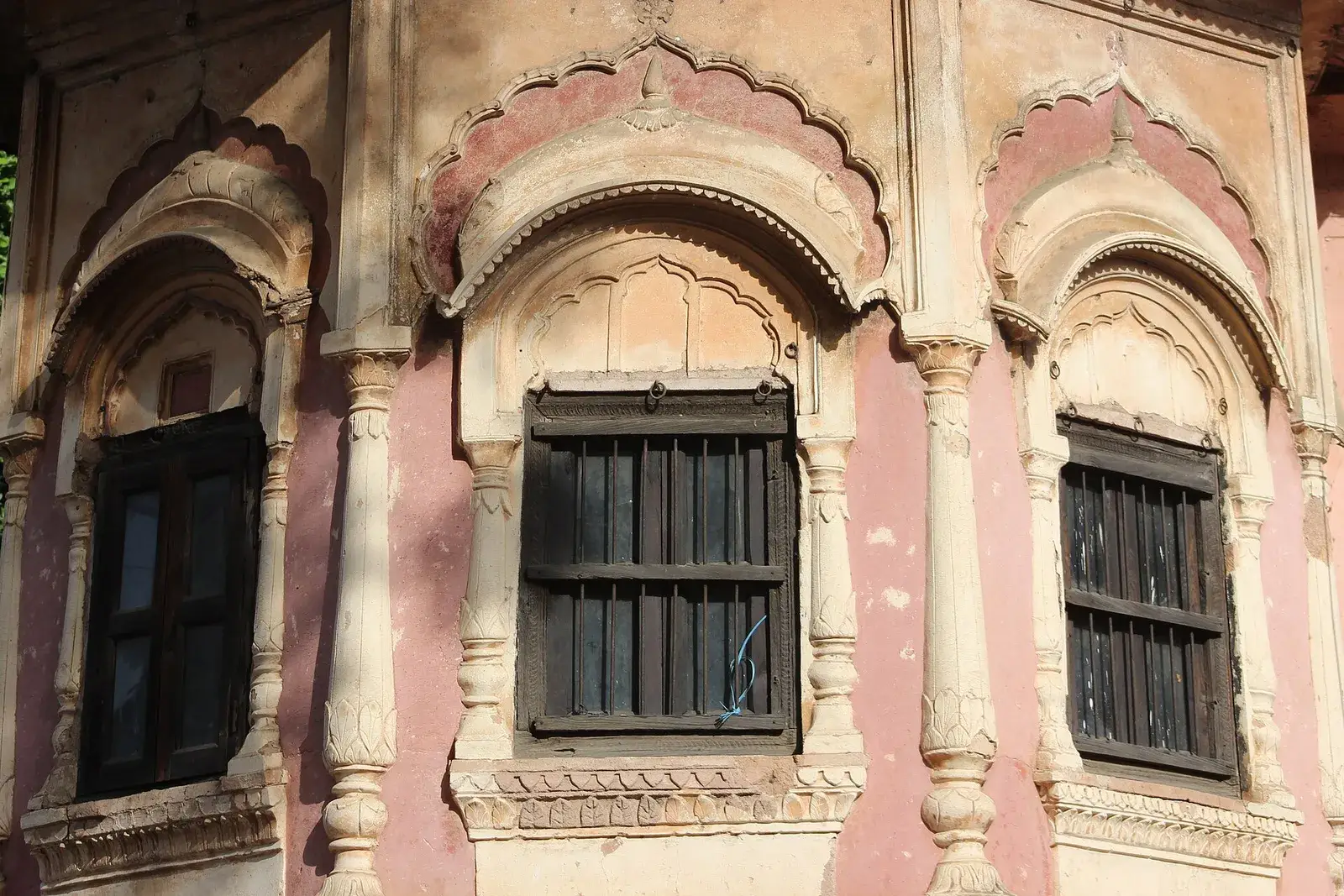
The second storey features jharokhas — the overhanging enclosed balconies projecting from the wall on carved brackets — that are unmistakably Mughal. The form goes back to Akbar’s Fatehpur Sikri; by the time it reached Bhopal, it had filtered through Rajput and Nawabi hands.
The upper levels pile on Baroque ornamental detail: sculpted medallions, decorative pilasters, cornices that step and turn in the European manner. The finials at the roofline are the exclamation marks — rising pointed elements, almost Gothic again, that draw your eye upward and stop it dead.
The building should not work. Somehow it does.
Sadar Manzil Next Door
Immediately adjacent to Shaukat Mahal, sharing the same compound, is Sadar Manzil — the old court hall of the Bhopal Nawabs. This is where the Begums held formal public durbars, received petitions, and administered justice. The form is different from Shaukat Mahal — European colonnades, arched galleries, a more restrained official dignity — but the two buildings together tell the story of a court that was simultaneously Nawabi and cosmopolitan, Islamic and European-influenced, traditional and self-consciously modern.
Sadar Manzil is now used as government offices. The interior is not accessible to visitors, but the exterior, viewed through the compound gate, is worth a few minutes. Both buildings are ASI-protected monuments — which means their facades are maintained, though the surrounding urban fabric presses close.
The Old City Walk
Shaukat Mahal is not an isolated destination — it is the anchor of one of India’s best urban heritage walks.
From the palace, step into Chowk bazaar itself. The market has been running in this form since at least the Nawabi era, and it retains something of that character in the tightly packed lanes, the narrow frontages, the trades — ittar shops, bangle sellers, halal butchers, cloth merchants — that have occupied the same alleys for generations. This is the old city that the Begums administered, and walking through it, the buildings of their period appear at intervals: a gateway here, a mosque facade there, an old haveli reduced to a ground-floor shop but with carved eaves still visible above.
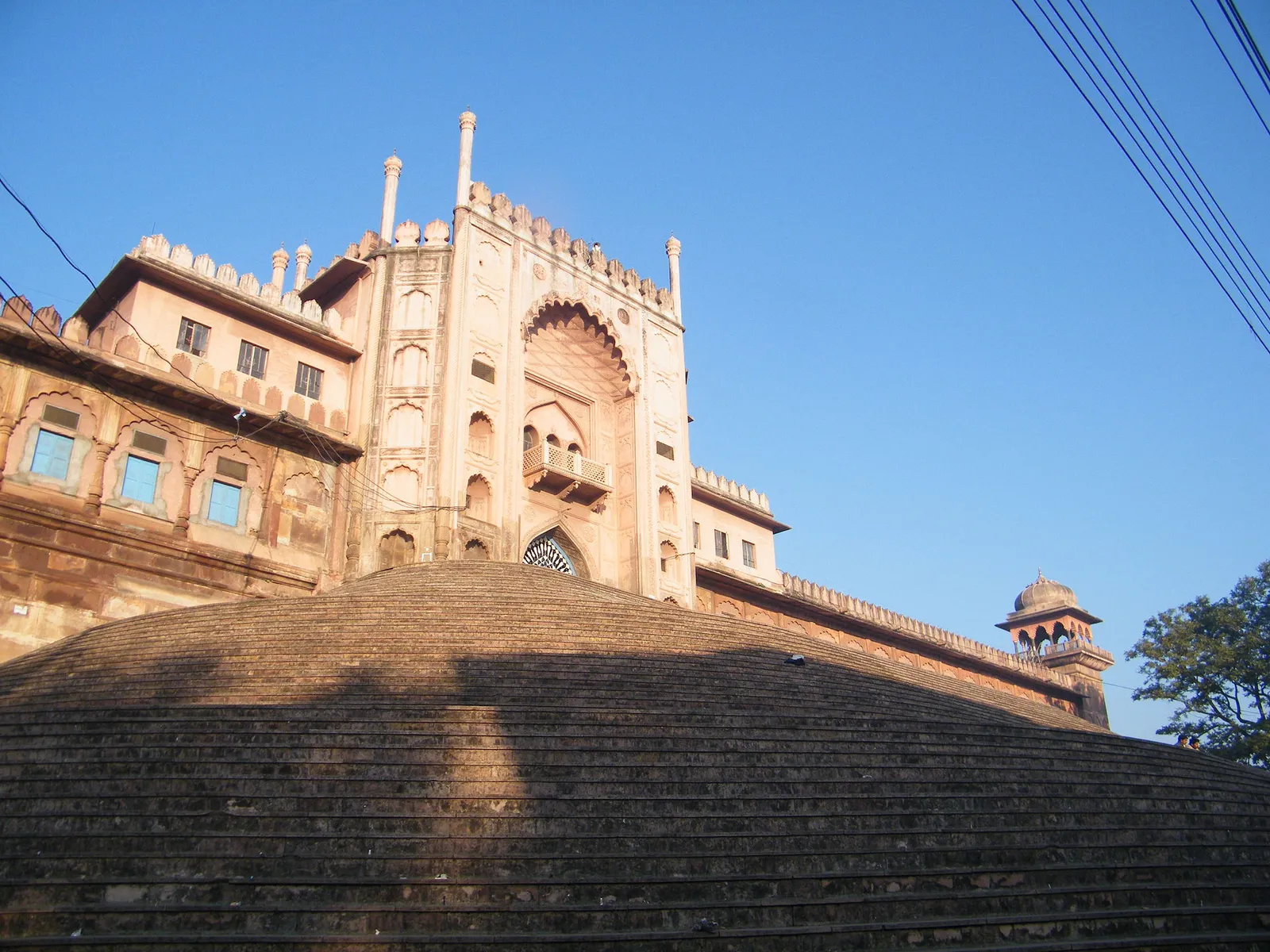
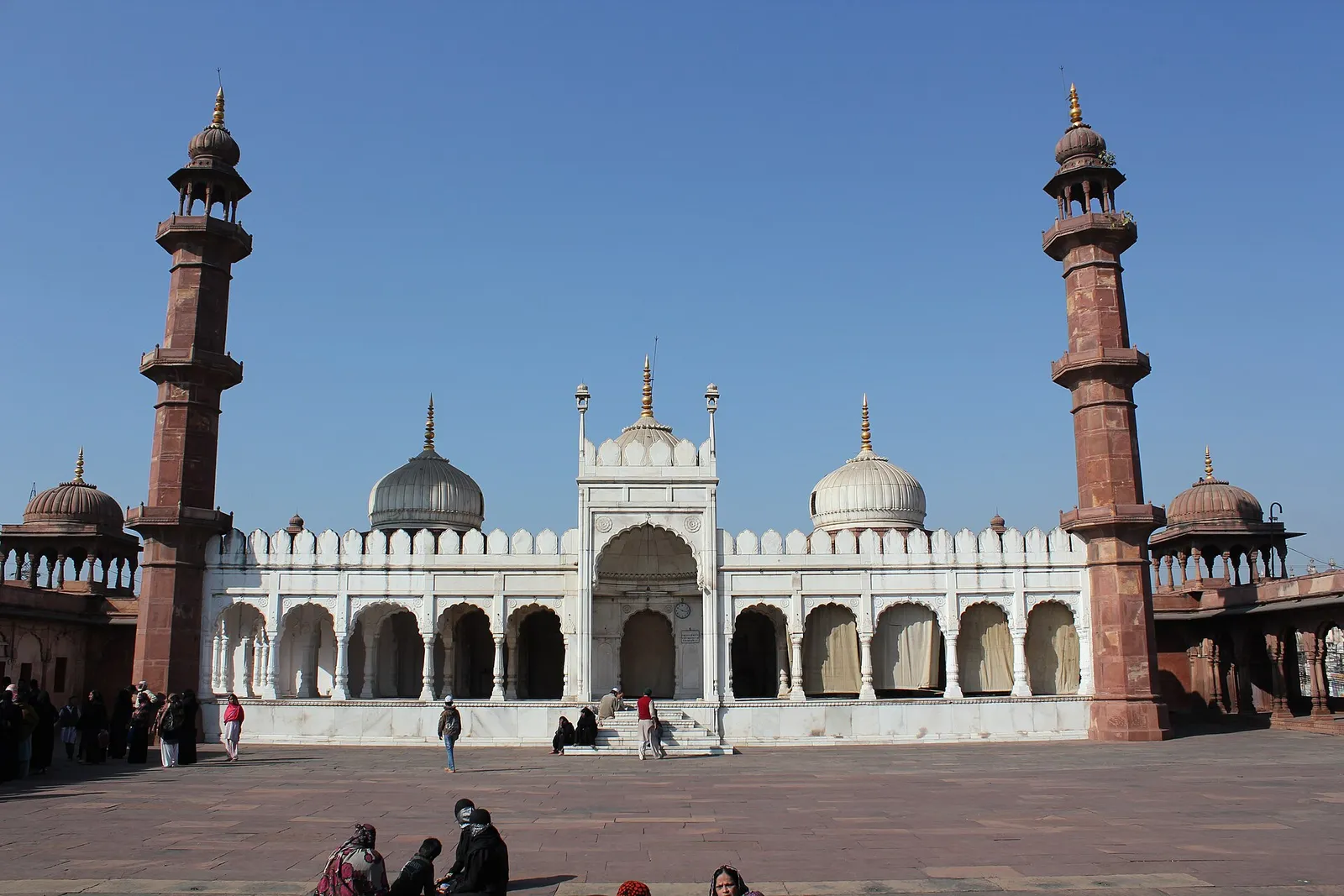
From Chowk, it’s a short walk to Moti Masjid — the small, elegantly proportioned mosque built by Sikandar Jahan Begum and sometimes called “the little Pearl Mosque” in loose reference to the Moti Masjid in Agra. From there, the road opens toward the vast compound of Taj-ul-Masajid, one of the largest mosques in Asia. That full circuit — Shaukat Mahal, Sadar Manzil, Chowk bazaar, Moti Masjid, Taj-ul-Masajid — is a half day well spent.
End the walk at Gohar Mahal on the Lower Lake shore, another Begum-built palace now used as an exhibition space, and you have traced the arc of Nawabi Bhopal from its political centre to its lakeside edge.
Getting There
Shaukat Mahal is in the heart of old Bhopal, about 3 kilometres from New Market. An auto from New Market costs ₹60–80 and takes 15–20 minutes through city traffic. Once you’re in the Chowk area, the palace is on foot — you’ll see it before you expect to.
There is no formal parking in the immediate vicinity. Leave a cab at the edge of the old city and walk in.
Shaukat Mahal is an ASI-protected monument. The exterior is publicly accessible at all hours. Interior access is restricted and subject to ASI authorisation — contact the ASI Bhopal circle for current arrangements.